SPECIES PROFILE · Birds of Prey
Buteo buteo · Linnaeus, 1758
The most common European Buteo — circling over fields, watching from poles, omnipresent along Polish roads.
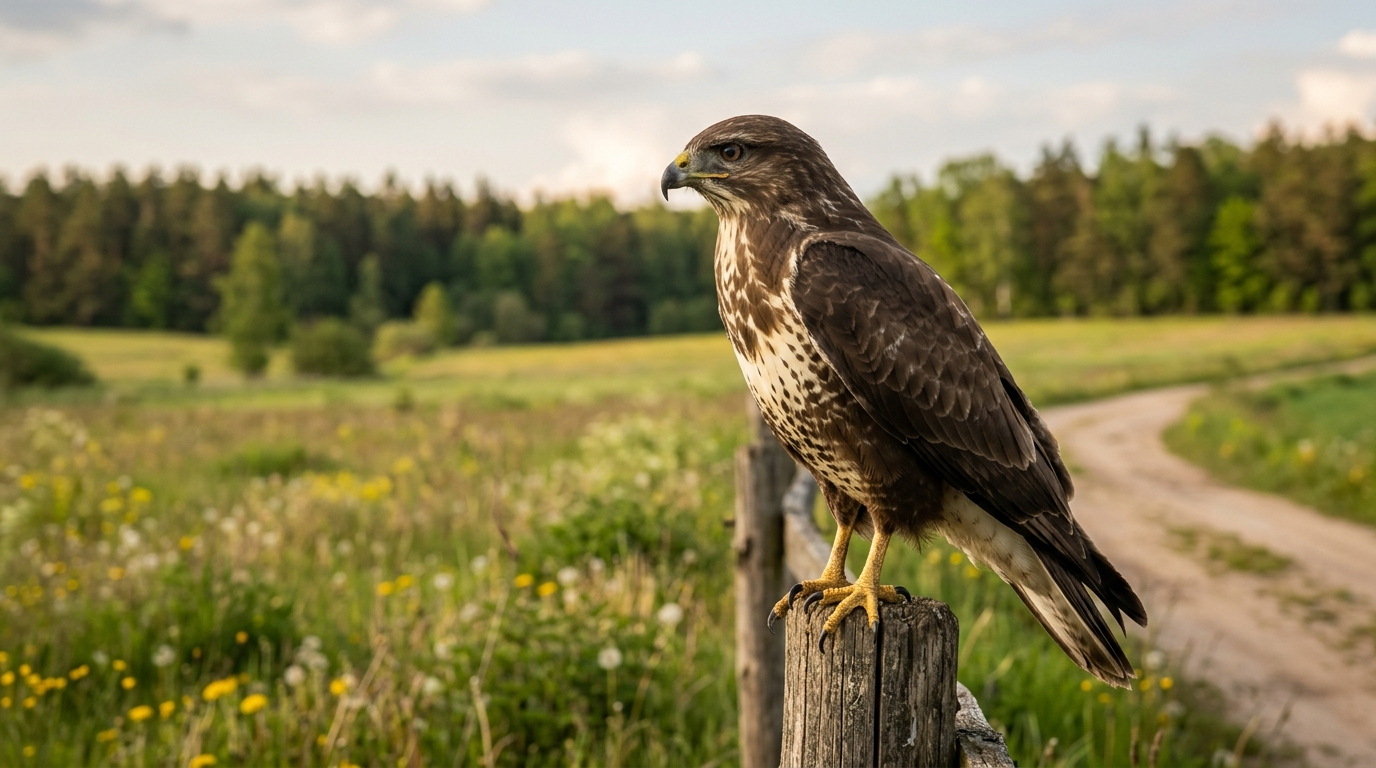
The Common Buzzard is the most common European bird of prey — in Poland, 60–80 thousand pairs nest, more than all other Accipitridae combined. It is that dark, stocky bird on a pole by the highway and that broad shape circling over the stubble. It is characterized by extreme color variability — from almost white to black-brown — meaning practically every individual looks different. A specialist in field rodents, an opportunist with carrion, a master of ambush hunting from poles.
| Kingdom | Animalia |
|---|---|
| Phylum | Chordata |
| Class | Aves |
| Order | Accipitriformes |
| Family | Accipitridae |
| Genus | Buteo |
| Species | B. buteo |
The Common Buzzard (Buteo buteo) is the most numerous and most widely recognized bird of prey in the Polish avifauna. Unlike the Goshawk or Sparrowhawk — forest specialists in avian prey — the buzzard is a generalist of open spaces, optimized for field rodents. Characteristic silhouette: stocky body, broad wings, short rounded tail. Length 51–57 cm, wingspan 110–130 cm, weight 525–1364 g (female significantly larger). Extreme color polymorphism — from light forms, almost whitish, to black-brown — means that field identification requires attention to proportions and silhouette, not color. The diet is based 60–70% on field rodents (common voles, field voles, striped field mice, wood mice), supplemented by carrion (15%), earthworms, birds, and reptiles. Characteristic ambush hunting from a pole or circling soaring over a field — the most common bird of prey observed along Polish highways and field roads.
A stocky silhouette, broad wings, short tail — and extreme color polymorphism, making each individual look slightly different.
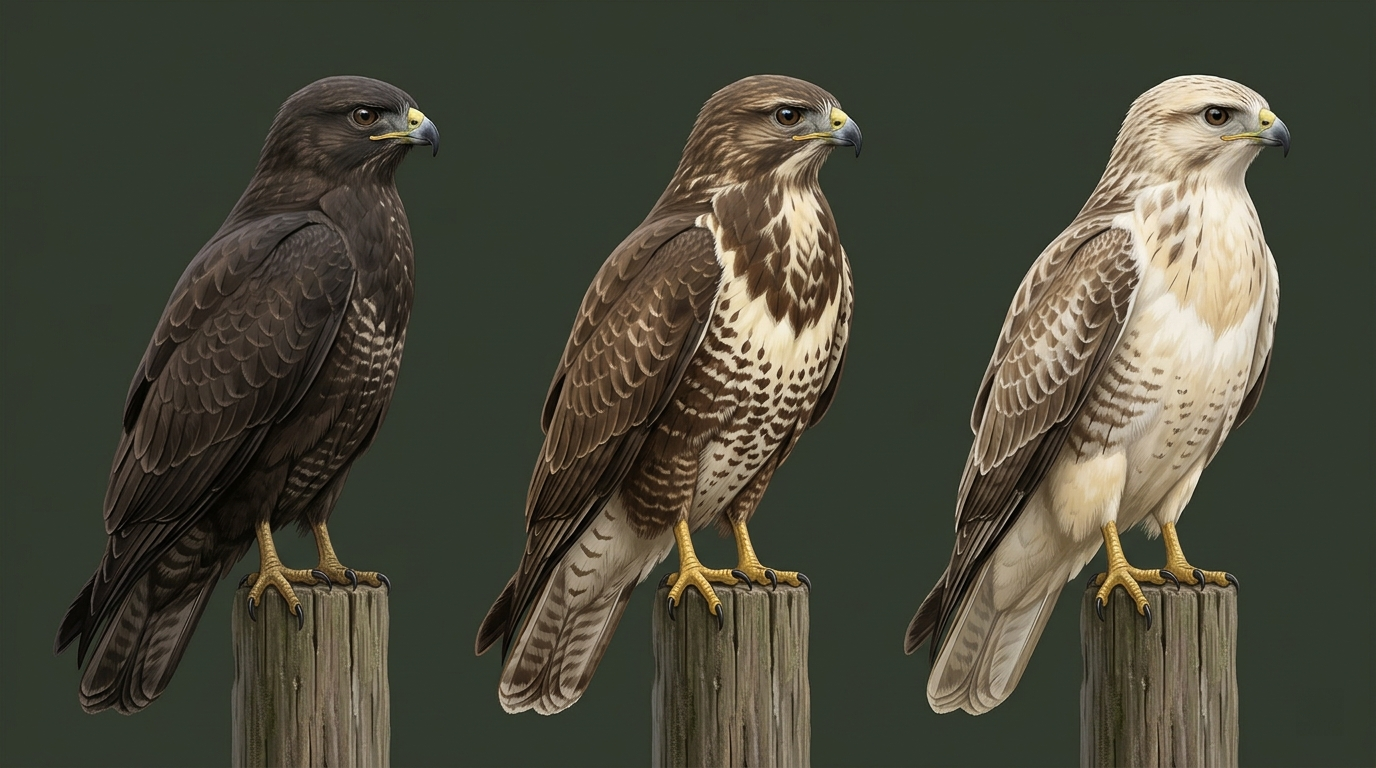
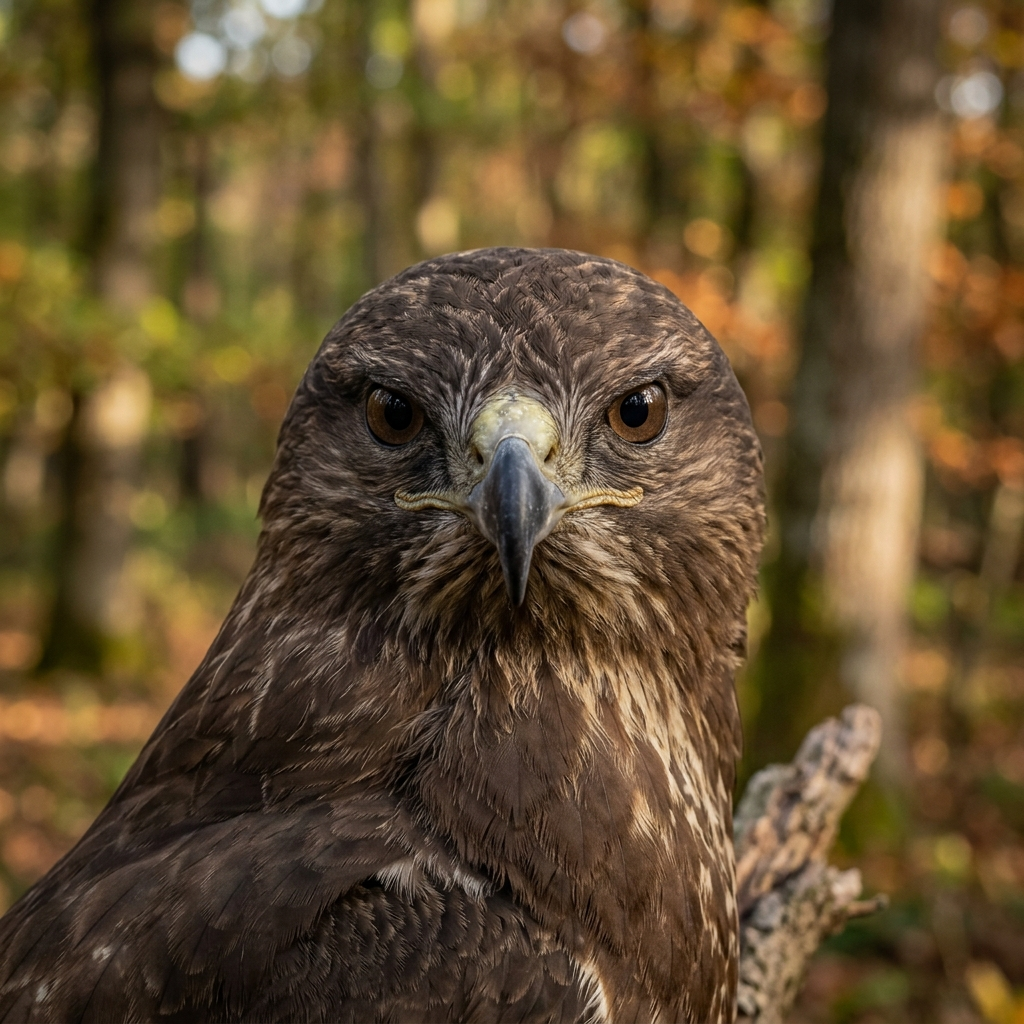
The buzzard is a bird easily recognized by its silhouette, difficult by its color. A stocky body, broad wings rounded at the ends, a short rounded tail, and a massive head — these are constant features. Color — from a light cream form with a white underside to almost black individuals — is so variable that among the Polish population, there are practically no two identical birds.
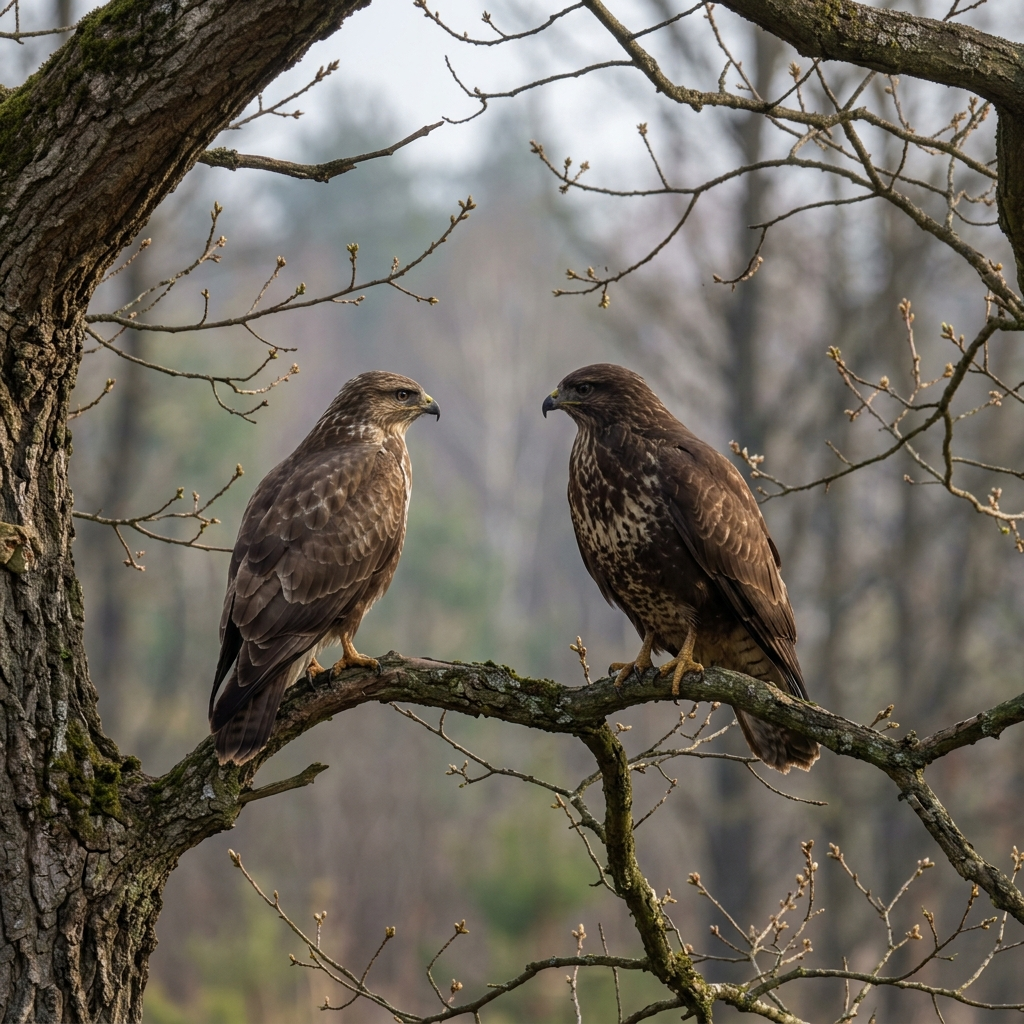
Body length 51–57 cm, wingspan 110–130 cm, weight 525–1364 g. Sexual dimorphism is distinct but less dramatic than in the sparrowhawk: the female is 10–25% heavier than the male, but in the field, the differences are subtle. The most certain way to distinguish them is by observing a pair — the significantly larger one is the female.
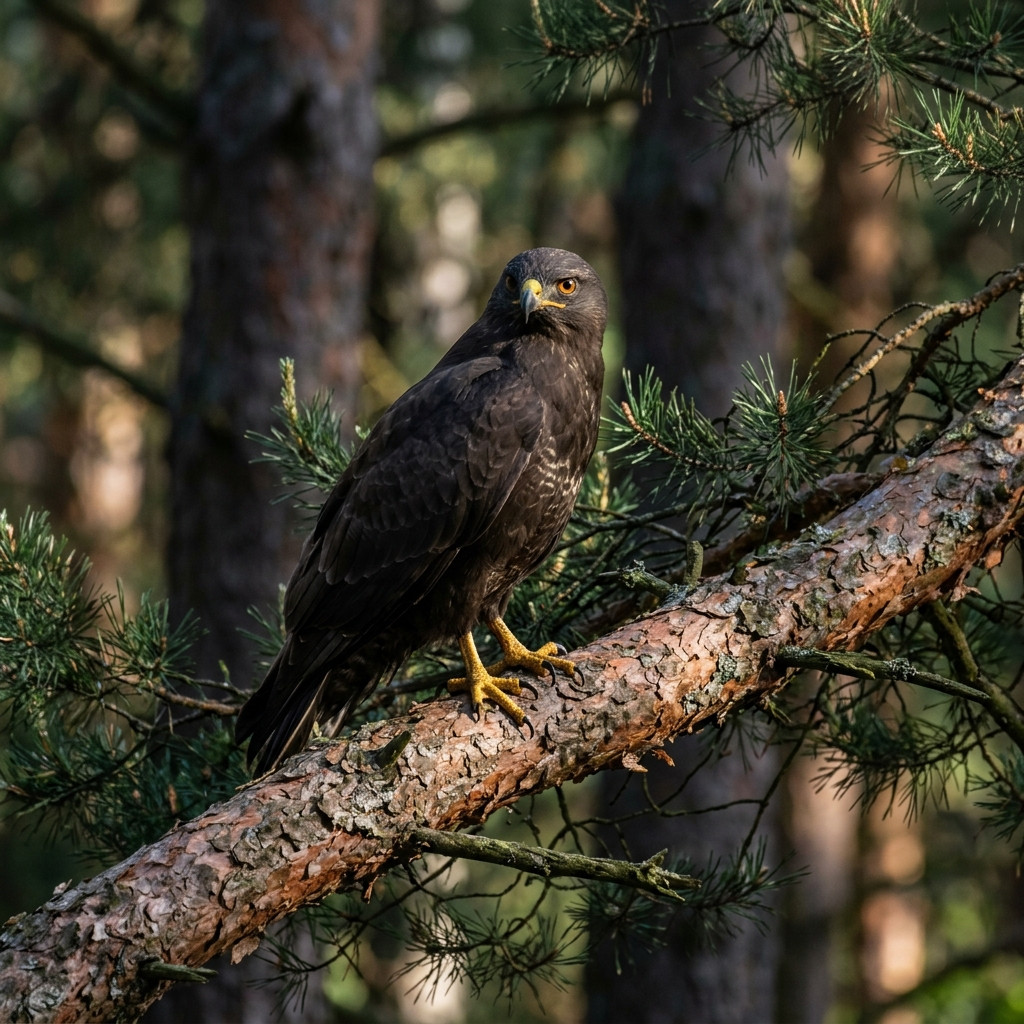
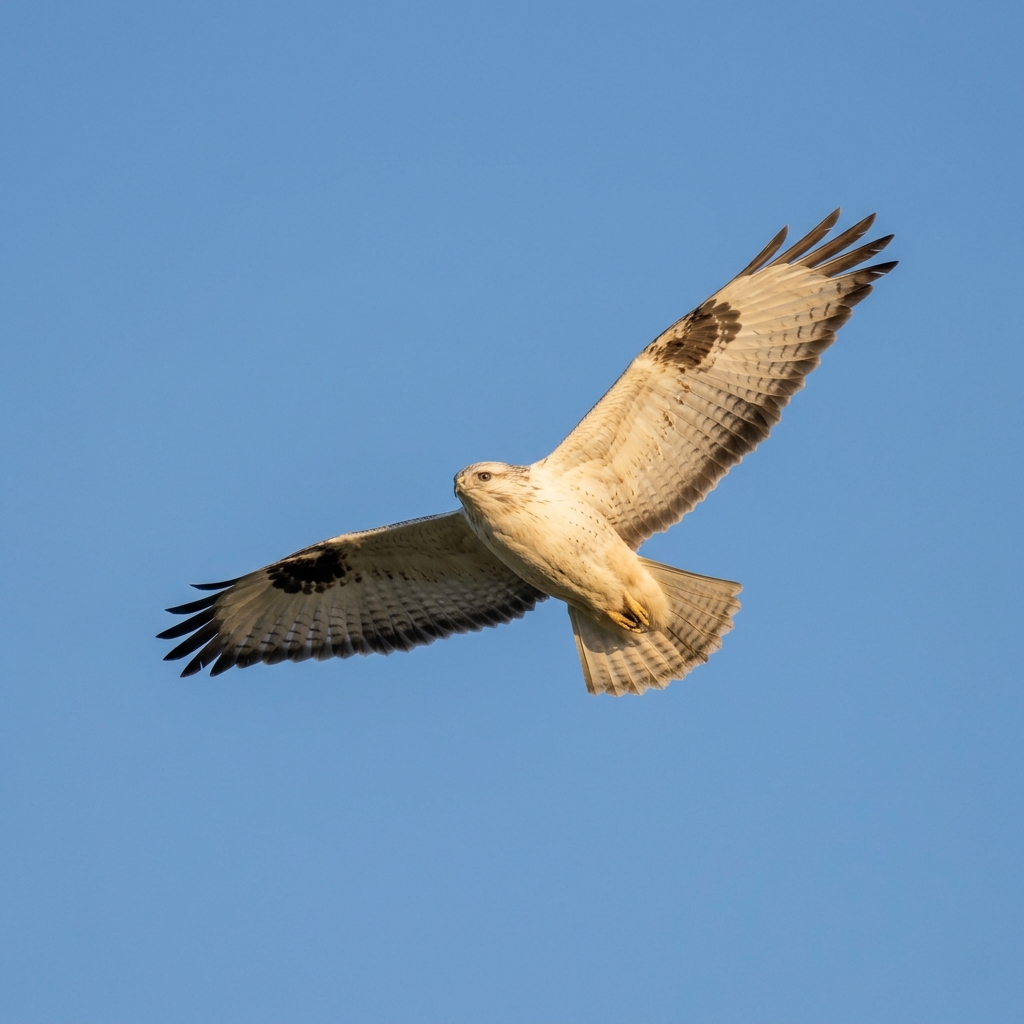
The buzzard's color polymorphism is a phenomenon among Polish birds of prey. Three main color types are distinguished: (1) dark form — uniformly dark brown, almost black, with minimal barring; (2) intermediate form — most common, brown back, light band on the breast (the so-called 'necklace'), barred belly; (3) light form — white-cream underside with minimal barring, light head. All three forms occur in the same area, sometimes even in the same pair. Juvenile buzzards have more distinct longitudinal streaking (instead of the transverse barring of adults) and yellowish (not dark brown) irises.
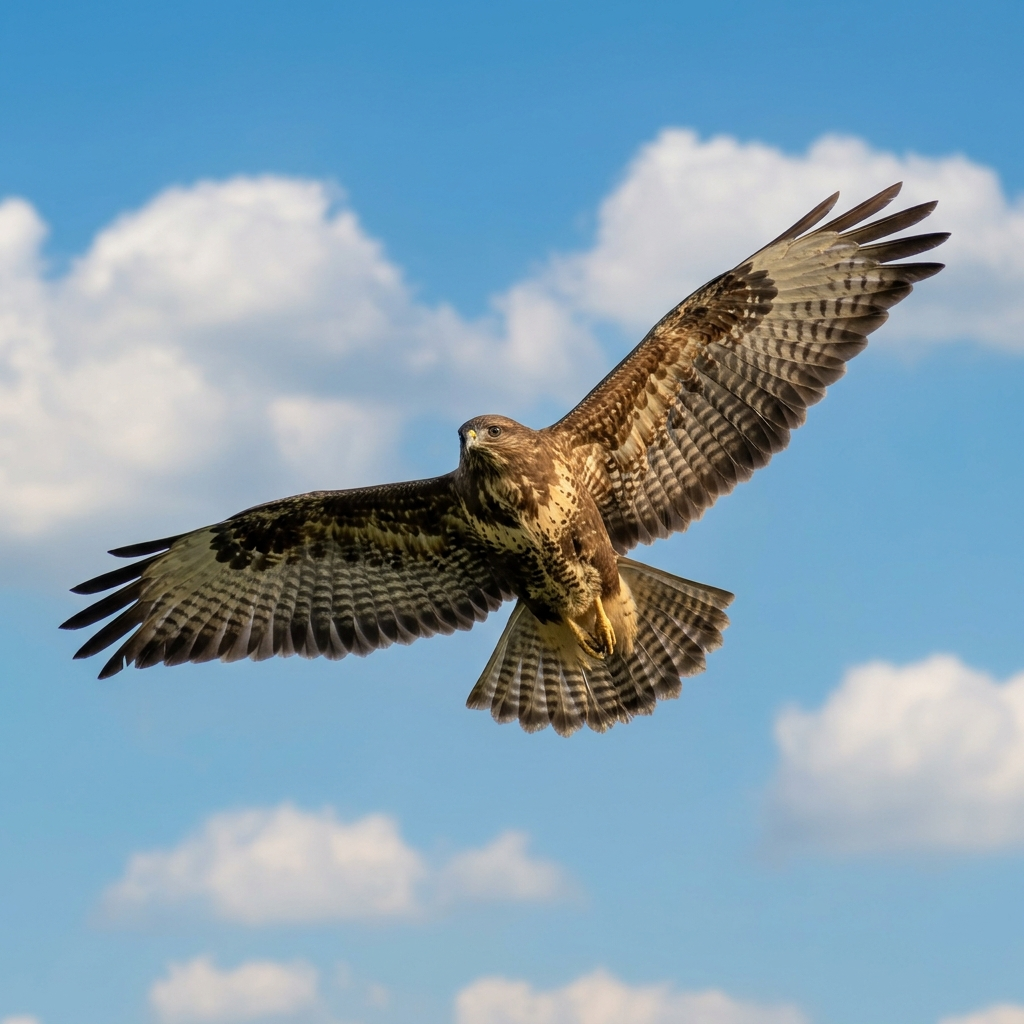
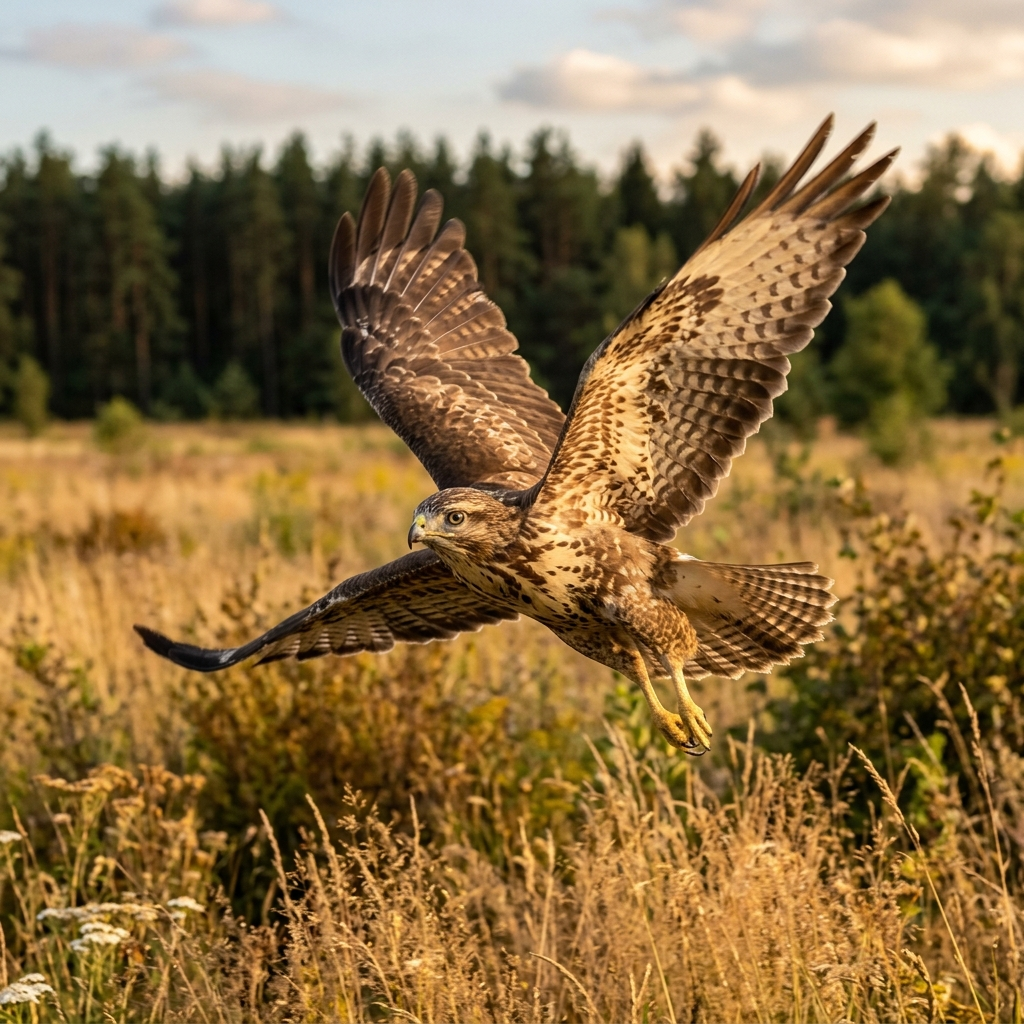
In flight, the buzzard is characteristic: broad wings held in a slight V (dihedral angle — a helpful diagnostic feature), short tail spread like a fan, massive head set into the silhouette. From under the wing, typical dark tips of the primary feathers and often a dark carpal patch — a round spot at the base of the flight feathers — are visible. This pattern occurs in most color forms and is an important identification clue when observed against the sky.
The buzzard's color polymorphism results from a combination of several evolutionary factors. (1) Lack of strong selection pressure on a specific color — the buzzard hunts from ambushes on the ground and from the air, where camouflage matters less than for the forest sparrowhawk; (2) Mixing of populations — individuals from all over Northern and Eastern Europe winter in PL (including Buteo buteo vulpinus from Siberia — often of a rusty color), which increases the gene pool for colors; (3) Dark dominance genes — analogous to melanistic forms in other Buteos. Practical consequence: field identification requires relying on silhouette and proportions, not color. Color only tells you which specific individual you are observing — not the species.

The widest habitat range among Polish Accipitridae — found wherever forest meets open space.
The buzzard is a landscape mosaic species — it needs forest for nesting and open space for hunting, ideally at the boundary of both. This universal niche explains why it is the most numerous European bird of prey and why it inhabits almost all of Poland, except for dense urban areas and high mountain peaks.
The optimal habitat for the buzzard is a mosaic landscape: small forest complexes (mixed or deciduous forests) interspersed with meadows, cultivated fields, fallow lands, field boundaries, and woodlots. The key is the availability of open space with a rodent population within a radius of 1–2 km from the nesting site. The buzzard avoids uniform dense old-growth forests (where the goshawk dominates) and completely open areas without trees (where harriers appear).
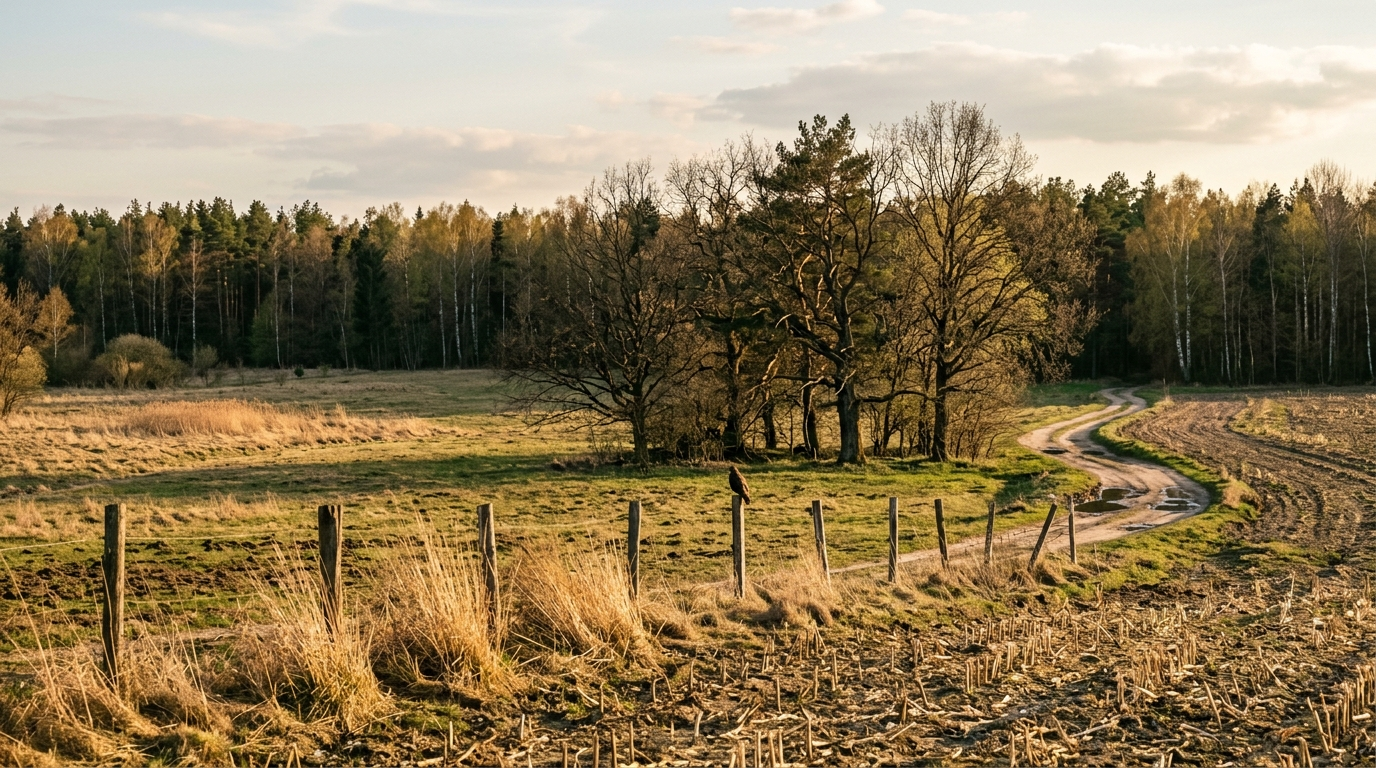
Its range in PL covers practically the entire country: from the Baltic to the Bieszczady, from Masuria to the Sudetes. The highest densities are in agricultural landscapes with a forest mosaic: Masuria, Greater Poland, Lublin region, Podkarpacie. Lower in dense primeval forests (Białowieża, Augustów — the buzzard is there, but rarer than in the adjacent cultural landscape). Expansion into roads and highways is a phenomenon of the last 20 years — highway roadsides offer unprecedented rodent density in tall grass and a regular supply of carrion (animals killed by cars). A buzzard on a pole by the A2 highway is today the most common sight of a bird of prey in the Polish landscape.
Migrations: most Polish buzzards are resident or short-distance migrants. In winter, individuals from Scandinavia, the Baltic countries, and Russia arrive in PL — including the subspecies vulpinus (Steppe Buzzard, often rusty). The autumn migration peaks in mid-October, spring in mid-March. Flights are spectacular — concentrations of hundreds of buzzards at migration bottlenecks (Vistula Spit, Low Beskids). In winter, birds are primarily observed in open fields with remains of beets or corn, where rodents are most numerous.

A specialist in field rodents, an opportunist with carrion, a master of patience on a pole.
The buzzard's diet is clearly optimized for field rodents — 60–70% of the prey biomass consists of voles and mice. The rest is opportunism: carrion, earthworms, birds, reptiles, insects. This dietary flexibility, along with a well-developed bone-digesting apparatus, explains the ecological success of the species.
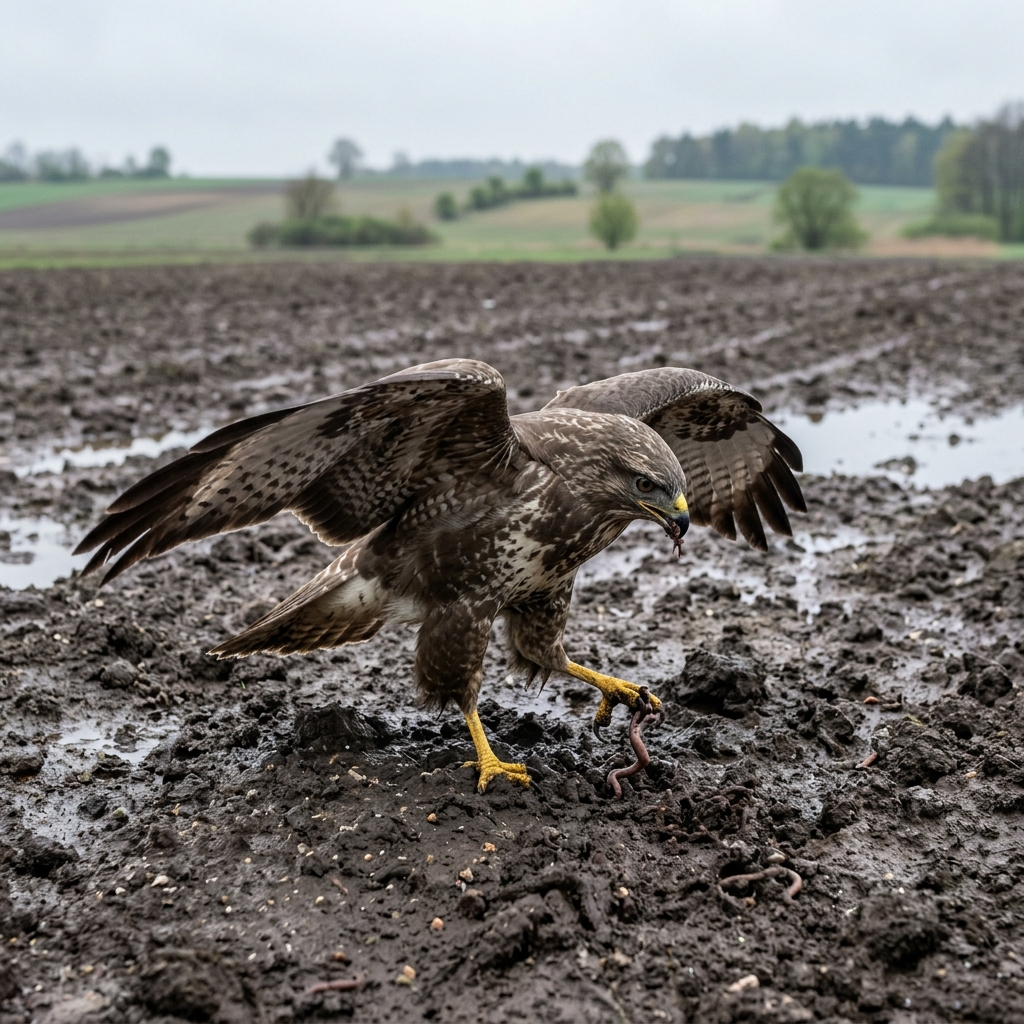
The prey spectrum in Polish studies: common vole (Microtus arvalis) — a key species, locally up to 80% of the diet in peak years; tundra vole, striped field mouse, wood mouse; less frequently bank vole, shrews, moles. The second most important component is carrion (15% of biomass) — the buzzard is one of the few Polish predators that regularly and without hesitation uses carrion: animals killed on roads (roe deer, foxes, hedgehogs, cats), dead farm animals, winter frost victims. Earthworms (10%) — key in summer after rain, when the buzzard walks on freshly plowed fields almost like a stork. Birds account for 5–10% of the diet: corvid chicks, young starlings, partridges, sometimes weak or injured individuals of larger species. Reptiles: grass snakes, slow worms, lizards — important in the dry meadows of southern PL.
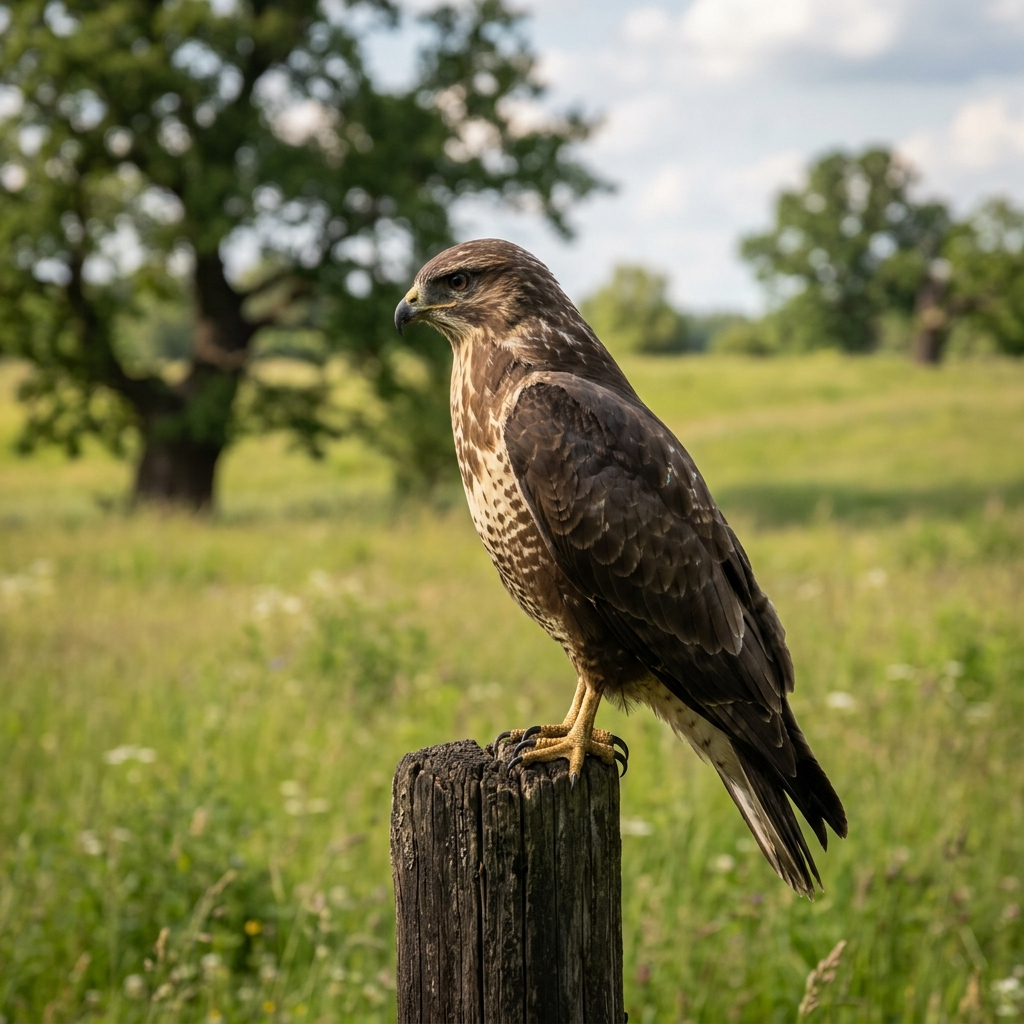
The buzzard's hunting techniques are diverse and situational. (1) Ambush hunting from a pole — the most common, energetically cheapest: the bird sits on a pole, tree, stone, or even a fence and waits patiently for 15–60 minutes, observing the surroundings; after spotting a rodent, it drops in a short glide and catches it. (2) Circling soaring over the field — higher energy expenditure but wider search area, used mainly on warm days with updrafts. (3) 'Hovering' like a kestrel — the buzzard can hang in one spot over a mouse hole, vigorously flapping its wings; a technique used less often but effective in strong winds. (4) Walking on the ground — during hunting for earthworms and insects, characteristic in freshly plowed fields. (5) Searching for carrion visually from a height or by observing other scavengers.
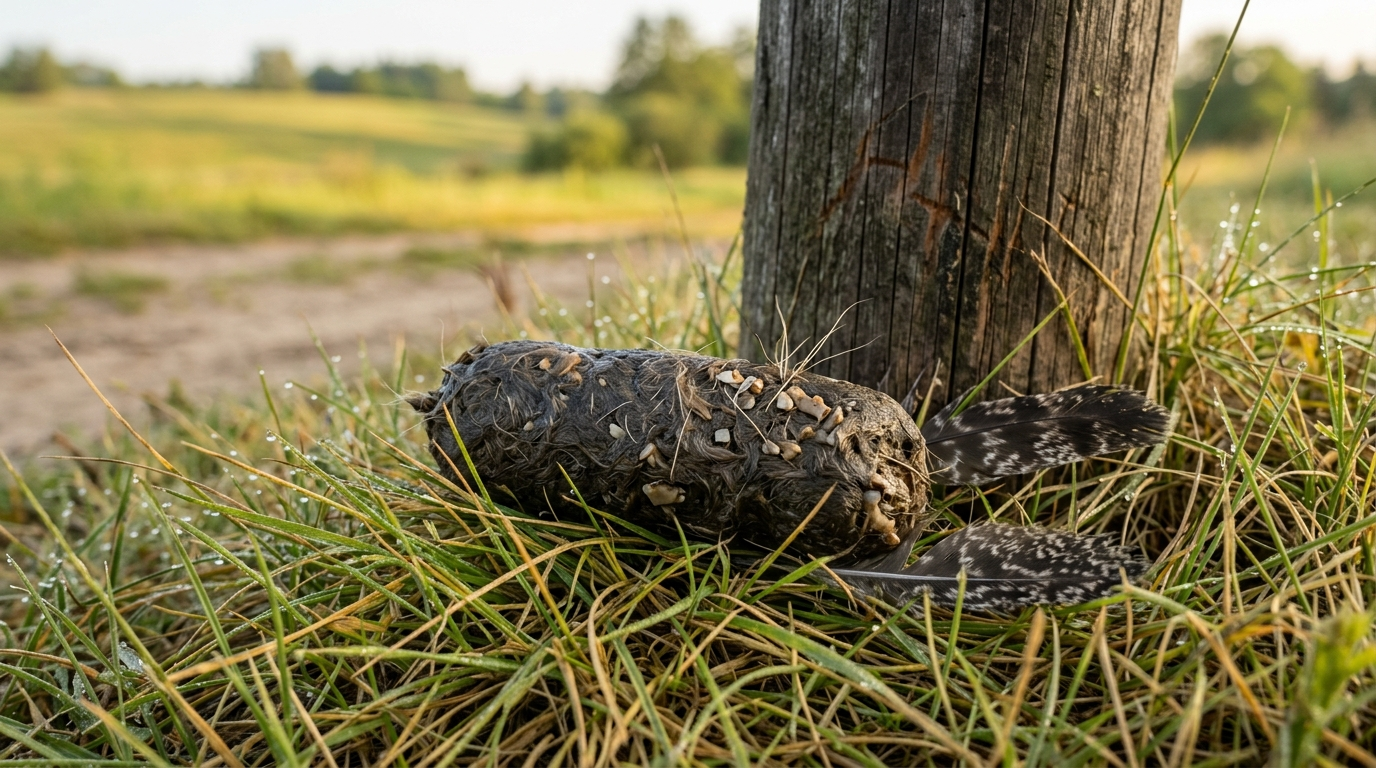
Consumption: small prey (voles, mice) are swallowed whole by the buzzard or eaten on a pole, where it consumes the prey head-first after killing it. Larger prey (carrion, birds) are torn apart on the spot or carried to a safe place — a clump of bushes, a tree branch. After a large meal, the bird stays nearby for several hours, digesting motionlessly on a pole. Pellets (see section 5) contain fur and bones — strongly compacted, cylindrical, 4–7 cm long.
The roadside of a highway is an ideal hunting ground for the buzzard — the dense tall grass breeds a rodent population twice as large as in neighboring fields (no plowing, no chemicals, regular mowing creating paths for voles). Utility poles and road signs provide excellent observation points — exactly like the single trees on the savannah it evolutionarily hunted from. An extra bonus: a regular supply of carrion from the road (animals killed by cars). The buzzard does not die under wheels at the same rate as, for example, the tawny owl — it quickly escapes from an approaching vehicle. Practical: if you see a large dark bird on a pole by the highway — in 90% of cases, it's a buzzard. A kestrel is smaller and hovers, a sparrowhawk rarely stands in the open, a goshawk stays in the forest.
Spring displays, a nest in an old tree, and 2–4 eggs — the buzzard usually returns to the same residence for many years in a row.
The buzzard is monogamous and faithful to its territory — pairs often last many years, and the same nest (or several alternative ones in the same territory) is used every year. The strategy is the opposite of the sparrowhawk, which changes nests: for the buzzard, a known location with a good view of hunting grounds is more valuable than concealment.
The breeding season begins in March — pairs perform spectacular courtship displays over the territory: soaring in pairs, diving from a great height with semi-folded wings, 'garlands' — alternating ascents and descents, and mewing calls. These acrobatics serve a territorial function (a signal to neighbors) and a partnership function (strengthening the pair bond). Nest building or renovation takes place in late March and April. A pair regularly has 2–3 alternative nests in the territory, using them rotationally in subsequent years.
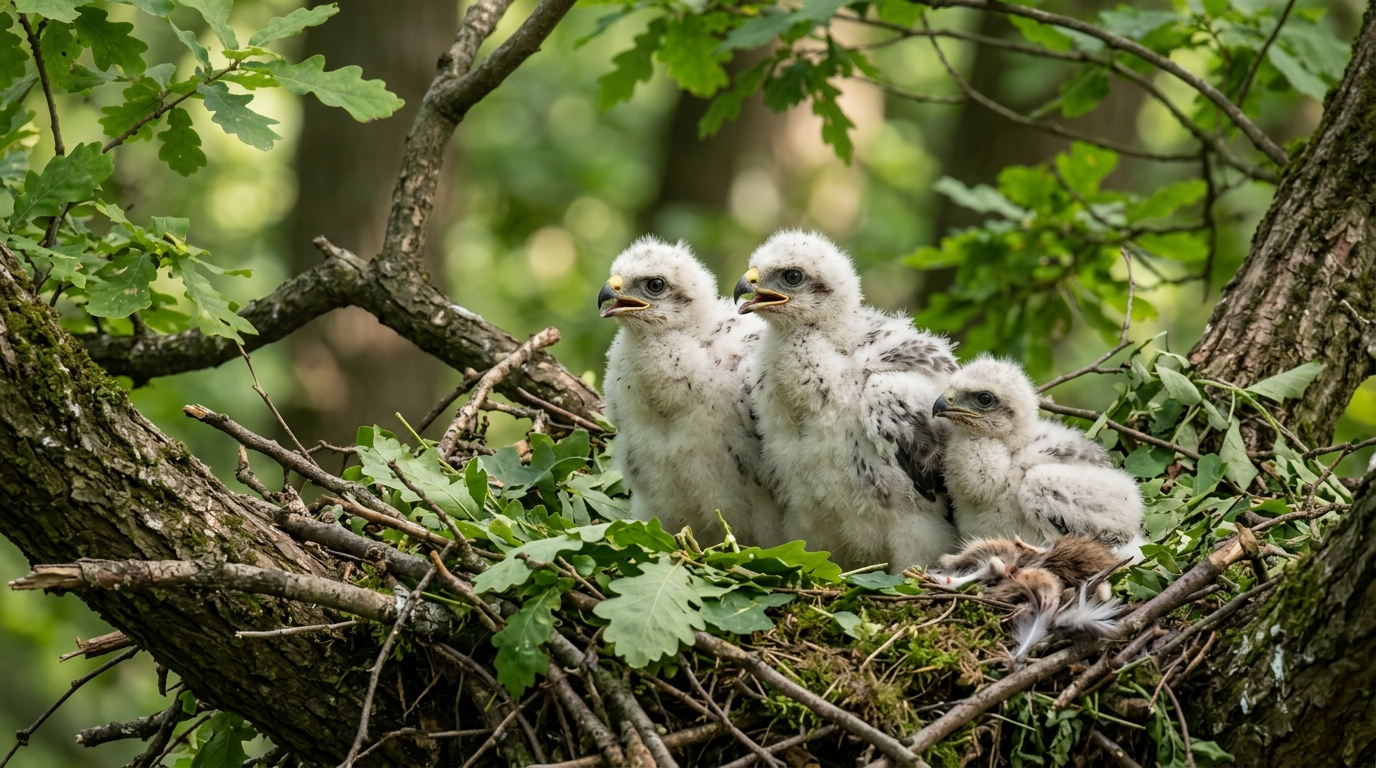
The nest is built in an old deciduous tree (most often oak, beech, pine, spruce) at a height of 10–20 m above the ground, in a fork close to the trunk. The construction is massive, made of thick branches (diameter up to 1 m, weight up to 100 kg after years of additions), lined with leaves, moss, and hay. A nest used for many years grows — annual additions create a characteristic platform visible in winter without leaves. Location: usually at the edge of the forest or in a small field woodlot, with a good view of the surrounding fields — the buzzard likes to see hunting grounds from the nest.
The clutch consists of 2–4 eggs (most often 3), white-blue with brown spots. Laying occurs at intervals of 2–3 days, from April to May. Incubation lasts 33–35 days, carried out mainly by the female; the male provides food. Chicks are born blind, covered with white down. They open their eyes on the 5th day and leave the nest (first flights) at 50–55 days of age. After leaving the nest, the young stay in the parents' territory for 4–8 weeks, learning to hunt. Full independence: at the turn of August and September. Breeding success in PL varies annually from 1.8 to 2.5 young per pair — years of vole gradation are years of high success, while years of rodent population collapse mean low breeding success.
The population of the common vole in the Polish agricultural landscape shows distinct 3–4 year gradation cycles: high years (up to 1000 individuals/ha) and collapse years (below 50 individuals/ha). Buzzard breeding success correlates strongly with the cycle phase: in gradation years, a pair raises an average of 2.5–3.0 young, in collapse years — 0.8–1.5 young, sometimes the pair does not attempt to breed at all. This is a natural population regulation mechanism: after hungry years, young cohorts of buzzards are smaller, and older individuals die more often in winter — the population reacts slowly to rodent cycles. Therefore, the number of breeding pairs in PL fluctuates annually between 60–80 thousand, depending on the gradation phase in a given region.

The buzzard leaves clear traces — pellets on poles, mutes under the nest, tracks in the snow in the field.
Among Polish birds of prey, the buzzard is one of the easiest to track. It spends a lot of time motionless on poles and trees, where it systematically leaves pellets, droppings, and feathers. Under the nest, mutes accumulate — diagnostic, extensive splashes visible even in winter without leaves.
The buzzard's pellets are characteristic and often found: cylindrical, 4–7 cm long, 2–3 cm diameter, dark gray or gray-brown, strongly compacted, containing rodent fur and small bones. Unlike owl pellets, the buzzard partially digests bones — the pellet contains fewer large bone fragments than a tawny owl pellet, but more than a sparrowhawk's. Location: under favorite observation points — poles, lone trees, village roadside crosses. Pellets on one pole often lie in groups of a dozen or so from different days — diagnostic that it's a regular lookout.
Mutes — these are white splashes of droppings under the nesting site or under permanent observation points. Under a buzzard's nest, the mute area is extensive (radius of 3–5 m around the tree), with white splashes on the ground, fallen leaves, and low shrubs. Diagnostic during the May–August period when the chicks are in the nest and regularly eject droppings over the edge. Practical tip: a mute area under an old oak at the edge of the forest = with high probability, a buzzard nest high in the canopy.
Tracks in snow and mud: the buzzard walks on the ground while hunting for earthworms — it leaves characteristic paw prints: four toes, 7–9 cm long, 6–8 cm wide, with clear impressions of claws and knuckles. The step is short (10–15 cm) and single (it does not hop, like a crow). In the snow in the fields after hunting, struggle sites with prey remain: trampled snow, feathers, sometimes wing marks ('wing-drag' — imprint of wing feathers on the snow after landing). Buzzard feathers are often found on poles and under trees — broad, barred flight feathers 25–35 cm long, the characteristic last element being a dark tip.
Both pellets are found in the Polish forest — and both contain rodent fur. Diagnostics: (1) bones — the tawny owl regurgitates complete skulls, pelvices, and long bones of the vole; the buzzard strongly digested fragments, usually impossible to reassemble a skeleton; (2) location — tawny owl in the forest under hollows and branches, buzzard in the open (poles, lone trees, crosses); (3) color — tawny owl lighter gray, buzzard darker with brown fur tones (due to carrion and greater prey diversity); (4) size — tawny owl 3–5 cm, buzzard 4–7 cm. If you find a pellet with smooth, heavily digested bones under a pole by the highway — it's 95% likely a buzzard.

The most visible bird of prey in the Polish landscape — a beneficiary of agriculture, a neighbor of highways, sometimes a victim of collisions.
The buzzard is the most frequently observed Polish bird of prey in the field — and one of the few that have benefited from the development of civilization. Open agricultural landscapes, power line networks, highways with poles and verges, and a regular supply of carrion — all this has created more favorable conditions for it than the native steppe-forest mosaics of 200 years ago.
Highway roadsides are today the primary context for observing buzzards in PL. Every driver on the A1, A2, A4, or S8 sees a dark silhouette controlling the grass on poles every few kilometers. Statistics: on 100 km of highway during the growing season, there are an average of 8–15 hunting buzzards, each occupying a several-kilometer stretch of the roadside. The highway zone is a modern ecological niche for the species — easy food, no competition, low predator pressure on nests (buzzards nest in the forests near the highways).
Cooperation with the farmer: the buzzard is the most important biological controller of rodent populations in Polish agriculture. A pair of buzzards consumes 2000–3000 voles and mice annually — the equivalent of several hundred kilograms of potential yield losses. Polish agri-environmental programs encourage leaving old nesting trees and buzzard perches (poles on field boundaries) to increase hunting efficiency. Pesticides and the buzzard: 2nd generation rodenticides (brodifacoum, bromadiolone) are a serious threat — they accumulate in the livers of prey rodents, causing internal bleeding in buzzards. Polish veterinary supervisors find dozens of poisoned individuals annually.
Conflicts with poultry farming are rare but recorded. The buzzard does not regularly attack adult hens (they are too large), but there are occasional kidnappings of chicks from village runs. Statistics: in PL, 1–3% of farms raising free-range poultry report losses annually, averaging 2–5 chicks per season. Illegal killing — in some regions of PL, the buzzard is still a target of illegal shooting (despite strict protection) — especially in regions with a strong tradition of raising chickens and pigeons. Poisoning with carrion containing carbofuran (a substance banned in the EU since 2008) is recorded. Falconry: the buzzard is a popular species in Polish falconry — hundreds of individuals are legally kept in breeding facilities, used mainly for demonstrations, less often for hunting.
Buzzards regularly fall victim to accidents — collisions with power lines, cars, office building glass, shootings, rodenticide poisoning. If you find an injured bird: (1) do not try to treat it yourself — the buzzard has strong talons and a beak, it can cause serious injury; (2) cover it with a thick blanket or jacket limiting its vision (it calms it down), put it in a large box with holes; (3) call the nearest bird of prey rehabilitation center (e.g., Falconiformes Mikołów, Rusałka Warsaw, Ptasi Azyl Wrocław); (4) do not give water or food before consulting a veterinarian. Reaction time is crucial — in the case of rodenticide poisoning, the chance of rescue drops drastically after 24 hours. Not touching and ignoring an injured bird is a harmful practice — in natural conditions, an injured buzzard dies of hunger or in a fox's jaws in a few days.
Strictly protected for decades — population stable, but still threatened by poisoning and the loss of old nesting trees.
The buzzard is fully covered by strict species protection in Poland — since 1981. After decades of persecution in the 19th and first half of the 20th century (considered a 'hunting pest'), the population is stabilizing at 60–80 thousand breeding pairs — the highest in 100 years. This is a conservation success, but civilization threats remain real.
Legal status: strict protection in Poland (Regulation of the Minister of the Environment of December 16, 2016, on the protection of animal species, Annex 1 — species under strict protection); EU — Annex I of the Birds Directive (species subject to special conservation measures in Natura 2000 areas); CITES — Appendix II (trade regulation); Berne Convention — Appendix II (strictly protected species). Absolute prohibitions: killing, disturbing, destroying nests, possessing dead birds, photographing at the nest without permission. Zonal protection is not mandatory for the buzzard, but recommended in Natura 2000 areas with a dense population (a zone of 100–200 m around the nest during the period March–August).
Main threats: (1) 2nd generation rodenticide poisoning (brodifacoum, bromadiolone, difenacoum) — they accumulate in the livers of prey rodents, causing internal bleeding in buzzards; an estimated 2–4% of annual population mortality; (2) Collisions with power lines and cars — highest mortality in inexperienced first-year young birds; (3) Illegal killing — shootings, poisoned carrion with carbofuran (a banned substance, but used illegally); (4) Felling of old nesting trees in forest management — the buzzard needs trees with a diameter at breast height of 50–80 cm; (5) Fragmentation of the agricultural landscape — field homogenization, removal of field boundaries and woodlots reduces the number of lookout points and the rodent population.
Conservation actions: (1) Leaving old trees in production forests as biocoenotic trees (State Forests); (2) Maintenance of field woodlots and boundaries in agri-environmental programs; (3) Educating farmers about the benefits of the buzzard as a rodent controller; (4) Population monitoring as part of the Common Breeding Bird Monitoring (MPPL); (5) Rehabilitation centers for injured individuals — there are over a dozen centers in PL accepting birds of prey. Long-term trend: stable or slightly increasing — the buzzard is one of the few European birds of prey that shows no decline in numbers.
The abundance and breeding success of the buzzard are used in PL as an indicator of agroecosystem health. The logic is simple: a high buzzard population = a healthy rodent population = a mosaic landscape with field boundaries, fallows, and woodlots = no excessive agricultural chemicals. A decline in buzzards in a given region can signal: excessive use of rodenticides, landscape homogenization (removal of field boundaries), felling of old-growth trees, or a combination of these factors. Practical: a buzzard on poles near your fields is not a problem to be solved — it's a good sign that your landscape is functioning ecologically.
Most often with the honey buzzard (most similar), red kite, and goshawk — the keys are proportions, tail, and flight style.
Even though the buzzard is the most common bird of prey in PL, its field identification is regularly confused. Three key species it is mistaken for: Honey Buzzard (almost identical size and color), Red Kite (silhouette in flight), Goshawk (in poor light). The buzzard's extreme color variability further complicates the matter — dark forms are mistaken for crow-like soarers, light ones for harriers.
The most common mistake — with the honey buzzard (Pernis apivorus). The honey buzzard is a summer visitor, in PL from May to September, ecologically specialized in the nests of wasps, bumblebees, and hornets. From a distance of 200 m or more, it is practically indistinguishable from the common buzzard — the same size (52–60 cm), the same general color pattern (variable, brown-white). Diagnostics: (1) head — the honey buzzard has a smaller, narrower head with a longer neck than the common buzzard (comparison with a wood pigeon vs. a jay); (2) tail — the honey buzzard has a longer tail with 2–3 distinct dark bands; (3) wings — the honey buzzard holds them horizontally or slightly lowered in soaring flight (common buzzard in a slight V); (4) belly — the honey buzzard often has transverse bars (common buzzard rather longitudinal streaks).
With the red kite (Milvus milvus), the buzzard is mistaken mainly from a distance or in silhouette against the sky. Key difference: the kite has a distinctly forked tail in the shape of a V (the buzzard has a rounded tail, straight at the end). The kite is also distinctly slenderer, has longer and narrower wings, and characteristic white 'windows' under the wings at the base of the primary feathers. The kite's color is uniformly rusty-orange — the buzzard rarely achieves such a tone. With the goshawk, the buzzard is mistaken in poor light or when the bird sits motionlessly. Diagnostics: the goshawk is slenderer, longer, has a long tail and narrower, longer wings; the buzzard is stocky with a short tail and broad wings. The goshawk in flight performs long glides with powerful wingbeats, the buzzard calmly circles in thermal currents.
(1) Flight silhouette: a stocky bird with broad wings in a slight V and a short rounded tail = common buzzard. Slender with long wings and a long tail = goshawk/sparrowhawk. Slender with a forked tail = kite. (2) Location: on a pole by a field road/highway + winter season = 90% certainly common buzzard (the honey buzzard does not winter). On a pole + small size = kestrel. (3) Call: a long mewing 'hi-jaaaa' = buzzard. Short 'kek-kek' = sparrowhawk. 'Wikwikwik' = falcon. Remember, however — the buzzard's call is regularly confused with the wood pigeon's call (also sounds mewing), so do not identify without visual observation.
| Feature | Common Buzzard | Honey Buzzard | Red Kite | Goshawk |
|---|---|---|---|---|
| Body length | 51–57 cm | 52–60 cm | 60–70 cm | 49–63 cm |
| Wingspan | 110–130 cm | 118–144 cm | 150–170 cm | 100–135 cm |
| Tail | short, rounded | longer with bands | distinctly forked | long, narrowed |
| Head | massive, recessed | small, on longer neck | slender | large with eyebrow |
| Wings in flight | in slight V | horizontal/lowered | slight M | horizontal, short |
| Silhouette | stocky | slender | slender, longer | slender, maneuverable |
| Season in PL | all year | May–Sept (summer) | Mar–Oct (summer+some winter) | all year |
| Characteristic detail | breast 'necklace' | pigeon-like head | forked tail | white eyebrow |
Eight shots in different conditions — seasons, environments, situations. Click to enlarge.