All species profiles
Full list — species with full profiles are clickable, skeletons and planned profiles are marked as „in preparation".
Mustelids
 LC
LC
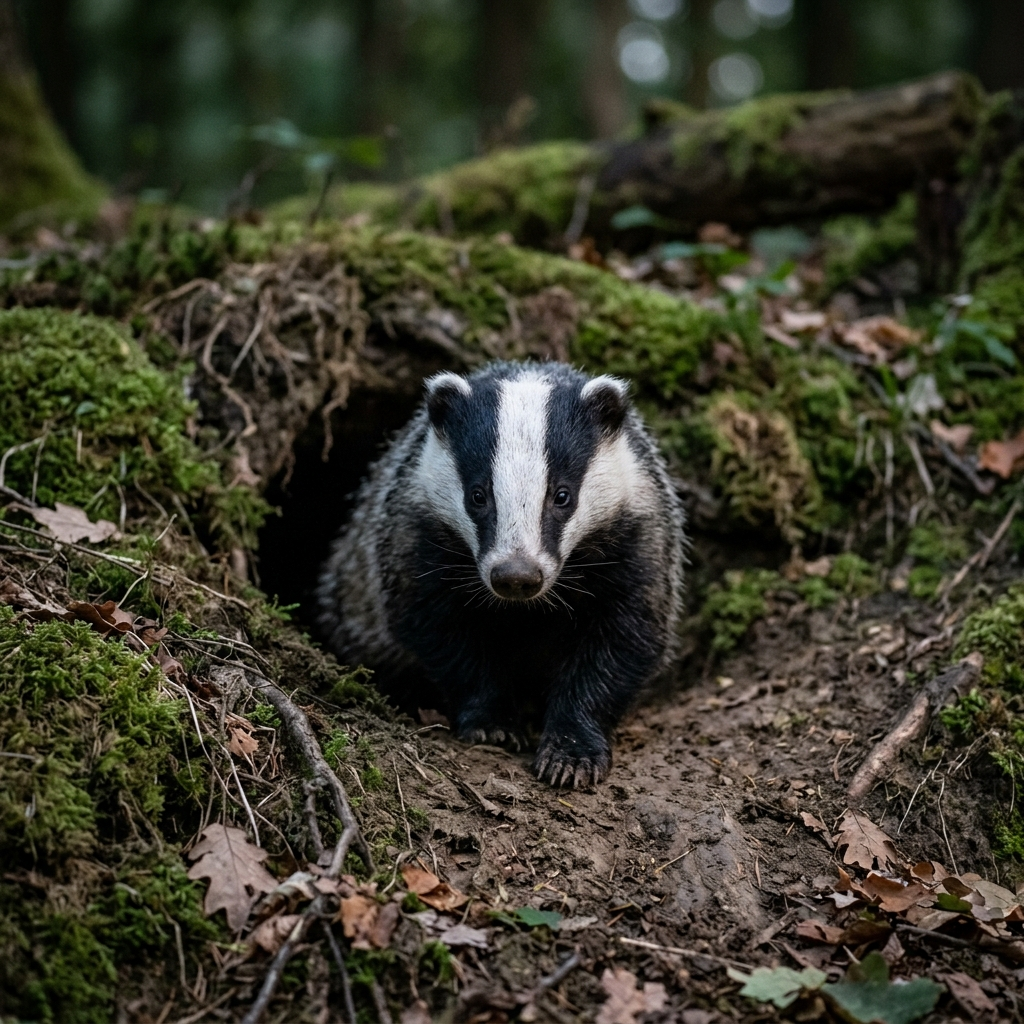
Beech marten
Martes foina
The most commonly encountered predator around human settlements in Poland. A master of adaptation — it thrives equally well in the attic of a villa near Warsaw, in the ruins of a farm in Masuria, or under the roof of a village church in Lesser Poland. Active at night, exceptionally quiet, it leaves behind a characteristic set of tracks — and many questions from the homeowner.
 LC
LC
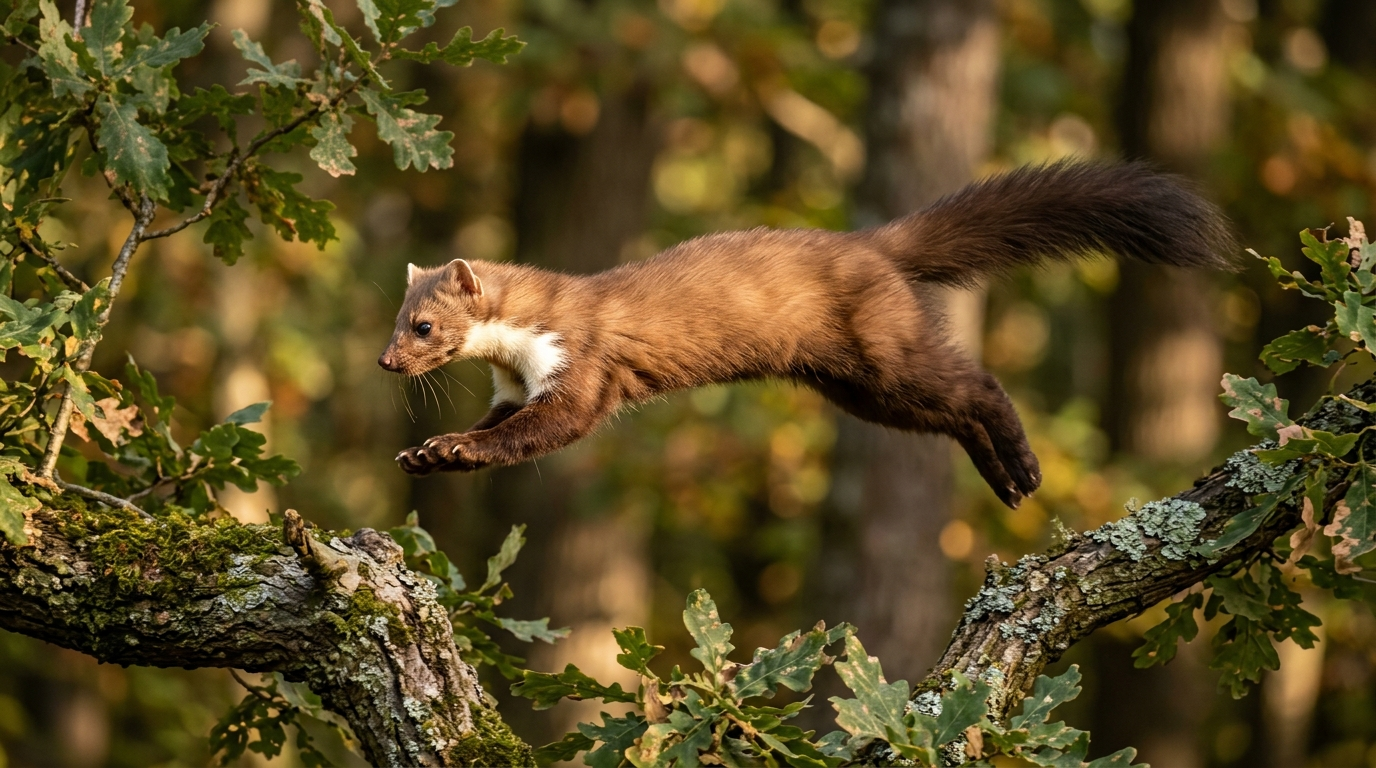
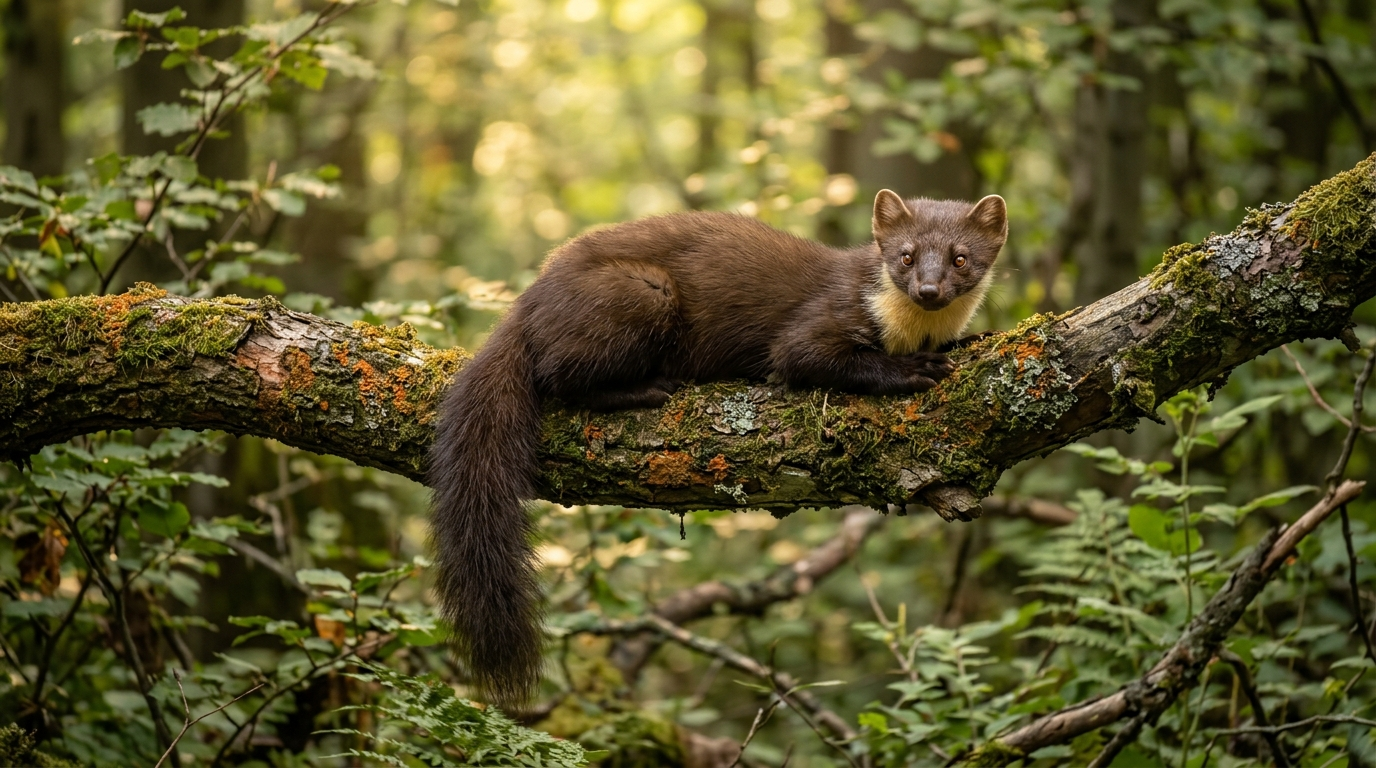
European pine marten
Martes martes
Quiet, secretive, and the most arboreal of all Polish mustelids. The pine marten is what the stone marten chooses not to be: a true inhabitant of ancient forests. It doesn't frequent attics, doesn't chew on cars, and doesn't draw attention to itself. It lives in the hollows of old oaks and beeches that were growing long before humans built villages at the forest's edge.
 LC
LC
Least weasel
Mustela nivalis
The world's smallest predator — the male weighs as much as two chocolate bars, and the female is even smaller. It fits into a mouse hole, runs through vole tunnels, and can kill prey five times heavier than itself. Quiet, fast, almost invisible — yet one of the most important regulators of small rodent populations in the agricultural landscape.
 LC
LC
Stoat
Mustela erminea
A small predator with two seasonal coats: reddish-brown with a white underside in summer, and snowy white with a black tail tip in winter — a heraldic symbol of rulers and one of the most efficient vole hunters in the Polish landscape. Larger than the least weasel, smaller than the marten, it moves through rodent tunnels as if it were in its own home.
 LC
LC
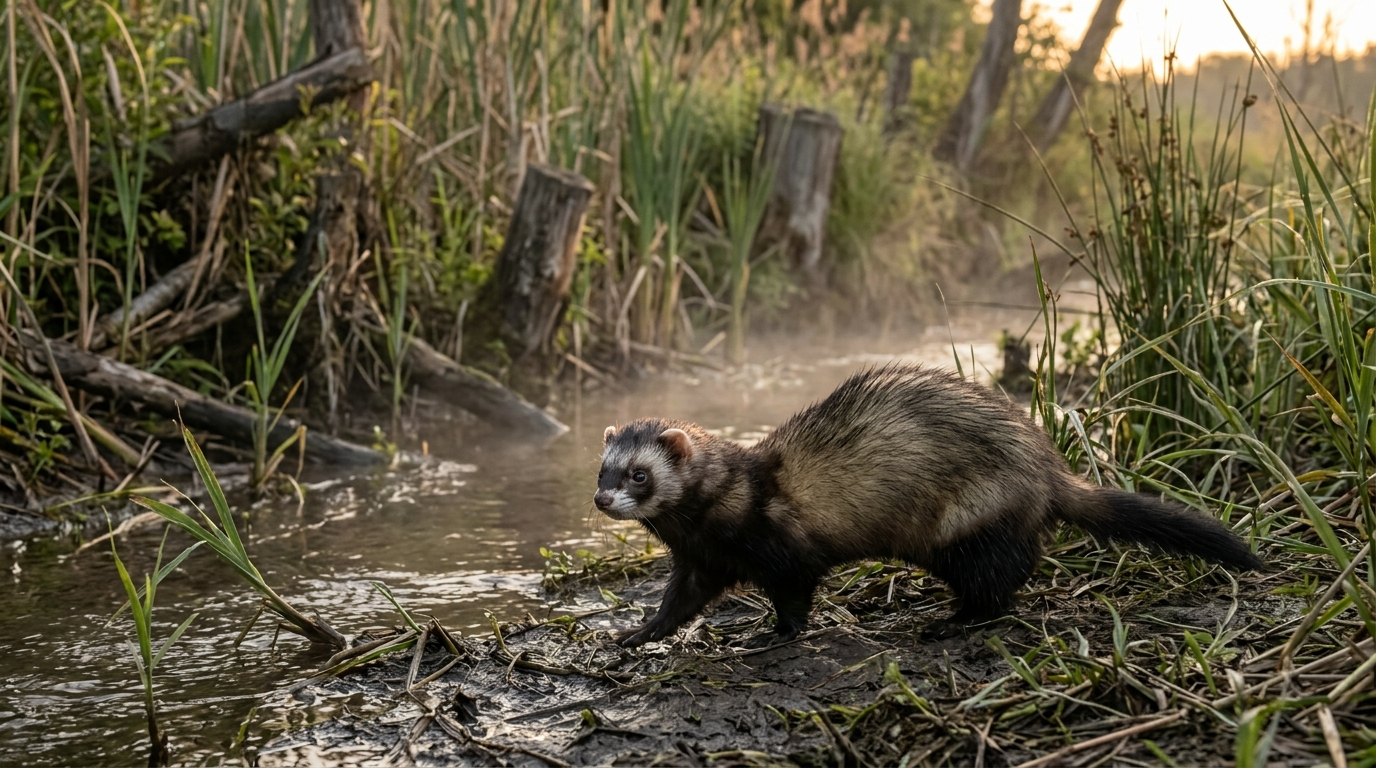
European polecat
Mustela putorius
The European polecat is a wetland specialist and an underrated frog hunter — its dark mask on its face betrays a nocturnal robber, and the characteristic smell from its anal glands gave it its Polish name. Where other mustelids hunt rodents, the polecat descends to the water.
 DOM
DOM
Ferret
Mustela furo
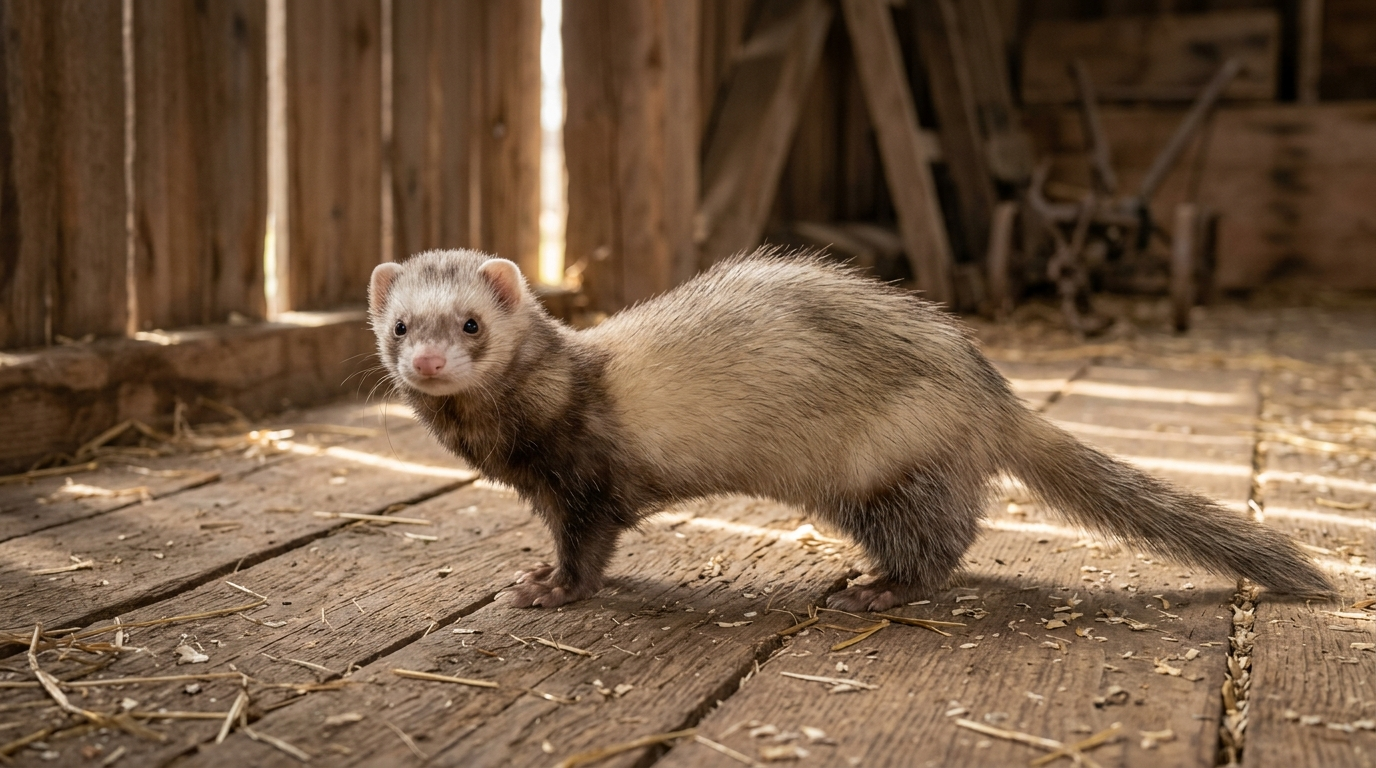
The ferret is not a wild species — it is a domesticated form of the polecat, accompanying humans for over 2500 years. Initially bred for rabbit hunting, it is now most commonly kept as a pet. It looks like a polecat with a makeover: lighter, gentler, with a blurred mask — and with its own set of ecological dilemmas if it escapes into nature.
 NT
NT
European Otter
Lutra lutra
The European otter is <strong>Poland's largest mustelid</strong> and one of the most spectacular conservation success stories of recent decades. From a species that in the 1980s teetered on the brink of local extinction, it is now expansively returning to Polish rivers, lakes, and ponds. It swims better than it walks, eats mainly fish, and leaves discreet but characteristic signs of its presence — from slimy droppings to gnawed shells.
Canids
 LC
LC
Red fox
Vulpes vulpes
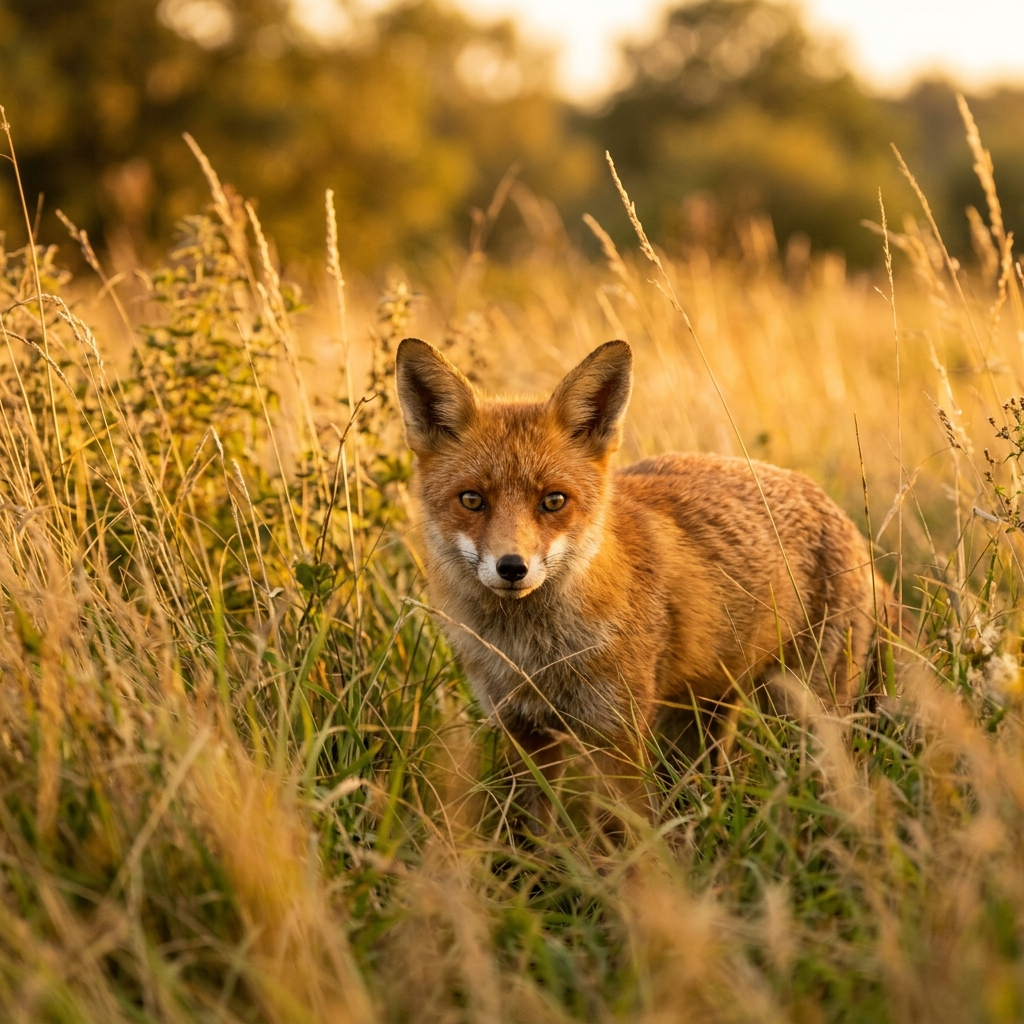
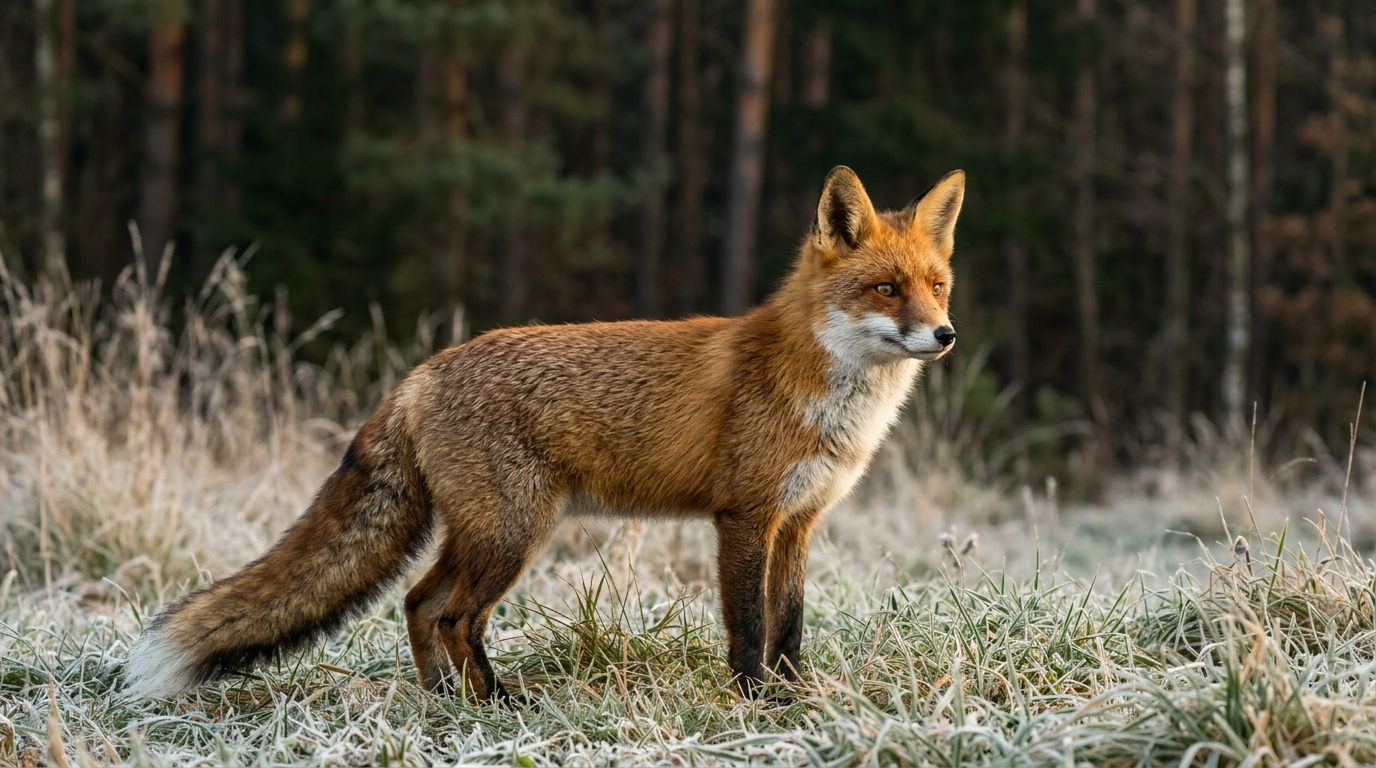
The world's most widespread terrestrial predator — from the Arctic Circle to the outskirts of Madrid. The red fox thrives everywhere because it eats everything, digs dens in every type of soil, and learns faster than most European predatory mammals.
 LC
LC
Raccoon Dog
Nyctereutes procyonoides
The raccoon dog is a canid that looks like a raccoon — with a black mask, stocky silhouette, and thick winter fur. Native to the Far East, it arrived in Poland as an escapee from Soviet fur farms in the 1950s. Today, it is an invasive species, included on the EU IAS list, and huntable year-round. Its most surprising biological trait is that it is the only canid that enters winter torpor, and its litter size breaks family records — up to 16 pups.
 LC
LC
Golden Jackal
Canis aureus
The golden jackal is a new resident of Polish fauna — a canid the size of a medium dog, whose silhouette fits exactly between a fox and a wolf. It wasn't introduced and didn't escape from a farm — it came on its own, through river valleys, from the Balkans. The first confirmed individual in Poland was recorded in the Biebrza Marshes in 2015, and breeding was documented in 2018. Today, about 200–500 individuals live in the country, and their nocturnal singing can already be heard regularly along the Biebrza, Bug, and in Roztocze.
Birds of prey
 LC
LC
Tawny Owl
Strix aluco
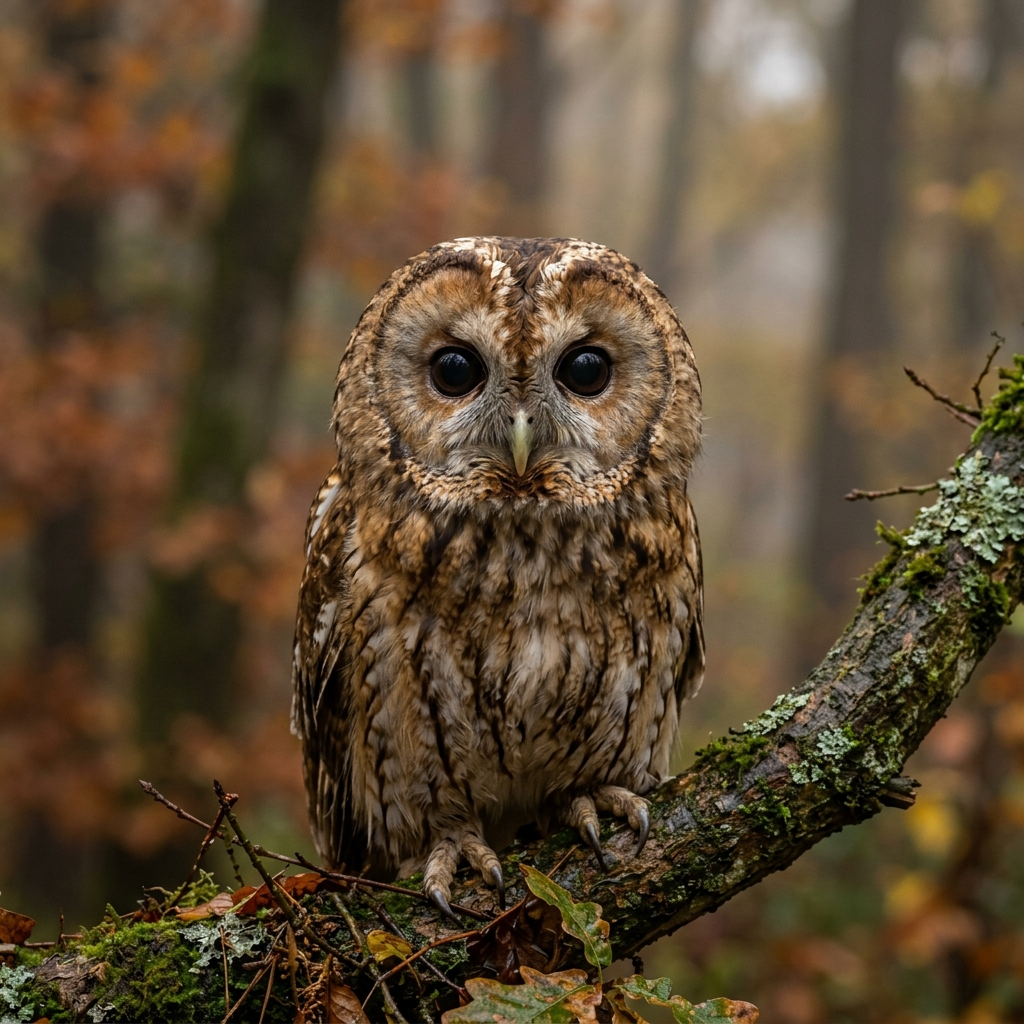
The tawny owl is not just a bird — it is the voice of the Polish night. Its hooting 'hoo-hoo-hooo' is known by everyone who has listened to the winter forest or an old park after dusk. The most common Polish owl, an inhabitant of hollow oaks and urban avenues, a master of noiseless flight and three-dimensional hearing, hunting from ambush for voles, field mice, and everything that can be caught in the dark. This profile is dedicated to the tawny owl as a representative of Polish owls — with references to the long-eared owl, little owl, and barn owl.
 LC
LC
Northern Goshawk
Accipiter gentilis
The Northern Goshawk is the largest Polish representative of the genus Accipiter — a forest hunter specialized in maneuverable flight among branches, with short broad wings and a long tail serving as a rudder. Since the 1990s, it has been increasingly seen in cities, where it hunts urban pigeons. Strictly protected, with its nest covered by a year-round protection zone — it is simultaneously the terror of racing pigeon breeders, who gave it its Polish name 'gołębiarz' (pigeoner).
 LC
LC
Eurasian Sparrowhawk
Accipiter nisus
The Eurasian sparrowhawk is the <strong>smallest European representative of the genus Accipiter</strong> — a predatory bird that fits within the wingspan of a jackdaw but reaches speeds of 50 km/h during attacks at feeders. It is the most frequently observed urban predator at garden feeders: lightning-fast, maneuverable, with a characteristic glide from behind a hedge. The adult male has decorative rusty-orange bars on its chest, while the female is larger and browner — a reverse sexual dimorphism typical of the Accipitrid family.
 LC
LC
Common Buzzard
Buteo buteo
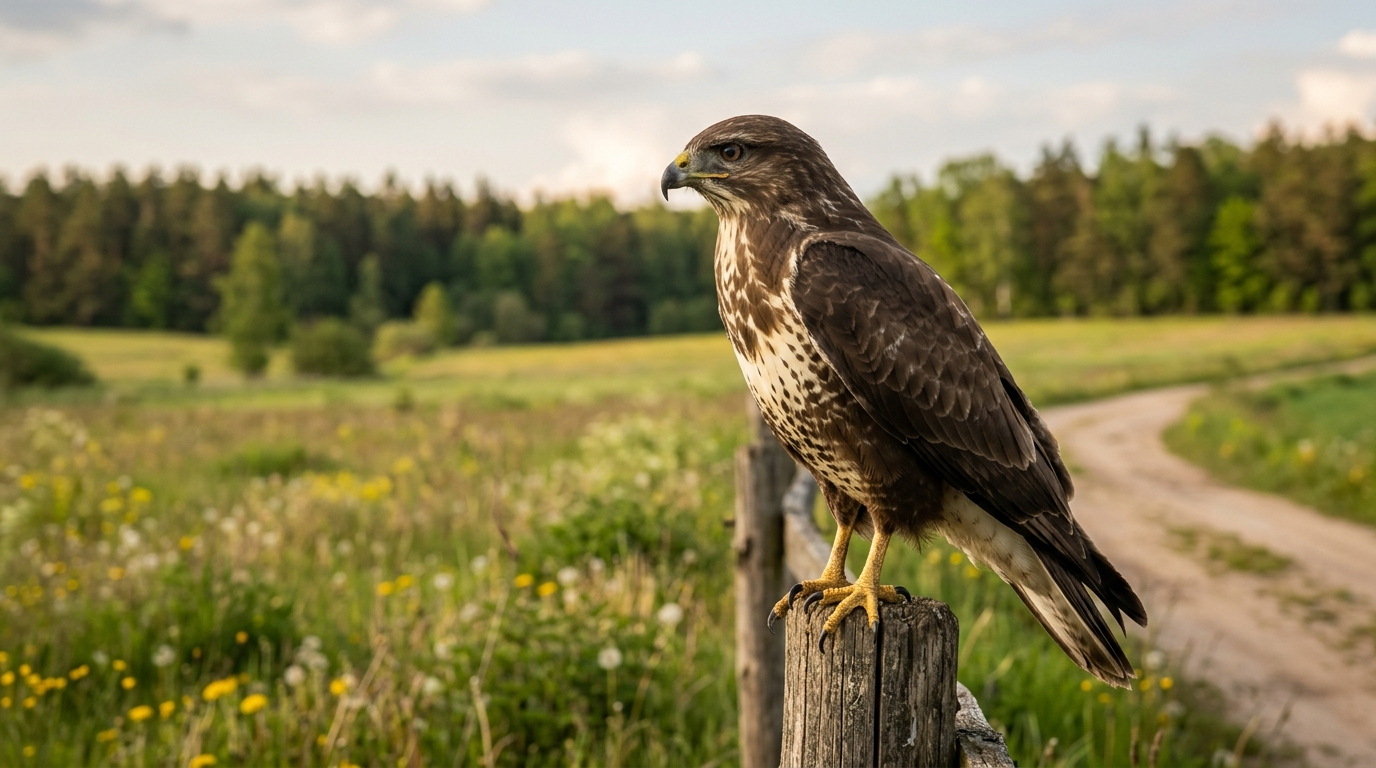
The Common Buzzard is the <strong>most common European bird of prey</strong> — in Poland, 60–80 thousand pairs nest, more than all other Accipitridae combined. It is that dark, stocky bird on a pole by the highway and that broad shape circling over the stubble. It is characterized by <em>extreme color variability</em> — from almost white to black-brown — meaning practically every individual looks different. A specialist in field rodents, an opportunist with carrion, a master of ambush hunting from poles.
 LC
LC
Eurasian Eagle-owl
Bubo bubo
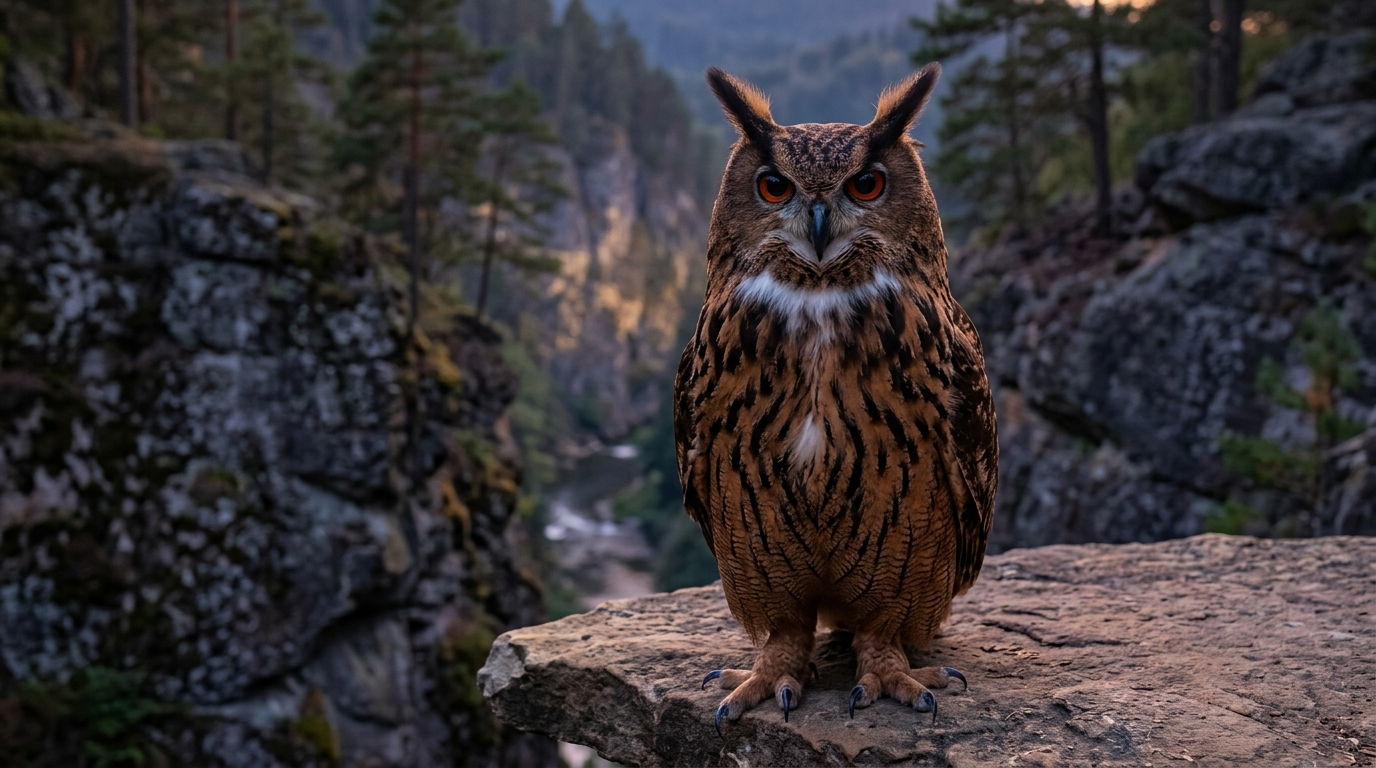
The Eurasian Eagle-owl is <strong>Europe's largest owl and one of the largest owls in the world</strong> — with a wingspan reaching 188 cm and a weight of up to 4.2 kg in females. Characteristic ear tufts (which are not for hearing), huge orange-red eyes, and silent flight thanks to the fringed edges of its feathers make it a secretive but recognizable ruler of nocturnal forests, rocky cliffs, and quarries. In Poland, it is a <em>highly threatened but increasing</em> species — the population of 350–400 breeding pairs has recovered following reintroductions since the 1980s.
Wild cats
 LC
LC
European wildcat
Felis silvestris silvestris
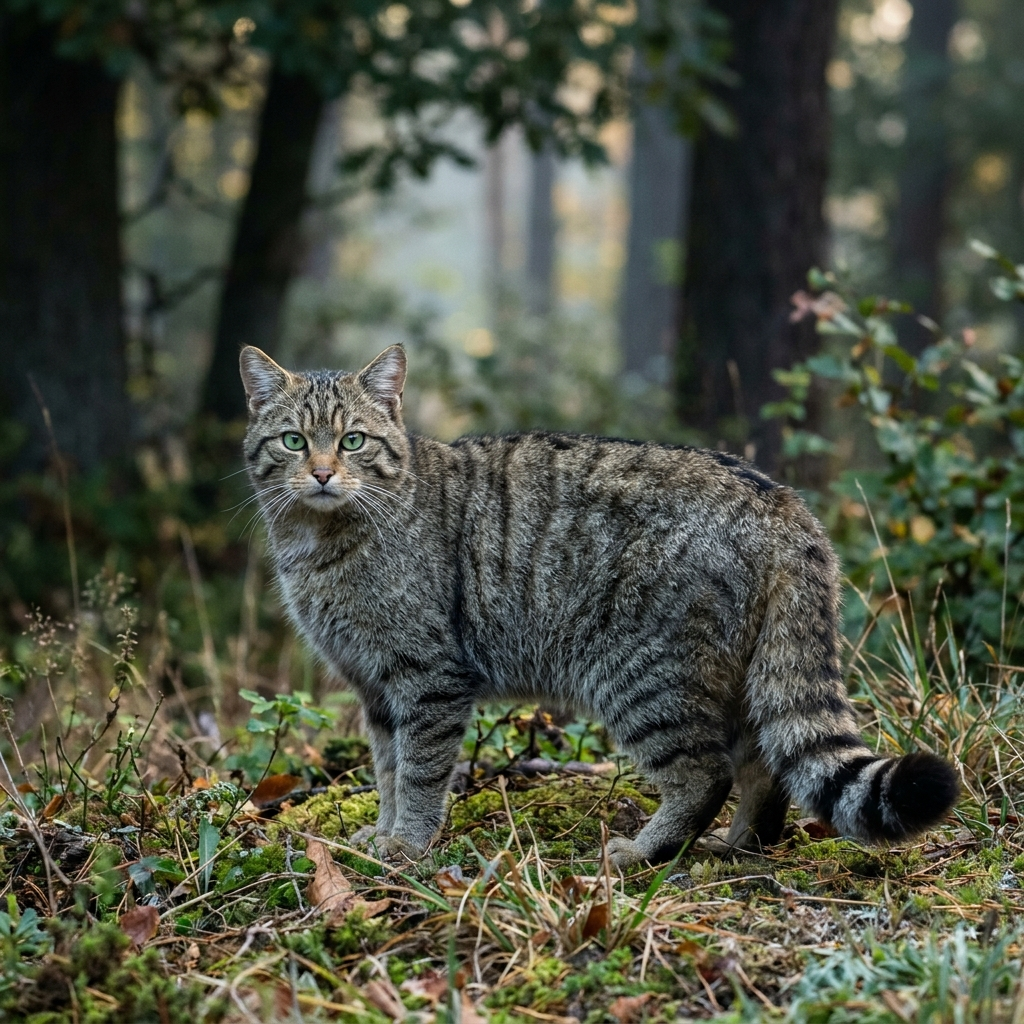
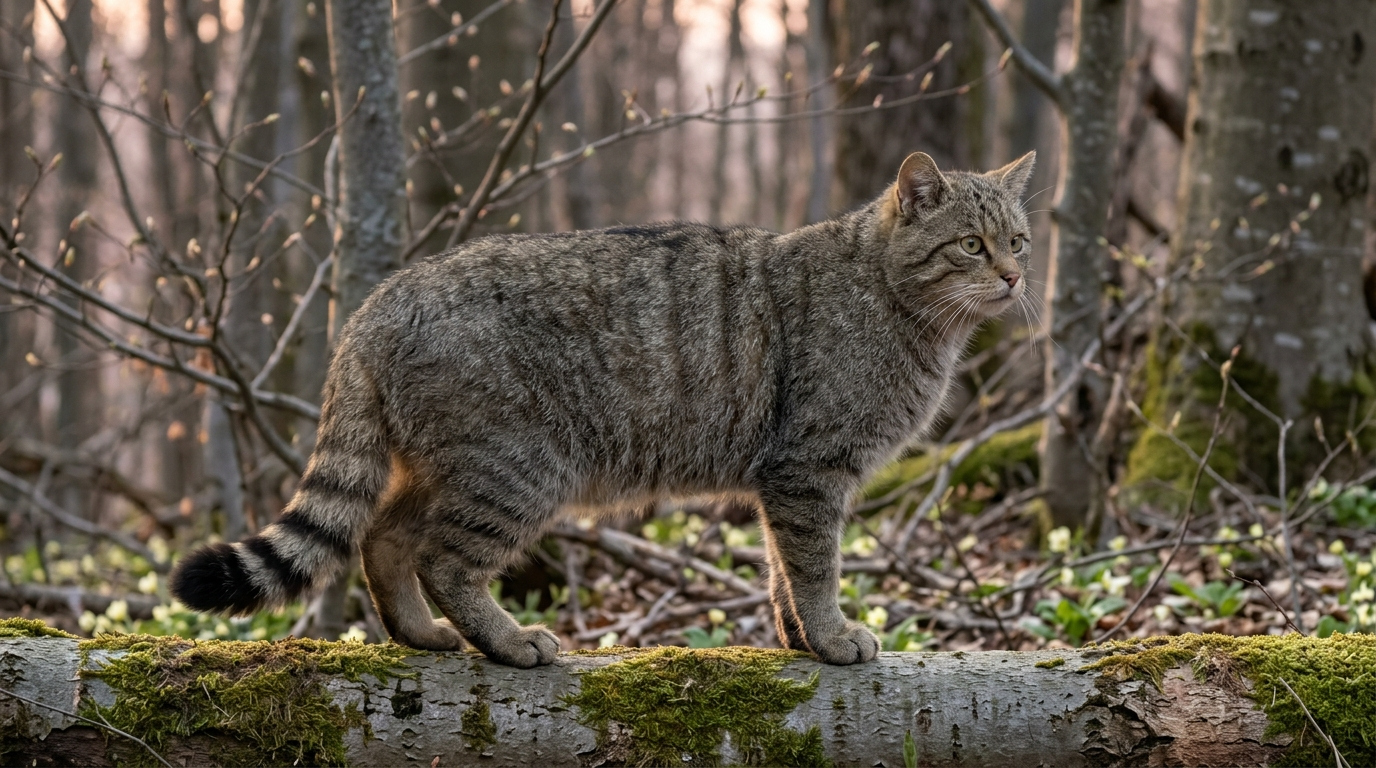
The European wildcat is <strong>Poland's rarest wild cat</strong> — only about 200 individuals live across the country, concentrated in the Bieszczady Mountains, Roztocze, and the restored population in the Świętokrzyskie Mountains. Commonly confused with a large striped tabby, it actually differs from the domestic cat in almost every detail: <em>a thick tail ending in a blunt black tip</em>, uniform gray-brown fur with dark streaks (never patches or white markings), a more massive head, shorter legs, and a compact silhouette. A Natura 2000 priority species — under strict protection.
 LC
LC
Eurasian lynx
Lynx lynx
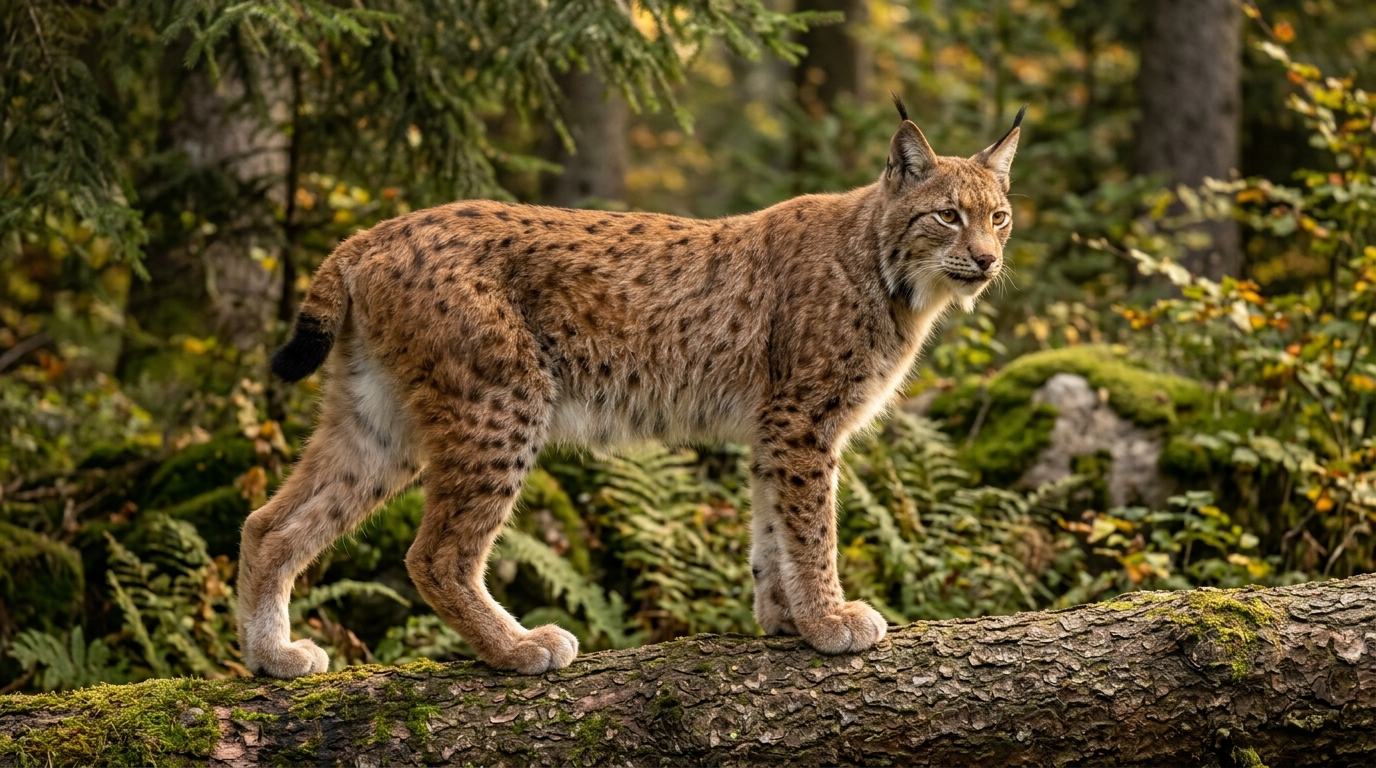
The Eurasian lynx is the <strong>third-largest European predator</strong> — after the brown bear and the wolf — and the only large cat living wild in Poland. It is an <em>ambush specialist</em>: night, dense undergrowth, a five-meter strike at a roe deer's neck. The Polish population of 200–300 individuals is divided into two centers: the Carpathian (Bieszczady, Low Beskids) and the lowland (Białowieża, Knyszyń, Augustów forests). Characteristic black ear tufts, massive facial ruffs, and a short tail with a black tip are hallmarks that cannot be confused with any other European mammal.