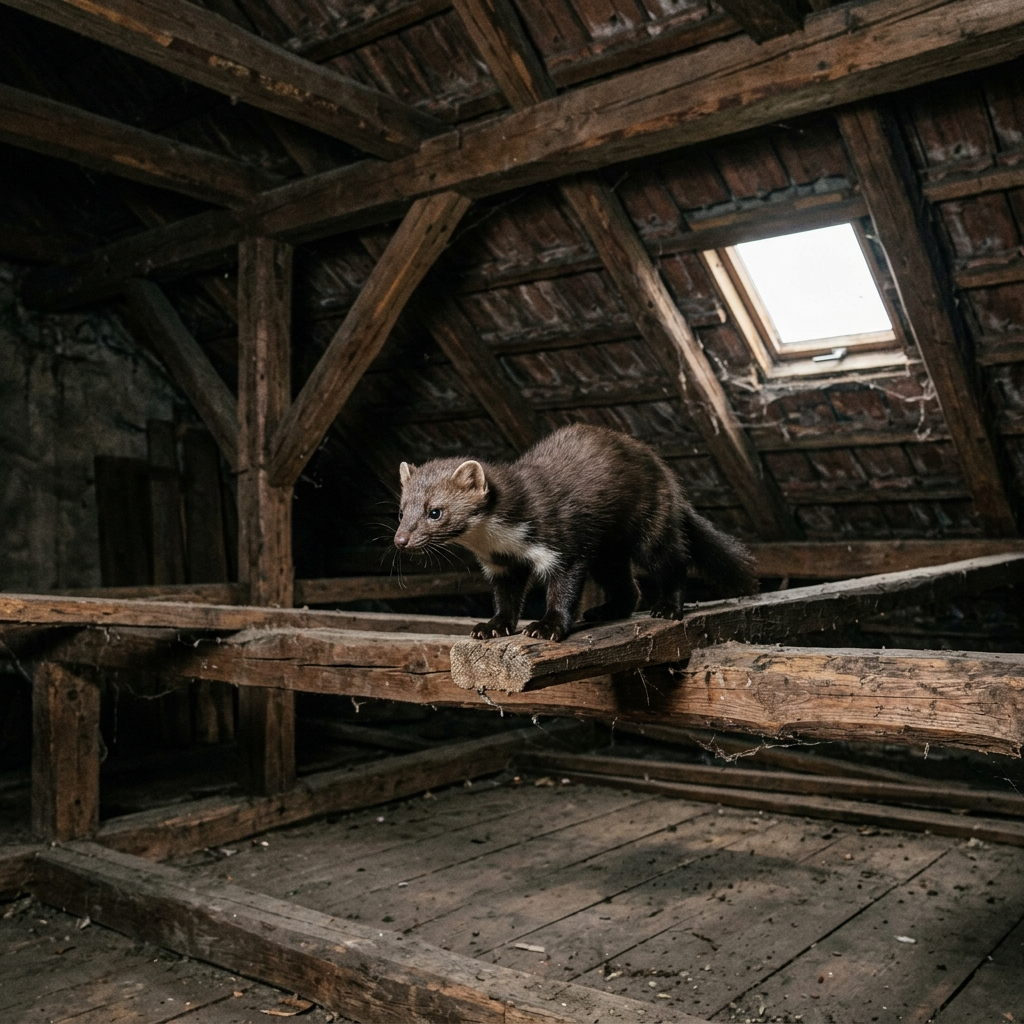
SPECIES PROFILE · Mustelids
Martes foina · Erxleben, 1777
The most frequent uninvited guest of Polish attics.
The most commonly encountered predator around human settlements in Poland. A master of adaptation — it thrives equally well in the attic of a villa near Warsaw, in the ruins of a farm in Masuria, or under the roof of a village church in Lesser Poland. Active at night, exceptionally quiet, it leaves behind a characteristic set of tracks — and many questions from the homeowner.
| Kingdom | Animalia |
|---|---|
| Phylum | Chordata |
| Class | Mammalia |
| Order | Carnivora |
| Family | Mustelidae |
| Genus | Martes |
| Species | M. foina |
The beech marten (Martes foina) is a medium-sized mustelid from the Mustelidae family, much more frequently seen by people than its forest relative. In Poland, it occurs practically everywhere except for high mountain ranges — from the city attics of Warsaw and Kraków to abandoned farms in the Suwałki region. Nocturnal, territorial, and surprisingly versatile in its diet. It has coexisted with humans for centuries — and this ability to use buildings as daytime shelters distinguishes it from the pine marten.
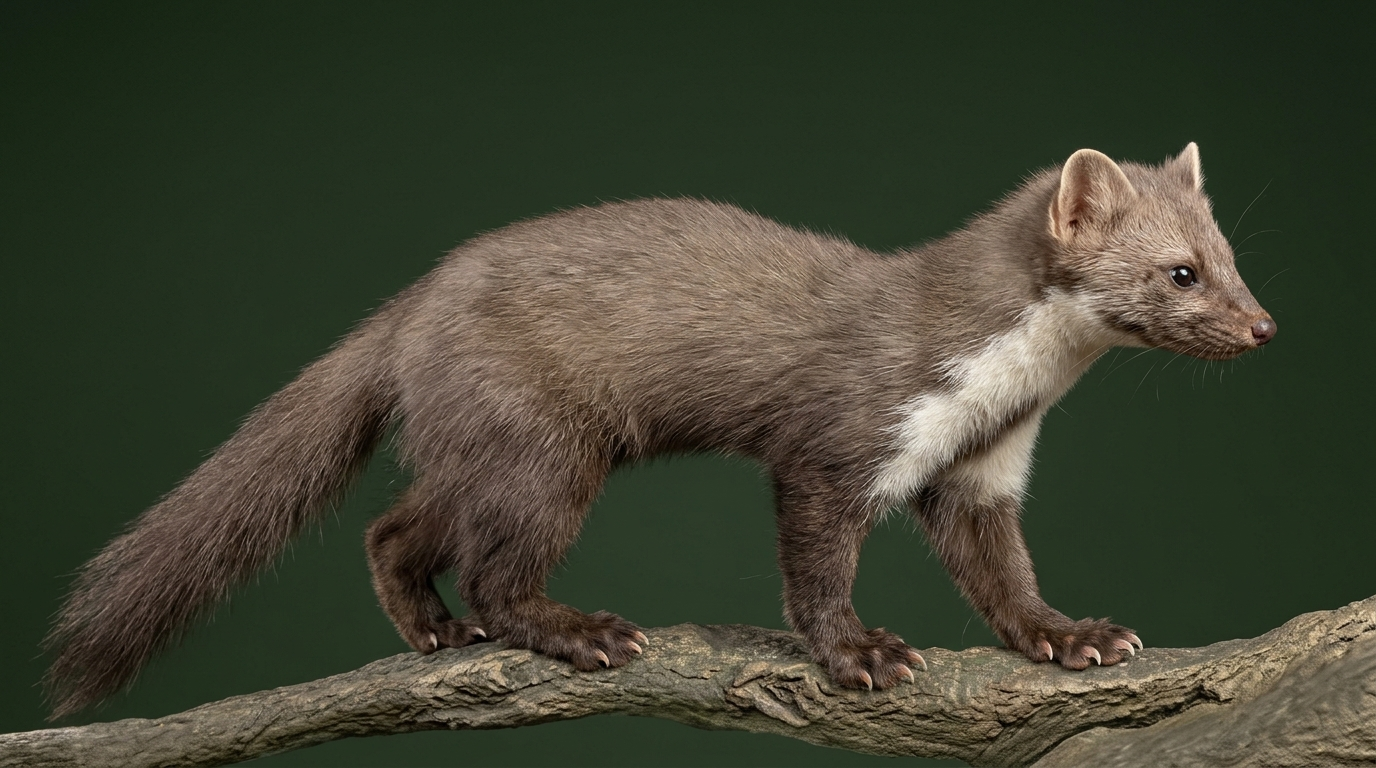
A medium-sized predator with a slender, distinctly elongated silhouette typical of mustelids.
The beech marten has a long, flexible body 42–48 cm in length, plus a fluffy tail of 22–27 cm. Males are about 10–15% larger than females — this is typical size dimorphism in mustelids. The weight of an adult marten ranges from 1.1 to 2.5 kg, with the largest individuals found in stable farm populations where food is available year-round.
The fur is dense and double-layered — a short, soft undercoat under long, stiffer guard hairs. The color of the back is warm brown with a delicate gray-ash tint; the belly is lighter and short-haired. In winter, the fur thickens so much that the weight of the "fur mass" increases by about 20%. In summer, a molting animal looks surprisingly thin — this is not a disease, just a seasonal change.

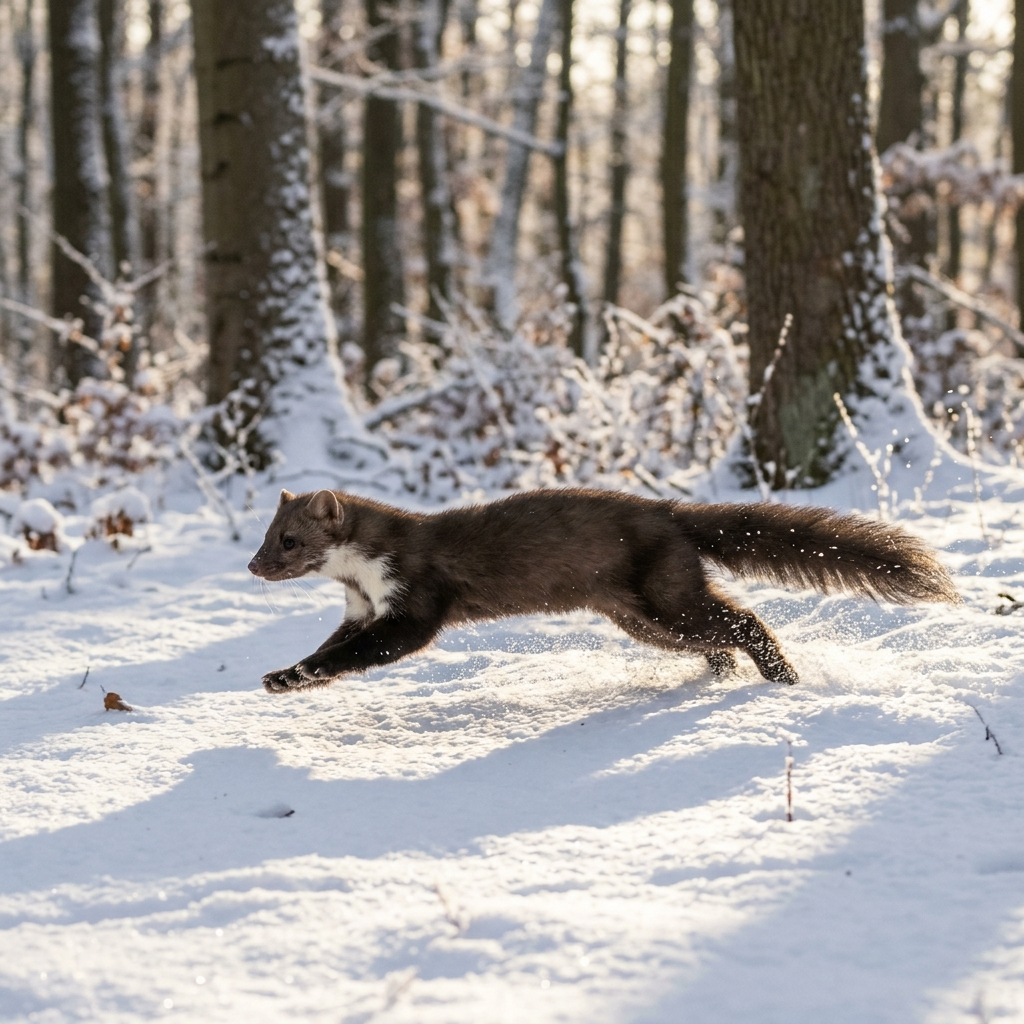
The most important identifying feature is the white, bifurcated bib on the chest and throat. In the beech marten, it is pure white, forks down onto both front legs, and often reaches as far as the belly. This is a key difference from the pine marten, whose bib is creamy-yellow to orange, uniform, and ends at the chest.
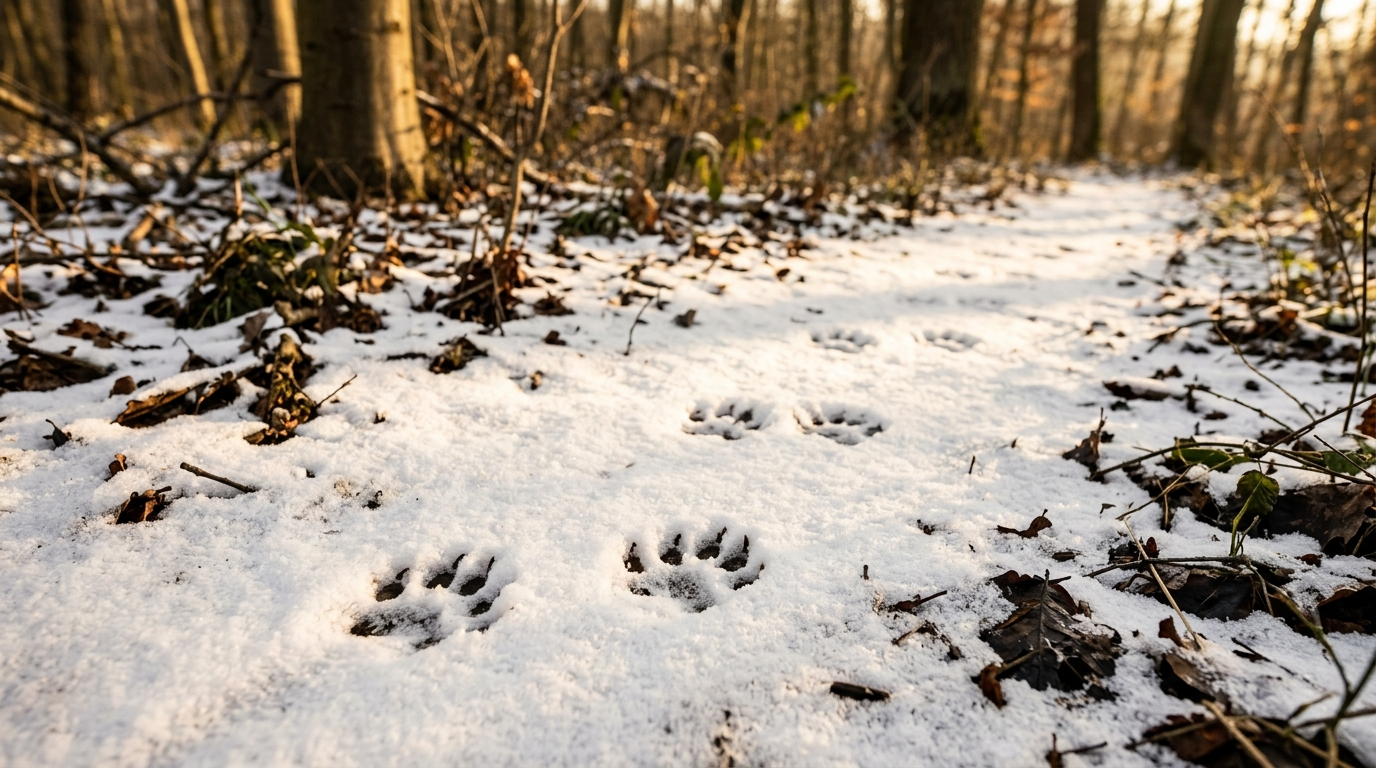
The marten's paws have five toes each with semi-retractable claws — this distinguishes it from canids/foxes, whose claws cannot be retracted. Tracks in the snow show all five pads and often claw marks. Muzzles are long and triangular with sharp canines. Eyes are large and dark brown — the animal sees in the dark much better than humans.
| Feature | Beech marten | Pine marten |
|---|---|---|
| Bib | white, bifurcated | creamy-yellow, uniform |
| Environment | synanthropic (buildings) | forest, natural |
| Muzzle | shorter, wider | slenderer, more pointed |
| Foot | partially hairless | densely hairy in winter |
| Winter tracks | clear toe prints | blurred by hair |
Almost all of Central Europe, the Balkans, and Asia Minor — with a strong preference for human settlements.
The beech marten occupies an area from the Iberian Peninsula to Mongolia, avoiding dense taiga and high mountains. In Poland, it is common — from the Baltic to the Tatra Mountains, although in high mountain areas it gives way to the pine marten. The highest numbers of individuals are recorded in a mosaic of fields, riparian forests, and villages — where it finds food and shelter close together.

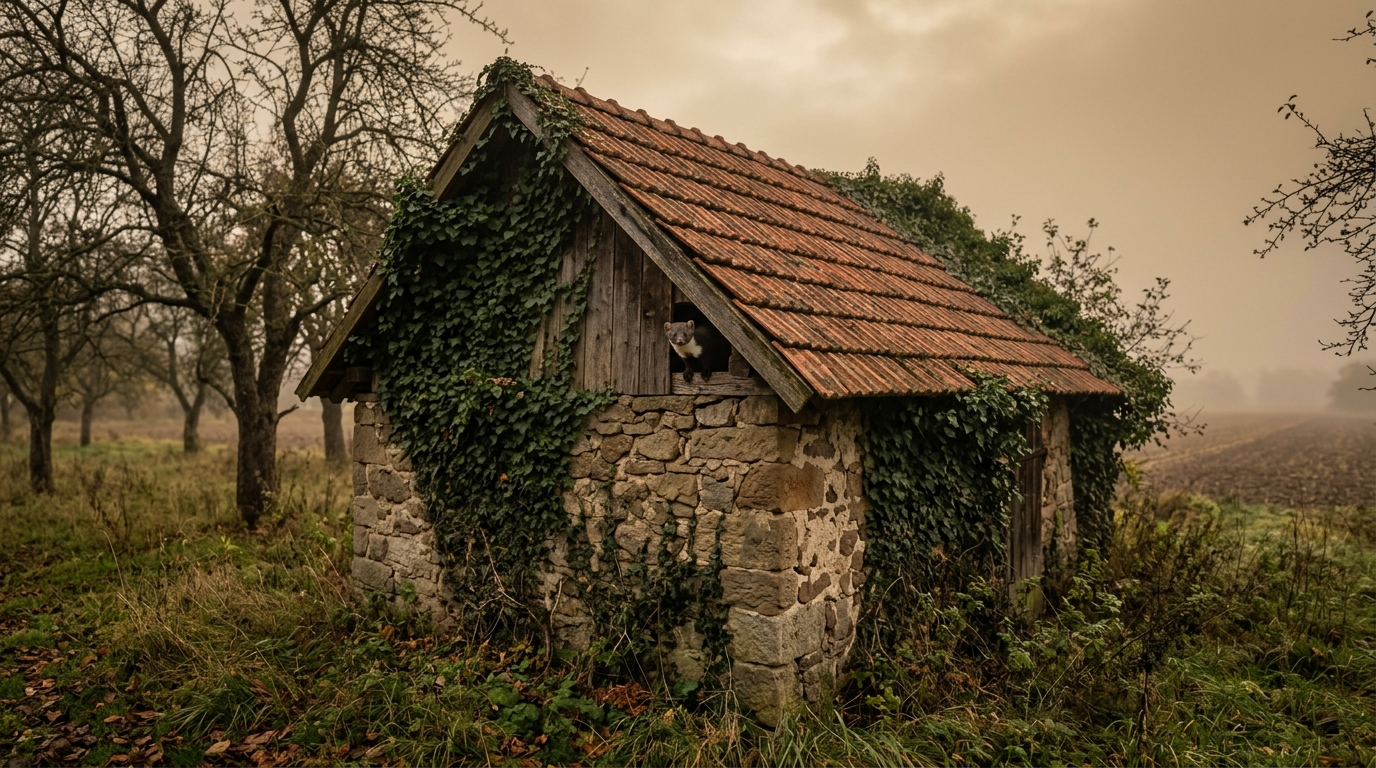
It chooses daytime shelters in ways that surprise many homeowners. It likes: attics of residential and farm buildings, woodpiles, interiors of empty chambers, abandoned dovecotes, granaries, ruins, and basements with external entry. A single female may have 5–8 shelters in her area, between which she moves cyclically.
The term "beech marten" (or stone marten) can be misleading — it's not about being tamed, but about commensalism with humans. Martens live alongside us, they use our buildings, but they never befriend humans. Attempts at taming often end in bites.
The individual range is strongly dependent on the availability of food and shelter. A male occupies 100–300 ha, a female 50–100 ha. In a rich agricultural-forest mosaic, ranges are often 3–5× smaller than in pine forest monocultures. Boundaries are systematically marked with secretions from anal glands and droppings left in exposed places (stumps, roof tiles, stones).
Omnivorous with a strong preference for meat — the season affects the proportions.
The beech marten is an opportunistic omnivore. The dietary balance changes throughout the year: small mammals and birds dominate in winter and spring, fruits and berries enter in summer, and nuts and carrion in autumn. You can find a more complete discussion in the article what a marten eats.

The marten does not hunt a specific species, but an opportunity. This explains its success in human-altered environments.
The hunting strategy is based on patience and knowledge of the terrain. The marten patrols its shelters and the habitats of its prey — it returns regularly to the same burrows, stacks of boards, or eaves. In chicken coops, it can kill more than it is able to eat (so-called surplus killing) — this is not sadism, but an instinct to secure prey that evolved under conditions of natural availability of small mammals.
Nocturnal activity, territoriality, and a specific vocabulary of vocalizations.
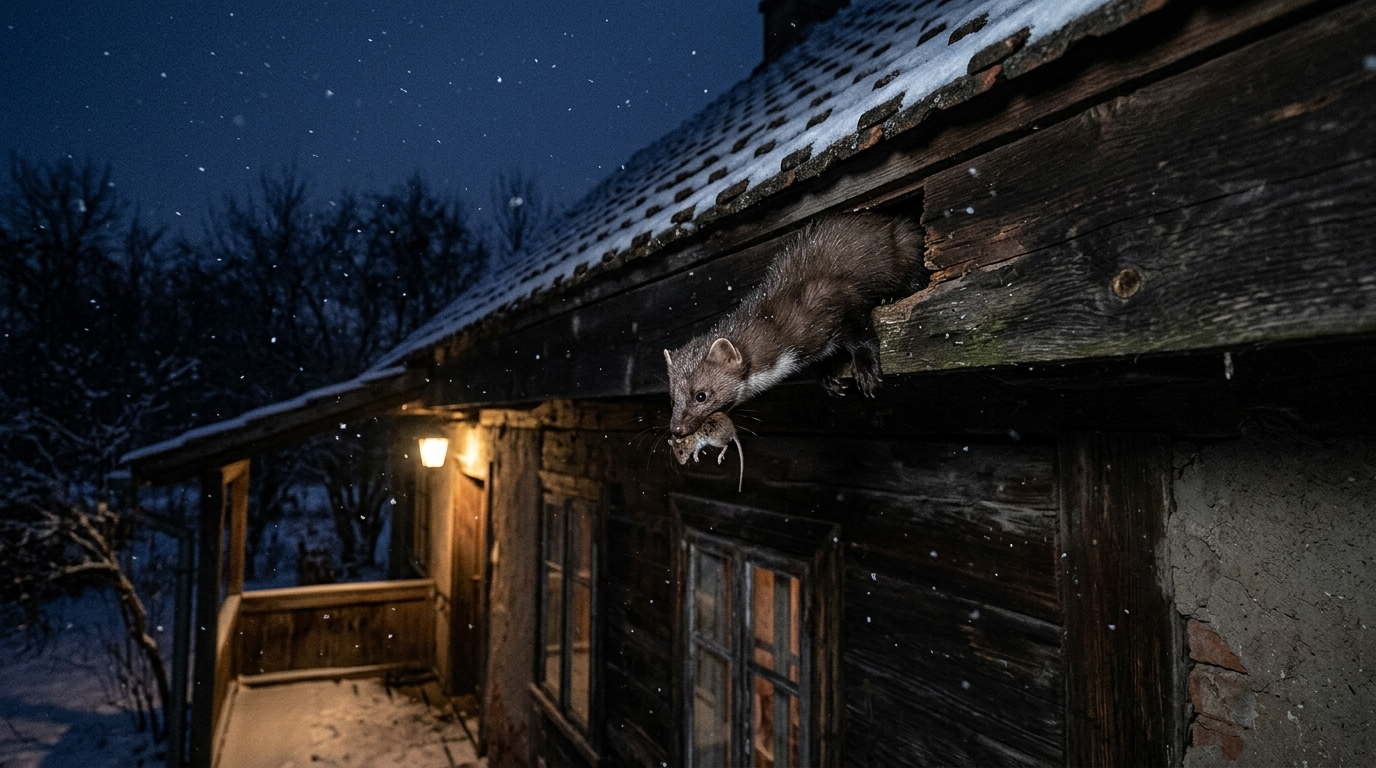
The beech marten is typically nocturnal — peak activity falls between 10:00 PM and 2:00 AM in summer and 6:00 PM and 10:00 PM in winter. Short excursions occur in the morning and evening, but meeting an active marten in full daylight is exceptional (and often a signal of rabies — warning!).
Territoriality is strong in both sexes. Male territories may overlap with the ranges of several females, but males fight each other for territory — especially in spring. Scent marking (anal glands, urine, droppings in exposed places) acts as "boundary markers." Border patrols take place 2–3 times a week.
The beech marten recognizes specific vehicles — it returns to the same car multiple times. This is why vehicles parked regularly in a yard become targets of damage: it's not about the brand, but about individual recognition of the object.

Vocalizations are a little-known side of marten biology. The most frequently heard are: short smacks (mother's contact with young), long-drawn-out grumbling (alarm), rat-pitched squeaking (alarm), low growling (aggression), and — in the mating season — a long whistle somewhat reminiscent of a dog's bark (male looking for a female). These last sounds are the most common cause of confusing the marten with much heavier animals.
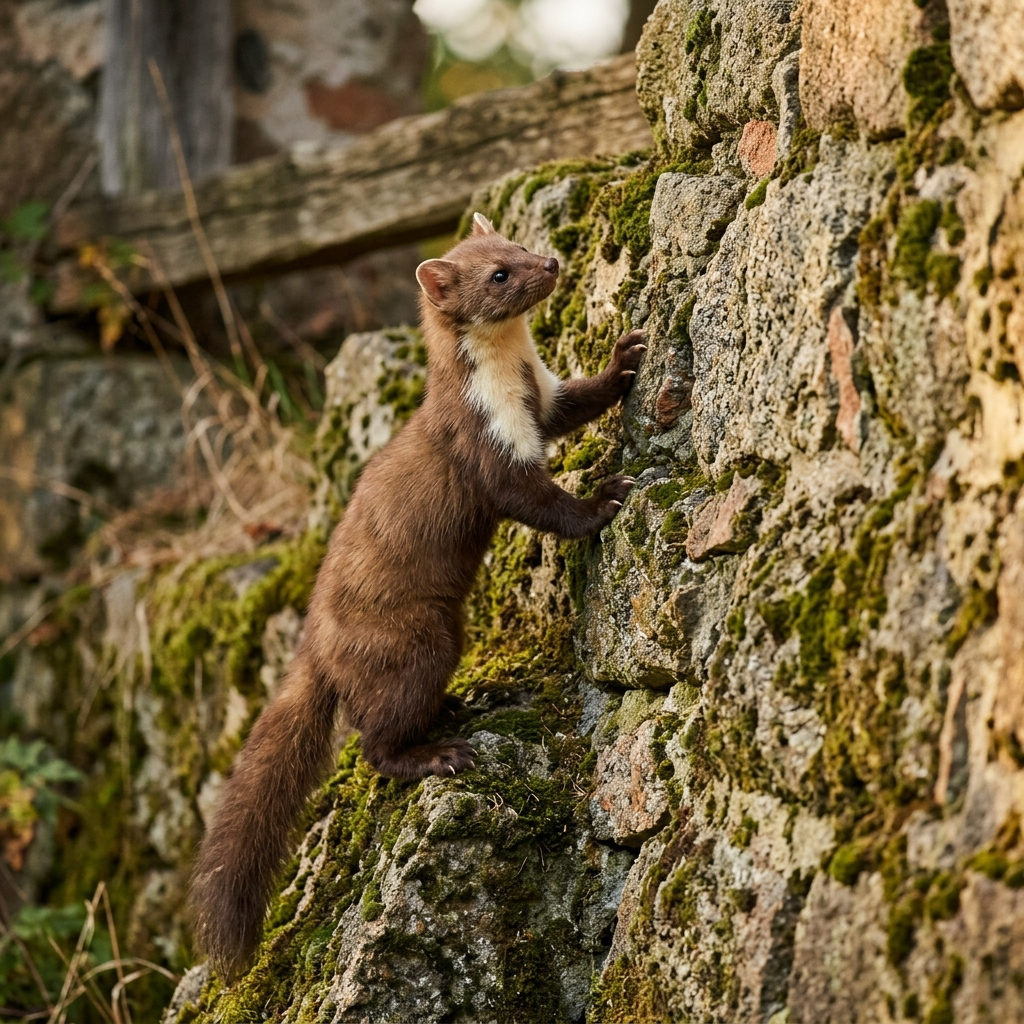
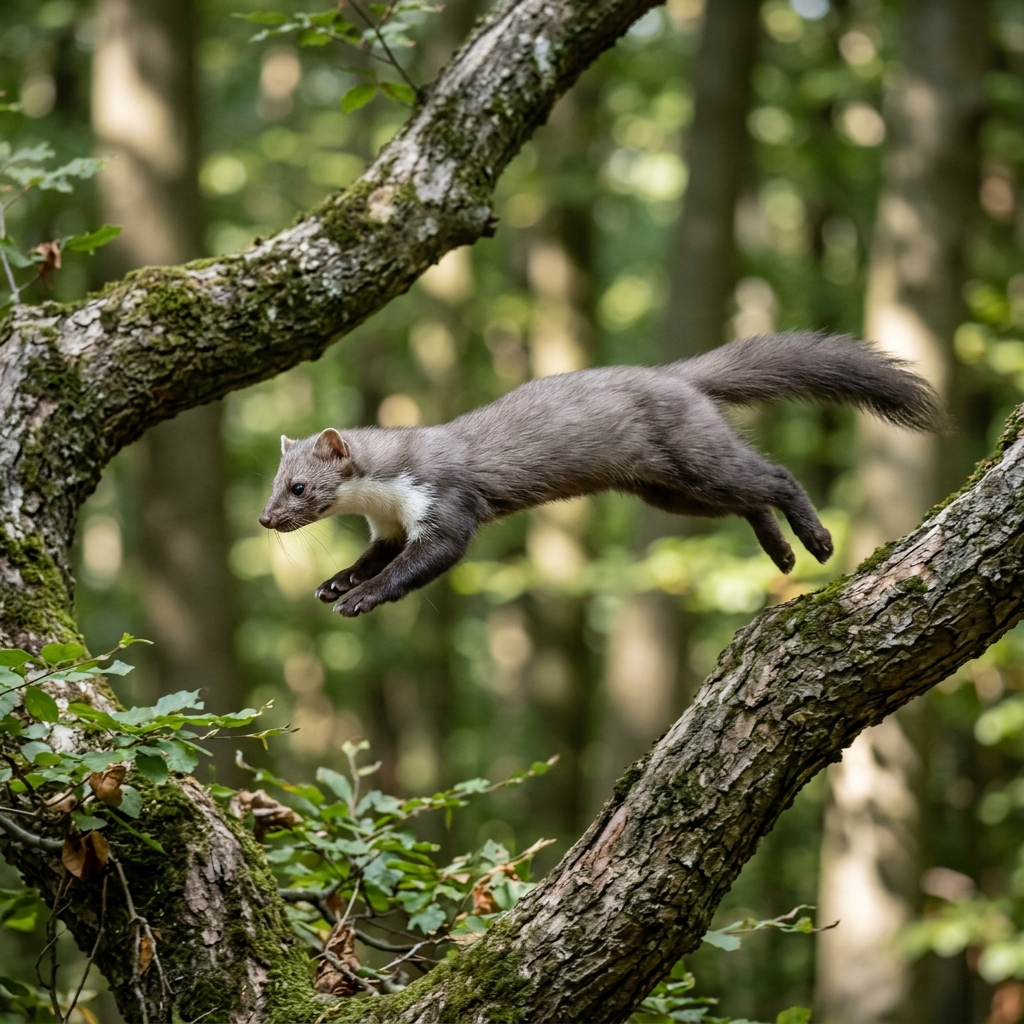
The marten is an excellent climber — in a vertical downspout, it moves as if on stairs. It jumps up to 2 m vertically and 4 m horizontally. These skills are crucial for accessing bird nests and attics. The silence of its movement is also impressive: a wooden attic floor rustles less under a marten than under a walking mouse — the weight is distributed over the entire paw pad.
Delayed embryo implantation — a fascinating pregnancy regulation mechanism.
The beech marten has one of the most interesting reproductive strategies among Polish mammals. Mating takes place in July and August, but actual embryo development only begins in February of the following year. The mechanism is embryonic diapause — delayed implantation: fertilized egg cells "wait" in the uterus for 7–8 months in a state of metabolic arrest until day length and ambient temperature signal the arrival of spring.
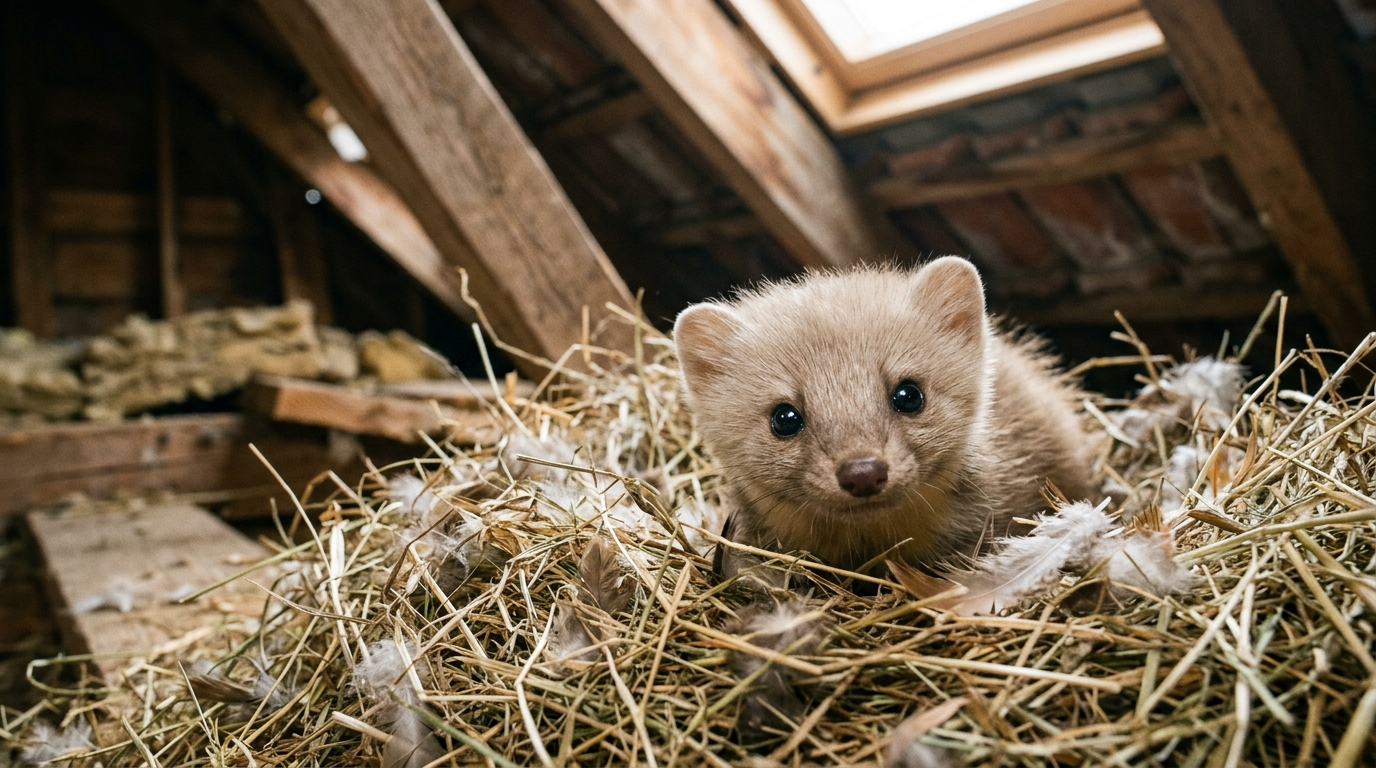
Actual pregnancy lasts only ~30 days after implantation. Young are born in April, most often between the 5th and 25th day of the month. A litter consists of 2–7 young, most often 3–4. They are born blind, deaf, and weigh 25–30 g — completely dependent on the mother.

Development is relatively fast: eyes open after 4 weeks, first solid foods after 6 weeks. The first independent trips from the nest occur at 7–8 weeks. Independence is achieved after 3–4 months; young males reach sexual maturity at 14–18 months, and females between 12 and 15 months of age.
Delayed implantation in mustelids evolved as a strategy to maximize synchronization of birth with optimal environmental conditions. Regardless of the mating day, the young are always born in spring — when rodents are most plentiful and temperatures favor growth.
In nature, martens live 3–10 years, but most die in their first year of life. In captivity, individuals have been recorded living up to 18 years — the extreme difference results from road mortality, predators (fox, eagle owl, larger birds of prey attacking the young), parasites, and food shortages in winter.
Five-toed tracks with claws, a characteristic gallop, and bifurcated droppings.
Identification of a marten in the field starts with tracks. A full paw print is 3.5–4 cm long and 3 cm wide — all five toes visible, with a rectangular "gap" between the toes and the main pad. Claws often leave clear marks, especially in snow. We have left a full description of tracks in a separate guide about marten tracks.

Marten droppings are cylinders 6–10 cm long, ~1 cm in diameter, almost always with a twist resembling the letter S. The color is dark brown, often containing seeds, rodent fur, and small bones. Fresh ones have a characteristic musky smell. They are left in exposed places — on stumps, stones, roof tiles — as part of the territory marking system. Therefore, if you see a dropping on a car hood or doorstep, it is not a coincidence.
Conflicts, damage, legal protection — the most important facts.
The beech marten is the most common predator-neighbor in Polish homes. Contacts usually have two faces: quiet existence in the attic (which you notice only after a gallop over the ceiling at 2 AM) or real damage — most often in cars, chicken coops, and building insulation.
Legal status: the beech marten is a game species with a closed season 1 IV – 31 VIII. Hunting outside this period may only be conducted by individuals with hunting licenses. Capturing a marten in a live trap for relocation is permissible for a property owner — provided it is released immediately and humanely at a distance of at least 10 km. A fuller discussion of methods can be found in the guide about marten traps.
Poisoning, snares, leg-hold traps, loops, and other injurious devices are prohibited in Poland. Poisoning has an additional disadvantage: a poisoned marten dies in an inaccessible place and for weeks emits a cadaverous smell in the attic.
Deterrence is effective if it starts with sealing entrances — smell, ultrasound, or light do not work long-term on their own. Full guide: how to effectively deter a marten.
The most common misunderstandings we hear from readers.
The beech marten has earned itself quite a few false labels. The six most common:
MYTH The beech marten is the same species as the pine marten.
FACT These are two separate species — Martes foina and Martes martes. They differ in bib color, environment, and minor anatomical features. Full comparison.
MYTH A marten bites cables in a car out of hunger.
FACT A marten bites out of curiosity and territoriality. It chews materials with a specific texture (rubber, soft plastics) — it's the same reflex seen when chewing bones.
MYTH It's enough to catch one marten and the problem will disappear.
FACT An area attractive for one marten is attractive for others. If you don't seal the entrances, another individual from a nearby territory will arrive within a few weeks.
MYTH The marten is aggressive towards humans.
FACT The marten is skittish and avoids humans. It attacks only when cornered, in defense of its young, or in a diseased state (rabies). There are no "hunts for people."
MYTH Martens only live in the countryside.
FACT Martens do very well in cities — Warsaw, Kraków, and Wrocław have stable urban populations. Attics of old tenement houses, parks, and abandoned buildings are their urban habitat.
MYTH The beech marten is nocturnal, so you won't see it during the day.
FACT Usually not — but a mother nursing young sometimes hunts during the day as well, especially in spring. Seeing a marten in the middle of the day is not rare in the May-June period.
„A beech marten doesn't choose an attic by accident — it seeks warmth, silence, and a safe route. A human home fulfills all three conditions.
— from field notes
Eight shots in different conditions — seasons, environments, situations. Click to enlarge.
Pulliainen E. (1981) The Status, Structure and Behaviour of Populations of the Wolf · Goszczyński J. (1986) Diet of foxes and martens in central Poland · Polish Atlas of Mammals (PAN, 2014) · Editorial field notes 2024–2026.
Compiled: May 5, 2026