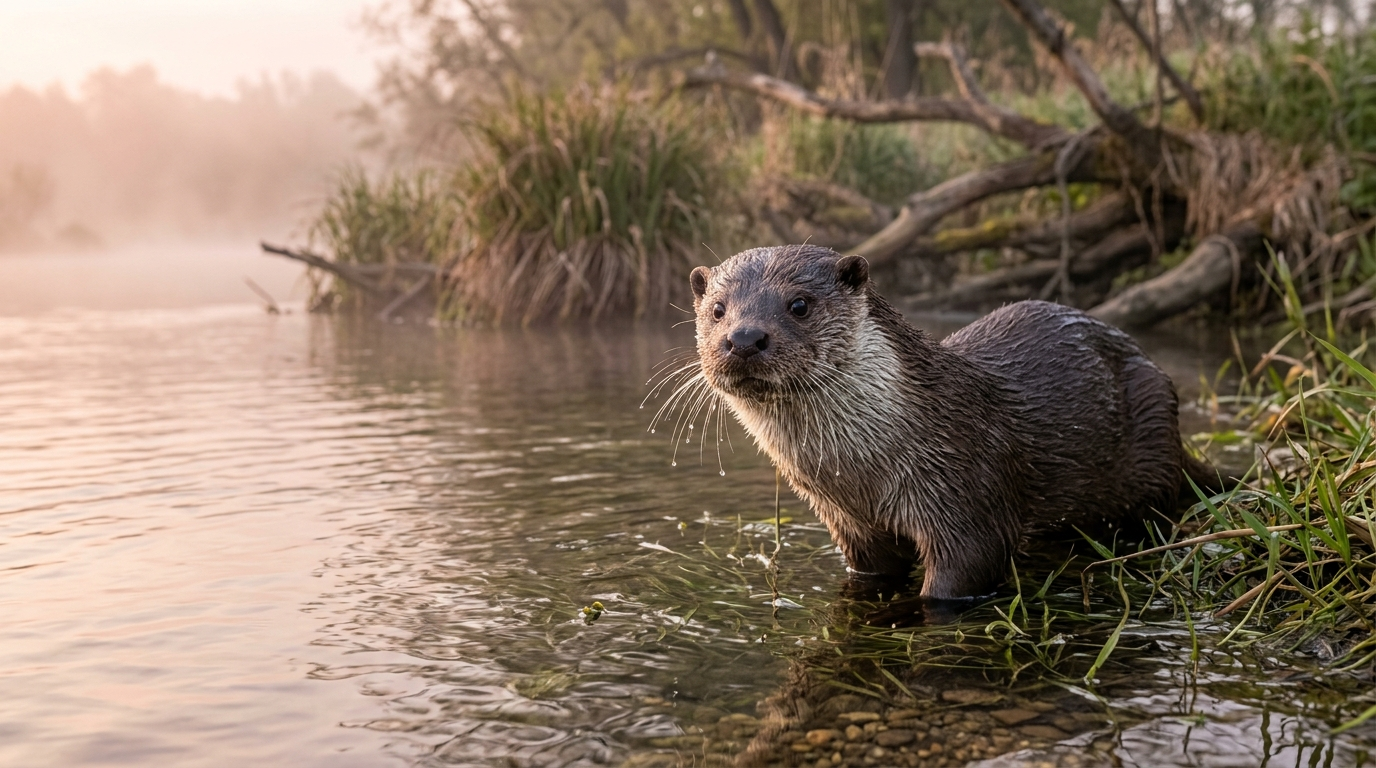
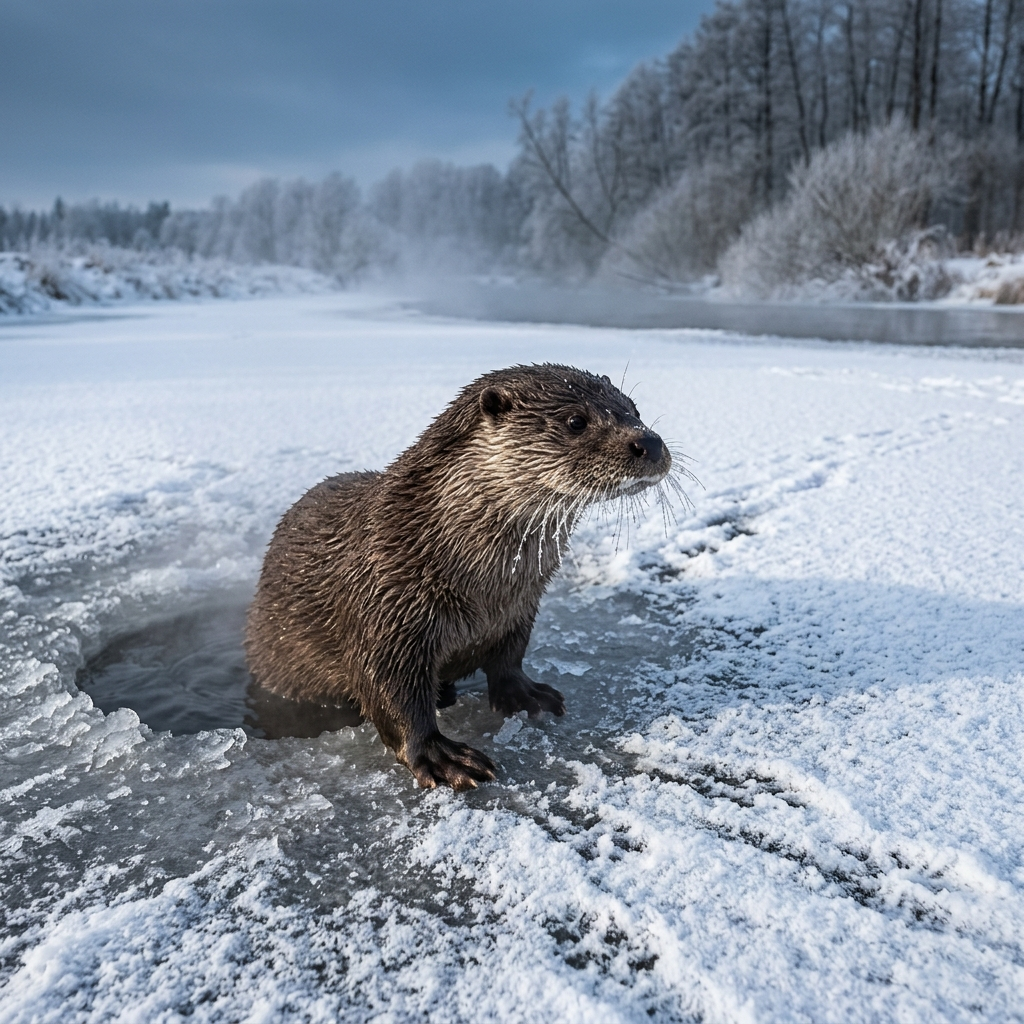
Poland's largest mustelid — as elegant as a fish in the water, only a guest on land.
The European otter is Poland's largest mustelid and one of the most spectacular conservation success stories of recent decades. From a species that in the 1980s teetered on the brink of local extinction, it is now expansively returning to Polish rivers, lakes, and ponds. It swims better than it walks, eats mainly fish, and leaves discreet but characteristic signs of its presence — from slimy droppings to gnawed shells.
60–90 cm
body length
35–45 cm
tail length
4–12 kg
weight (males up to 12)
8–13 years
lifespan in the wild
10–40 km
territory along the river
2–3 young
per litter (up to 4)
60–63 days
gestation (no diapause)
20–30 thousand
Polish population
NT Near Threatened Strict protection in Poland — since 1995 (previously only partial); prohibition of killing, capturing, and habitat destruction; derogations possible for fish farmers after a decision by the Regional Directorate for Environmental Protection (RDOŚ)Increasing in Poland — from approx. 1,000 individuals in the 1980s to 20,000–30,000 today; expansion into new river basins and return to historically lost basins
In short
Largest Polish mustelid — males up to 12 kg, length up to 1.2 m with tail
Diet ~80% fish — since 1990 also invasive signal crayfish
Spectacular re-expansion in PL — from 1,000 individuals in 1985 to 20,000–30,000 today
Strict protection since 1995 — previously persecuted as a competitor to fishermen
Conflict with aquaculture — losses of 5–15%/year in carp ponds; compensation available
Lack of embryonic diapause — gestation 60–63 days; unlike other mustelids
Key bioindicator — requires clean water and a rich fish fauna
Classification
Kingdom
Animalia
Phylum
Chordata
Class
Mammalia
Order
Carnivora
Family
Mustelidae
Subfamily
Lutrinae
Genus
Lutra
Species
L. lutra
The European otter (Lutra lutra) is the sole representative of the genus Lutra in Polish fauna and stands out significantly among native mustelids. It is the largest — adult males weigh 7–12 kg, females 4–7 kg — and it is the only one whose life takes place mainly underwater. The otter's anatomy is a spectacular study of adaptation to the aquatic environment: a streamlined body, short limbs equipped with swimming membranes, a tail used as a rudder, dense double-layered fur that traps air, long sensitive whiskers for hunting in murky water, and fleshy muscles that close the nostrils and ears while diving. In Poland, the otter experienced spectacular drama and equally spectacular recovery in the 20th century: persecuted as a competitor to fishermen until the 1980s, it barely survived in isolated river basins (approx. 1,000 individuals in 1985); since 1995, under strict protection, it has seen a re-expansion — estimates for 2025 speak of 20,000–30,000 individuals and presence in over 80% of the country's hydrographic network. Today, it is a species more present in our rivers than in our grandfathers' time — and simultaneously, once again, a source of conflict with fish farmers.
01
Appearance and Anatomy
Every detail of the body — from the shape of the head to the length of the tail — is aquatic environment engineering.
The otter is an exception to the rule in Polish mustelid fauna. All other native species (marten, weasel, stoat, polecat) are terrestrial predators with optional access to water. The otter is an aquatic predator with optional access to land — and this is visible in every inch of its body.
The body length of an adult otter is 60–90 cm, with a tail of 35–45 cm (long, thick at the base, tapering), and weight between 4–12 kg. Sexual dimorphism is distinct — males are 30–50% heavier than females. It is unequivocally Poland's largest mustelid; the badger may be heavier (10–18 kg), but it is stockier and shorter. A record Polish specimen (male, Biebrza basin, 2018) weighed 13.2 kg.
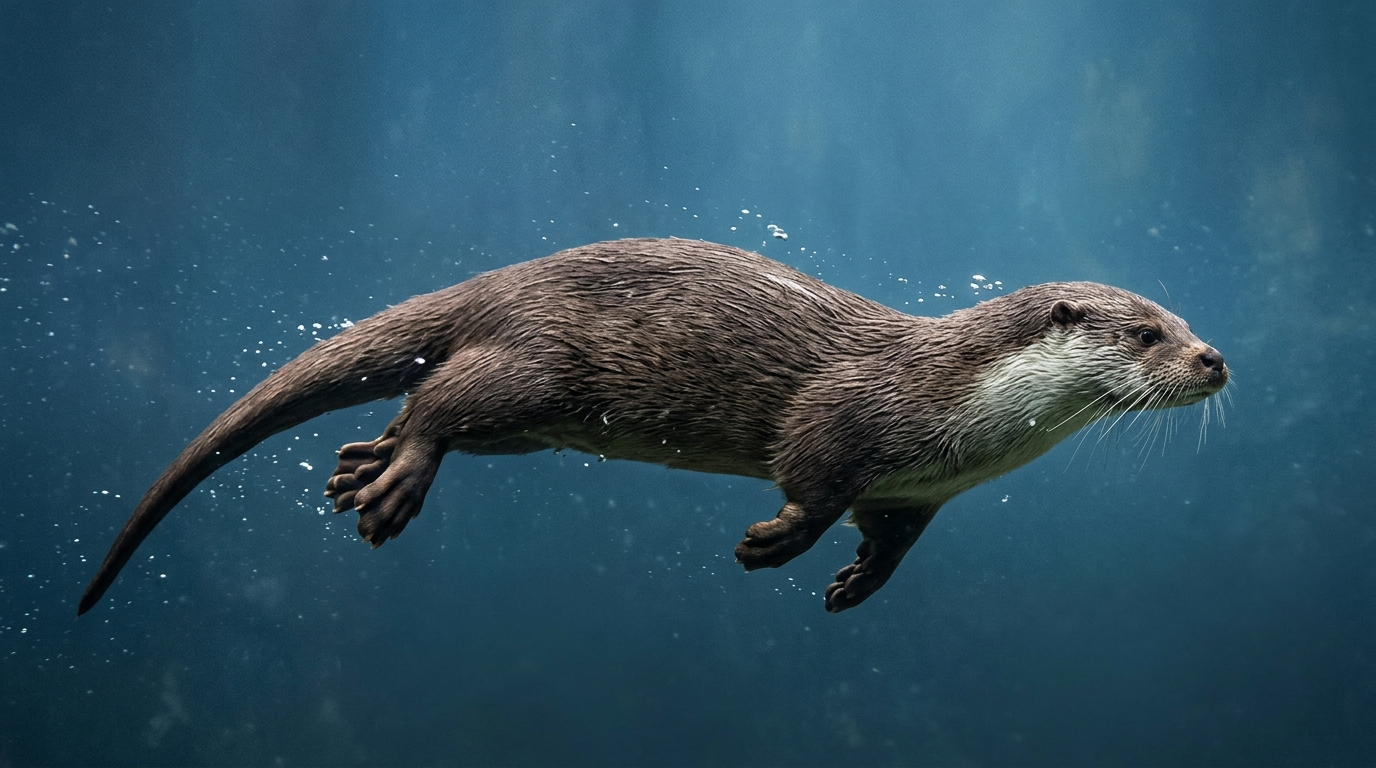
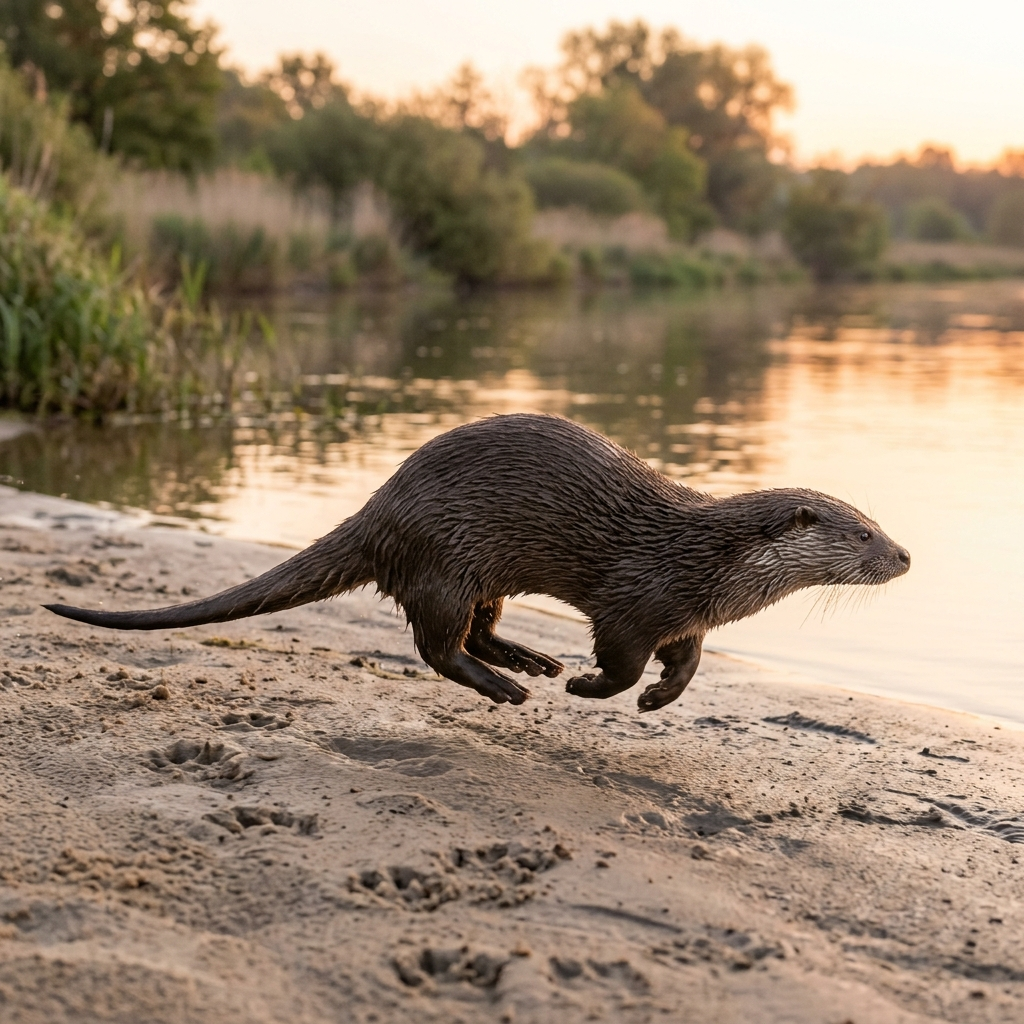
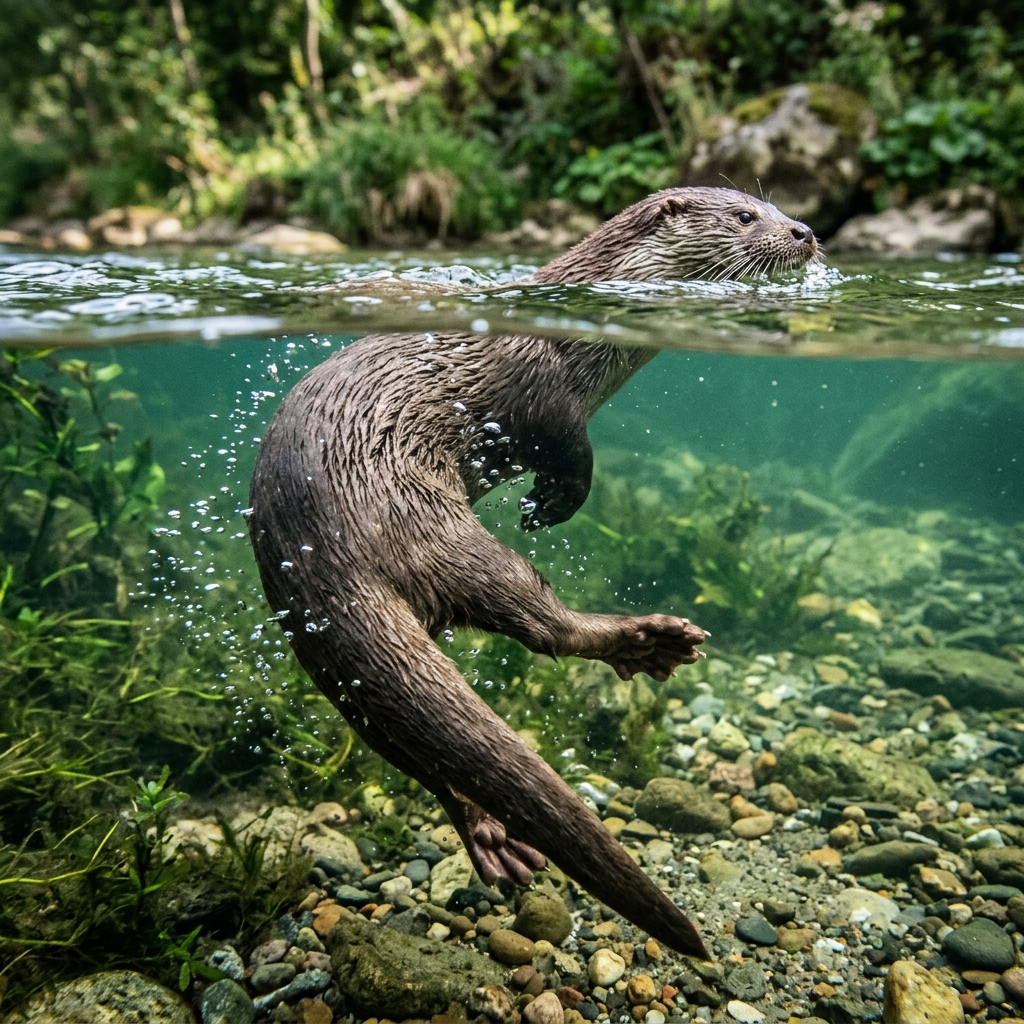
The silhouette is streamlined — a cylindrical, slightly flattened body, short muscular limbs with swimming membranes between the toes, and a strong neck transitioning into a wedge-shaped head. The tail accounts for approx. 40–50% of the body length, is thick at the base (up to 6–8 cm in diameter), tapering towards the tip, and highly muscular — acting as a rudder in the water and a counterweight during fast turns. It stores fat and heat under the skin. The secret to the otter's swimming lies here, not in its paws.
The fur is double-layered and extraordinarily dense — as many as 70,000 hairs per square centimeter on the back (for comparison: a dog has 100–600 hairs/cm²). Sharp, waterproof guard hairs cover a dense downy undercoat that traps air. This air thermally insulates the otter underwater — without it, it wouldn't survive Polish winters in icy rivers. For the same reason, the otter obsessively grooms its fur: every immersion ends with long rolling in the grass and cleaning. Dirty, matted fur = death.
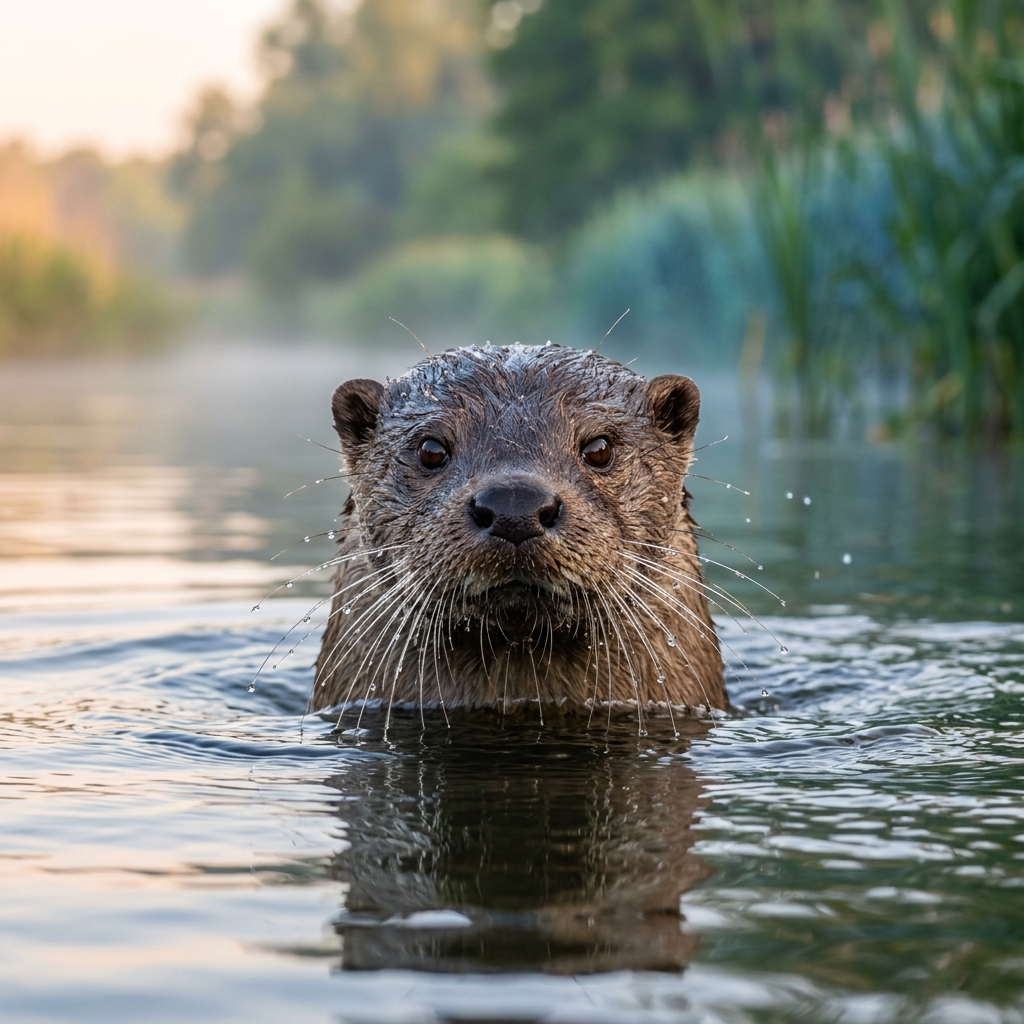
The head is wedge-rounded, with small round ears set low (which close during diving), long white whiskers around the muzzle (sensors for water movement and prey), a broad dark nose, and dark round eyes set high (allowing for surface observation while the body is submerged). Underwater, the nostrils and ear canals are closed — prey is detected by whiskers and sight.
Streamlined body — cylindrical, slightly flattened, almost without narrowing
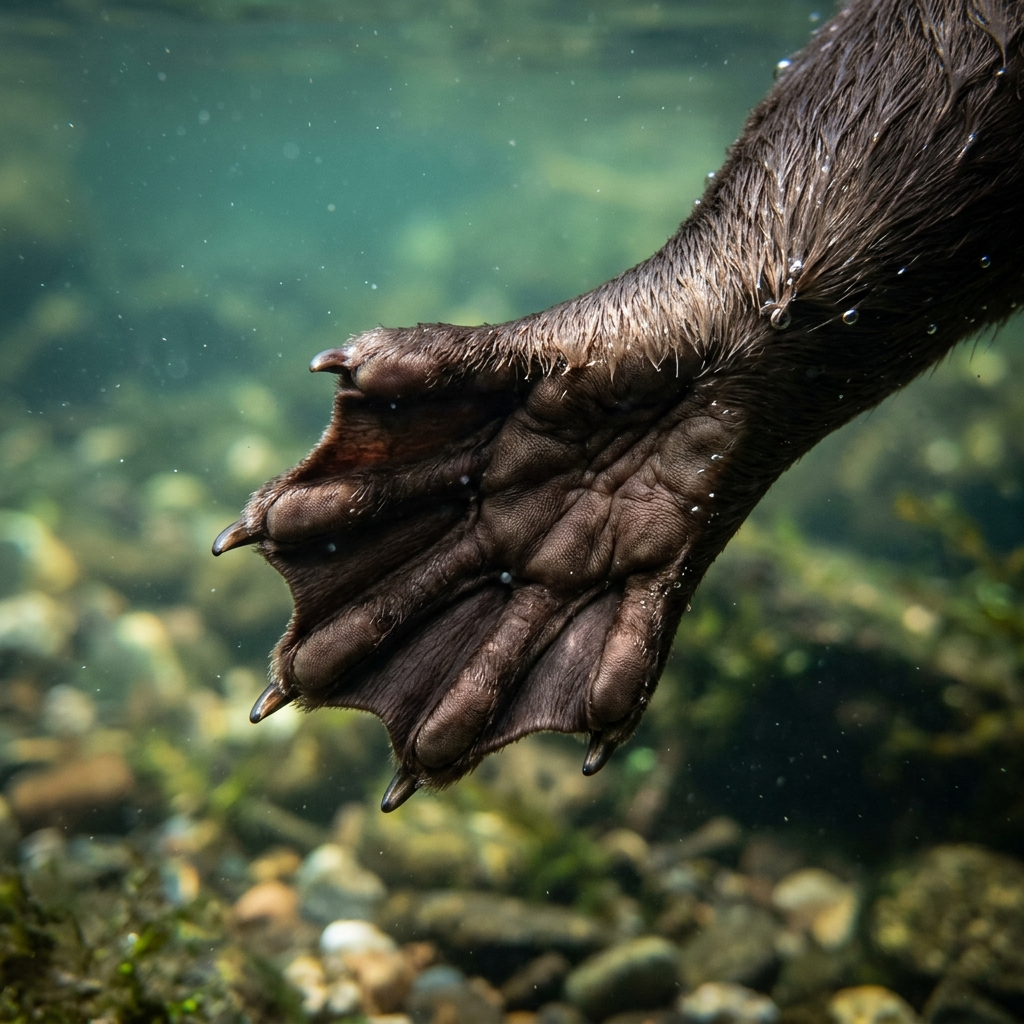
Swimming membranes between all toes — full on hind paws, partial on front paws
Tail-rudder — thick at the base, long (40–50% of body length), muscular
Fur with 70,000 hairs/cm² — extreme density, thermal insulation
Muscles closing nostrils and ears — automatically during diving
Long sensitive whiskers — sensors for hunting in murky water
Strong canines and cutting teeth — adapted for holding slippery fish
Dark brown back, cream-white throat — contrasting pattern
Physiological adaptations — what the otter does underwater
The otter routinely dives for 30–60 seconds while chasing fish — and up to 4 minutes. A record dive in laboratory conditions lasted 8 minutes. Mechanisms: (1) diving bradycardia — heart rate drops from 150–170 to 30–50 beats/min; (2) high concentration of hemoglobin in muscles (myoglobin) storing oxygen; (3) resistance to hypercapnia (high CO₂); (4) automatic closure of nostrils and ears with ring muscles; (5) shifting blood to the brain and heart at the expense of muscles. This is a complete set of mammalian diving adaptations shared only by seals, cetaceans, and a few other mustelids (mink, southern otters).
Fig. 01Otter silhouette — full adaptation to water: webbed feet, tail rudder, and muscles closing nostrils and ears.
Feature
Otter
Badger
Pine Marten
Adult weight
4–12 kg
10–18 kg
0.8–2.2 kg
Length with tail
1.0–1.3 m
0.9–1.1 m
0.7–1.0 m
Environment
water
deciduous forests
old-growth forests
Webbed feet
yes — full
no
no
Lifestyle
solitary
family in dens
solitary
Main prey
fish
earthworms, rodents
squirrels, birds
02
Environment and Range in Poland
Potentially every Polish river, lake, and pond. An expansive return after decades of persecution.
The otter is a species so closely linked to the aquatic environment that it cannot exist without clean, fish-rich water. Every new area it returns to is simultaneously a signal of the state of the water and fish fauna. It is a natural bioindicator — particularly effective.
On a European scale, the otter inhabits almost the entire continent — from Iberia and the British Isles to the Urals, with isolated populations in North Africa and Asia as far as the Japanese Islands. In Poland, it was common in all river basins in the 19th century. Persecution in the 20th century (mainly the first half, as a competitor to fishermen) led to a dramatic decline — in the 1980s, the population was estimated at approx. 1,000 individuals, limited mainly to the Biebrza Marshes, the Narew basin, the Suskie Marshes, and parts of the Masurian Lake District.
After being granted strict protection in 1995, the population began to recover. Nationwide inventories from 2007 and 2017 showed a consistent increase — from approx. 5,000 to 15,000 individuals. Current estimates for 2025 speak of 20,000–30,000. The otter has regained most historical river basins, including the upper Vistula, San, Warta, Oder, Pasłęka, and has reached regions where it hadn't been recorded for centuries (e.g., Drawskie Lake District, Tuchola Forest).
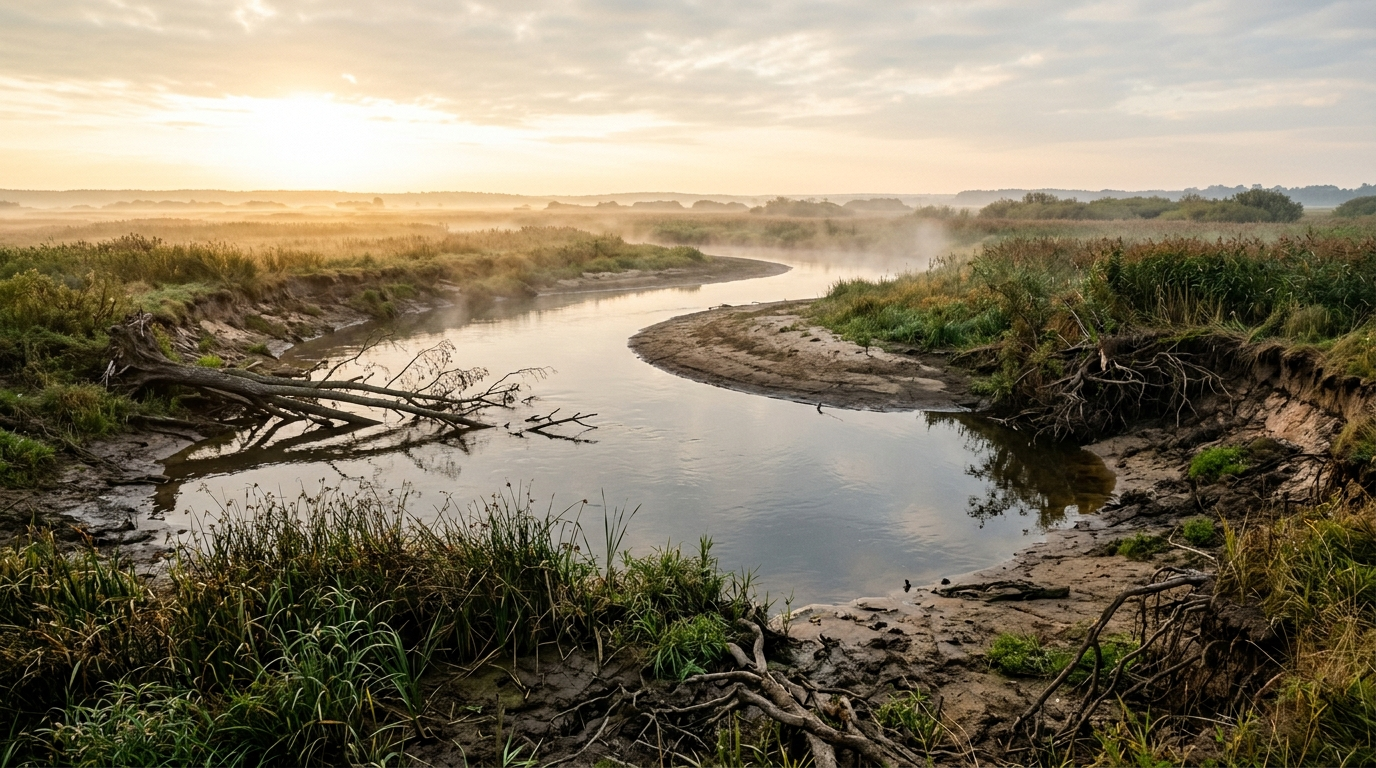
Preferred habitats include: lowland and submontane rivers with meanders, natural banks, and rich fish fauna; ribbon and post-glacial lakes; oxbow lakes and wetlands; breeding ponds (a source of conflict); canals and drainage ditches, provided they have access to larger bodies of water. The otter avoids large bodies of water with concrete banks, artificial single "puddles" without connections, and heavily polluted waters. In winter, it does not hibernate — it moves under the ice, using breathing holes in thinner spots.
Natural and semi-natural rivers — meandering, with fallen trees and undercut banks
Ribbon and post-glacial lakes — with varied shorelines and reed beds
Marshes and wetlands — Biebrza, Narew, Pasłęka — historical strongholds
Oxbow lakes and canals — with access to larger water bodies
Breeding ponds — attractive but conflict-prone (fish losses)
Baltic coast — populations on the thin coastline and in deltas
Fig. 02Ideal otter habitat — a meandering river with natural banks, abundant fish, and providing shelter.
03
Diet — Almost Exclusively Aquatic
80% of the menu is fish. The rest is whatever the water provides.
Among Polish mustelids, the otter has the most specialized diet and at the same time is best adapted to its habitat. Almost all the energy it consumes comes from aquatic prey — making it a direct partner (and competitor) of the local fish fauna.
Diet composition in Polish studies (fecal analysis, years 1990–2020) consistently shows a predominance of fish: 60–85% of biomass, depending on the habitat. In lowland rivers, carp, bream, roach, perch, and pike dominate; in breeding ponds — farmed carp (hence the conflict); in trout waters — trout and grayling; in mesotrophic waters — barbel and chub. On average, an otter catches fish up to 30–40 cm in length, although attacks on 60 cm specimens have been recorded.
Other diet components include: crayfish (historically noble crayfish, now mainly signal and spiny-cheek crayfish as invasive species), frogs (especially in spring during spawning), small mammals (water voles, water rats, young beavers), waterfowl (ducks, coots — mainly chicks), and invasive American crayfish (a dietary novelty of the last 20 years). In some regions, also young beaver kits; defending them from otters is an important part of European beaver behavior.
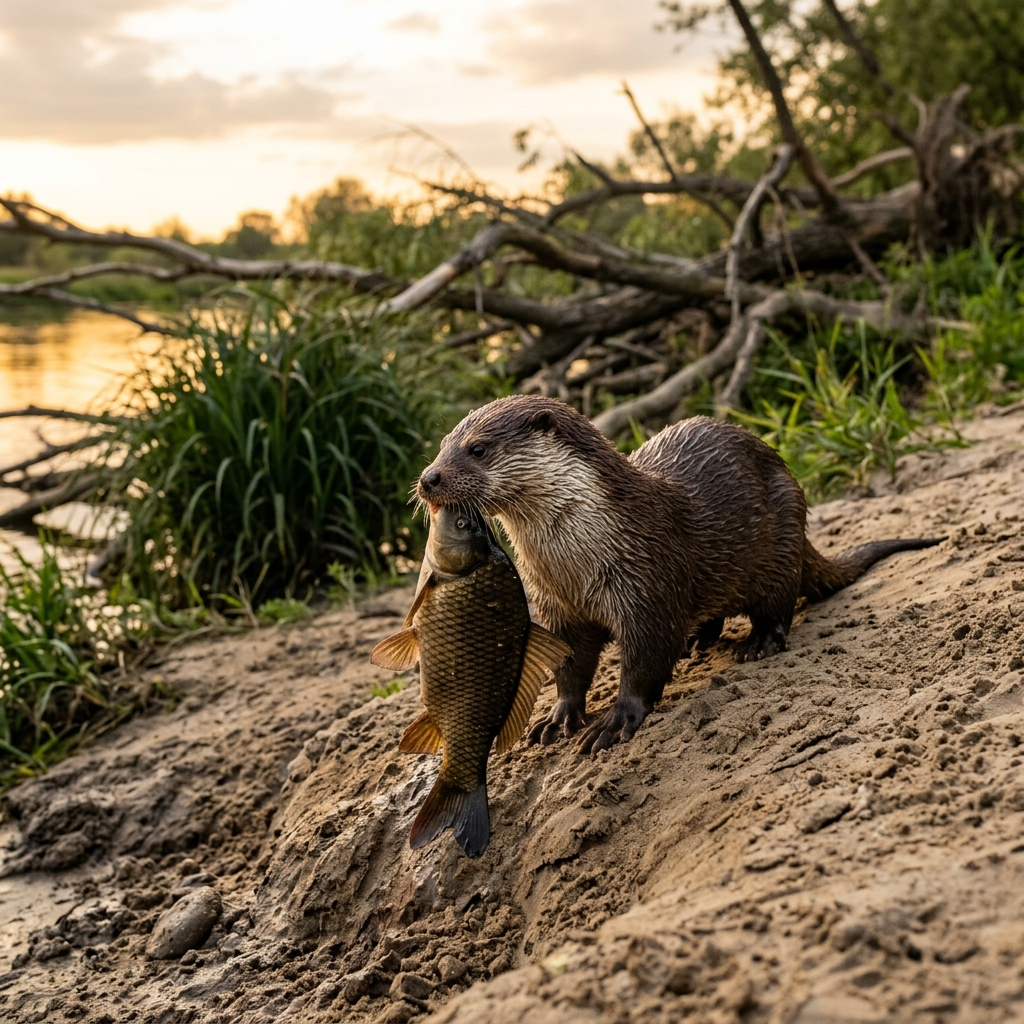
Hunting technique is based on diving and close sensory cooperation. The otter spots prey from the surface (high-set eyes), dives, chases the fish with speed maneuvers (up to 12 km/h underwater), grabs it by the back with its teeth, surfaces, and transports it to the shore. It consumes fish on land, starting from the head. This leaves characteristic remains — scales, tails, parts of the skeleton. In murky water — e.g., in ponds after rainfall — whiskers are key: they detect the movement of prey from a distance of 20–40 cm without visual aid.
Otters and fish farming — the anatomy of conflict
Carp ponds are ideal feeding grounds for otters: a dense, easily accessible fish population, no competition, and no shelter for prey. A single otter in the winter season can kill 1–3 kg of fish per day, which scales to 300–800 kg per year. In a 5-hectare pond with a population of 5–10 tons of carp, this means losses of 5–15% annually. Polish law allows two solutions: (1) compensation from the RDOŚ budget (up to full value of damages, after documentation); (2) deterrence permits and mechanical protection (nets, overhead electric fences, noise). Shooting requires a separate RDOŚ decision — issued in extreme cases of persistent conflict.
Fish — 60–85% of dietary biomass; carp, bream, roach, pike, perch
Crayfish — especially invasive signal and spiny-cheek species (consumed since 1990+)
Frogs — in spring during breeding, in ponds year-round
Small aquatic mammals — water voles, water rats, young beavers
Waterfowl — mainly duck and coot chicks, occasionally adults
Fish carrion — in ponds after winter oxygen deficits
Hunting activity — mainly dusk and night, occasionally during the day
04
Reproduction and Cub Care
The most 'normal' pregnancy in the Polish mustelid family — no diapause, in a den by the water.
In the mustelid family, where most species use embryonic diapause (delayed egg implantation), the otter is an exception to the rule. Its pregnancy is short and proceeds directly — approx. 60–63 days from fertilization to birth.
The mating season for the otter is extended — in Polish conditions, it lasts from late February to September, with a peak in February–May. The lack of diapause means that birth occurs 60–63 days after mating, which spreads births evenly throughout most of the year. Litters are most commonly observed in March–July. Why no diapause? Hypothesis: in the aquatic environment, where temperature changes more slowly than on land, seasonality is less restrictive.
The litter consists of 2–3 young, rarely 4. They are born blind, deaf, with short light gray fur, weighing approx. 100 g. They open their eyes at 4–5 weeks. They eat their first fish at 14 weeks, but start hunting independently only at 6–7 months of age. Full independence — at 9–12 months.
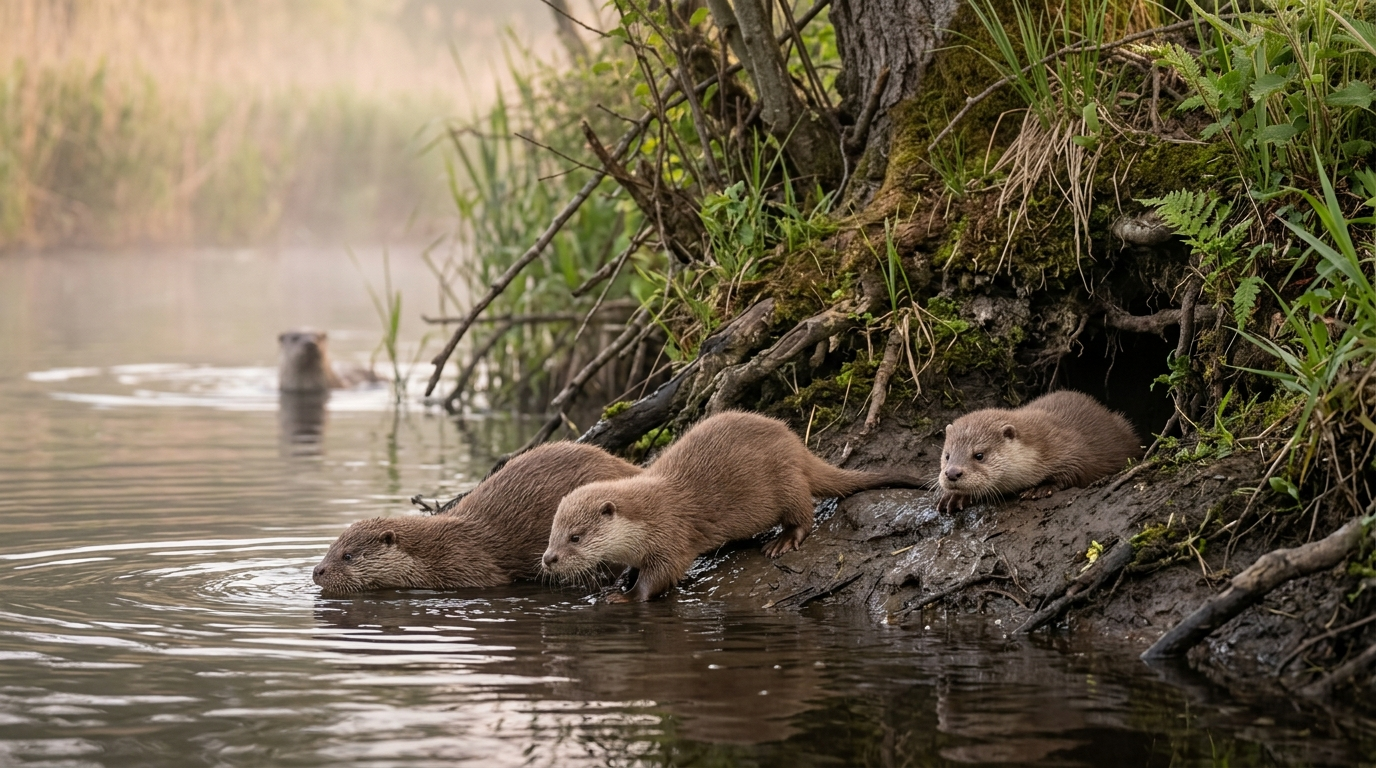
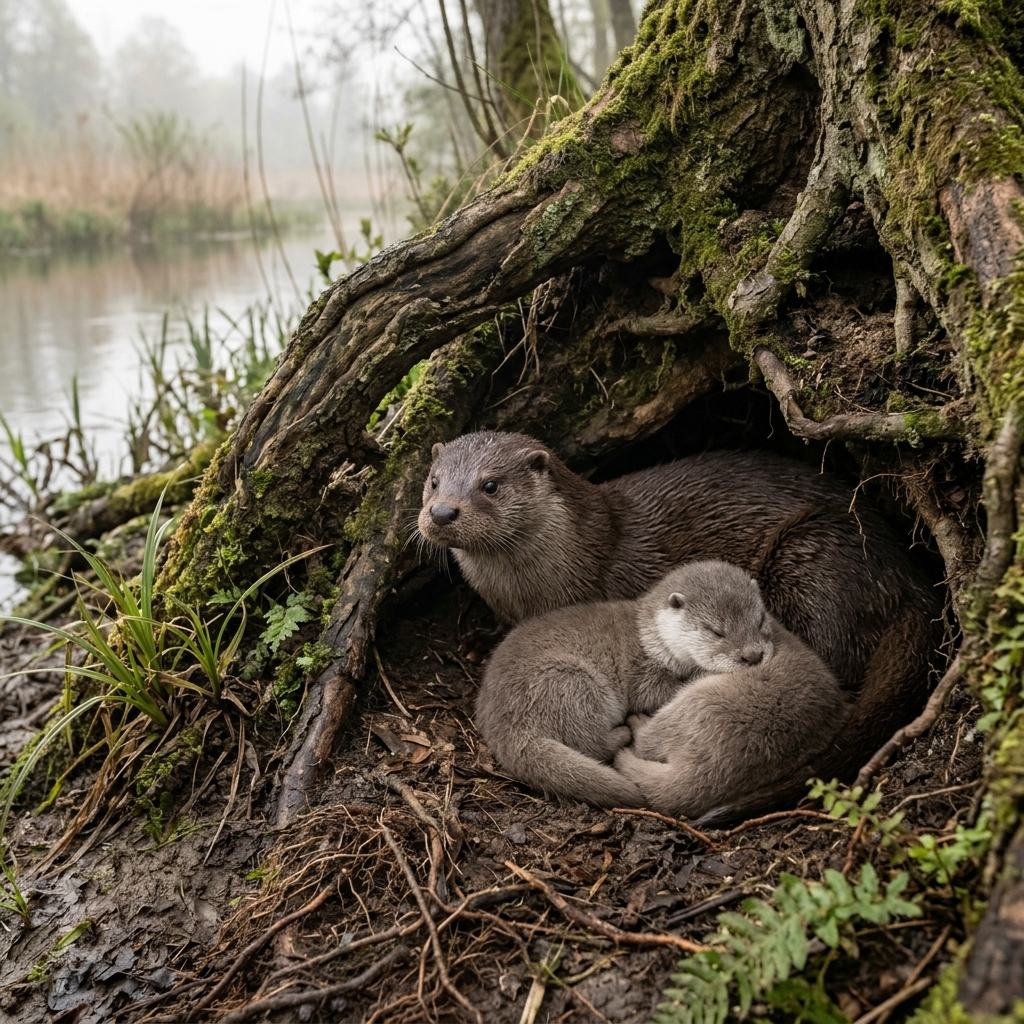
The birth den is in a bank by the river, under tangled roots of an alder or willow, in a fallen pile of brushwood, sometimes in an abandoned badger or beaver burrow. The entrance is often underwater — this is reliable protection against land predators. The female goes out to hunt; the male does not participate in care. The young swim from 8–10 weeks, but they fear the water — the mother teaches them by force, dragging them into the river by the scruff of the neck.
Beavers and otters — non-conflictual neighbors with a narrow exception
The otter and the European beaver (Castor fiber) share the same aquatic habitats and often use the same dens (beaver as builder, otter as usurper of abandoned burrows). Adult conflicts are few — the beaver is twice as heavy and significantly stronger, and the otter avoids confrontation. Exception: the otter hunts beaver kits during the first 3–4 weeks of their lives, when they are still too weak to escape into the water. This is a significant factor in beaver kit mortality in some river basins (up to 20% in dense otter populations). Beavers have developed specific defensive strategies — aggressive tail-slapping on the water, moving young to safer dens — to minimize risk.
Fig. 03Otter cubs at 8 weeks old — first cautious entry into the water under the mother's care; the male does not participate in raising them.
05
Tracks, Signs of Presence, and Spraints
The otter rarely shows itself — but it leaves a diagnostic set of signs that cannot be mistaken.
Direct observation of an otter in nature is rare and accidental. Most species identification in the field relies on indirect signs of presence — from paw prints to characteristic droppings and meal remains.
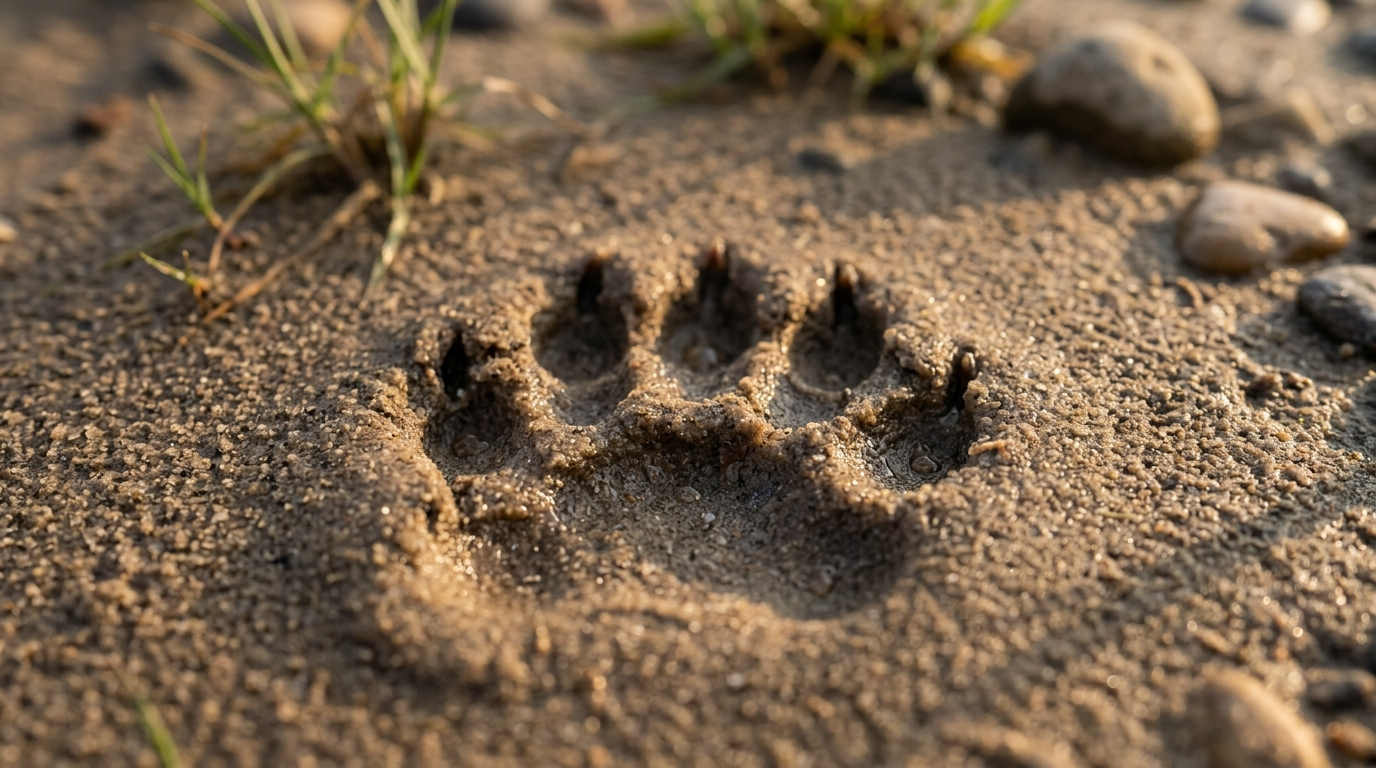
Paw prints are diagnostic for a tracker. An otter has five toes on each paw (like all mustelids), but thanks to the swimming membrane, the track has a characteristic arrangement of spread-out, tapering toes with claws. Track diameter: 6–9 cm for the front paw, 6–9 cm for the hind paw (hind paws often overlap front tracks in a typical gallop). Stride: 60–90 cm. Best seen on sand, mud, and snow — especially in winter along riverbanks.
Droppings (spraint) of the otter are the surest sign of presence. They have unique characteristic properties: they contain fish scales, bones, fragments of crayfish shells, frog bones; the consistency is slimy and tarry when fresh, black-brown; the smell — and this is the strongest diagnostic — is sweetish-fishy, almost pleasant, described as 'fresh hay with cabbage'. This smell lasts up to a week, is characteristic of the otter, and is not confused with the droppings of any other Polish mammal. Sprainting is territorial — on characteristic 'marking spots' (rocks, clumps of grass, fallen logs by the shore).
Meal remains are the second diagnostic sign. The otter consumes fish on land, starting from the head, so on the bank remain: the fish tail (often whole, untouched), spine fragments, scales. Also characteristic are gnawed painter's mussel shells — the otter opens them with its teeth, leaving characteristic bite marks along the edges. Piles of gnawed shells by the riverbank are a nearly certain sign of regular otter presence.
Paw prints — 5 toes with claws, swimming membrane visible; 6–9 cm
Droppings (spraint) — slimy, with fish scales, characteristic sweet smell
Marking spots — territorial points on rocks, logs, grass clumps by the shore
Fish remains — uneaten tails, spine fragments on the bank
Gnawed mussel shells — characteristic piles by the shore
Ice holes in winter — the otter uses breathing holes
Grass corridors — the otter uses the same paths between shelter and water
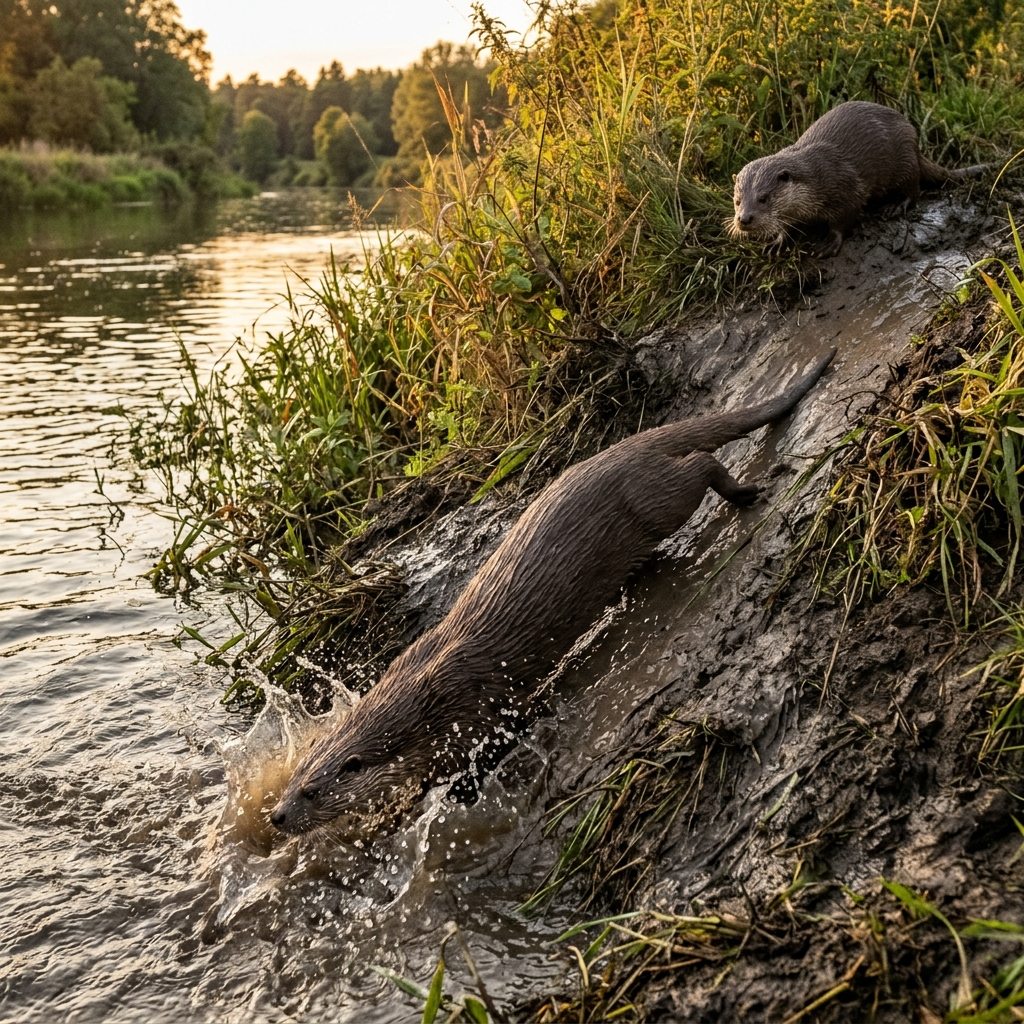
Slides — worn corridors from the bank to the water where the otter 'slides in'
Fig. 04Otter track in a sandy bank — five-toed with a clear swimming membrane; diagnostic for the species.
06
Behavior and Lifestyle
A loner with an extensive territory, active mainly at night, leaving discreet signs of social activity.
The otter leads a solitary lifestyle with elements of territoriality. Although it can be seen in a group (mother with young, sometimes a pair during mating season), at other times it functions in isolation from its kin, across large territories along rivers and lakes.
Territory is linear — the otter does not think in hectares, but in kilometers of shoreline. A male patrols 10–40 km of riverbank (records: 60 km), a female 5–20 km. Male territories overlap the territories of several females. Boundaries are marked with marking spots — points with droppings and gland secretions. Each marking spot is refreshed every 7–14 days — the fresher it is, the more clearly it declares presence. Territorial conflicts between males are rare but brutal — ending in wounds or the displacement of the weaker one.
Activity is crepuscular-nocturnal, with peaks at dawn and sunset. In sparsely populated areas (Biebrza, Suskie Marshes), the otter is also active during the day, especially in winter when nights are long. Wintering does not involve hibernation — the otter must obtain food daily because its large body surface relative to mass means high energy demands. Under ice, it moves through systems of cracks and breathing holes; occasionally, it gets trapped under the ice and dies of exhaustion.
Communication is multimodal: scent markings (spraint + anal gland secretion — much weaker than a polecat's), high-pitched whistles on the water surface (mother-young contact), contact whistles (communication up to 100 m), warning snorts in situations of danger. Complex mimicry — tail play, head posture, whisker positioning — is primarily important in close interaction.
Water <em>slides</em> and play — an element of otter behavior
Among characteristic otter behaviors is the slide down a slope into the water: on grassy or muddy banks, otters create regular sliding corridors, used both functionally (quick entry into the water) and — documented in numerous observations — recreationally. An otter returns to the same slide repeatedly, sometimes sliding several times in a row, including accelerating on land. This is a rare example of play in adult mammals in Polish fauna — most mammals cease play after reaching maturity, but otters continue throughout their lives. This phenomenon likely has a dual meaning: maintaining motor fitness and strengthening bonds in family groups.
07
Protection and Conflicts with Humans
A success for conservation and inevitable costs — a story that is still being written.
The otter in Poland is a flagship species for nature conservation — the story of its return from the local brink of extinction is proof that strict protection plus the preservation of natural river valleys yields concrete results. Simultaneously, the return of the species brings back a conflict economically felt by fish farmers.
Legal status in Poland: strict protection since 1995 (Minister of Environment regulation); on the list of protected species in Annex II of the EU Habitats Directive; requires the designation of Natura 2000 areas. Prohibited: killing, capturing, destroying dens and shelters, keeping. Possible derogations require a decision by the Regional Director for Environmental Protection (RDOŚ) — issued individually in extreme conflict situations.
Main threats despite population growth: collisions with vehicles (otters crossing riverside roads — the largest single cause of mortality in some regions), water pollution (PCBs and heavy metals accumulating in fat), habitat destruction (river regulation, concrete banks, lack of natural bottom), poaching (rare, but recorded in ponds), being caught in fishing nets (fatal).
Conflict with pond farming is the most serious current issue. There are approx. 40,000 hectares of carp ponds in Poland — all within the otter's range. Average documented losses are 5–15% of annual fish production. The state has introduced a system of compensation: farmers can obtain the full value of the damage after formal documentation and valuation. Alternatively: electric fences around ponds, bypasses, and acoustic deterrents are subsidized. Shooting is permissible only in extreme cases following an RDOŚ decision.
Strict protection in Poland since 1995; EU Annex II Habitats Directive
Road collisions — the biggest cause of mortality in some regions
Water pollution — PCBs, heavy metals accumulate in fat
River regulation — loss of natural meanders and undercut banks
Conflict with pond farming — losses of 5–15%/year, compensation system
Poaching and fishing nets — rare but recorded
Climate change — shifts in range, changes in fish fauna
Position as bioindicator — first to disappear from polluted waters
08
Myths and Facts
The most common misunderstandings about the otter — from 'fish pest' to 'beaver in another skin'.
Despite its visible presence and conservation success, the otter remains a species shrouded in a mixture of admiration and resentment. Myths about it circulate among both fishermen and nature lovers — and as usual, the truth is more nuanced.
MYTH The otter is a species from the same family as the beaver.
FACTFalse. The otter (Lutra lutra) belongs to the mustelid family (Mustelidae) in the order Carnivora. The European beaver (Castor fiber) belongs to the beaver family (Castoridae) in the order of rodents. These two species share habitats but are evolutionarily further apart than humans are from mice. The otter is a carnivore with sharp canines; the beaver is a herbivore with constantly growing incisors.
MYTH The otter destroys all the fish in breeding ponds.
FACTExaggerated. A single otter kills approx. 300–800 kg of fish per year — which in a 5-hectare pond (stocked with 5–10 tons of carp) means a 5–15% annual loss. This is a significant economic loss, but far from 'destroying all the fish'. The state reimburses these losses through the RDOŚ compensation system. Also, the otter does not kill fish for surplus — it consumes as much as it needs for energy, just like any other predator.
MYTH Otters can be shot without restrictions, like foxes.
FACTCategorically no. The otter has been under strict species protection in Poland since 1995. Every instance of shooting requires individual RDOŚ consent, issued in extreme situations of persistent conflict after exhausting alternative methods (fencing, acoustic deterrents, compensation). Illegal shooting is a crime punishable by up to 5 years in prison (Penal Code Art. 181, 187).
MYTH The otter went extinct in Poland in the 20th century.
FACTFalse — it was close, but it survived. In the 1980s, the Polish population was estimated at approx. 1,000 individuals, limited mainly to the Biebrza Marshes, the Narew basin, and isolated Masurian basins. After being granted strict protection in 1995, the population recovered explosively — current estimates are 20,000–30,000 individuals, a twenty-fold increase in 30 years. This is one of the brightest successes of Polish species conservation.
MYTH The otter attacks dogs and humans.
FACTExtremely rare. An adult otter can weigh 12 kg and has strong teeth — theoretically dangerous. In practice, it actively avoids humans and large dogs; documented attacks on humans in Europe are single cases and all involved individuals cornered in a trap or den. An attack on a dog is possible in the water if the dog swims after the otter or near its young — then the otter defends itself by biting. However, most contacts end with the otter escaping underwater.
MYTH The otter is the same species as the American mink.
FACTFalse. The American mink (Neogale vison) is a much smaller, distinct mustelid species — weight 0.5–1.5 kg (vs. 4–12 kg for the otter), body length 30–45 cm (vs. 60–90 cm). The mink is an invasive species in Europe, brought from North America for fur and escaped from farms. It competes with the native polecat, but not with the otter — the otter is too big, too strong, and hunts different prey. Diagnostic features: the mink is a uniform color (brownish-black), the otter — contrast of dark fur with a white throat; the mink is much smaller and has a pointed snout.
§ Gallery
Species gallery
Eight shots in different conditions — seasons, environments, situations. Click to enlarge.
POLAND 2026
— Field correspondence —
One letter from the field, every month.
The latest species profiles, seasonal guides and field observations delivered straight to your inbox. No spam, no clickbait — just solid content once a month.
2,847 readers · 0% spam · unsubscribe with one click