SPECIES PROFILE · Canids
Vulpes vulpes · Linnaeus, 1758
The world's most widespread terrestrial predator — and a neighbor to every Polish field.
The world's most widespread terrestrial predator — from the Arctic Circle to the outskirts of Madrid. The red fox thrives everywhere because it eats everything, digs dens in every type of soil, and learns faster than most European predatory mammals.
| Kingdom | Animalia |
|---|---|
| Phylum | Chordata |
| Class | Mammalia |
| Order | Carnivora |
| Family | Canidae |
| Genus | Vulpes |
| Species | V. vulpes |
The red fox (Vulpes vulpes) belongs to the Canidae family — canids — and is its most cosmopolitan representative. In Poland, it occurs from the Baltic to the Tatra Mountains, from the deepest forests to the centers of large cities like Warsaw, Krakow, and Wroclaw. Its ecological success is based on three pillars: extreme omnivory, behavioral plasticity, and the ability to live in proximity to humans. The fox is not a mustelid — although it is sometimes confused with them — it belongs to the same family as the wolf and the domestic dog. Since 1993, Poland has conducted a program of oral rabies vaccination (aerial drops), which has radically changed both the epidemiology of the disease and the fox population itself.
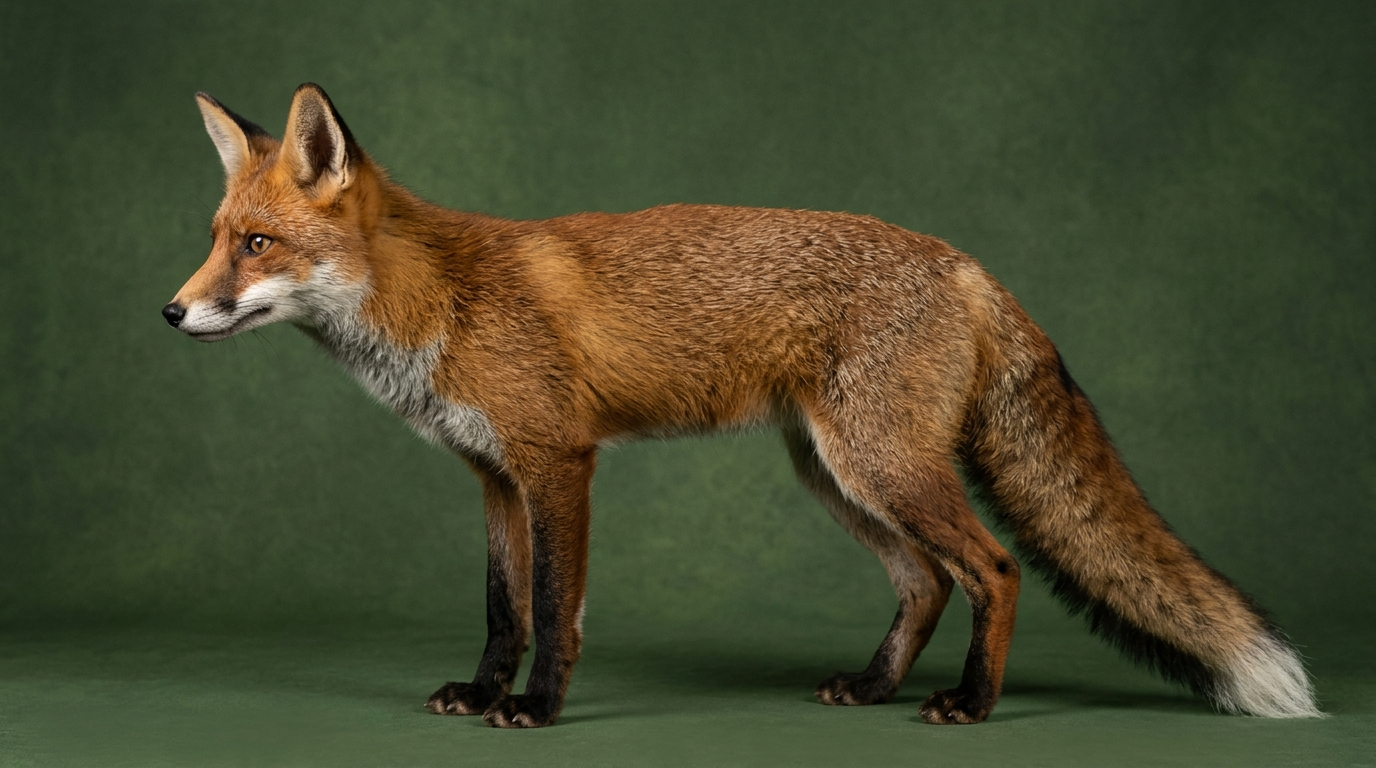
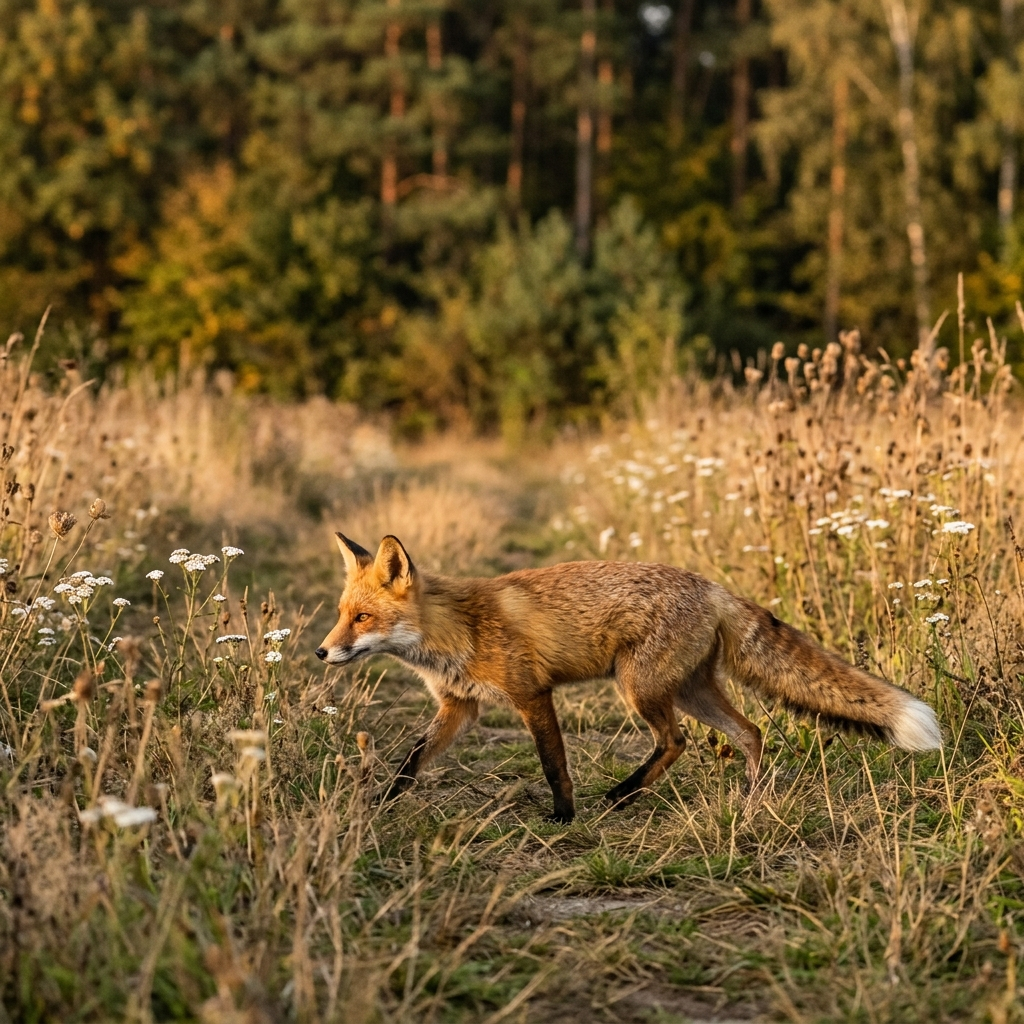
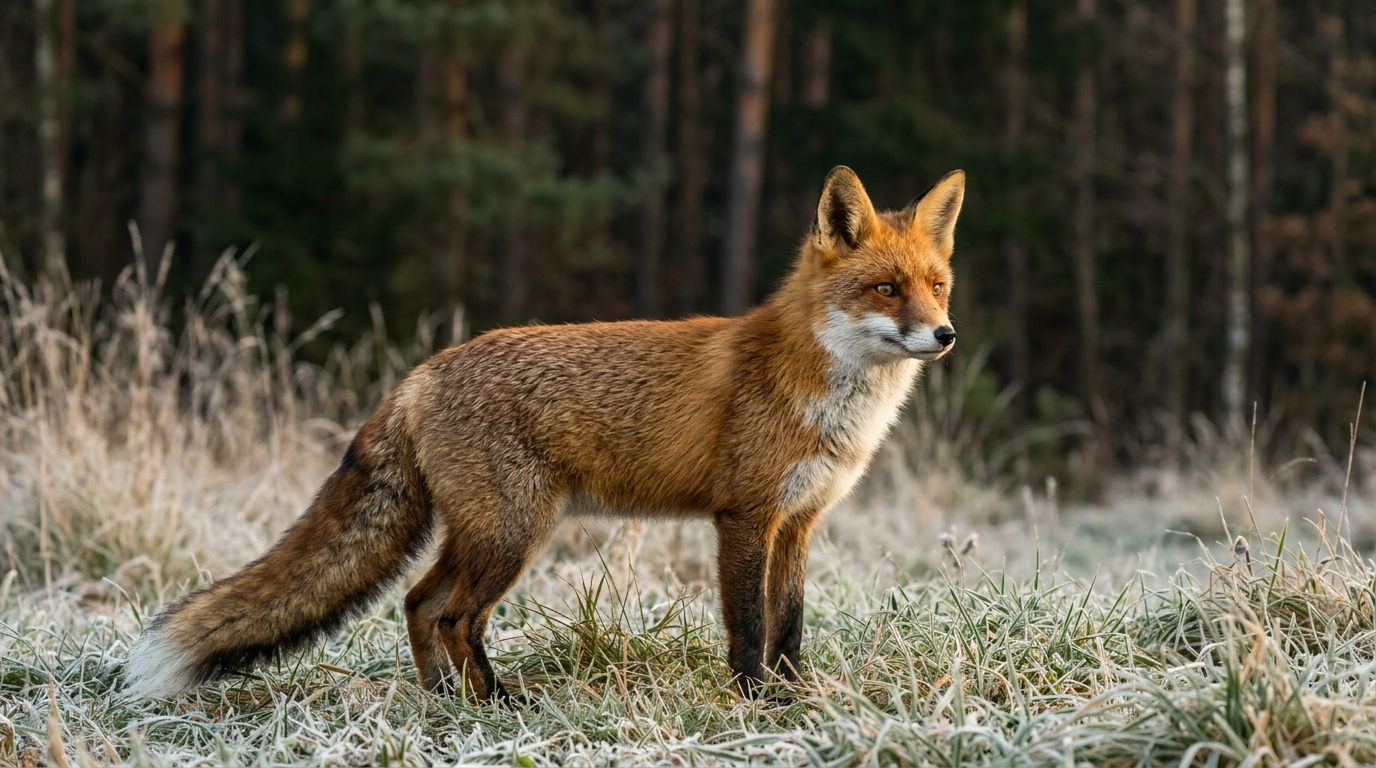
A slender canid silhouette, a long fluffy brush, and a narrow snout — a silhouette so characteristic it is unmistakable.
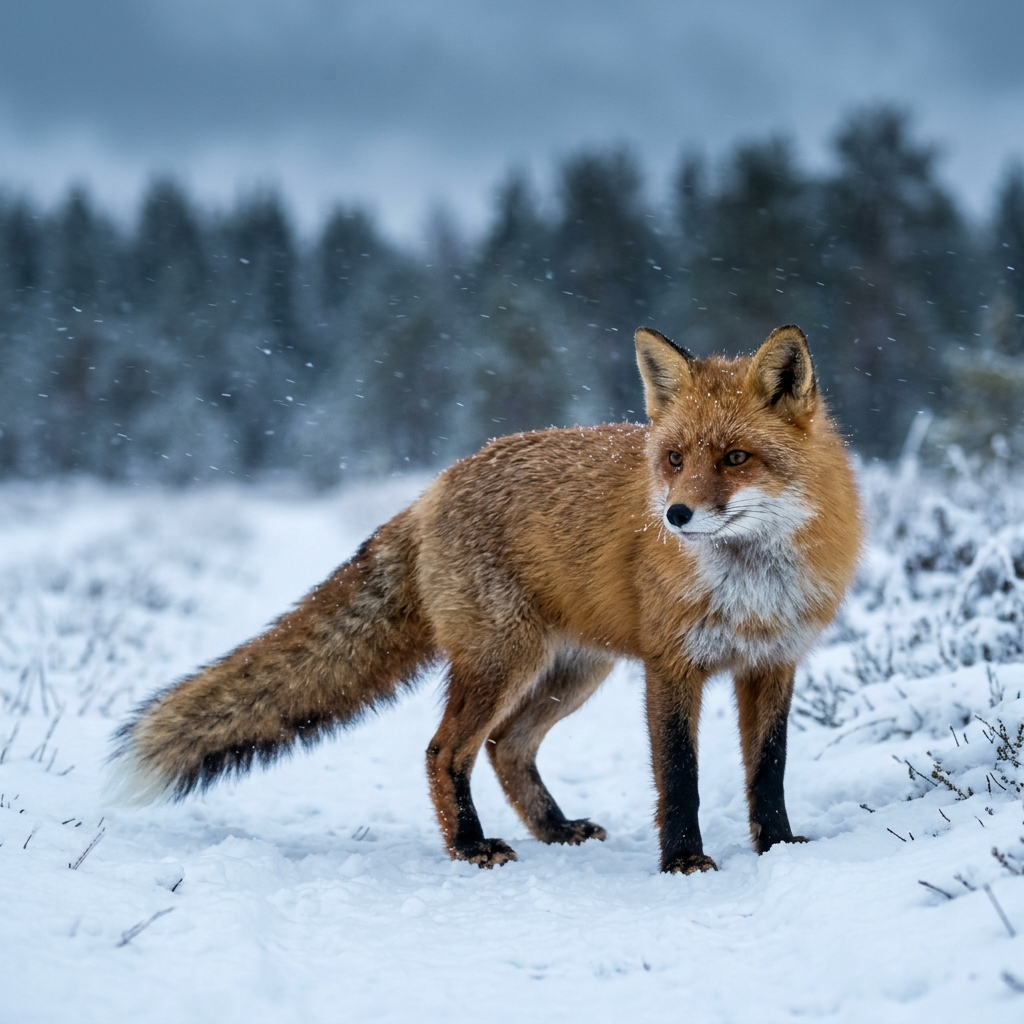
The red fox combines the traits of a dog and a cat: a canid skeletal structure with feline movement plasticity, alertness, and narrow, almost vertical pupiled eyes. It is the largest member of the genus Vulpes and is clearly distinguished in silhouette from other European canids.
The body is low and elongated — with a length of 60–90 cm and an additional 35–50 cm for the tail. Weight is typically 5–10 kg, though adult males can weigh up to 14 kg in late autumn when well-fed before winter. Females are about 10–20% smaller than males. Limbs are relatively short compared to the torso, and the chest is narrow — a silhouette "flattened" to the sides, which distinguishes the fox from a shepherd dog or a jackal.
The fur has three layers: short dense down near the skin, longer guard hairs, and sharper, longest outer hairs. In summer, the fur is sparse, short, darker, usually tawny-red with distinct gray highlights. In winter, it is dense, long, light red to almost orange, with a white chin, chest, and belly. Characteristic black "socks" on the front and hind legs (sometimes reaching the wrists) and black backs of the ears are permanent regardless of the season.

The fox molts twice a year. The spring molt (April–June) removes the dense winter coat — the animal then looks slender, almost thin, with sparse, noticeably darker fur. The autumn molt (September–November) restores the thick winter coat; in November, a fox looks 30–40% larger than in July. This is one of the main reasons readers make mistakes when judging size — the summer "small fox" and the winter "large fox" are often the same individual.
The skeleton and dentition are typically canid. Dental formula 3.1.4.2/3.1.4.3 = 42 teeth. Canines are long and sharp, carnassials (upper P4 and lower M1) are strongly developed — an adaptation for cutting meat and crushing small bones. The skeleton is light — the fox's skull is narrow, elongated, with a distinct constriction behind the eye sockets; this allows it to be distinguished from a dog's skull even in juveniles.
The widest geographic range of any terrestrial predator — from the tundra to metropolises.
The red fox occupies the entire Northern Hemisphere except for the highest mountain ranges and the deepest tundra — occurring in Europe, Asia, North America, and parts of North Africa. In Australia, it is an invasive species, introduced by colonists in the 19th century for hunting.
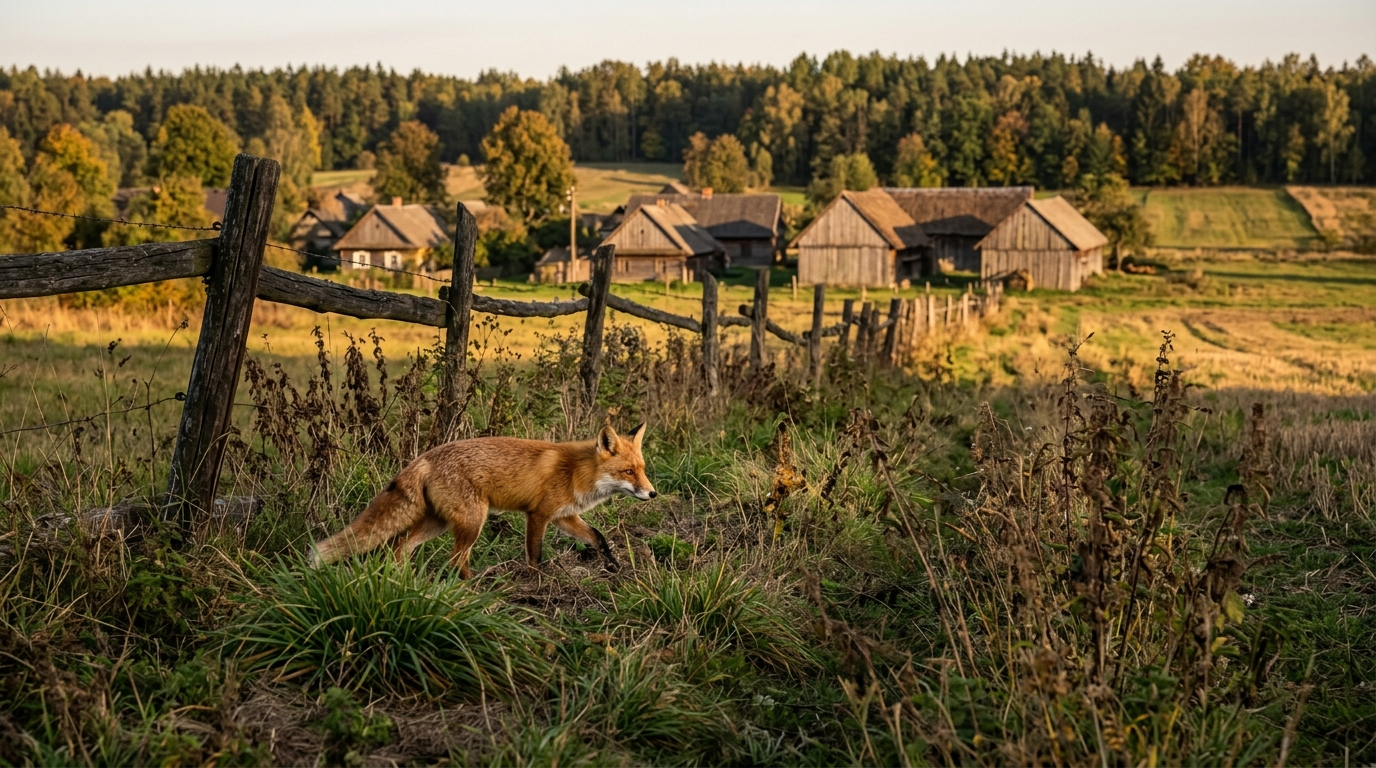
In Poland, it is found literally everywhere — from the Baltic coast to the upper montane zone of the Tatras (up to approx. 1500–1800 m above sea level). There is no municipality in our country where the fox has not been recorded. It reaches the highest densities in the agricultural mosaic (fields, meadows, boundaries, clumps of trees), moderate densities in mixed forests, and low densities in monotonous pine forests. In the last twenty years, the urban population has significantly increased.
The home range is extremely variable — from 50 ha in the city (where food is concentrated) to 2000 ha in a poor peat bog or in high mountains. This is a forty-fold difference, one of the largest among Polish predatory mammals. Territory size is regulated primarily by food availability, followed only then by habitat structure.

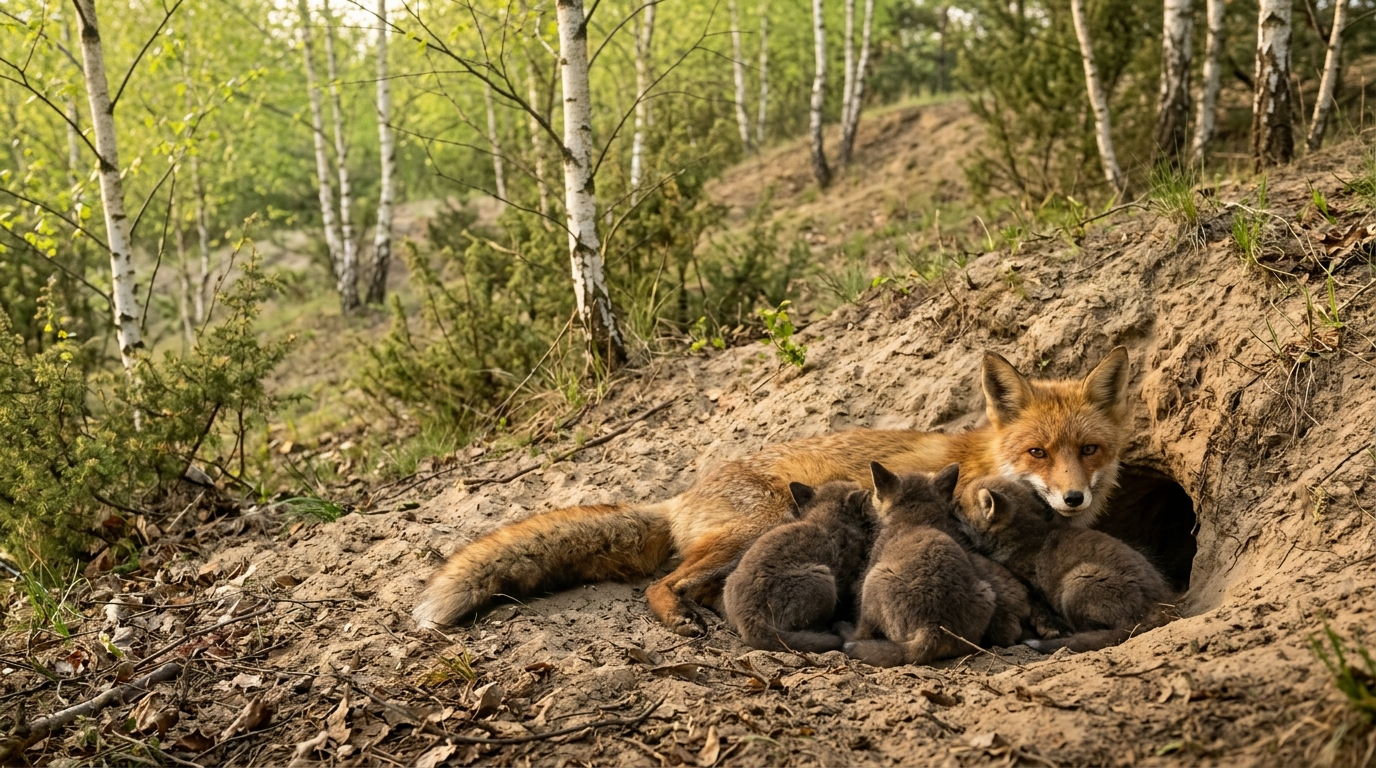
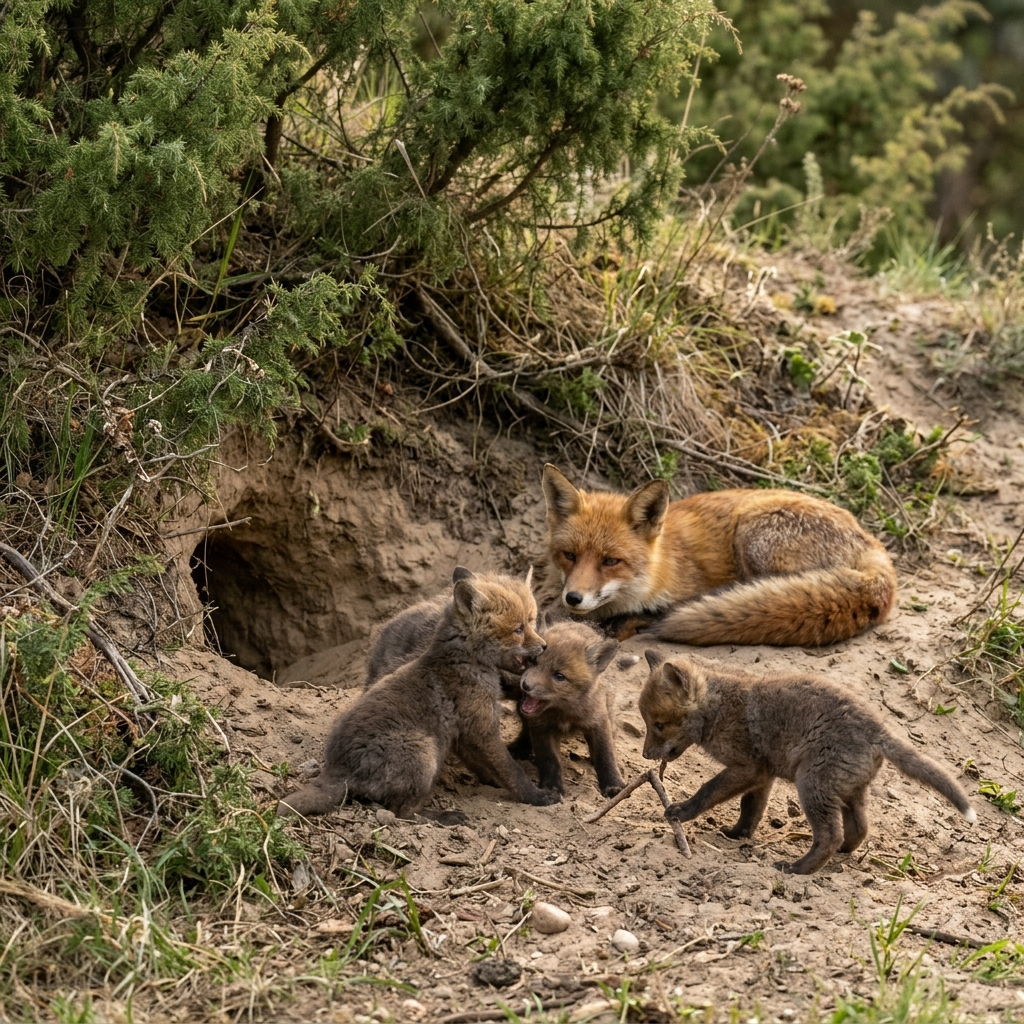
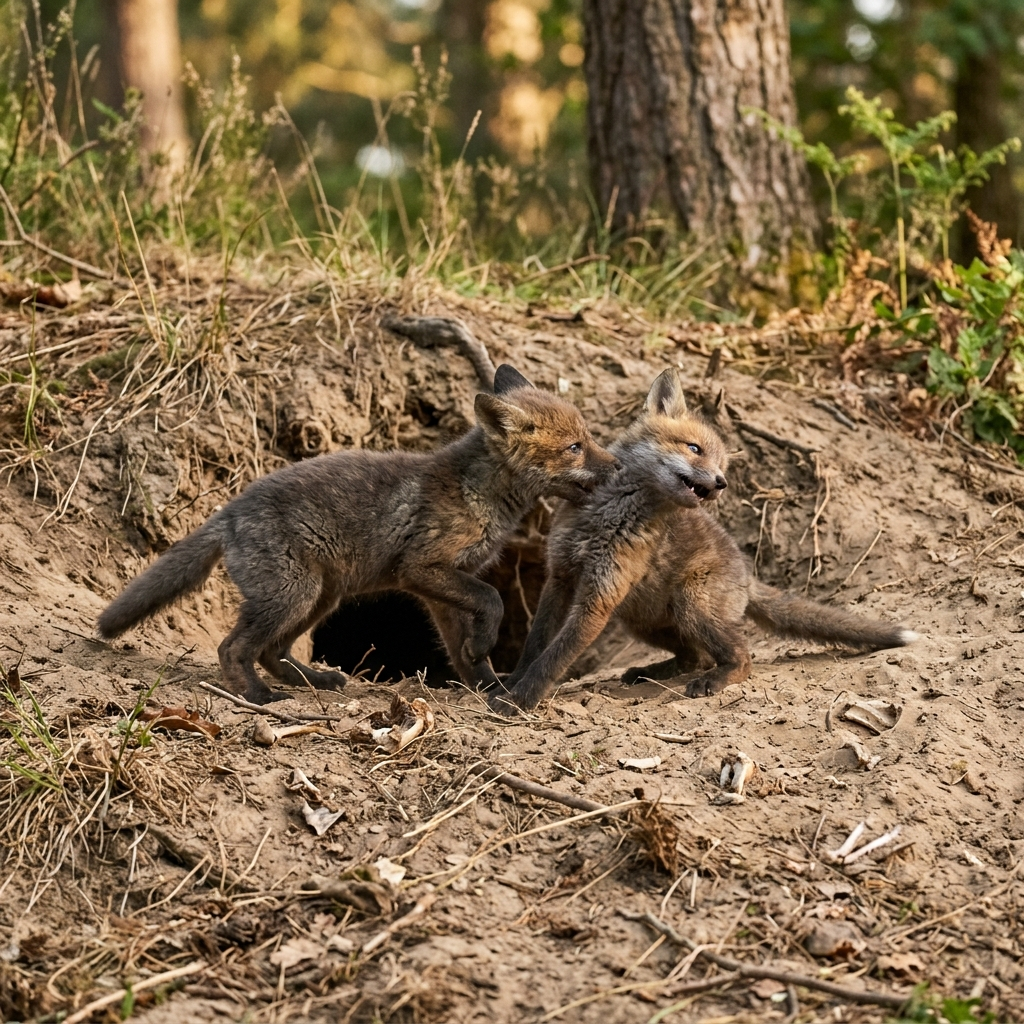
The den is the center of the territory. The fox often does not dig it itself — it takes it over from badgers, sometimes sharing the same hill with a badger (cohabitation). A classic fox den has 5–10 exits, a system of tunnels 10–50 m long, and several chambers. The same dens are used for generations; there are "fox hills" in Poland known to have been occupied for several decades. In the city, dens are replaced by hiding places under gazebos, holes in railway embankments, and abandoned basements.
Extreme generalist — from voles to apples, from chicks to a kebab from a bin.
The red fox is one of the most dietarily versatile mammals in the world. Annually, hundreds of species of prey and plant foods have been documented in its diet — from beetles to young roe deer, from cherries to bread discarded by humans.
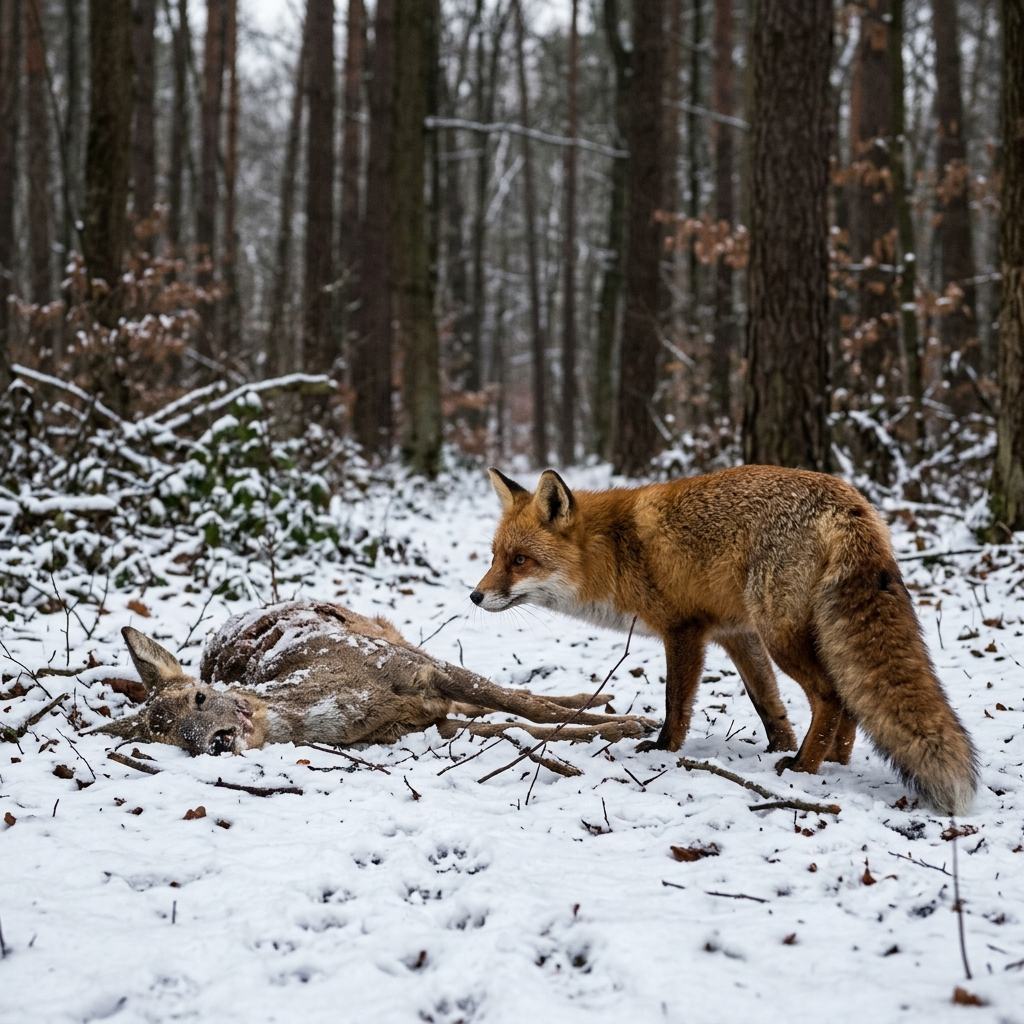
The core of the diet in Polish conditions consists of small rodents — mainly common voles, field mice, and bank voles. In summer, insects (ground beetles, larvae), earthworms, chicks, and eggs of ground-nesting birds play a significant role. In late summer and autumn, the fox switches to fruit: fallen apples, pears, plums, berries, and rose hips. In winter — carrion (roe deer, wild boar), smaller rodents detected under the snow, and remains from human hunting.
| Food | Behavior / Technique | Peak Season |
|---|---|---|
| Voles, mice, shrews | Mouse-jump — vertical leap from listening onto prey under grass or snow | Year-round, peak: summer and winter |
| Chicks, eggs, nesting birds | Systematic checking of bushes and boundaries, stealing from ground nests | May–June |
| Carrion (roe deer, boar, poultry) | Locating by scent over long distances; the fox returns repeatedly | November–March |
| Fruit (apples, plums, berries) | Passive gathering of windfalls; some individuals climb low branches | August–October |
| Urban waste and pet food | Penetrating bins, composters, bowls left in front of houses | Year-round (urban population) |
| Invertebrates (earthworms, beetles) | Digging with the nose in damp sod, gathering on meadows after rain | Spring and summer |
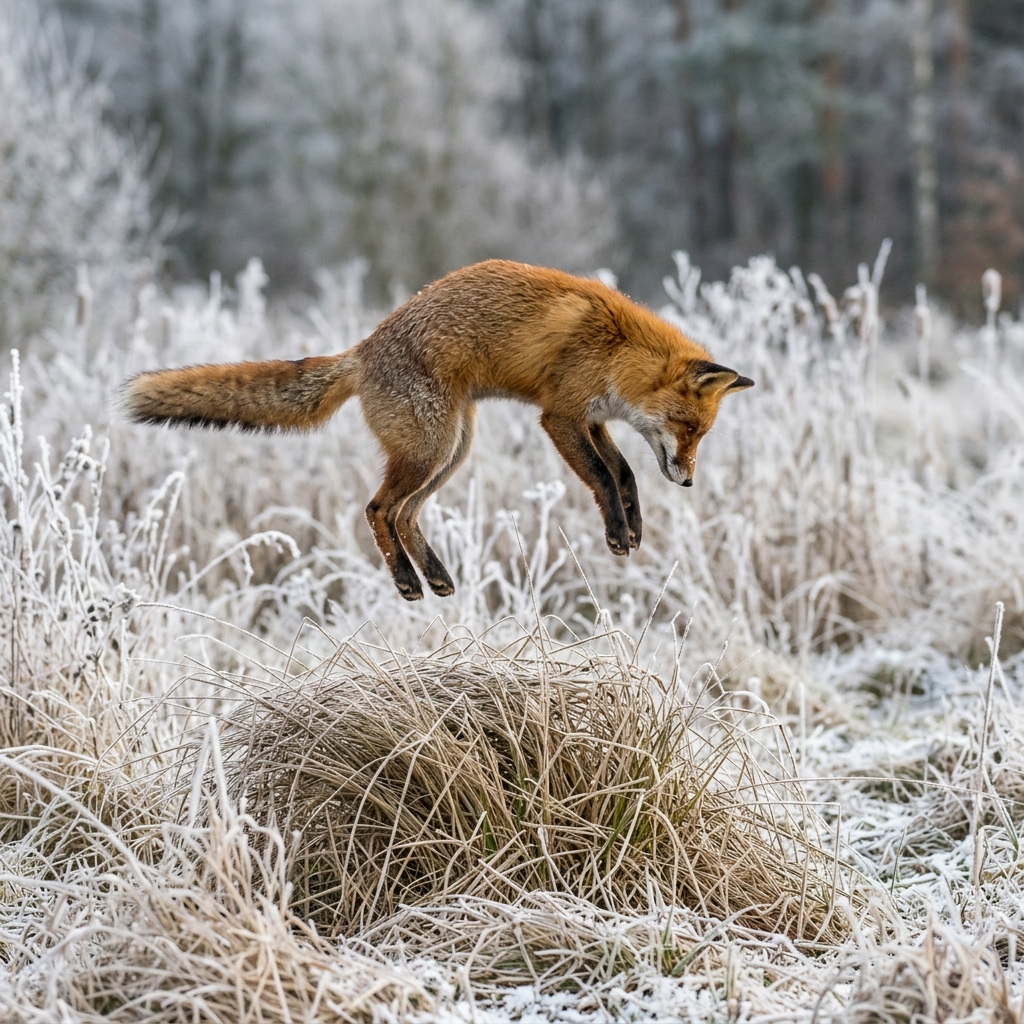
The mouse-jump is the hallmark of fox hunting in open spaces. The fox listens, positions itself perpendicular to the sound source, performs a vertical jump to a height of 70–100 cm, and lands with its front paws and snout on the prey. Very precise hearing is key — a fox locates a rodent under a 30-centimeter layer of snow with an accuracy of a few centimeters. The success rate of this hunting method is 50–70% in optimal conditions.
The fox is a classic hoarder of surpluses. After a successful hunt, when it cannot eat everything at once, it buries leftovers in shallow (10–15 cm) caches, covering them with leaves and earth using its snout. It remembers the locations of hundreds of such "pantries" — returning to them even after several weeks. With abundant prey (e.g., discovered waterfowl on a frozen lake), the same individual can make 10–20 separate caches in one day.
The diet of the urban fox differs significantly. Studies in Warsaw, Krakow, and Wroclaw show the share of human waste at 30–60% of the food biomass, supplemented by pigeons, rats, mice, moles, and — seasonally — fruit from allotment gardens. This is low-protein, high-calorie food; the urban fox is often significantly heavier than its rural counterpart but has a worse coat condition and a shorter average lifespan.
Intelligent, adaptable, solitary outside the season — during the breeding season, a monogamous and affectionate parent.
The red fox is considered one of the most intelligent European predators. Behavioral plasticity — the ability to learn quickly and adapt to new conditions — has allowed it to colonize environments as diverse as the taiga and the center of a metropolis.
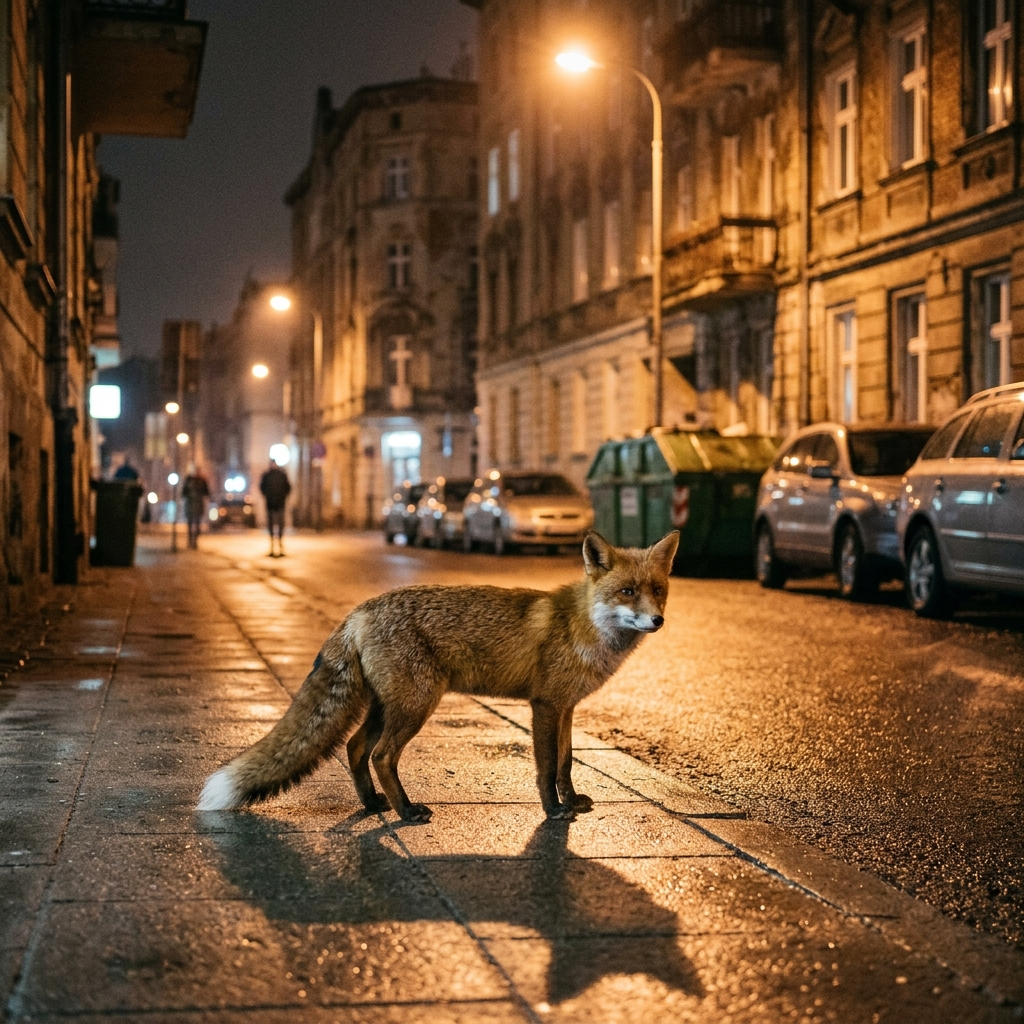
The fox is active mainly at night and at twilight, although in quiet places — especially where it is not disturbed — it does not hesitate to appear during the day. In spring and early summer, when feeding young, adults hunt almost around the clock. In the city, daily activity is often "shifted" — foxes learn when the streets are empty and move then (after midnight, before dawn).
The social structure is distinctly family-based. A pair forms a stable bond for the breeding season and the rearing period — often for subsequent seasons as well if both partners survive. The family range is occupied by the pair with young from the current year, sometimes also a female from the previous litter (acting as a helper to assist in feeding the new young). Otherwise, the fox lives solitarily — contacts with other families occur mainly while patrolling territory boundaries.
The fox does not simply run ahead — every few steps it stops, listens, and checks the wind. It is an animal that thinks one hunt ahead.
The fox's intelligence and spatial memory are exceptional. In laboratory studies, foxes learn to solve manipulative problems faster than domestic dogs. In the field, they remember dozens of locations of "pantries" with buried food, den maps used for years, and human activity schedules (departure times, garbage disposal times, times for feeding cats in the neighborhood). This plasticity is the direct cause of the success of urban populations.
Short gestation without diapause, one litter per year, intensive parental care from both parents.
The fox's reproductive cycle — unlike mustelids — occurs without embryonic diapause. Fertilization means immediate development of embryos, and the entire pregnancy is completed in less than two months.
The breeding season in Poland falls in January and February. This is when the characteristic scream can be heard in the night forest and on the outskirts of cities — a sharp, almost human-like cry of a vixen calling males. The pair bonds for a few days; males may fight for a female, though rarely with serious injuries.
Gestation lasts 51–53 days. Young are born in March or April, deep within the den, in a litter typically numbering 4–6 (range 1–13). They are blind, deaf, dark gray-chocolate in color, weighing 80–150 g. Eyes open on the 11th–14th day, hearing functions from the 3rd week. First exits from the den occur around the 4th–5th week, when the fur takes on its typical reddish tints.
This is a fundamental difference compared to mustelids (marten, badger, stoat, weasel), where the fertilized egg can "wait" for months before implantation. In the fox, fertilization and development occur immediately — which is why the cycle is much shorter (approx. 7.5 weeks of gestation instead of 9 months as in the stone marten). Consequence: a fox can only have one litter per year, strictly tied to the season, and the time of birth is precisely fitted to the spring peak in rodent abundance.

They reach sexual maturity usually at the age of about 10 months — the winter following their birth. The average lifespan in the wild is 2–5 years; many individuals die in their first year (road collisions, diseases, hunting, death during the dispersal period). In captivity, foxes live to 12–14 years, but in the Polish landscape, a 7-year-old fox is a rarity.
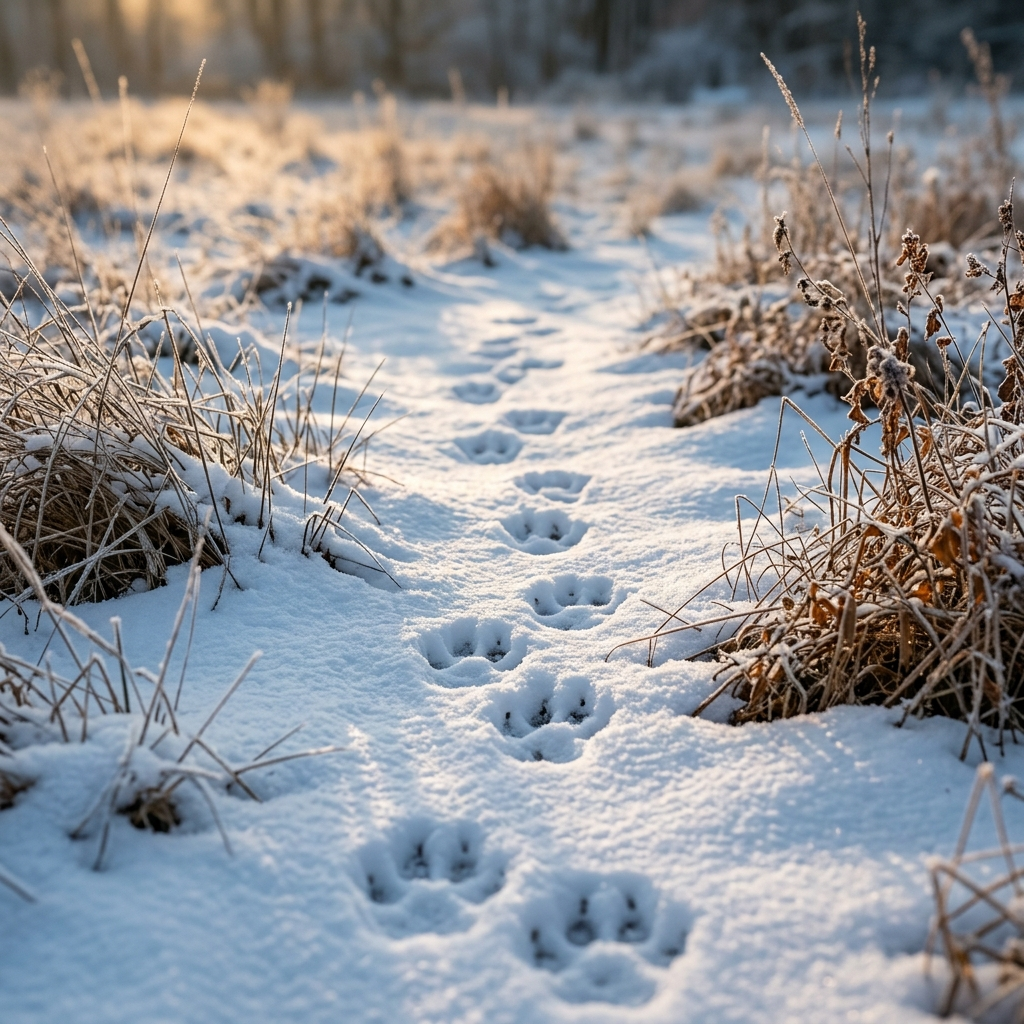
The fox track resembles a dog's — but the gait pattern and proportions are characteristically different.
Fox tracks are among the most frequently encountered in the Polish terrain — and simultaneously the most often confused with dog tracks. The key lies in three things: the width of the track, the arrangement of the toes, and — above all — the gait pattern.
A single fox paw print has a length of 4.5–5.5 cm and a width of 3.5–4 cm — distinctly narrow in relation to its length. Four toes with claw marks, the rear pad is triangular. Key feature: the two front toes are clearly advanced forward relative to the two side toes — an "X" can be drawn between them or a ruler passed through without touching any of the pads. This is not possible with a dog — the toes are usually more roundly distributed.
| Feature | Red Fox | Dog (medium) |
|---|---|---|
| Track length | 4.5–5.5 cm | 5–9 cm (depending on breed) |
| Length/width proportion | narrow, slender (~1.3:1) | roundish (~1.1:1) |
| Toe arrangement | Front toes clearly advanced; clean X-line possible | Toes arranged in more of an arc, no clean X-line |
| Claws | Small, sharp, close to the pads | Usually larger, further from the pads |
| Gait pattern | Direct register — almost a single line, step 25–35 cm | Zigzag, two lines of tracks, step shorter or longer |
| Hair between pads | Often visible in winter tracks (furred feet) | Rarely |
Direct registering (sznurowanie) is the most diagnostic feature of fox tracks. The fox walks so that the hind paws are placed exactly in the prints of the front ones, and the track of each subsequent pair overlaps almost into a straight line. In snow, it looks like a single string of prints, as if a two-legged animal was walking. A dog does not walk this way — its tracks usually form two distinct lines.

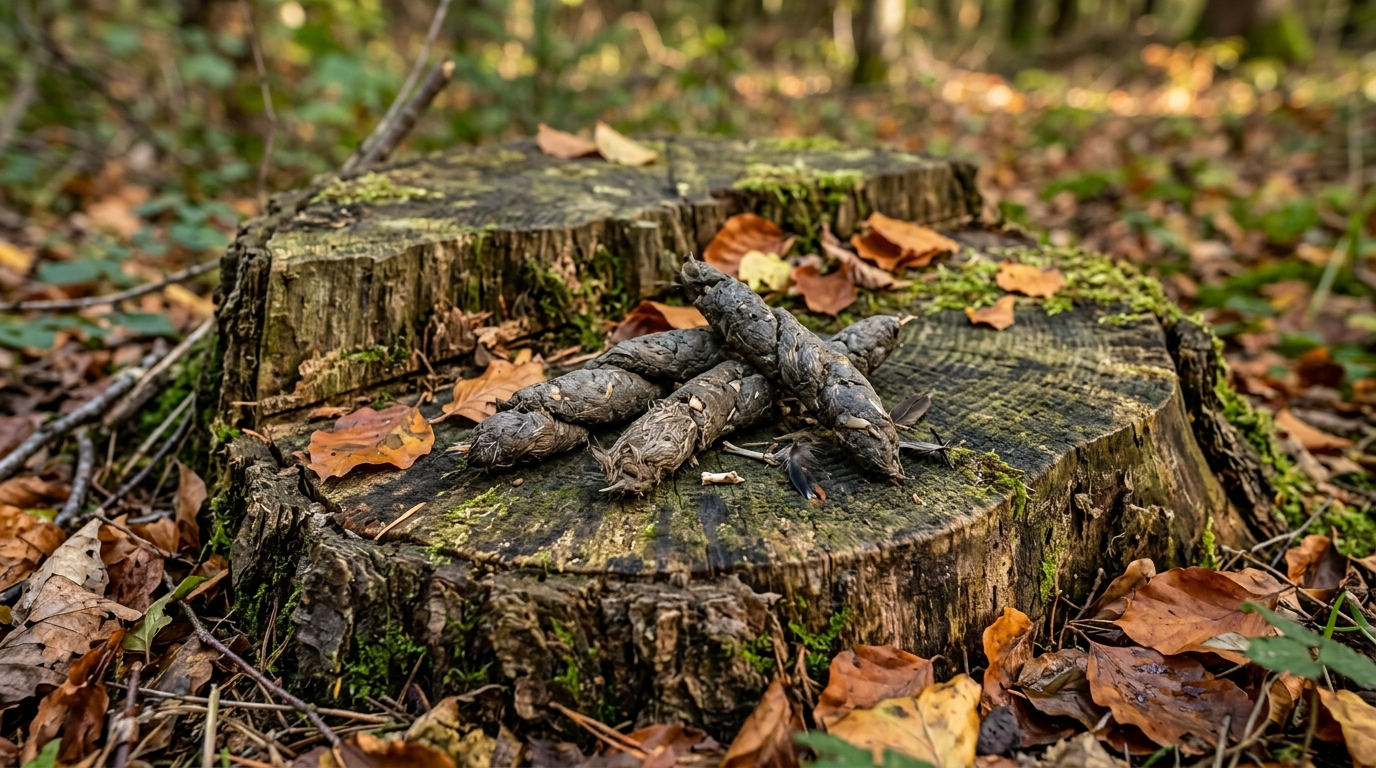
Fox droppings are 5–10 cm long and approx. 1.5 cm thick — narrow, twisted, ending in a sharp point. Inside there is almost always rodent fur, fragments of small bones, sometimes feathers, and fruit seeds (in summer and autumn). A characteristic sharp, musky, and for many people stinking smell (different from dog droppings). The fox leaves them in exposed places: on stumps, stones, clumps of grass — as part of territory marking.
Neighbor to the farm, neighbor to the housing estate, game animal — and a key vector of rabies before the vaccination era.
It is hard to find another wild mammal species whose relationship with humans is so multidimensional. The fox is simultaneously a farmer's partner (rodent control), a poultry breeder's problem, a hunting object, a neighbor to the metropolis dweller, and the central link of the most important epidemiological program of the 20th century in Europe.
Rabies and vaccinations. Before 1990, the fox was the main vector of rabies in Poland — every year, several hundred, sometimes over a thousand cases were recorded in wild animals. Since 1993, oral protective vaccinations were introduced: vaccines in the form of a fish-meat lure are dropped from planes onto forest and field areas twice a year (spring and autumn). The fox eats the bait, and the vaccine activates in the oral cavity. The success of the program is spectacular — for over a decade, Poland has been practically free of rabies in animals, with very few localized outbreaks.
Hunting status. The fox is not a protected species — in Poland, it has the status of a game animal. Hunting season: from June 1st to the end of February (males), with absolute protection of the vixen during the rearing of young. The annual hunting harvest in Poland amounts to several dozen thousand animals (usually 100–150 thousand according to the Polish Hunting Association reports), which is one of the highest numbers in Europe. Despite this, the population is stable or growing — which testifies to the demographic resilience of the species.
The urban fox is a phenomenon of the last three decades. In Warsaw, it is regularly recorded at Pola Mokotowskie, near the Vistula, in the parks around Łazienki; in Krakow — Decjusz Park, Wolski Forest; in Wroclaw — Odra embankments. The behavior of urban foxes is bolder — shorter flight distance, more frequent daytime activity, using human movements as background. Most encounters are without conflict; the fox does not attack humans, it flees or watches from a distance of a dozen meters.
Vaccinate your dogs regularly against rabies — it is a legal obligation, not just a recommendation. Despite the fox vaccination program, there is always a residual risk. Do not touch dead foxes found in the field — if you must, use gloves; do not take droppings home. If you see a fox behaving strangely (staggering, aggressive, without fear of humans at 2–3 m) — report it to the District Veterinary Inspector. If a fox bites a human, immediate medical consultation is essential (post-exposure prophylaxis).
Folklore. The fox in Polish culture is the archetype of cunning — from tales of Reynard the Fox to sayings like "sly as a fox." At the same time, it was often the victim of aristocratic hunts (the parforce tradition in Greater Poland and Pomerania in the 19th century) and, in the communist era, mass harvesting for its fur. Today, the commercial value of pelts is low; the main motivation for hunting is tradition, reduction of conflicts with small livestock, and maintaining population surveillance in the context of rabies.
The most common misunderstandings about the fox — from rabies to pack hunting.
The red fox has garnered more common beliefs than perhaps any other Polish predator. The six most common — and what science and field practice say about them:
MYTH Every fox has rabies.
FACT A myth based on a real, but former risk.
MYTH The fox hunts domestic cats.
FACT Extremely rare.
MYTH The urban fox is a new species.
FACT It is the same species — the ecology has changed.
MYTH The fox is a pest that needs to be exterminated.
FACT Half-truth — the balance is often positive.
MYTH Foxes hunt in packs.
FACT No. The fox is a solitary predator.
MYTH Meeting a fox during the day means it's sick.
FACT False — especially in the city and in spring.
„The fox does not hunt with strength. It hunts with its ear — first it hears the vole, then it calculates where it will land from the air. The mouse-jump is a trigonometric measurement.
— from field notes
Eight shots in different conditions — seasons, environments, situations. Click to enlarge.
Lloyd H.G. (1980) The Red Fox, Batsford, London · Goszczyński J. (1995) Lis — monografia przyrodniczo-łowiecka, Oikos, Warszawa · Jędrzejewski W., Jędrzejewska B. (1998) Predation in Vertebrate Communities — The Białowieża Primeval Forest as a Case Study, Springer · Forest Research Institute (IBL PAN), annual reports · Polish Society for Nature Protection "Salamandra" (PTOP), field publications · General Veterinary Inspectorate (GIW) — reports on the oral fox vaccination program against rabies · Polish Hunting Association, game harvest statistics · Editorial field notes 2022–2026.
Compiled: May 5, 2026