Saturday · May 9, 2026 · Vol. I, Nº 01
★ Spring observation season · 52°13′N 21°00′E · 14°C / pochmurno
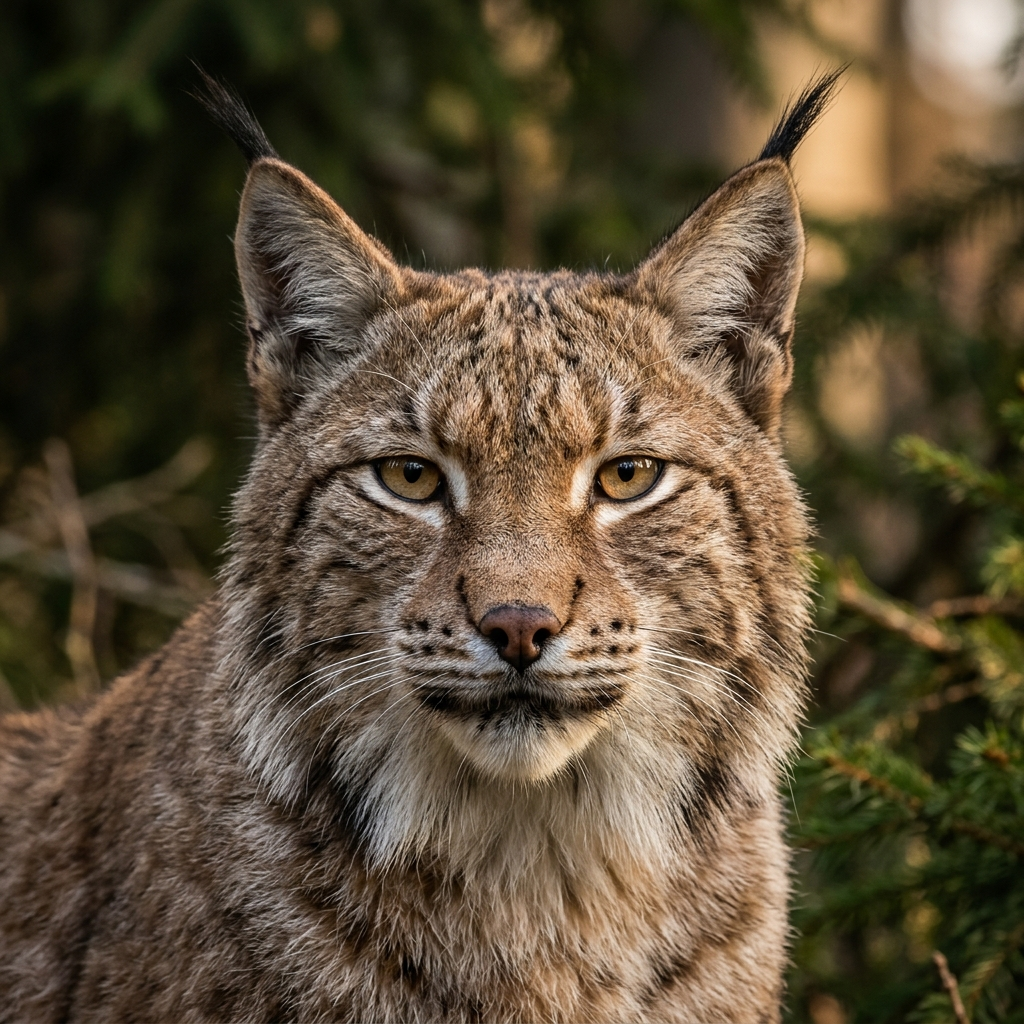
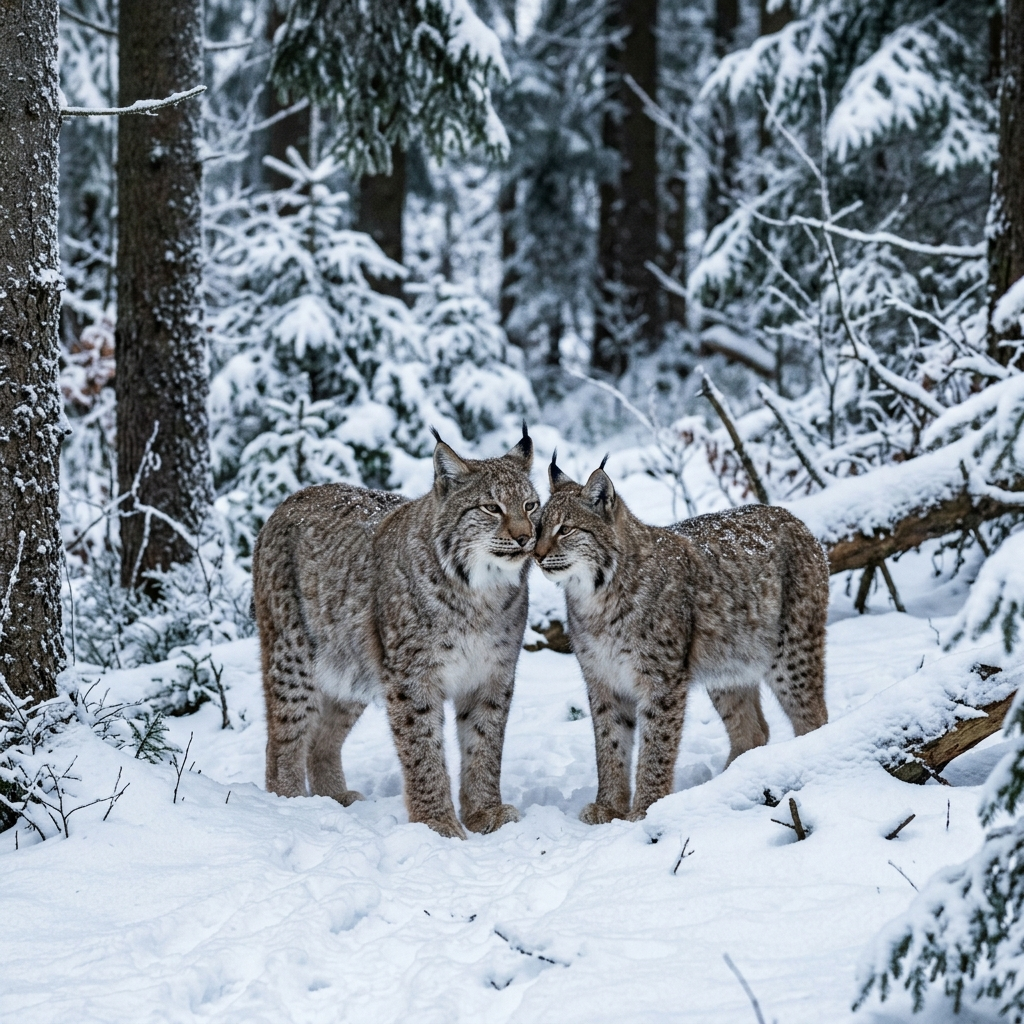
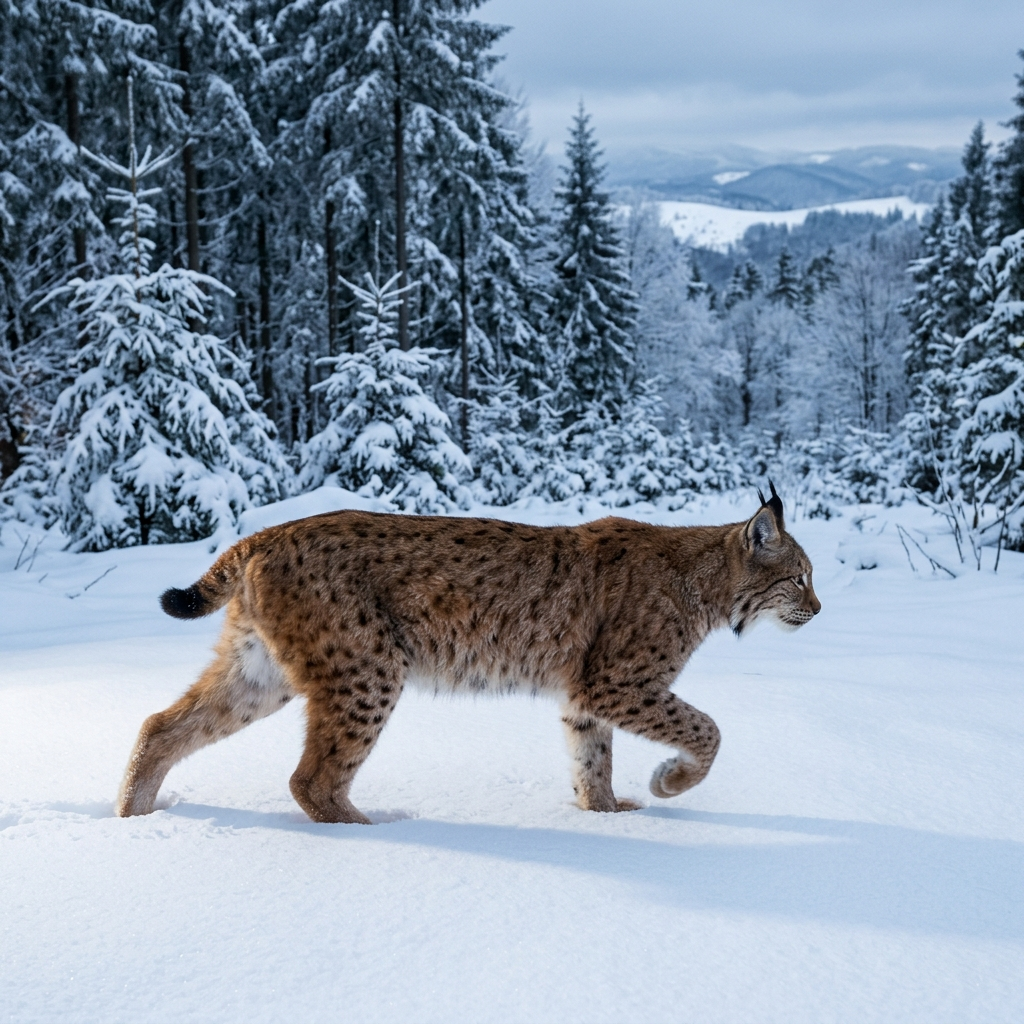
Eurasian lynx Lynx lynx adult male in a Bieszczady fir forest, characteristic black ear tufts, facial ruffs, and short tail with a black tip, spotted reddish fur
PLATE Nº 01 Lynx lynx

SPECIES PROFILE · Wild cats

Eurasian lynx

Lynx lynx · Linnaeus, 1758

Europe's third-largest predator — the cat of deep forests, master of the roe deer ambush.

The Eurasian lynx is the third-largest European predator — after the brown bear and the wolf — and the only large cat living wild in Poland. It is an ambush specialist: night, dense undergrowth, a five-meter strike at a roe deer's neck. The Polish population of 200–300 individuals is divided into two centers: the Carpathian (Bieszczady, Low Beskids) and the lowland (Białowieża, Knyszyń, Augustów forests). Characteristic black ear tufts, massive facial ruffs, and a short tail with a black tip are hallmarks that cannot be confused with any other European mammal.

80–130 cm
body length
11–25 cm
tail (short)
60–75 cm
shoulder height
18–30 kg
male mass
16–21 kg
female mass
200–450 km²
male territory
67–74 days
gestation
200–300 indiv.
PL population
LC Least Concern Strict protection + zonal protection around the den (Regulation of the Minister of Environment of 16.XII.2016); Annex II of the EU Habitats Directive — Natura 2000 priority species; CITES Appendix II Stable / slightly increasing — PL population approx. 200–300 individuals (Carpathian 130–170 + lowland 60–100), supported by reintroduction programs and camera trap monitoring

In short

Classification

Kingdom Animalia
Phylum Chordata
Class Mammalia
Order Carnivora
Family Felidae
Genus Lynx
Species L. lynx

The Eurasian lynx (Lynx lynx) is, alongside the wildcat, one of two wild cats in the Polish fauna. It is significantly larger — a male weighs 18–30 kg, a female 16–21 kg, body length 80–130 cm — and much rarer than other Polish predators like the fox or goshawk. It is a roe deer specialist: roe deer make up 80% of its prey biomass (3–5 per day during starvation periods after utilizing caches), supplemented by red deer calves, hares, and rodents. Its characteristic hunting technique is ambush and attack from 5–10 m — the lynx does not chase its prey like a wolf but waits patiently for hours on a game trail. After killing, it remains with the prey for 3–5 days, returning to it regularly. A male's territory reaches 200–450 km² — an extreme area reflecting low population density. Poland has two genetically distinct populations: the Carpathian (autochthonous, connected to Slovak and Ukrainian populations) and the lowland (supplemented by individuals from Belarus and Lithuania), differing in minor morphological traits and genetics.

01

Appearance and Silhouette

The largest European member of the Felidae family — a compact silhouette, but with extremely long legs. Every detail of its anatomy reveals a specialist for ambushing in deep snow.

The lynx is Europe's largest wild cat and the only representative of the Felidae family in Poland that cannot be confused with a domestic cat. Body length 80–130 cm, weight 18–30 kg for males and 16–21 kg for females. Shoulder height reaches 60–75 cm — the size of a large hunting dog. However, the silhouette is fundamentally feline: a short torso, very long legs, and a compact head with massive facial ruffs.

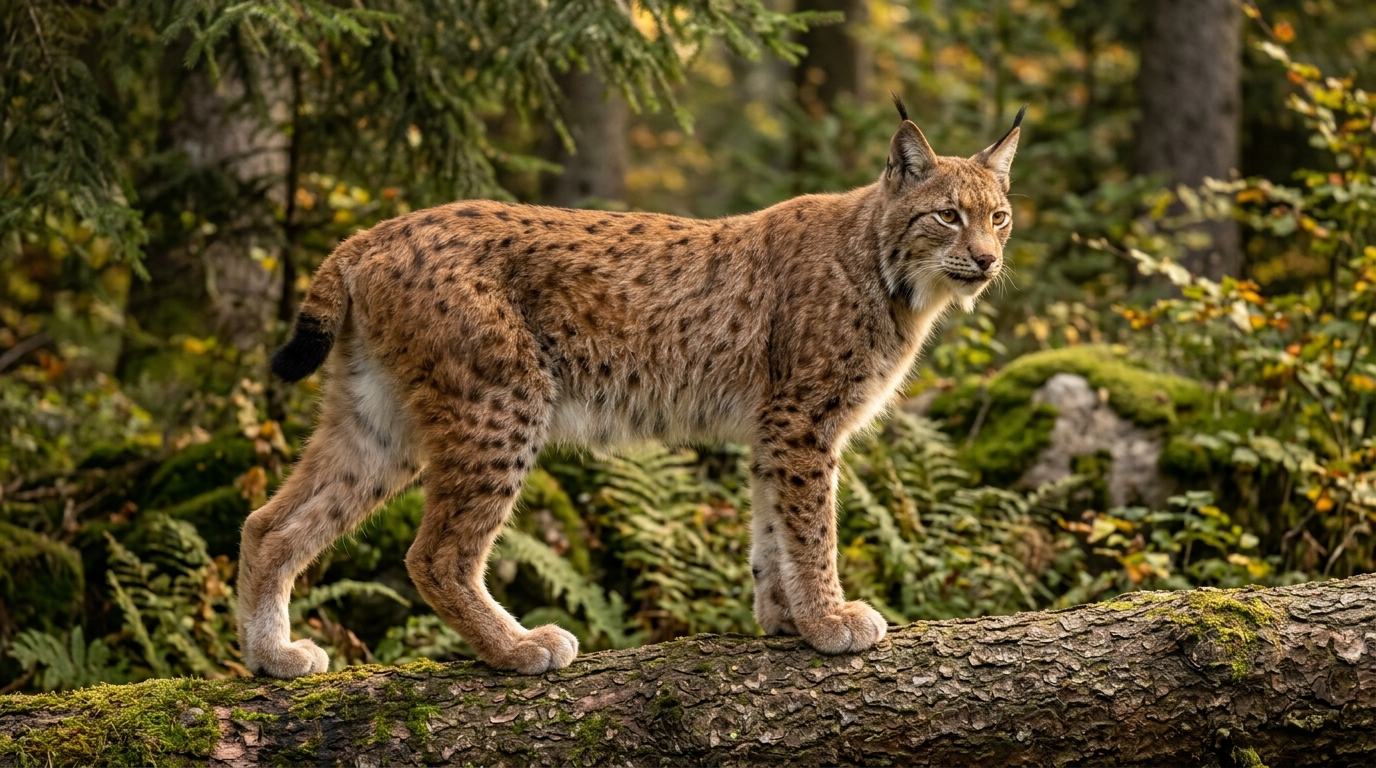
Three diagnostic features of the lynx, not found in any other Polish mammal: (1) black ear tufts — 5–7 cm long, protruding vertically from the triangular tips of the ears, likely serving a signaling function in visual communication; (2) massive facial ruffs — long hair flowing from the cheeks on both sides of the muzzle, forming a "beard," more prominent in males; (3) short bobbed tail 11–25 cm long ending in a sharply defined black tip covering the entire final section of the tail. These three features together constitute the lynx's identity certificate in the field.

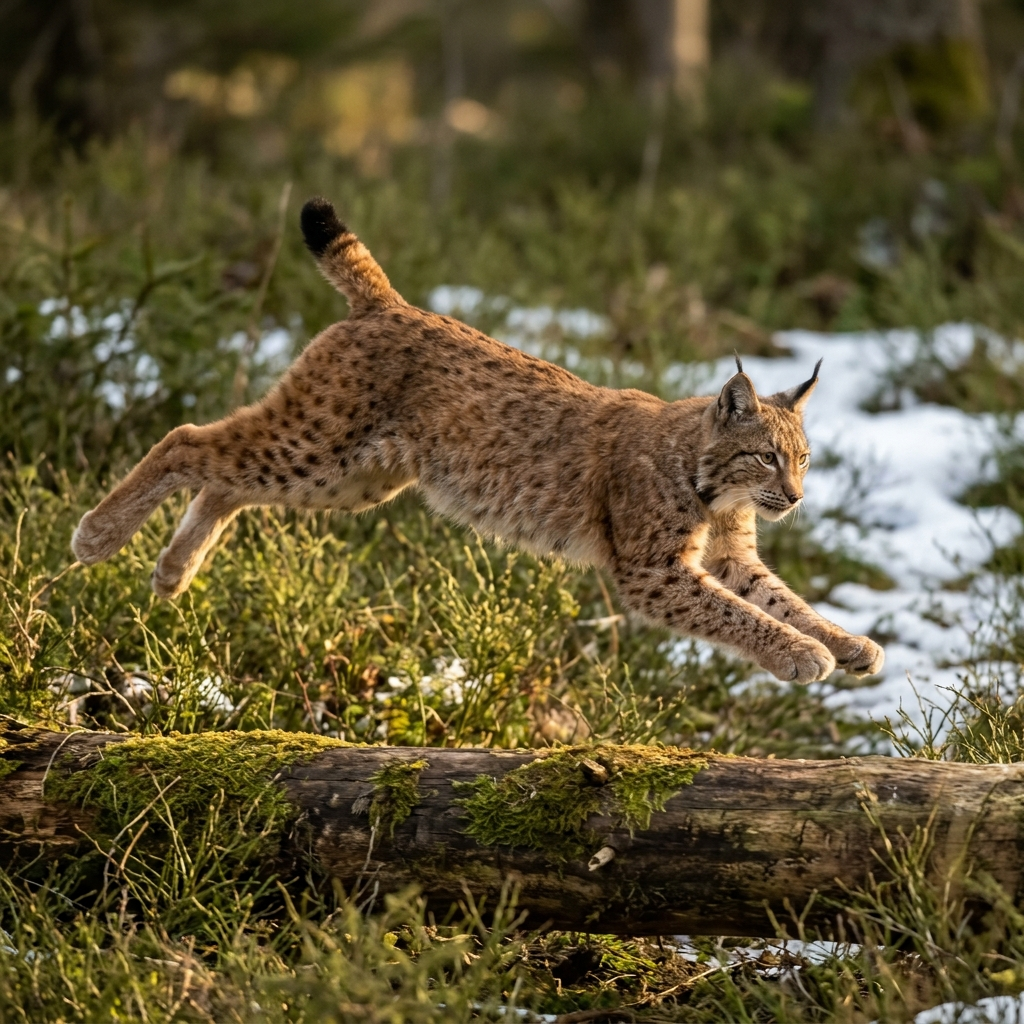
The lynx's limbs are extremely long — especially the hind ones, which are significantly longer than the front ones, giving the silhouette a characteristic raised rump. This is an adaptation for moving through deep snow and for jumping from a standstill. The paws are exceptionally wide, with dense fur between the toes and pads — natural "snowshoes" that distribute the animal's weight over a large area. A 25 kg Polish lynx exerts the same unit pressure on snow as an 8 kg fox — allowing it to hunt in conditions where a roe deer, sinking up to its belly, cannot escape.

The coat is spotted/blotched, with background colors ranging from reddish (Carpathian individuals, summer) to gray-sandy (lowland individuals, winter). Spots vary individually and aid identification via camera traps — each lynx has a unique pattern on its flanks. The Carpathian population has more distinctly spotted, high-contrast fur; the lowland population is less contrasty, with blurred spots and a paler background color — an adaptation to a different light environment (dense coniferous forests vs. Białowieża's mixed forests). The belly and throat are always creamy-white, and the forehead is adorned with a delicate dark pattern.

Why does the lynx have ear tufts?

The function of the lynx's ear tufts (known in Polish terminology as pióropusze) is debated. Three main hypotheses: (1) Acoustic — the tufts act like resonators, increasing hearing sensitivity to high frequencies (rodent squeaks, rustling of hare fur); ablation studies on Canada lynx showed an 8–12% drop in hunting efficiency after tuft trimming; (2) Communication — the black tufts are clearly visible against the face and serve as a visual signal in feline facial expressions (ear positioning = information about mood, aggression, alertness); (3) Camouflage — they break up the silhouette of the head, making it harder for prey to detect a lurking lynx. Latest research (Sundell et al., 2024) indicates a combined effect of all three functions.

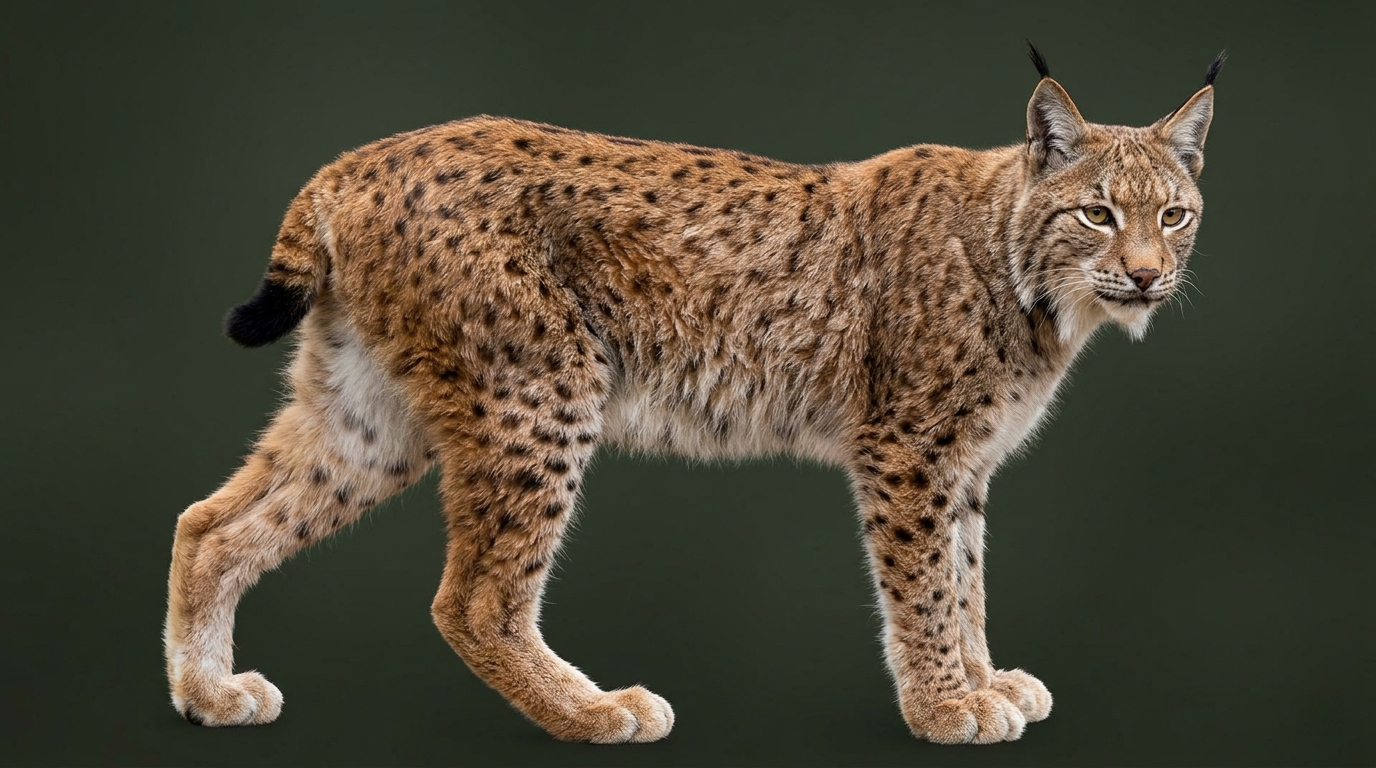
Lynx anatomy — side silhouette with described features: ear tufts, facial ruffs, short tail with black tip, long legs
Fig. 01Silhouette of a male lynx in profile — key diagnostic features: ear tufts, facial ruffs, short tail with black tip, long legs with furry paws.
02

Environment and Range in Poland

Two Polish centers: mountainous in the Carpathians and Bieszczady, lowland in the Białowieża and Knyszyń forests. Separated by hundreds of kilometers, genetically distinct.

The lynx in Poland occupies two separate areas — which is typical on a European scale, but biogeographically fascinating in a Polish context. The Carpathian range (Bieszczady, Low Beskids, Sądecki Beskids, fragmentarily the Tatras) has 130–170 individuals and is part of the autochthonous Carpathian population connected with Slovakia, Ukraine, and Romania. The lowland area (Białowieża, Knyszyń, Augustów forests, partially Romincka and Borecka forests) has 60–100 individuals and is supported by immigration from Belarusian and Lithuanian populations.

The lynx's natural habitats are dense coniferous and mixed forests with thick undergrowth. Critical factors include: (1) dense undergrowth — essential for ambush techniques and hiding kittens; (2) an area of at least several dozen km² without permanent human presence; (3) the presence of a stable roe deer population as the dietary base; (4) the presence of hollows and crevices under roots or rocks for a den. The lynx avoids open spaces, uniform young plantations, and areas with a dense network of forest roads with tourist traffic.

A male's territory in Polish conditions reaches 200–450 km² — an extreme area, indicating low population density. A female's territory is smaller (100–200 km²) and often lies within a male's territory, but individual females do not overlap. Population density: in the Polish Carpathians 1–2 individuals per 100 km², in the lowlands 0.5–1 individual per 100 km². For comparison — in Scandinavia (Norway, Sweden), densities reach 4–6 individuals/100 km². Polish density is typically low, characteristic of fragmented habitats.

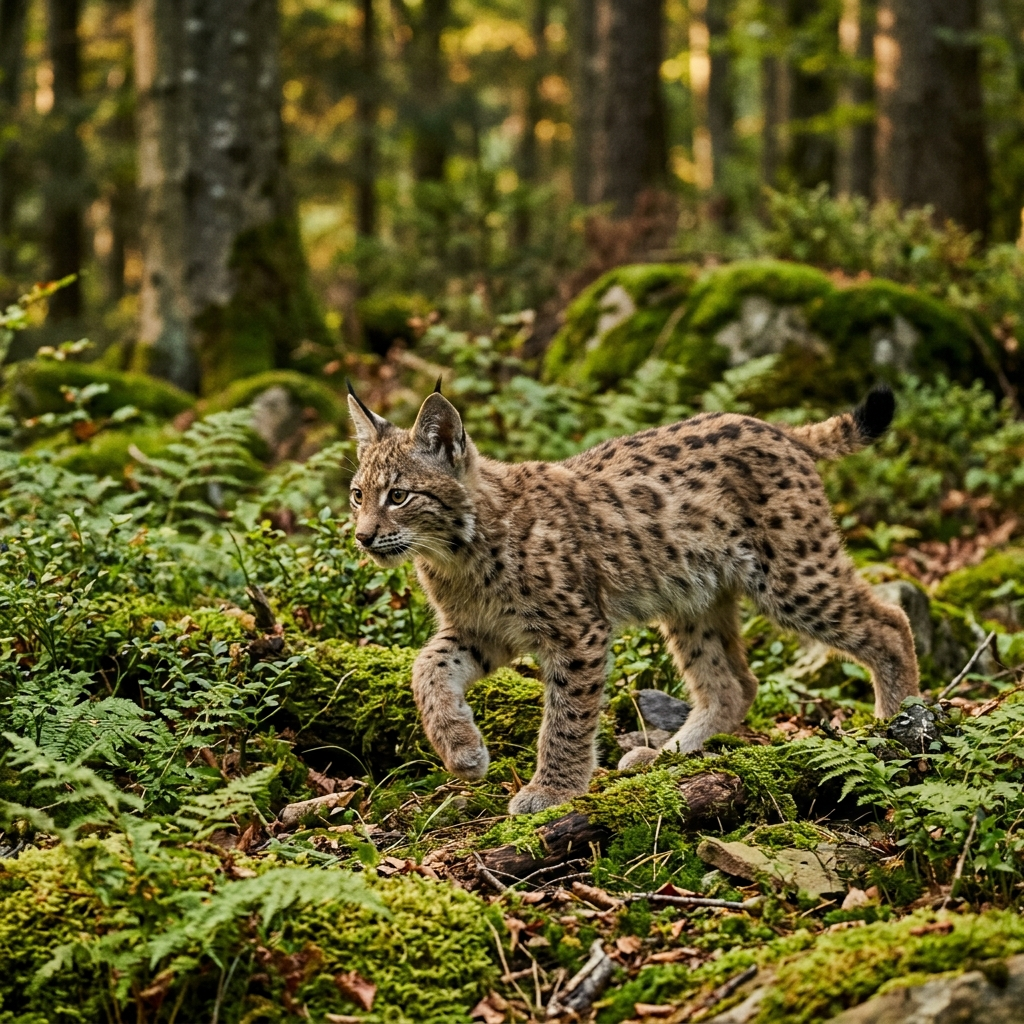
Bieszczady fir-beech forest with dense bilberry undergrowth and mossy fallen logs — typical habitat of the Carpathian lynx population
Fig. 02Typical habitat of the Carpathian lynx population — Bieszczady fir-beech forest with dense undergrowth and fallen logs.
03

Diet and Hunting Strategy

Roe deer account for 80% of prey biomass. The rest consists of opportunistic supplements. Strategy: ambush, five-meter strike, return to prey over the next 3–5 days.

The lynx is a highly specialized roe deer predator. In Polish studies of stomach contents and kill remains, roe deer constitute 70–85% of prey biomass (averaging about 80%). The rest includes red deer calves, European hares, rodents, ground birds, and occasionally foxes and badgers. This level of specialization in the Polish environment is unique — no other Polish predator relies so heavily on a single prey species.

Prey spectrum in Polish conditions: roe deer (15–25 kg, the ideal prey-to-predator mass ratio), red deer calf (up to 50 kg, taken seasonally), European hare (3–5 kg, frequent in forests with large open areas), rodents (mice, voles, occasionally squirrels — seasonal supplement), ground birds (capercaillie, black grouse, hazel grouse — during their abundance periods), and occasionally young wild boars and foxes/badgers. Average requirement for a lynx is 1–2 kg of meat per day; this means an independent adult kills about one roe deer per week, while a female with kittens during the rearing period kills a roe deer every 3–4 days.

The hunting strategy is fundamentally different from the wolf's. The lynx does not chase its prey — it stalks and hunts from ambush, waiting for hours in a chosen spot (terrain drop, fallen log near a game trail, dense spruce clump). The attack occurs from a distance of 5–10 m: a maximum of three long leaps, a grip on the neck or throat, the lynx's weight topples the roe deer and allows for a bite to the larynx or cervical spine. A successful attack lasts 2–4 seconds. If the leap fails and the roe deer escapes — the lynx does not chase further than 30–50 m. This is a radically different hunting economy than that of canids.

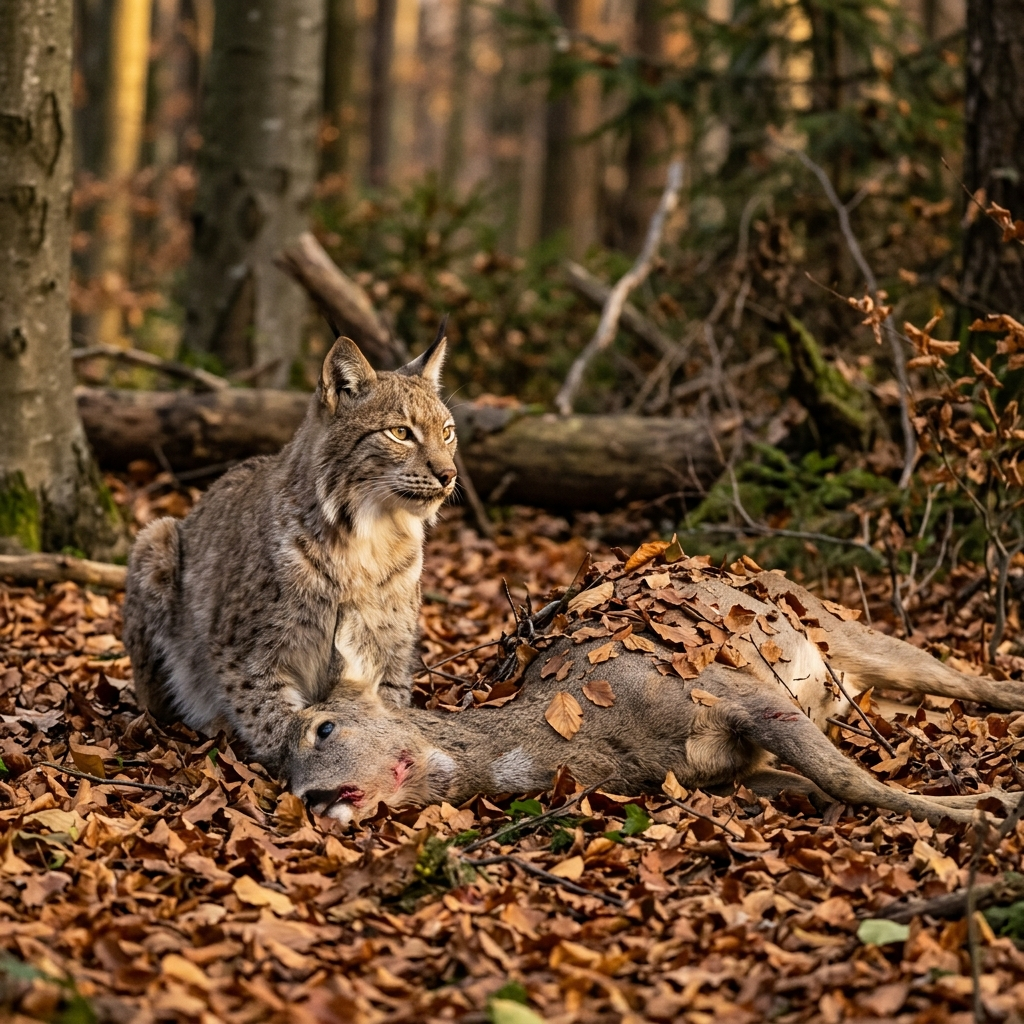
After the kill, the lynx remains with the prey — and this is its second diagnostic behavioral trait. Partial consumption (a lynx eats 2–3 kg at a time), then the prey is cached (covered with leaves, branches, or snow) and the lynx returns to it for 3–5 days, renewing the meal every night. This allows for maximum biomass utilization from a difficult hunt. Consequently: finding a blood trail leading to a hidden roe deer carcass in dense undergrowth is an almost certain sign of a lynx's presence in the area. Camera traps set up at a freshly killed roe deer often record the same lynx individual returning every 24 hours.

Why doesn't the lynx chase its prey?

The energy economy of cats is fundamentally different from that of canids. The lynx is a sprinter, not a marathon runner: it has a powerful but small heart relative to its body mass, and muscles made of type II fast-twitch fibers (white, anaerobic), with low myoglobin levels compared to the wolf. After a sprint of up to 60 km/h for 80–100 m, it reaches the lactic acidosis limit and must stop for at least 15–20 minutes. A wolf, however, can run at 30–40 km/h for several hours — it has endurance that felines genetically lack. Therefore, the lynx by necessity hunts from ambush: it has no choice; it cannot chase a roe deer for kilometers. This is not a strategic difference, but a physiological one — written into its muscles and heart.

04

Reproduction and Rearing of Young

Mating in February, gestation 67–74 days, den under the roots of an old tree. The female raises 2–3 kittens alone — the male does not participate. Independence after 10 months.

The lynx is solitary and polygamous — the male leaves the female after a short mating period and does not participate in raising the kittens. The entire burden of care, feeding, and hunting instruction rests on the female for 10–12 months. This is one of the longest periods of kitten dependency among Polish predatory mammals.

The mating season (rut) falls in February–March. During this period, males actively patrol their own territories and those of several females, traveling up to 20–30 km per day. Vocal communication (rare for lynxes in other periods!) becomes regular — characteristic roaring, meowing calls of females audible at night from 1–2 km away, and short growling overtures from males. After finding a female, the male accompanies her for 3–7 days, with copulation repeated multiple times, then the males leave — sometimes seeking another female in the same season.

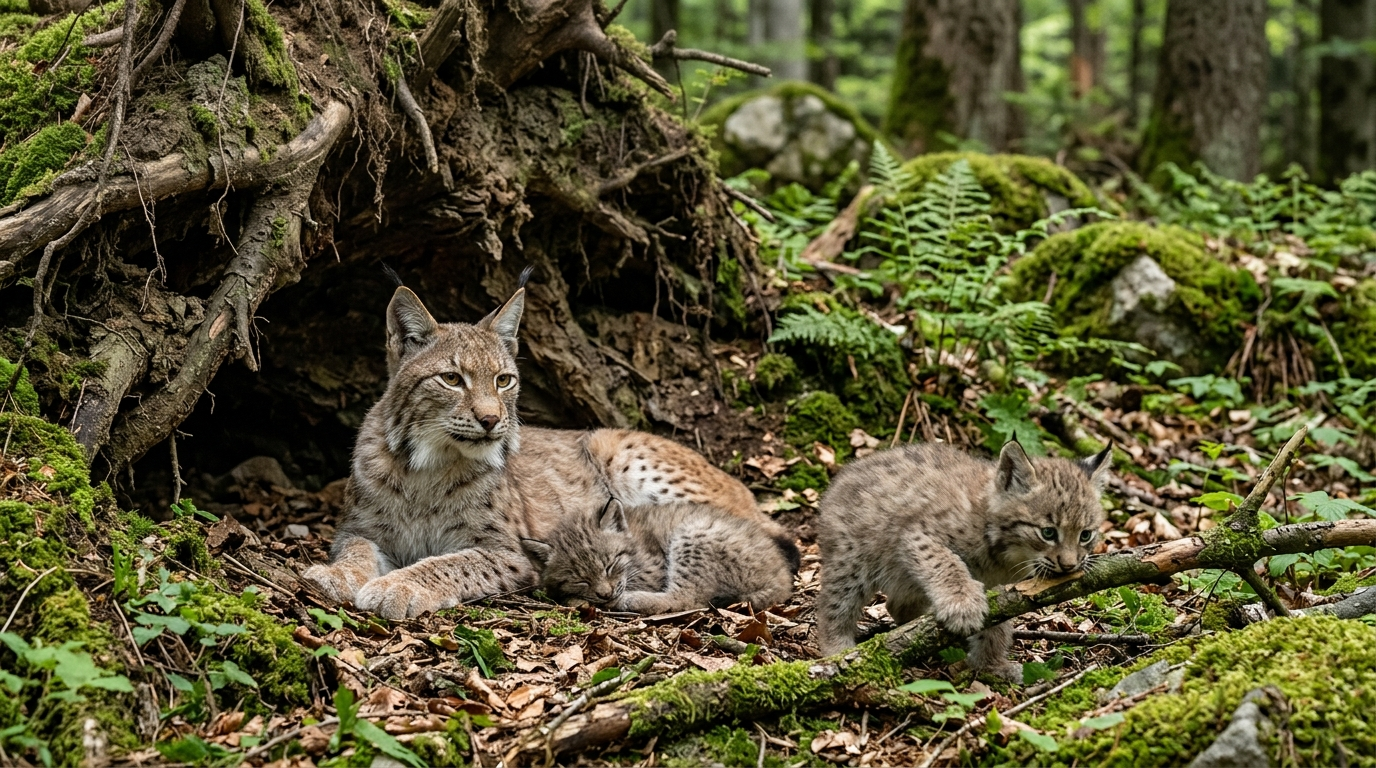
Gestation lasts 67–74 days. The den is arranged under the roots of a fallen oak or spruce, in a rock crevice, under an uprooted tree, or sometimes in dense spruce undergrowth with a lining of moss and dry grass. The location is critically secret — the female chooses places difficult for humans and other predators (wolves, bears) to access. A litter consists of 2–3 kittens (rarely 4), born blind and deaf, with a newborn weight of 250–300 g. They open their eyes on the 12th–14th day and leave the den under the mother's care in the 6th–8th week.

Rearing is long and intensive. Milk feeding lasts up to 4–5 months, but as early as the 2nd–3rd month, the mother brings killed roe deer to the den — first small young ones, then increasingly larger ones. From the 6th month, the kittens accompany the mother on hunts, learning ambush techniques through observation. Full independence occurs in the 10th month — the kittens disperse and begin wandering in search of vacant territories. Young males travel further (up to 100–200 km from the birth den), while young females settle closer — usually within or bordering their father's or mother's territories. Male dispersal is crucial for genetic exchange between subpopulations.

Female lynx with two kittens at a den under the roots of an old oak — early summer parental care
Fig. 03Female lynx with two kittens aged 8 weeks at a den under the roots of an old oak — a typical scene from the Bieszczady forest.
05

Tracks, Paths, and Signs of Presence

The lynx is almost impossible to observe directly. Everything we know about it from the field comes from signs: a track without claws, a "registering" gait, a hidden roe deer carcass, claw marks on bark.

Direct observation of a lynx in Poland borders on a miracle. Tracking is the main way to document its presence, and for 15 years — camera traps. Lynx tracks are highly diagnostic: four toes, NO claws (as in all felines), a 6–9 cm print, in a "registering" line.

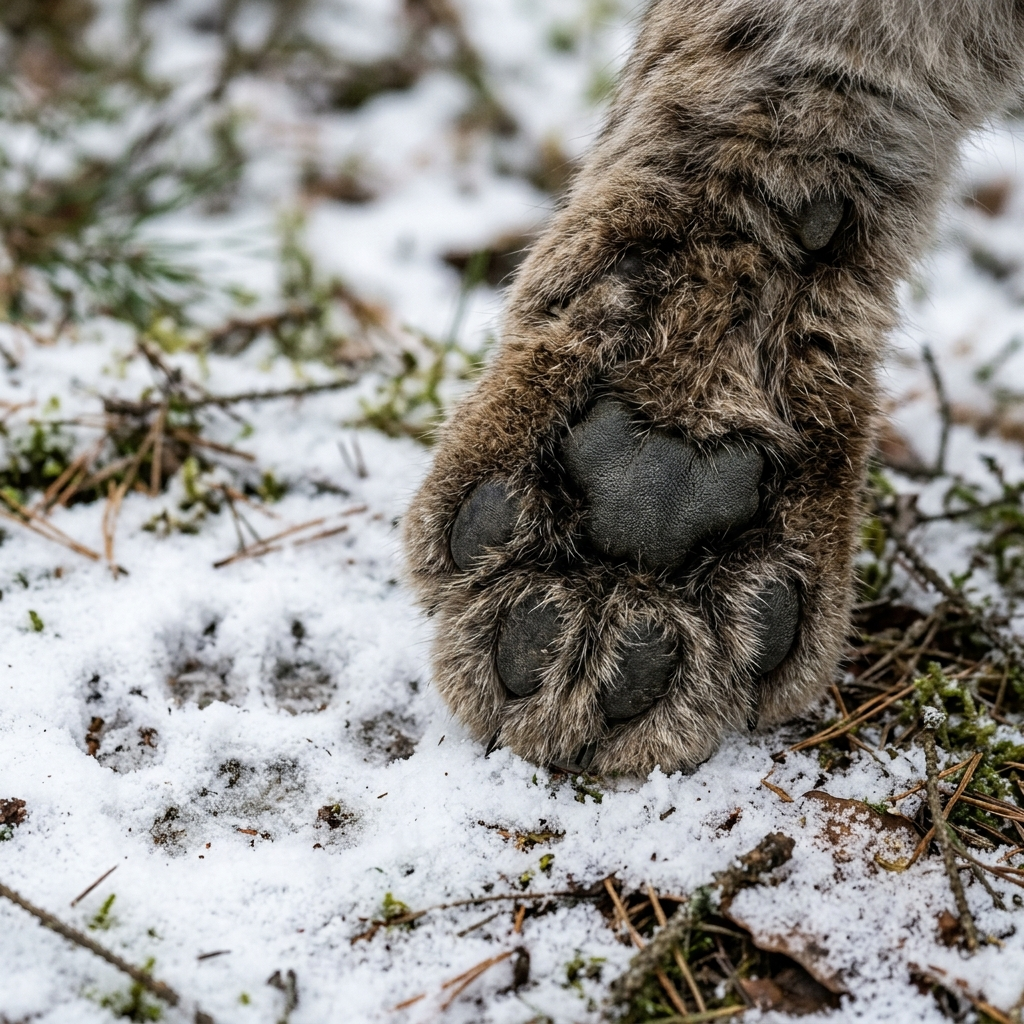
A lynx track shows four toe prints (the fifth, the thumb, does not leave a mark), WITHOUT claws (they are retracted during walking, unlike canids) — this is absolutely diagnostic for the Felidae family. Dimensions: track length 6–9 cm, width 6–9 cm — the print is almost circular, much larger than a wildcat's (3–4 cm) and a domestic cat's (2.5–3 cm). The track pattern during walking is a characteristic "string" (registering) — tracks in a single line, one after another, with minimal gap between right and left legs; a roe deer would leave tracks in two parallel lines, a fox — in a single line but with claws. A lynx's stride when walking is 60–80 cm, and up to 4 m in a hunting leap.

A hidden roe deer carcass is the second diagnostic sign of a lynx in the field. After hunting, the lynx masks the prey — covering it with leaves, branches, moss, or snow, forming a loose mound. Characteristic features of a lynx kill: the prey is almost always a roe deer, rarely a young red deer; a wound inflicted in the neck/throat area; partially consumed (from fleshy parts of the torso, chest, thighs); internal organs usually left untouched; no tearing as with a wolf — the wound is precise, bones relatively intact. The lynx returns to the carcass for 3–5 days — a camera trap at the find usually records the same individual several times.

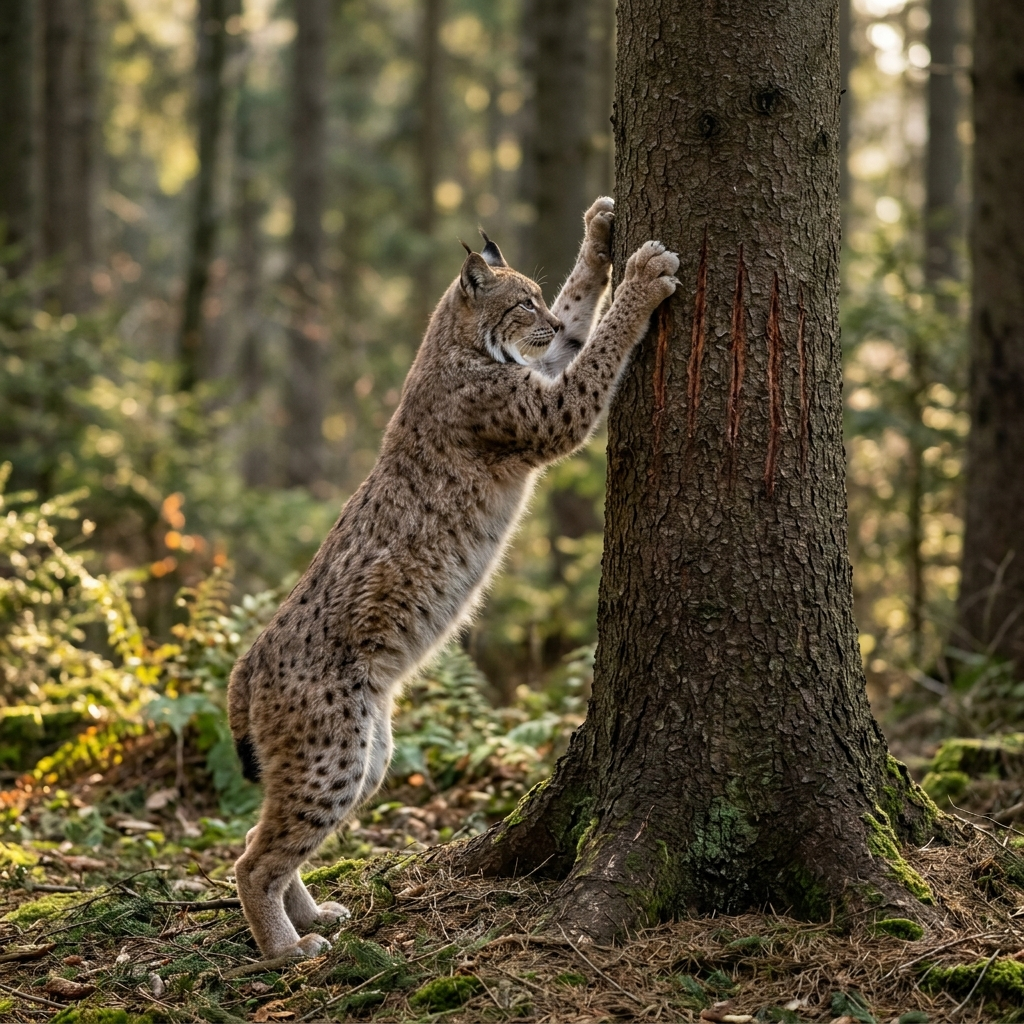
Clawing bark of trees is a behavioral sign — the lynx marks its territory through vertical scratches on the bark of spruces and firs, at a height of 80–120 cm (the reach of a raised paw with extended claws). The scratches are 4-toed, parallel, and 15–30 cm long. Scent points — the lynx marks individual trees, stumps, and grass clumps with urine and anal gland secretions at territory boundaries; in winter, these signs may be visible as yellow spots on the snow. Lynx scats are cylindrical, 8–15 cm long, full of roe deer fur, usually left in prominent places (on paths, on stumps) as a territorial signal.

Lynx track in fresh snow with four distinct toes without claws — diagnostic registering gait
Fig. 04Fresh lynx track in Carpathian snow — diagnostic four toes without claws and characteristic registering gait.
06

Two Populations in Poland

Carpathian and lowland — geographically separated, genetically distinct, requiring separate conservation strategies. Barriers: highways, cities, lack of a continuous ecological corridor.

Poland is one of the few European countries where the lynx occurs in two genetically distinct populations within a single state. The autochthonous Carpathian population and the lowland population (fed by Belarus/Lithuania) are about 350–400 km apart and almost entirely lack genetic exchange due to habitat fragmentation (A2, A4 highways, urban areas, lack of continuous forest corridors).

The Carpathian population numbers 130–170 individuals in the Polish part of the Carpathians (Bieszczady, Low Beskids, Sądecki Beskids, fragmentarily the Tatras, Żywiec Beskids). It is part of the wider Carpathian population covering Slovakia (350–400), Ukraine (250–300), and Romania (1500–2000) — totaling 2500–3000 individuals. It is an autochthonous population, having never gone extinct in the Carpathians. It is characterized by: stronger spotting of the fur, high-contrast reddish color, larger body mass (males up to 30 kg), and richer genetic diversity. Stable / slightly increasing trend thanks to the Bieszczady National Park and strict protection.

The lowland population numbers 60–100 individuals in the Białowieża, Knyszyń, Augustów forests, and partially in the Tuchola Forest and Borecka Forest. It is younger — in the 19th–20th centuries, the lynx almost went extinct in the Polish lowlands; surviving population fragments recovered in the second half of the 20th century thanks to immigration from Belarus (the Belarusian side of the Białowieża Forest) and Lithuania. It is characterized by: weaker spotting, paler gray-sandy color, lower body mass (males 20–25 kg), and poorer genetic diversity (founder effect). Stable trend, but requiring a constant influx of individuals from Belarus.

Genetic differences between the two populations have been documented in DNA studies (mtDNA and microsatellite analysis). The Carpathian population has Central-European and Balkan haplotypes; the lowland population has Northeastern haplotypes shared with populations from Belarus, Lithuania, Latvia, and Fennoscandia. There is no documented exchange of individuals between the two Polish populations in the 20th/21st centuries. Ecological corridors are theoretically planned (e.g., the eastern corridor through Roztocze and Janów Forests), but in practice, their function is blocked by infrastructure barriers. This is one of the key problems for lynx conservation in Poland.

Are the two populations two different subspecies?

Not in current taxonomy. Traditionally, several subspecies of Eurasian lynx were distinguished: L. l. lynx (Scandinavia, Russia, Balkans), L. l. carpathicus (Carpathians), L. l. balcanicus (Balkans), L. l. dinniki (Caucasus), and L. l. wrangeli (Siberia). The Polish Carpathian population was traditionally assigned to L. l. carpathicus, and the lowland population to the nominate L. l. lynx. However, modern genetic studies (Rueness et al., 2003; Gugolz et al., 2008) indicate a lack of sufficient divergence to maintain subspecies — morphological differences result from geographical clines rather than evolutionary isolation. Currently, the IUCN recognizes all European populations as one monotypic species, but recommends treating the Carpathian and lowland populations as separate conservation management units.
07

Conservation and Conflicts

Strict protection, zonal protection around the den, Natura 2000 priority species. Main threats: poaching, road collisions, habitat fragmentation. Reintroduction programs are controversial.

The lynx in Poland is covered by one of the strongest legal protections among Polish predatory mammals — combining strict species protection with zonal protection for dens and Natura 2000 priority species status. Despite this, the population remains small (200–300 individuals), and real threats (poaching, road collisions, fragmentation) still exist.

Legal status: strict protection in Poland (Regulation of the Minister of Environment of 16.XII.2016, Annex 1); zonal protection around the den — a 200 m year-round protection zone, and a 500 m seasonal protection zone from January to August; EU — Annex II and IV of the Habitats Directive, Natura 2000 priority species (its presence justifies the creation of an area); CITES — Appendix II (trade regulation); Bern Convention — Appendix III. International conservation programs: Carpathian Convention, Habitats Directive monitoring.

Main threats: (1) Poaching — illegal shooting, most often by poachers hunting roe deer or through illegal snares; in PL, 2–5 killed lynxes are found every year, though the true number could be 2–3 times higher. (2) Road collisions — particularly tragic in the Carpathians, where expressways (Zakopianka, S19, roads to Bieszczady) cross migration corridors; females with kittens are especially vulnerable. (3) Habitat fragmentation — the A2/A4 highways physically block exchange between Carpathian and lowland populations; ecological crossings exist but are few. (4) Reduction of roe deer populations by diseases (e.g., ASF in wild boars competing for food) and intensive hunting. (5) Disturbance during the kitten-rearing period — forest tourism, 4x4 rallies.

Reintroduction and support programs: (1) Reintroduction in Kampinos National Park (2019–) — a controversial project releasing lynxes from captive breeding (Active Environment Association, WWF partner); part of the scientific community criticizes the project as genetically and ecologically unjustified (small area, isolation, low survival chances); the first individuals died in road collisions. (2) Camera trap monitoring (Association for Nature "Wolf", IBS PAN, GDOŚ) — systematic studies since 2010 on population size, distribution, and individual identification (each lynx is recognized by its spot pattern). (3) Ecological corridors — theoretically planned, partially realized (crossings over/under highways). (4) Education in border areas — reducing poaching.

08

What it is Often Confused With

The lynx is practically impossible to mistake if seen in full. Problems arise with fragmentary observations: a shadow in the thicket, a silhouette at night, or an unclear track.

The most common mistakes involve very large wildcats (during fragmentary observations) and very large domestic cats (during observations from a distance or in cities). Tracks can be confused with those of a young wolf — however, key diagnostic features allow for unambiguous identification.

The European wildcat (Felis silvestris) is the only wild cat in Poland other than the lynx. It occurs in specific spots in the Bieszczady, Low Beskids, and fragmentarily in the Central Carpathians. Weight 3–7 kg (3–5 times less than a lynx!), compact silhouette, long and massive tail (60–70% of torso length, with distinct black rings and a blunt black tip, NOT a sharp black cap), gray-striped fur (like a thick mackerel tabby domestic cat), WITHOUT ear tufts. Critically: the wildcat has no tufts and has a long, striped tail.

Domestic cat — a large reddish or gray cat can be mistaken for a lynx by laypeople from a distance. However: weight 3–6 kg (on average), long tail (gradually tapering, WITHOUT a black cap), no ear tufts, no facial ruffs, short legs. Key diagnostics: a lynx does not enter human settlements, and a cat does not occur deep in state forests. The myth of an "alpha lynx seen near buildings" is practically always a large domestic cat or a wildcat-domestic cat hybrid.

Tracks: a young wolf's track (1–2 years old) is 6–8 cm long — comparable to a lynx. Key: a wolf has claws (4 distinct marks in front of the toes), a lynx does not. A young lynx's track (kitten aged 8–10 months) is 4–6 cm — very similar to a large domestic cat, but the registering gait and location deep in the forest are decisive.

FeatureLynxWildcatDomestic Cat
Mass16–30 kg3–7 kg3–6 kg
Body length80–130 cm50–80 cm45–55 cm
Shoulder height60–75 cm30–40 cm23–25 cm
Tailshort 11–25 cm, black tiplong, striped, blunt tiplong, tapering, no black cap
Ear tufts5–7 cm, blacknonenone
Facial ruffsmassive, longdelicatenone
Furspotted/blotchedgray-striped (mackerel)diverse
Track6–9 cm, NO claws, stringing3–4 cm, NO claws2.5–3 cm, NO claws
Habitatdeep coniferous/mixed forestsCarpathians, forests with gladesnear buildings
How to recognize a lynx in 3 seconds

If you see a wild cat in a Polish forest and have 3 seconds, check in order: (1) ear tufts (present — it's a lynx; absent — wildcat or domestic cat); (2) tail length (short, bobbed with a black tip — lynx; long striped — wildcat; long plain — domestic cat); (3) mass (like a large shepherd dog — lynx; like a large cat — wildcat/domestic cat). These three features together give 100% certainty of identification. Additionally: location — lynxes live exclusively in the deep, dense forests of the Carpathians or the Białowieża/Knyszyń forests; seeing a "lynx" elsewhere in PL is 99% likely to be a mistake.

POLAND
2026
— Field correspondence —

One letter from the field, every month.

The latest species profiles, seasonal guides and field observations delivered straight to your inbox. No spam, no clickbait — just solid content once a month.

2,847 readers · 0% spam · unsubscribe with one click