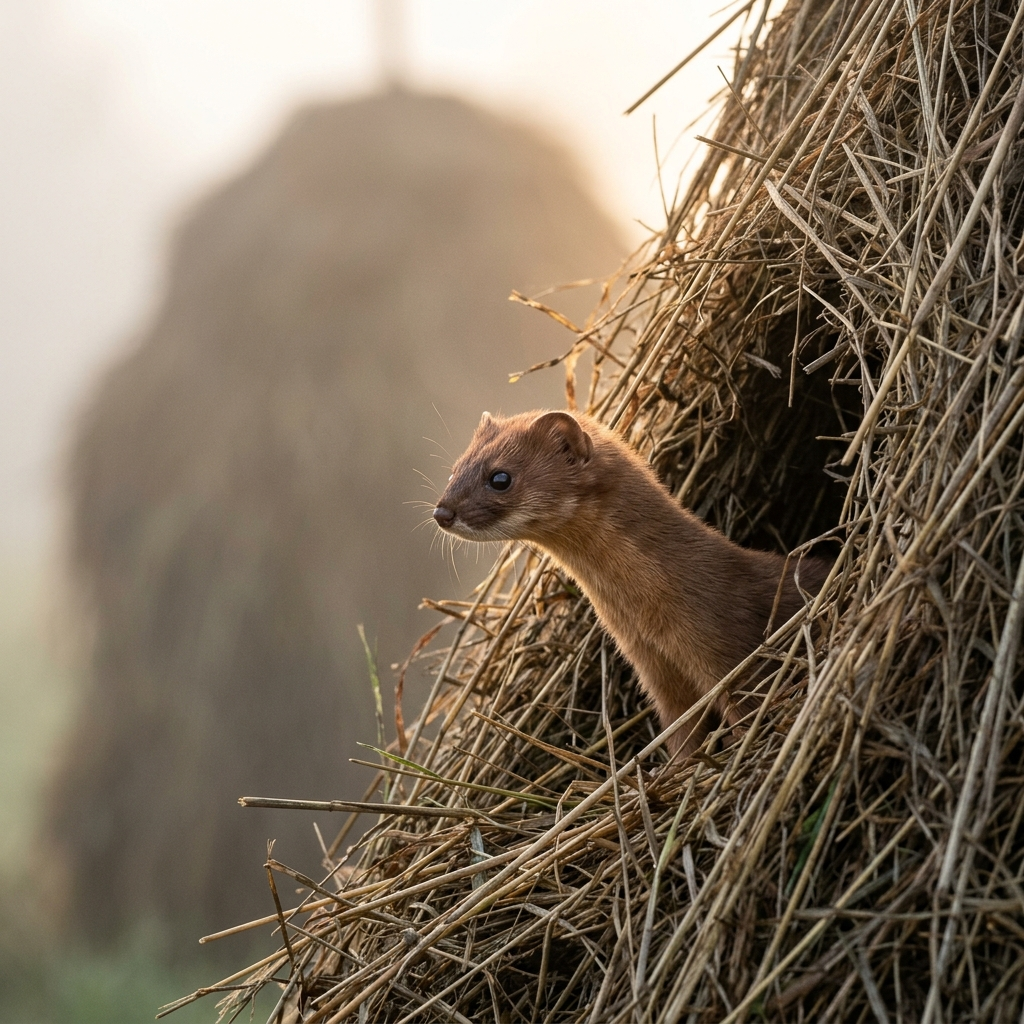
The smallest predator in the world — and the terror of common voles.
The world's smallest predator — the male weighs as much as two chocolate bars, and the female is even smaller. It fits into a mouse hole, runs through vole tunnels, and can kill prey five times heavier than itself. Quiet, fast, almost invisible — yet one of the most important regulators of small rodent populations in the agricultural landscape.
11–26 cm
body length
3–9 cm
tail length
30–250 g
body mass
1–3 years
lifespan in the wild
1–25 ha
male territory
3–8 young
per litter
34–37 days
gestation (no diapause)
1/3 mass
eaten daily
LC Least Concern Species under partial protection (since 2014)Stable population, but closely tied to rodent cycles
In short
The world's smallest carnivore — male 60–250 g, female only 30–100 g
Narrow silhouette allows it to enter a burrow with a diameter of 22 mm — hunts underground
Belly is always white, back reddish-brown; in Poland, it rarely turns completely white in winter
80% of the diet consists of small rodents — mainly common voles, mice, and shrews
Active both day and night — an exception among mustelids
No embryonic diapause — can produce 2 litters per year when food is abundant
In Poland, the species is under partial protection (since 2014) — key rodent regulator
Classification
Kingdom
Animalia
Phylum
Chordata
Class
Mammalia
Order
Carnivora
Family
Mustelidae
Genus
Mustela
Species
M. nivalis
The least weasel (Mustela nivalis) belongs to the Mustelidae family — it is its smallest representative and also the smallest living carnivore in the world. In Poland, it occurs everywhere except for the high parts of the Tatra Mountains, although due to its small size and secretive lifestyle, it is disproportionately rarely noticed. It shares only a family with the stone marten — the weasel is 10–20 times smaller, belongs to a different genus (Mustela), has a different ecology, and a different reproductive strategy. Its closest relative is the stoat, with which it is often confused, especially in winter.
01
Appearance and Anatomy
The smallest mustelid in the world with extreme dimorphism and a body narrower than a pencil.
The least weasel is a predator with a narrow, cylindrical, almost snake-like body. The length of a male is 16–26 cm, a female only 11–19 cm — the difference in dimensions is so large that in the past, both sexes were sometimes described as separate species. The tail is short, 3–9 cm, making up less than one-third of the body length. Male mass: 60–250 g, female: 30–100 g. For comparison: an adult stone marten weighs 1100–2500 g, which is 10–40 times more.
The fur is smooth, short, and close-fitting. The back is a warm reddish-brown to chestnut color, while the belly and throat are pure white, with a sharp, straight boundary line running along the sides. This is one of the key diagnostic features — no irregular band, spots, or 'bib' like in martens. In summer, the hair is shorter and clearly darker; in winter, it is denser and lighter.
Fig. 01Silhouette of the least weasel in profile — key features: cylindrical body, short tail, sharp fur boundary line.
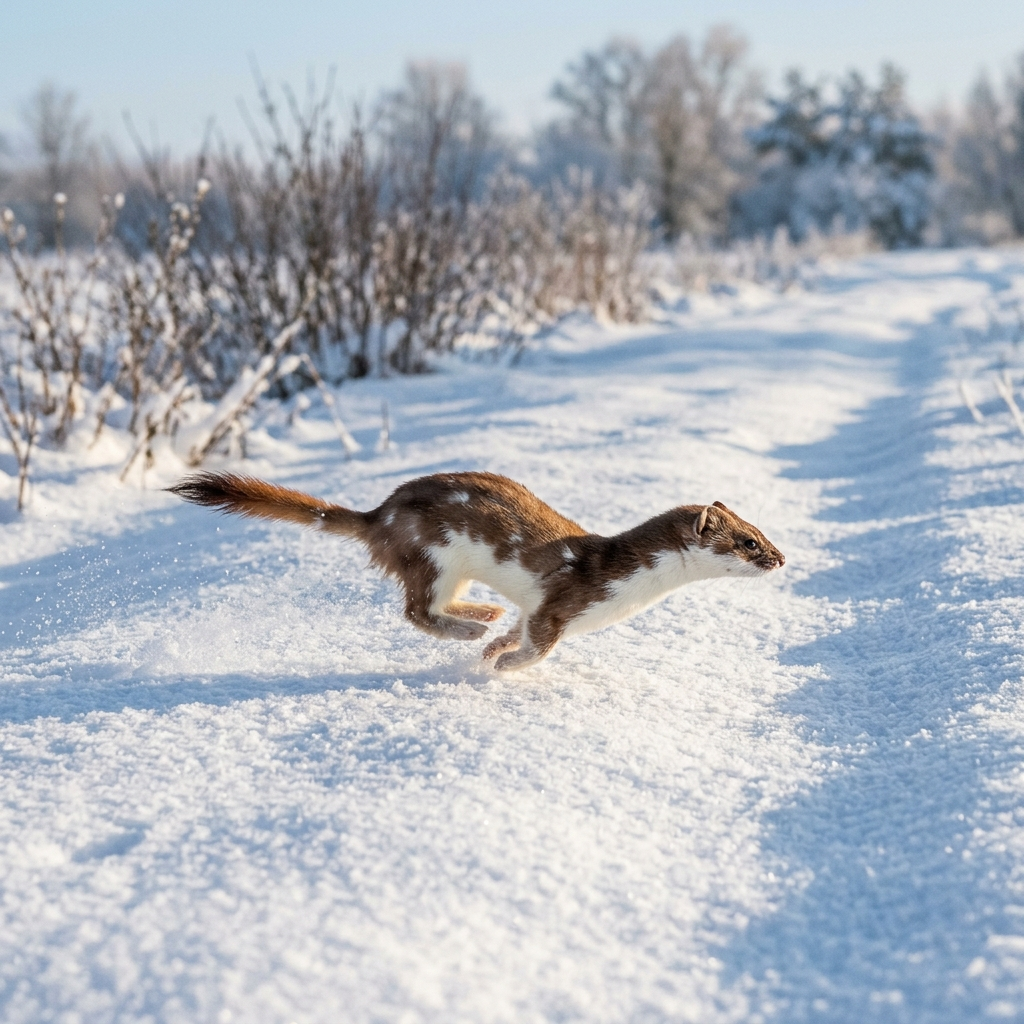
Seasonal color change is poorly marked in the least weasel under Polish conditions. In Scandinavia, Karelia, and Siberia, the entire coat turns white in winter — this is the form called nivalis (hence the Latin name: nivalis = snowy). In Poland, most individuals do not turn white at all or only turn white partially (spots on the sides, lighter legs). This is one of the main reasons for confusion with the stoat, which turns fully white in our winter — but the stoat also has a distinct black tail tip, which the least weasel never has.
The paws are very short, with five toes ending in sharp, non-retractable claws. The foot is slightly hairy in winter and bare in summer. Muzzles are narrow and triangular with small teeth — the canines are relatively long in relation to body size, which is an adaptation to the hunting technique (biting the prey in the cervical spine area). Eyes are large, dark brown, and shiny — the weasel sees excellently in twilight.
Feature
Least Weasel
Stoat
Body length
11–26 cm
16–32 cm
Mass
30–250 g
100–450 g
Tail
short, 3–9 cm
longer, 7–12 cm
Tail tip
uniform color
black tip year-round
Winter coat (PL)
rarely turns fully white
regularly turns fully white
Fur line
sharp, straight
sharp, straight
02
Environment and Range
Across Eurasia, North America, part of Africa — wherever small rodents are found.
The least weasel is one of the most widely distributed land mammals in the world. It occurs throughout Europe (except Iceland and Ireland), in almost all of Asia as far as Japan, in North America, and locally in North Africa. In Poland, it is encountered everywhere — from the Baltic coast to the Tatra Mountains — though with a clear preference for the agricultural mosaic and forest edges.
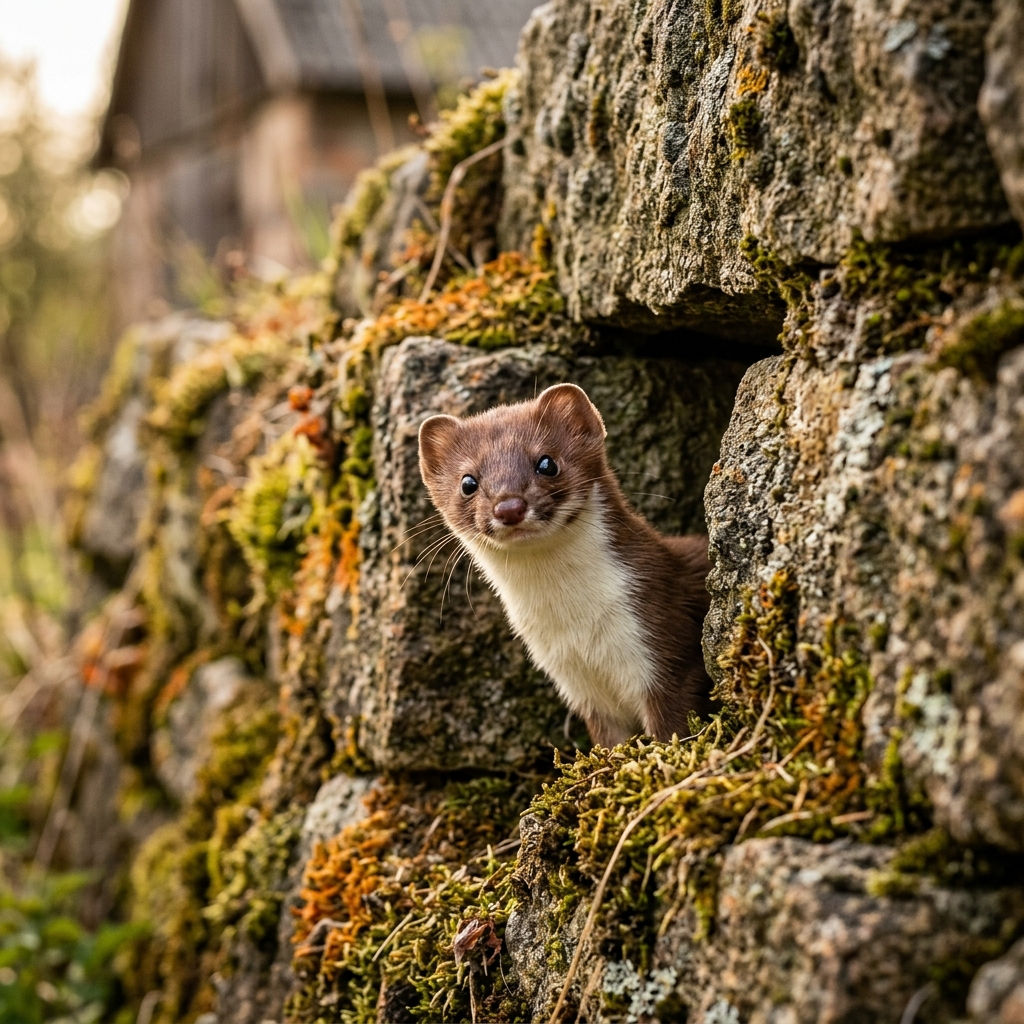
Fig. 02Typical habitat: stone field boundaries, piles of field stones, woodpiles on the edges of meadows and fields.
The best habitats are areas with high densities of small rodents: flowery meadows, field boundaries, fallow land, thickets, edges of cultivated fields, and orchards. The weasel avoids dense forest (where martens dominate) and open agricultural landscapes devoid of cover. Piles of field stones, woodpiles, old farm walls, and underground tunnels of the common vole are its classic living spaces. In the mountains, it reaches the upper montane forest (~1500 m a.s.l.), and in the Tatras, it has been recorded even above the tree line.
Why don't we encounter it at home?
The least weasel is not a synanthrope like the stone marten — it prefers open environments with rodents. It sometimes visits farms (chicken coops, grain stores, barns), but rarely lives in them permanently. If you see a small brown-and-white predator in the attic, it is almost certainly not a weasel — it is a stoat, marten, or polecat.
The individual home range is the smallest among Polish mustelids. A male occupies 1–25 ha, a female 1–7 ha — 10–100 times less than a stone marten. The size depends mainly on rodent availability: in years of vole outbreaks, ranges are very small (1–2 ha), while in years of rodent population collapse, they increase several-fold. Boundaries are marked with secretions from the anal glands, urine, and droppings left on visible elements (stones, stumps).
03
Diet
A narrow specialist — small rodents make up four-fifths of the menu.
The least weasel is a narrowly specialized micropredator. There is no other predator in Polish fauna whose diet is so strongly dominated by one type of prey. This results directly from its anatomy — its narrow body allows it to enter rodent burrows and hunt them in their own tunnel systems. This is an ecological niche that not even the much more numerous marten can occupy.
Common voles, shrews, mice — accounting for 70–85% of the diet, up to 95% during vole outbreaks
Young rats — occasionally, mainly around farms
Chicks and eggs of small birds — during the breeding season (April–June)
Insects, earthworms — a supplement in summer when rodents are less active during the day
Carrion — very rare, the weasel prefers fresh prey
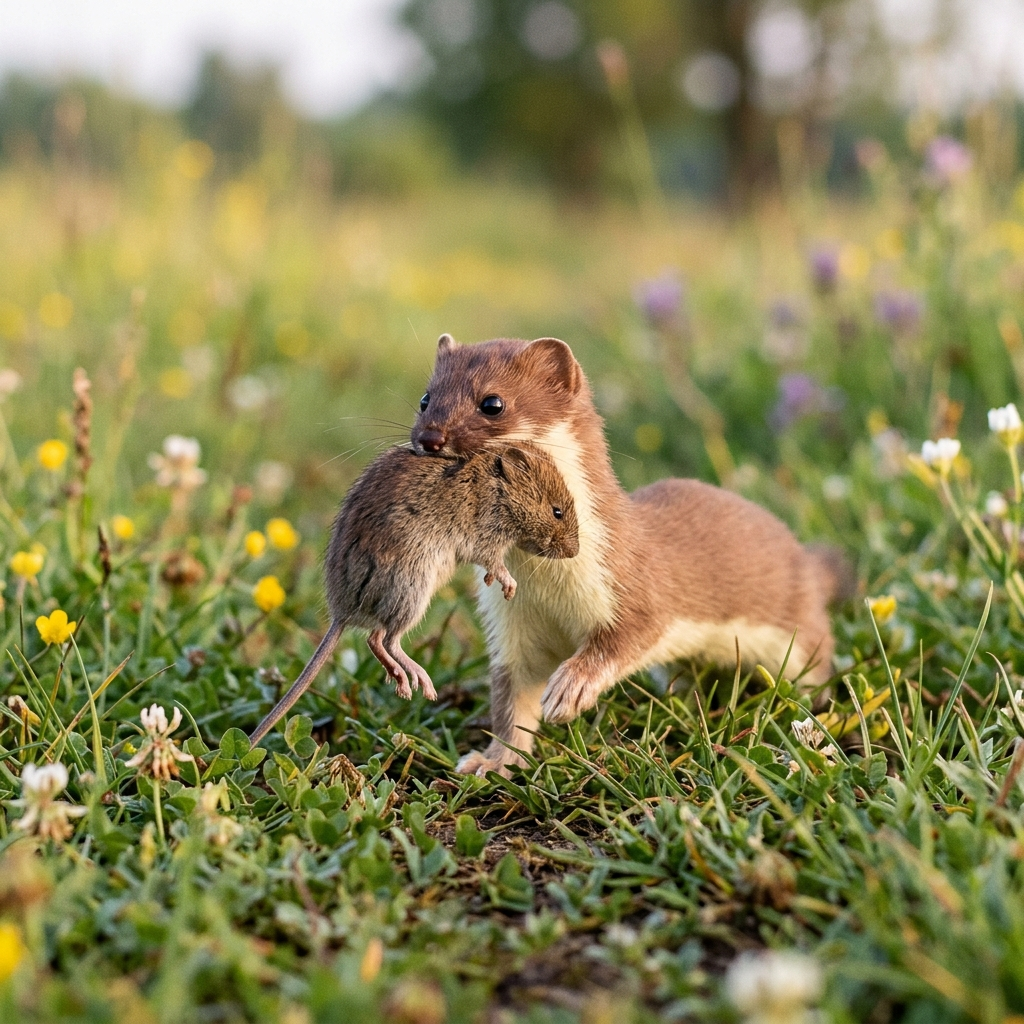
Fig. 03Common vole — the weasel's most frequent prey. Often comparable in size to the predator itself.
The hunting technique is precise and efficient. The weasel grabs the prey by the neck and kills it with a single bite to the cervical spine — canines that are long relative to its size allow it to pierce the spinal cord. The time from attack to the death of the prey is usually 1–3 seconds. In a vole tunnel, the weasel moves as confidently as the vole itself, using its sense of smell (rodents leave strong scent marks on the walls of the corridors).
The weasel eats one-third of its body weight daily. A female must hunt a vole every few hours — that's why she never truly rests for long.
An extremely fast metabolism forces constant hunting activity. Small body mass means an extremely high surface-to-volume ratio — the weasel loses heat very quickly and must consume the equivalent of one-third of its own weight daily. A female nursing young needs food every 2–3 hours. This is why a lack of rodents for a dozen or so hours can be fatal for her.
The population cycle of the weasel is synchronized with the outbreak cycle of the common vole (3–5 year cycles). In a 'good' vole year: weasels have 2 litters, the young grow large, and the home range is small. In a 'bad' year: one litter, smaller young, home range several times larger, and mortality increases.
04
Behavior and Ethology
24-hour activity, territoriality, and the famous 'weasel dance'.
Unlike most mustelids, the least weasel is active both day and night. It does not have one fixed daily rhythm — it chooses its hunting time depending on rodent activity and weather conditions. In summer, it is more often seen at dawn and dusk; in winter — in the middle of the day when the sun warms the rodent habitats. This behavior is evolutionarily forced by its very high metabolism: the weasel cannot afford 12-hour breaks between meals.
Territoriality is strong, although the home ranges of males and females may overlap. Males fight among themselves — especially in spring, during the mating season. They patrol boundaries several times a week, scent-marking along known 'highways' (stone boundaries, woodpiles, earth corridors). In captivity, weasels recognize individual scents of conspecifics and remember them for many weeks.
Weasel dance
The weasel is sometimes observed performing a so-called dance of death — a series of wild leaps and a twisting, dancing choreography near observed prey. Scientific hypothesis: this movement disorients the rodent so that it momentarily loses the ability to judge distance — giving the weasel the moment for a decisive attack. Another view: it is simply a release of hunting tension. Definitive observations are difficult to perform in the field.
Fig. 04The weasel is an excellent climber — it moves efficiently over stumps, stone walls, and thick branches.
Vocalizations are small and quiet. Most common: short clicks (mother contacting young), high-pitched squeaks (alarm, young calling mother), low growls (aggression). During the mating season, males make characteristic, dry 'clicking' sounds — barely audible to humans, but well recognized by females from a distance of several dozen meters.
Movement of the weasel is surprisingly fast — in a gallop, it covers 8–12 m/s (29–43 km/h) over short distances. It can jump over a meter vertically and 1.5 m horizontally. It swims well but reluctantly. It is an excellent climber — moving efficiently over stumps, stone walls, and thick tree branches.
05
Reproduction and Life Cycle
Lack of embryonic diapause — a fundamental difference from martens.
The least weasel does not have embryonic diapause. This is a fundamental difference compared to the stone marten, stoat, or badger — species where the fertilized egg 'waits' for months in the uterus. In the weasel, fertilization and embryo development occur directly one after the other. Consequence: pregnancy lasts only 34–37 days, and a female can give birth to two litters per year — the first in April/May, the second in July/August.
The mating season lasts from March to September, with peaks in April and July. Females reach sexual maturity very early — some young born in April can start breeding as early as August of the same year. Males mature at 8–11 months of age. The pair does not form a long-term bond — contact occurs only during copulation.
A litter consists of 3–8 young, most often 4–6. They are born blind, deaf, almost naked, and weigh only 1.5–4.5 g — for comparison, an adult female weighs 30–100 g, so the entire litter is 5–25% of the mother's mass. The nest is built in an abandoned vole burrow, under a pile of stones, in a woodpile, or between tree roots. Lining consists of grass, rodent fur, and feathers.
Fig. 05Young weasels — approx. 5 weeks old. Eyes open, ready for first excursions from the nest.
Development is extremely fast compared to other mustelids. Eyes open after 3–4 weeks, first solid food — after 4 weeks (the mother brings already killed, cut-up rodents). Independent excursions from the nest: 5–6 weeks. Full independence: 9–12 weeks. Females can give birth at 4 months of age, and males reach sexual maturity at 8 months.
r-strategy — mass reproduction
The least weasel is a classic example of an r-strategy in reproduction: short life cycle (1–3 years), early maturity, large litters, frequent reproduction. This is the opposite of the K-strategy of martens (long life, delayed maturity, small litters). The r-strategy fits species with high variability in prey populations — the weasel must quickly take advantage of vole outbreaks, because 'good years' do not last long.
Lifespan in the wild is on average 1 year, maximum 3 years. Most young perish during their first winter — freezing, hunger, predation by foxes, owls, hawks. In captivity, individuals have been recorded living up to 8–10 years, but that is an abstract statistic — in the reality of the Polish fields, the weasel lives short and intense lives.
06
Tracks and Signs
The smallest tracks among Polish predators and characteristic narrow droppings.
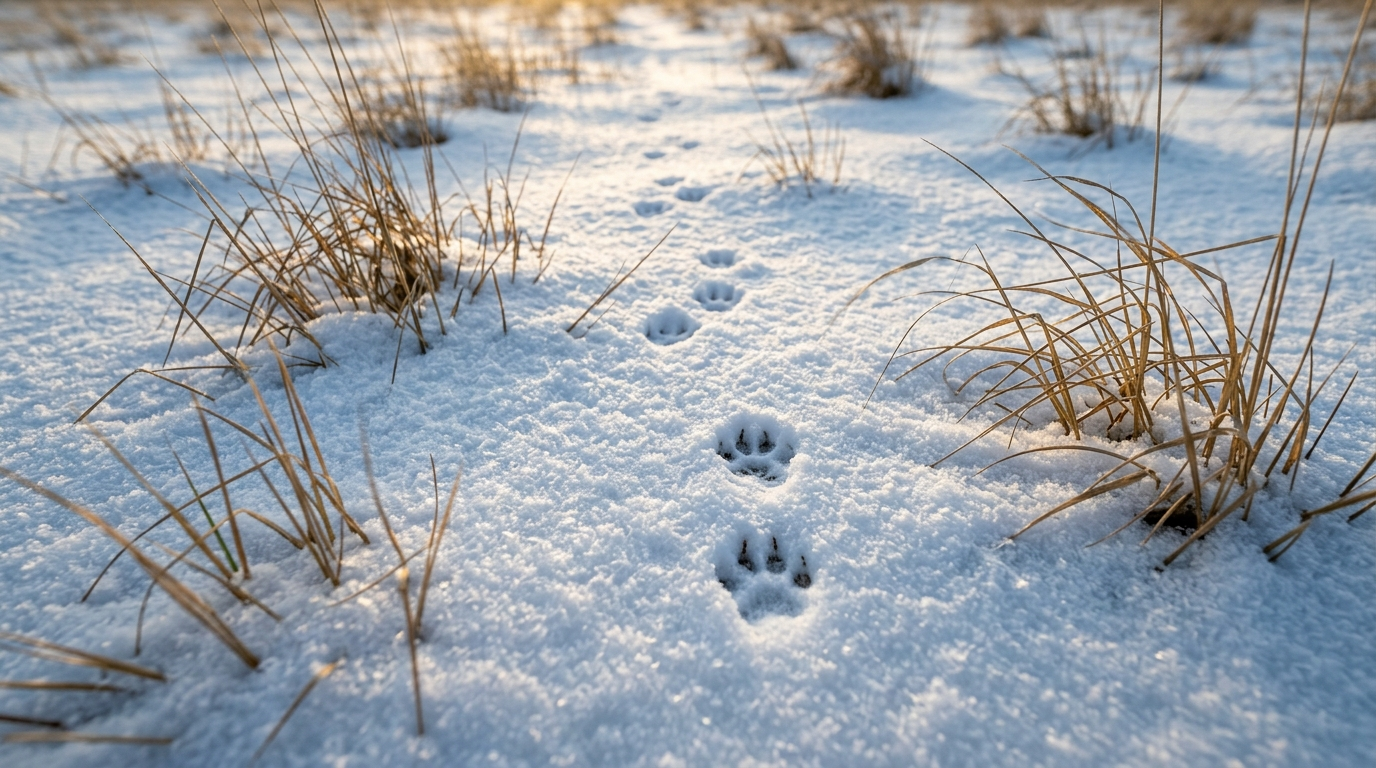
Least weasel tracks are the smallest predator tracks in Polish fauna. A full paw print is only 1–1.5 cm long and ~1 cm wide — for comparison, a stone marten track is 3.5–4 cm. Five toes with claws are visible only on fresh, soft surfaces (wet clay, snow). The gallop pattern — pairs of tracks close together, gaps between pairs 25–40 cm — is typical for mustelids, but much tighter in the weasel than in its larger relatives.
Fig. 06Weasel gallop — pairs of tracks close together, gaps between pairs only 25–40 cm.
Weasel droppings are thin, dark cylinders 3–5 cm long and 3–4 mm thick — significantly thinner than those of a marten (~1 cm). Twisted, often ending in a sharp, drawn-out point. Inside: rodent fur, fragments of small bones, sometimes feathers. Characteristic musky smell. They are left in exposed places — on stones, clumps of grass, stumps — as part of territorial marking. A more complete discussion of the differences can be found in the article weasel vs. marten droppings — key differences.
Other signs of presence: plucked, partially eviscerated rodent carcasses (the weasel eats the brain and head first), holes in stone piles with worn edges, characteristic tunnels in tall grass running straight across the meadow. In summer, look for signs along field boundaries and under woodpiles — these are its classic patrol areas.
07
Humans and the Weasel
The farmer's ally, a victim of folklore, and a protected species.
The human relationship with the weasel is paradoxical. On one hand, it is one of the most effective regulators of small rodent numbers in the agricultural landscape — a single pair of weasels can kill several hundred voles in a season. On the other hand, for centuries it was persecuted on farms as a supposed chicken coop pest and an object of superstition. Today, the threat is not so much a hunter's shot as habitat loss: field boundaries and stone walls are disappearing, and the mosaic of meadows and fields is turning into a monoculture.
Damage in chicken coops — very rare, the weasel prefers prey of its own size. It happens, but mainly with chicks and nestlings; it will not attack an adult hen.
Grain stores — positive impact: the weasel keeps the field mouse and brown rat in check, turning pressure away from the grain.
Orchards, vegetable gardens — exclusively beneficial presence. Fewer voles = less damage to the roots of fruit trees.
Cultivated fields — a key regulator of the common vole, which in outbreaks can destroy entire crops.
Legal status: the least weasel is a species under partial protection in Poland since 2014 (Regulation of the Minister of Environment of October 6, 2014, on the protection of animal species). Killing, injuring, or destroying burrows and breeding sites is prohibited. Leghold traps and snares are strictly forbidden (Art. 6 and 35 of the Animal Protection Act) — both for the weasel and any other wild mammal. Capturing in a live trap for the purpose of releasing elsewhere requires RDOŚ (Regional Directorate for Environmental Protection) consent.
Do NOT deter the weasel
If you see a weasel on your farm, do not try to remove it. First — it is a protected species. Second — its presence means you have a rodent population in the area that is worth controlling, and the weasel does it for free. Third — the weasel will not stay with you permanently; it moves within a few hectares and will disappear on its own when the rodents decrease.
Folklore and myths have burdened the weasel disproportionately to its real damage. 'Tangling horses' manes', 'sucking chickens' blood', 'casting a spell on cattle' — these are all motifs of Slavic agricultural folklore. In Mazovia and Lublin regions, the weasel was formerly called łaskuna, łaskotka, babka — diminutive names were meant to ward off evil spirits. The name 'łaska' (Polish for grace/mercy) actually derives from the Slavic laska (slender, lithe) and has nothing to do with Christian 'grace' — it's a phonetic coincidence.
08
Myths and Facts
The most common misunderstandings we hear from readers.
The least weasel is a species surrounded by more myths than perhaps any other Polish predator. The six most common:
MYTH The least weasel is just a small marten.
FACT It is a different genus — the weasel belongs to the genus Mustela, martens to the genus Martes. Differences: size (10–40× smaller), lack of a bib, lack of embryonic diapause, shorter life cycle, different ecology. Full comparison.
MYTH The weasel sucks the blood of chickens.
FACTFolkloric myth. The weasel has no mechanism for 'sucking' — it kills its prey by biting the neck. Damage to the neck leaves the impression of 'bloodless' prey, but this is not vampirism, just a killing technique.
MYTH The weasel used to tangle horses' manes in the stable.
FACTFolk myth. Tangled horse manes ('knots') are the result of skin fungus, poor grooming, or social behavior in the herd. A weasel has no biological reason to be interested in the mane of a living horse.
MYTH A white weasel in winter is a stoat.
FACT Sometimes yes, sometimes no. In Poland, the least weasel usually does not turn fully white, while the stoat usually does. Key identifying feature: the stoat has a black tail tip all year round, the weasel never does. Second sign: size — the stoat is 2–3 times larger.
MYTH Weasels are pests and should be exterminated.
FACTOn the contrary. The weasel is one of the most effective regulators of small rodents — its presence on a farm reduces vole pressure on crops and grain in storage. Since 2014, it has been under partial protection in Poland.
MYTH The weasel is aggressive and can attack a human.
FACT A weasel weighs 30–250 g and runs away from everything larger than itself — meaning humans, always. It only attacks when cornered, in defense of young, or when caught in a trap. There is not a single documented human death resulting from a weasel attack.
„
A weasel doesn't choose a stone field boundary out of sentiment for the landscape. It chooses it because there's a vole under every stone — and it has to eat every three hours.
— from field notes
§ Gallery
Species gallery
Eight shots in different conditions — seasons, environments, situations. Click to enlarge.
01 Portrait · M. nivalis02 Old wall · summer day03 Gallop · winter in Poland04 Vole · perfect-sized prey05 Jump · field boundary06 Haystack · farmstead07 Winter · incomplete whitening08 Young · first outings
Sources and credits
King C.M., Powell R.A. (2007) The Natural History of Weasels and Stoats, Oxford University Press · Jędrzejewski W., Jędrzejewska B. (1998) Predation in Vertebrate Communities — The Białowieża Primeval Forest as a Case Study, Springer · Polish Atlas of Mammals (PAN, 2014) · Regulation of the Min. of Environment of Oct 6, 2014 on animal species protection · Editorial field notes 2024–2026.
Compiled: May 5, 2026
POLAND 2026
— Field correspondence —
One letter from the field, every month.
The latest species profiles, seasonal guides and field observations delivered straight to your inbox. No spam, no clickbait — just solid content once a month.
2,847 readers · 0% spam · unsubscribe with one click