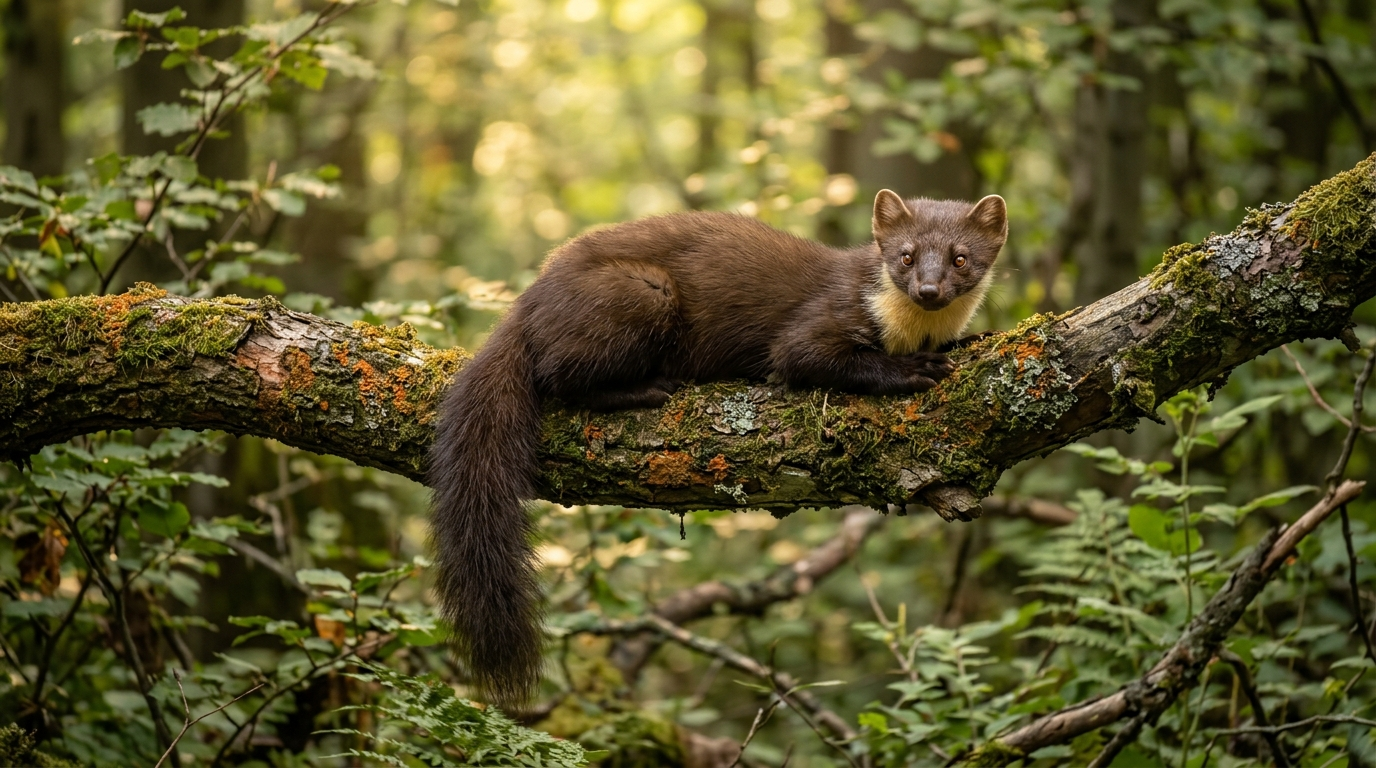
A secretive inhabitant of old tree hollows in Polish forests.
Quiet, secretive, and the most arboreal of all Polish mustelids. The pine marten is what the stone marten chooses not to be: a true inhabitant of ancient forests. It doesn't frequent attics, doesn't chew on cars, and doesn't draw attention to itself. It lives in the hollows of old oaks and beeches that were growing long before humans built villages at the forest's edge.
36–56 cm
body length
17–28 cm
tail length
0.5–2.4 kg
weight
8–11 years
lifespan in the wild
100–700 ha
male territory
1–5 young
per litter (usually 3)
9 mos.
pregnancy (with diapause)
30–35 days
actual development
LC Least Concern Game species — closed season April 1 – August 31Stable or locally declining population (loss of old-growth forest)
In short
Close cousin of the stone marten — same Martes genus, but highly arboreal and forest-dwelling
Cream-yellow to orange bib, uniform (NOT split like in the stone marten)
Requires old forests >80 years — nests in tree hollows and abandoned squirrel dreys
Excellent climber — jumps up to 4 m between canopies, covers 10 km in a single night
Embryonic diapause: mating in July, implantation in February, young born in spring
Territory of 100–700 ha — larger than the stone marten's (lower food density habitat)
Game species in Poland with a closed season from April 1 to August 31
Classification
Kingdom
Animalia
Phylum
Chordata
Class
Mammalia
Order
Carnivora
Family
Mustelidae
Genus
Martes
Species
M. martes
The European pine marten (Martes martes), also known in Poland as the tumak or golden-throated marten, belongs to the Mustelidae family and the same Martes genus as the stone marten. Both species are anatomically very similar and often confused, but they lead fundamentally different lifestyles — the stone marten chose human proximity, while the pine marten remained faithful to the old-growth forest. It is an indicator species: where a stable pine marten population exists, the forest stand is usually 80+ years old and rich in structure. Where it disappears, the tree hollows usually disappeared first.
01
Appearance and Anatomy
A slender mustelid silhouette with its most characteristic feature: a cream-colored bib.
The pine marten has a long, slender body measuring 36–56 cm and weighs 0.5–2.4 kg. Males are significantly larger than females — a typical size dimorphism in mustelids: an adult male weighs 1.3–2.4 kg, while a female weighs 0.5–1.5 kg. Compared to the stone marten, the pine marten is slightly lighter but has a proportionally longer tail (50–55% of body length vs. 45–50% in the stone marten) and a more slender silhouette — an adaptation for life in the treetops.
The fur is dense, double-layered, and soft. The color of the back is a warm, dark brown with a slight chestnut or chocolate tint; the belly is lighter. In summer, the fur is shorter and slightly more reddish, while in winter it is much denser and darker, with a lighter undercoat. Historically, the pine marten was an important fur-bearing species (hence the Polish folk names tumak and golden-throated marten — referring to the color of its bib).
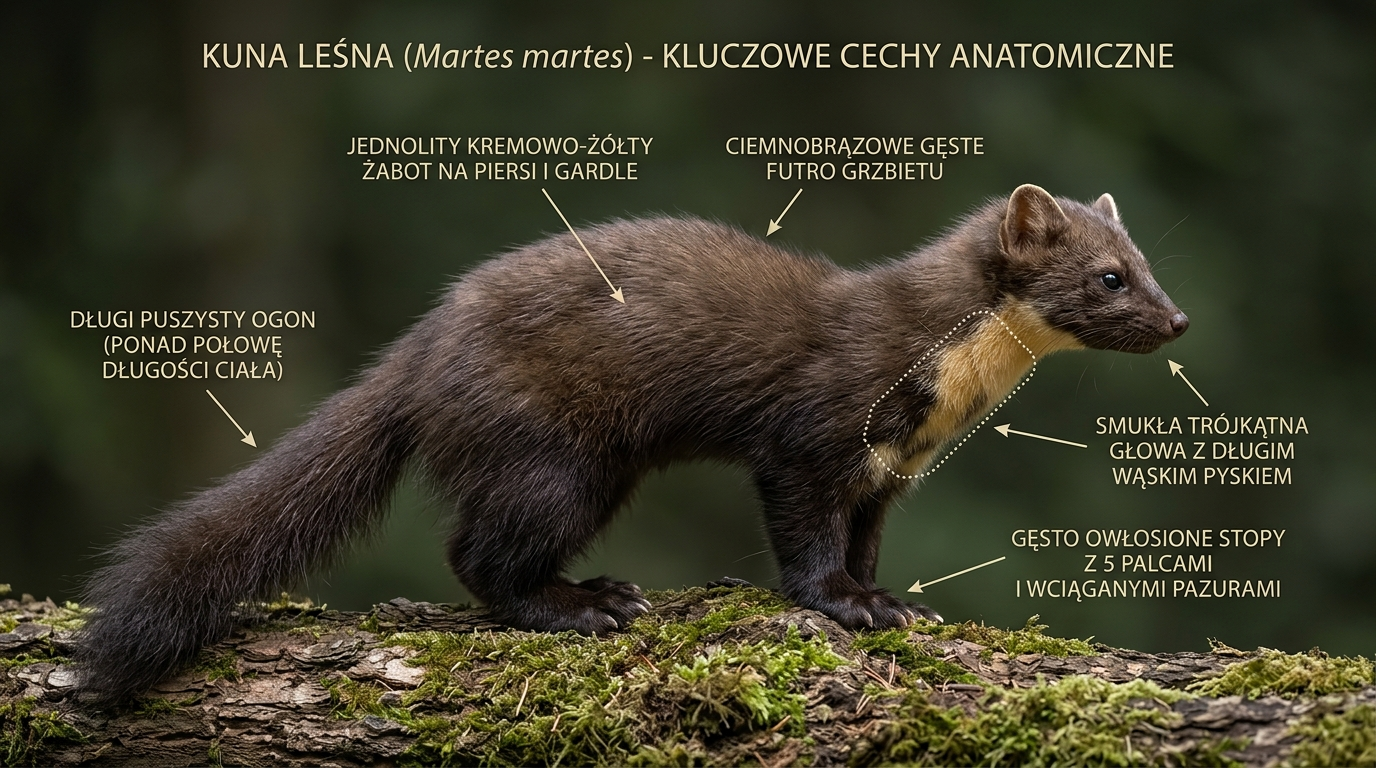
Fig. 01Pine marten silhouette in profile — key diagnostic features: cream bib, long tail, furred paws.
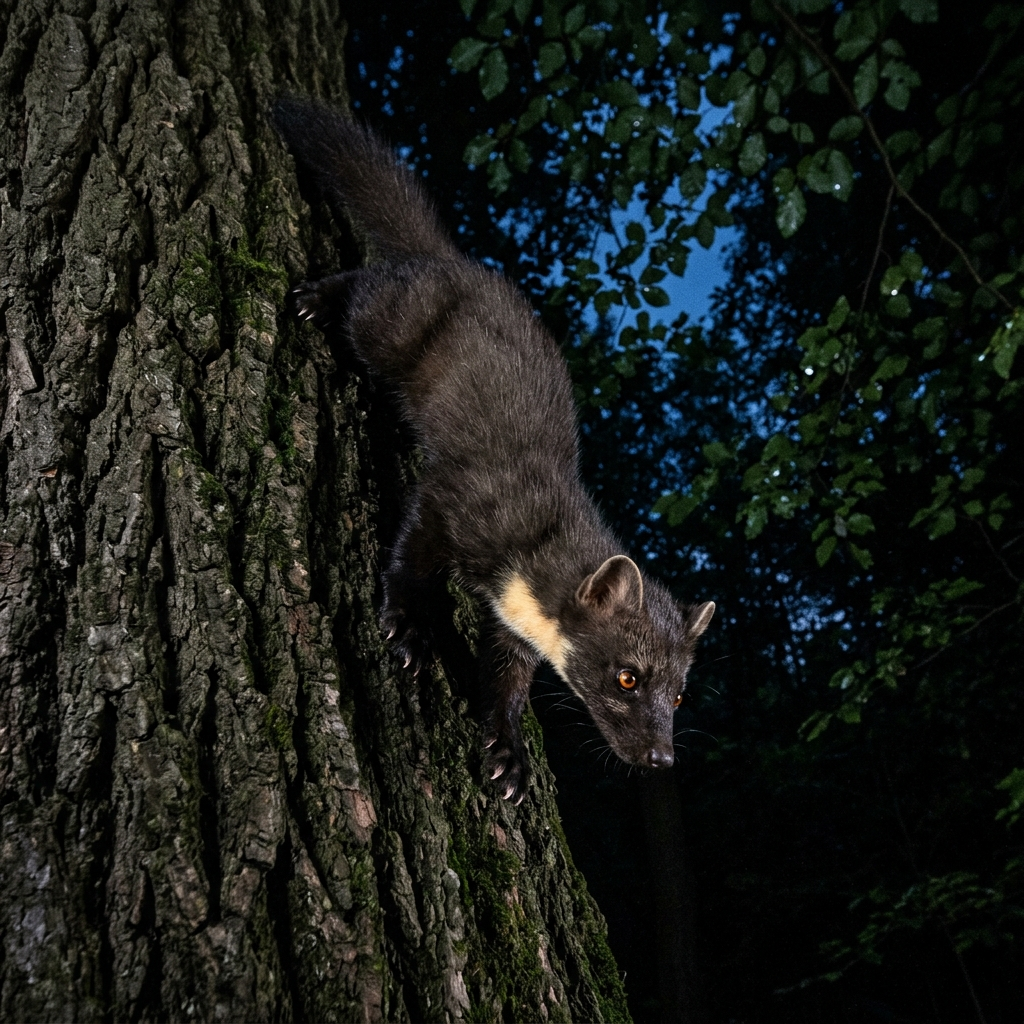
The most important identifying feature is the bib on the chest. In the pine marten, it is cream-yellow to yellow-orange, uniform (without a split), and ends at the chest — it does not extend down the legs or onto the belly. This is a crucial difference from the stone marten, whose bib is pure white, bifurcated (split), and reaches down to the belly. For a full comparison of both species, see the guide pine marten vs stone marten.
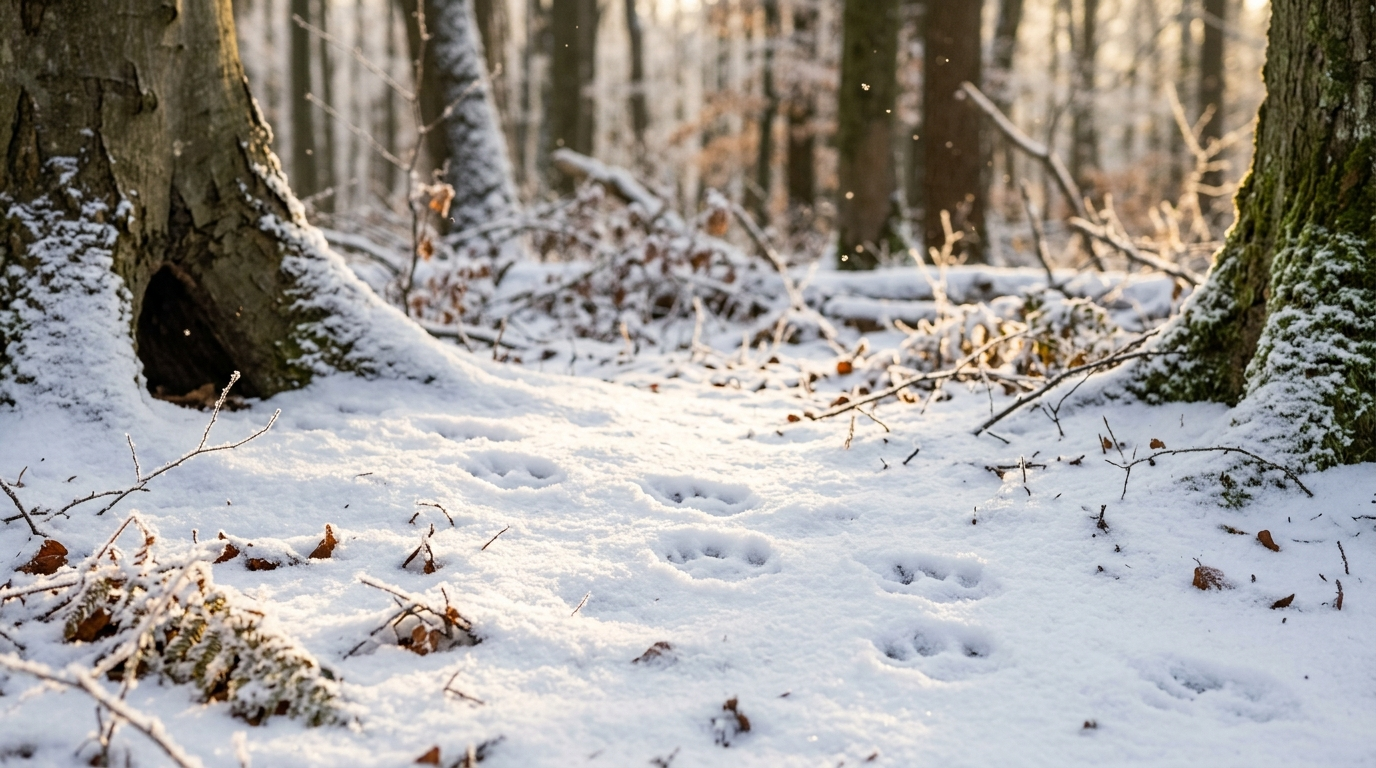
The pine marten's paw is densely furred, especially in winter — an adaptation to the cold that facilitates walking on snow and wet bark. The winter fur is so thick that tracks in the snow appear blurred — an important diagnostic indicator in the field. In the stone marten, the paw is only partially furred, so its winter tracks show clearer toe prints.
Feature
Pine Marten
Stone Marten
Bib
cream-yellow, uniform
white, split
Environment
old forest (>80 years)
synanthrope (buildings, field edges)
Snout
slender, more pointed
shorter, wider
Paw in winter
densely furred
partially hairless
Tracks in snow
blurred by fur
clear toe prints
Daytime shelter
hollows, squirrel nests
attics, woodpiles
02
Habitat and Range
Found across almost all of Europe to the Urals — but only where old-growth forest remains.
The pine marten occurs from the Iberian Peninsula to the Urals, as far north as the Kola Peninsula, and south to the Caucasus. In Poland, it is found throughout the country, but with very uneven density. Stable, dense populations are found in the Bieszczady Mountains, the Low Beskids, the Białowieża Forest, the Tuchola Forest, and the larger forest complexes of Pomerania. In forests with short rotation cycles (managed pine monocultures of 30–60 years), its presence is significantly more modest.
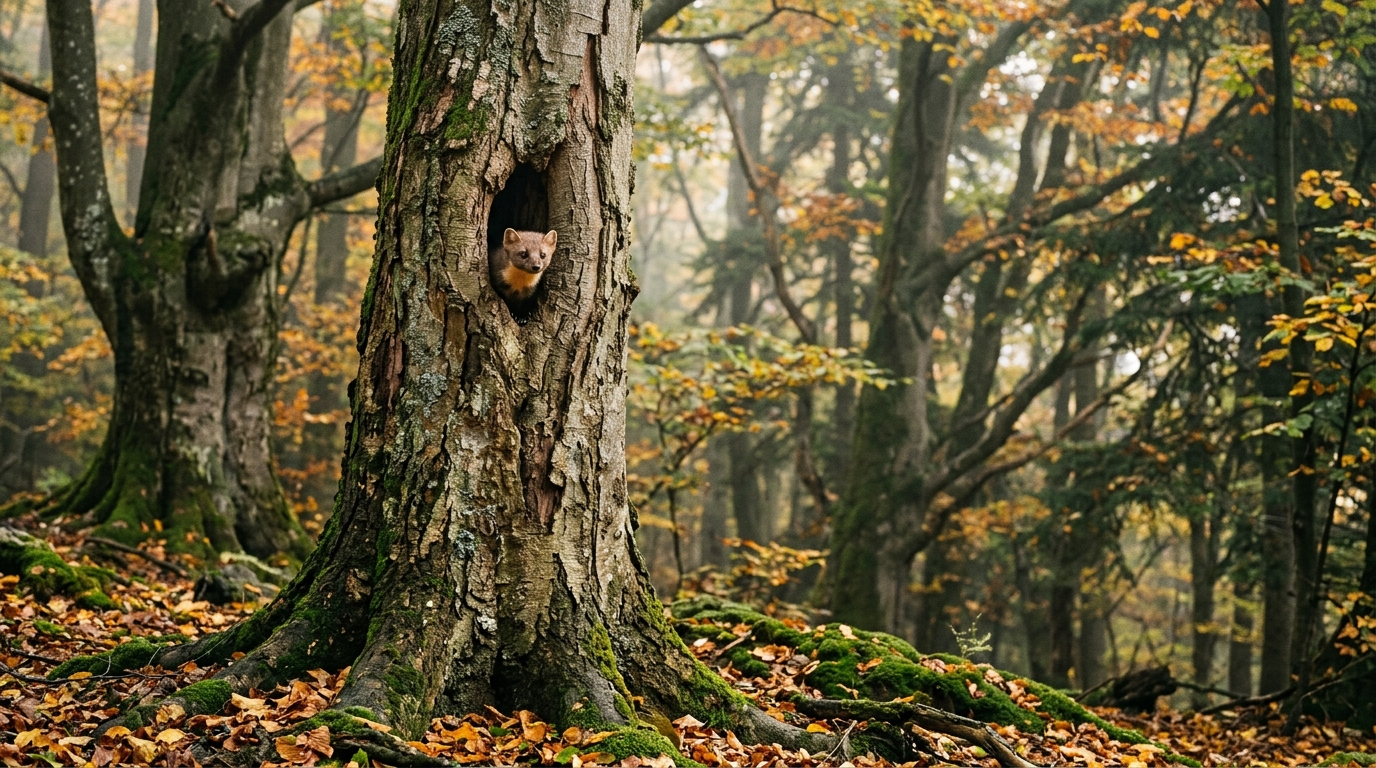
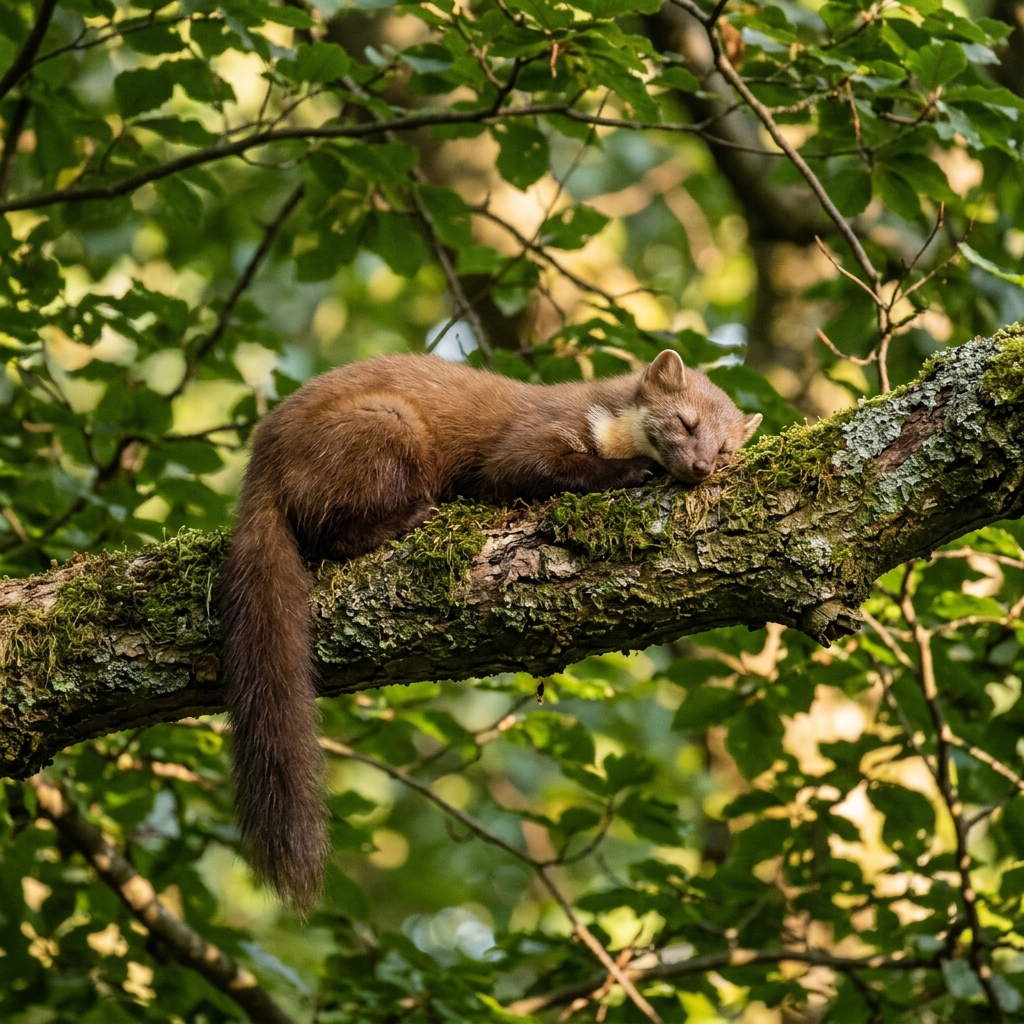
Fig. 02Typical habitat: old deciduous or mixed stands with hollows and a rich vertical structure.
The habitat requirements of the pine marten are key to understanding its distribution. The species needs old-growth forest — trees 80+ years old with hollows where it builds nests. Ideal environments include old beech forests, oak forests, mixed fir-beech forests, and spruce forests with rich vertical structure. The more standing and fallen dead wood, the better.
Indicator Species
The pine marten is one of the best indicators of forest quality in Polish forestry. A stable population means the forest contains hollow trees, squirrel nests, an abundance of small mammals and squirrels, and that human penetration is not intense enough to drive the animal away. Where it is absent, the hollows usually disappeared before the marten did.
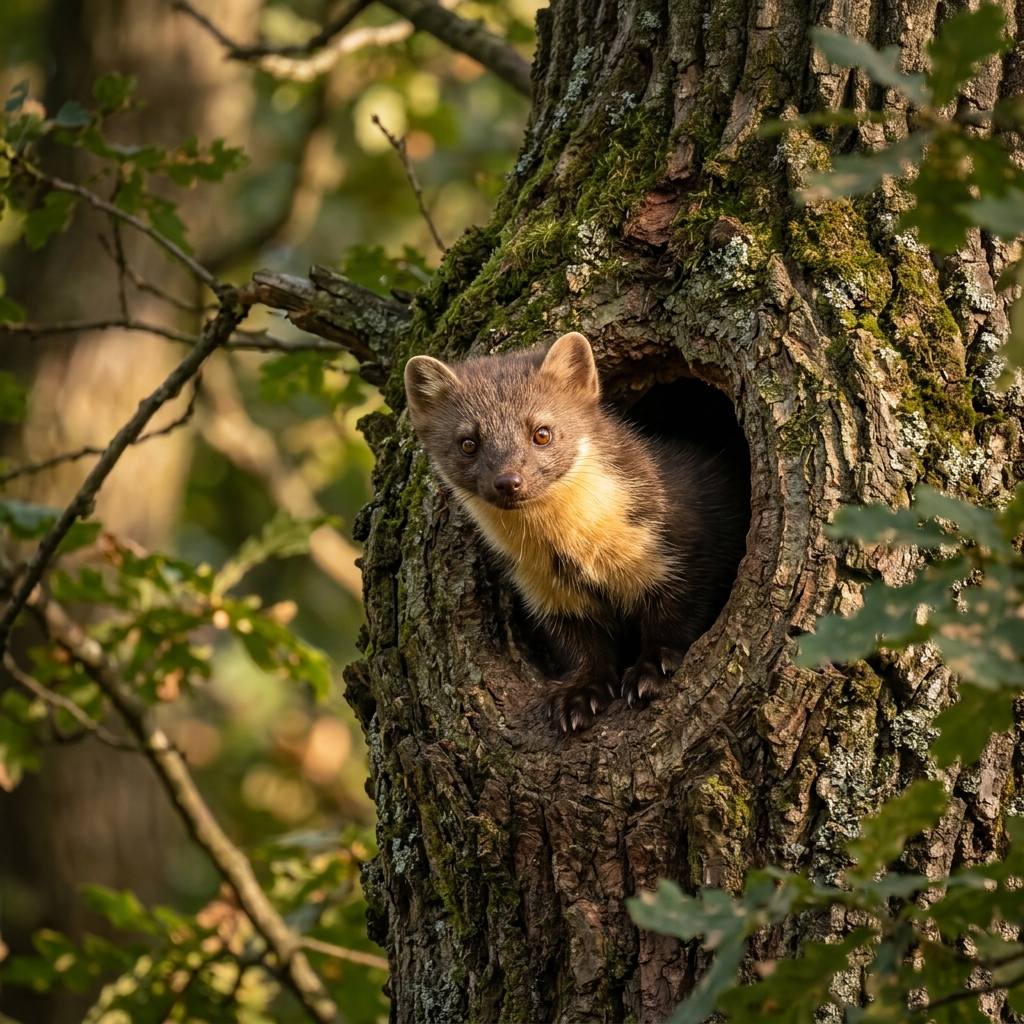
Daytime shelters are critical for the pine marten. It most often chooses: tree hollows (especially abandoned nests of the black woodpecker and grey-headed woodpecker), abandoned squirrel nests (dreys — dome-shaped twig structures high in the canopy), occasionally owl hollows, abandoned birdhouses, and brush piles. A single marten has 5–15 shelters in its territory, moving between them cyclically. It occupies attics of buildings only exceptionally, usually in homesteads bordering forests — this is where it is most often confused with the stone marten.
The individual territory (home range) of a pine marten is significantly larger than that of a stone marten — a male covers 100–700 ha, while a female covers 50–250 ha. This is due to a less food-rich habitat (forests usually have fewer small mammals than agricultural mosaics) and longer distances between good shelters. In winter, territories can be even larger as the marten patrols for carrion left by wolves or in places where game has died.
03
Diet
Omnivorous with a strong preference for small forest mammals, birds, and seasonal fruit.
The pine marten is an opportunistic omnivore with a distinct forest profile. Its diet differs from the stone marten's not so much in composition as in source — instead of the common vole from the fields, it hunts the bank vole in the old-growth forest; instead of the feral pigeon, it targets thrushes and jays; instead of chicken eggs, it takes woodpecker eggs. For a fuller discussion of the food of both martens, see the guide what martens eat.
Small forest mammals (bank voles, shrews, wood mice, dormice) — 35–50% of the diet for most of the year
Squirrels — 5–15% of the diet; the pine marten is one of the primary natural predators of the red squirrel in Polish forests
Forest birds and their eggs (thrushes, tits, jays, woodpeckers) — 15–25%
Carrion (wolf kills, deer carcasses in winter) — an essential element of the winter diet
Insects, snails, earthworms — a supplement during the summer
Fig. 03The squirrel — one of the marten's most difficult prey items, accessible only to an arboreal predator.
Hunting squirrels is one of the most spectacular sights in the Polish forest. The pine marten is one of the very few predators capable of catching a squirrel in the treetops. The chase takes place in three dimensions — up the trunk, through the canopies, in leaps of up to 4 meters. Squirrels can manage smaller predators (hawks, owls), but there is nowhere to hide from a marten. This is why squirrel numbers can be significantly reduced in forests with strong pine marten populations.
A marten doesn't hunt a squirrel out of hunger alone — it hunts it because it can. The old forest provides it with an opportunity that poorer tree stands no longer do.
The hunting strategy of the pine marten combines two tactics. On the ground, it uses its excellent sense of smell and knowledge of paths to hunt small mammals, much like the stone marten. Arboreally, it patrols the tree canopies in search of sleeping birds, nests with chicks, and squirrels in their dreys. Surplus killing (killing more than can be eaten) happens rarely — unlike martens attacking chicken coops, the pine marten in the forest usually takes individual prey.
Seasonal dietary changes: In winter, small mammals, carrion, and squirrels in nests dominate. In spring — chicks and eggs of forest birds. In summer — insects, young rodents, and berries. In autumn — hazelnuts, rowan berries, berries, and sometimes acorns and beechmast. This dietary plasticity allows the marten to survive in a habitat where there is no single constant food source year-round.
04
Behavior and Ethology
Secretiveness, arboreality, and territoriality — the most elusive of Polish mustelids.
The pine marten is crepuscular and nocturnal, with activity peaks from an hour before dusk until midnight and from 3 AM until sunrise. During the day, it sleeps in a shelter — most often a hollow or a squirrel nest high in the canopy. Unlike the stone marten, which regularly enters farmsteads and is heard there, the pine marten leads a life so secretive that most people living on the edge of its range never see it.
Arboreality is one of this species' greatest evolutionary adaptations. The pine marten spends 60–80% of its time in the tree canopies, descending to the ground only to hunt mammals or travel between groups of trees. It jumps from branch to branch over distances of up to 4 m horizontally and 3 m vertically. It descends trunks head-first (just like a squirrel) using a reversible ankle joint — an adaptation the stone marten does not use nearly as intensively.
Small Fact
A pine marten can cover 10 km in a single night while patrolling its territory. The route usually follows the same "highways" — branches of specific trees, stumps, and field edges. Experienced naturalists can recognize marten paths in the forest by worn moss on the bark and droppings left in exposed places.
Fig. 04Jumping between canopies — an arboreal movement technique in which the pine marten has no competition in the Polish forest.
Territoriality is strong in both sexes. Male territories may overlap with the ranges of several females — a typical social structure for mustelids. Boundaries are marked with secretions from anal glands, urine, and droppings left on visible objects: stumps, stones, or the roof tiles of forest gazebos. Boundary patrols occur 2–4 times a week, becoming more intense in the spring during the mating season.
Vocalizations of the pine marten are quiet and rare — also a part of its secretive lifestyle. The most commonly heard are: short clicks (mother-young contact), growls (aggression during territorial encounters), and high-pitched squeaks (young calling for the mother). During the mating season, males make a characteristic, dry "clicking" sound — very rarely heard by humans.
The pine marten is quite proficient at swimming. It can cross rivers and streams without difficulty but rarely uses this skill — it prefers to cross on a tree trunk fallen across the water. In the Biała Lądecka river, individuals have been observed swimming 30-meter stretches in cold water.
05
Reproduction and Life Cycle
Embryonic diapause, hollows as nests, and one of the longest cycles among Polish mustelids.
Reproduction in the pine marten works according to the same mechanism as in the stone marten — with embryonic diapause. Mating takes place in July and August, but the actual development of the embryo only starts in February or March of the following year. This mechanism is delayed implantation: fertilized eggs "wait" in the uterus for 7–8 months in a state of metabolic arrest until day length signals the arrival of spring.
Actual pregnancy lasts 30–35 days from implantation. The young are born in March, April, or May (depending on the region and weather). Litter size is 1–5 young, most often 3 — fewer than the stone marten, but a typical number for K-strategist mustelids (long life, small litter, intensive parenting).
For a fuller discussion of marten reproductive biology, see the article young martens and their development. Here we focus on what is specific to the pine marten.
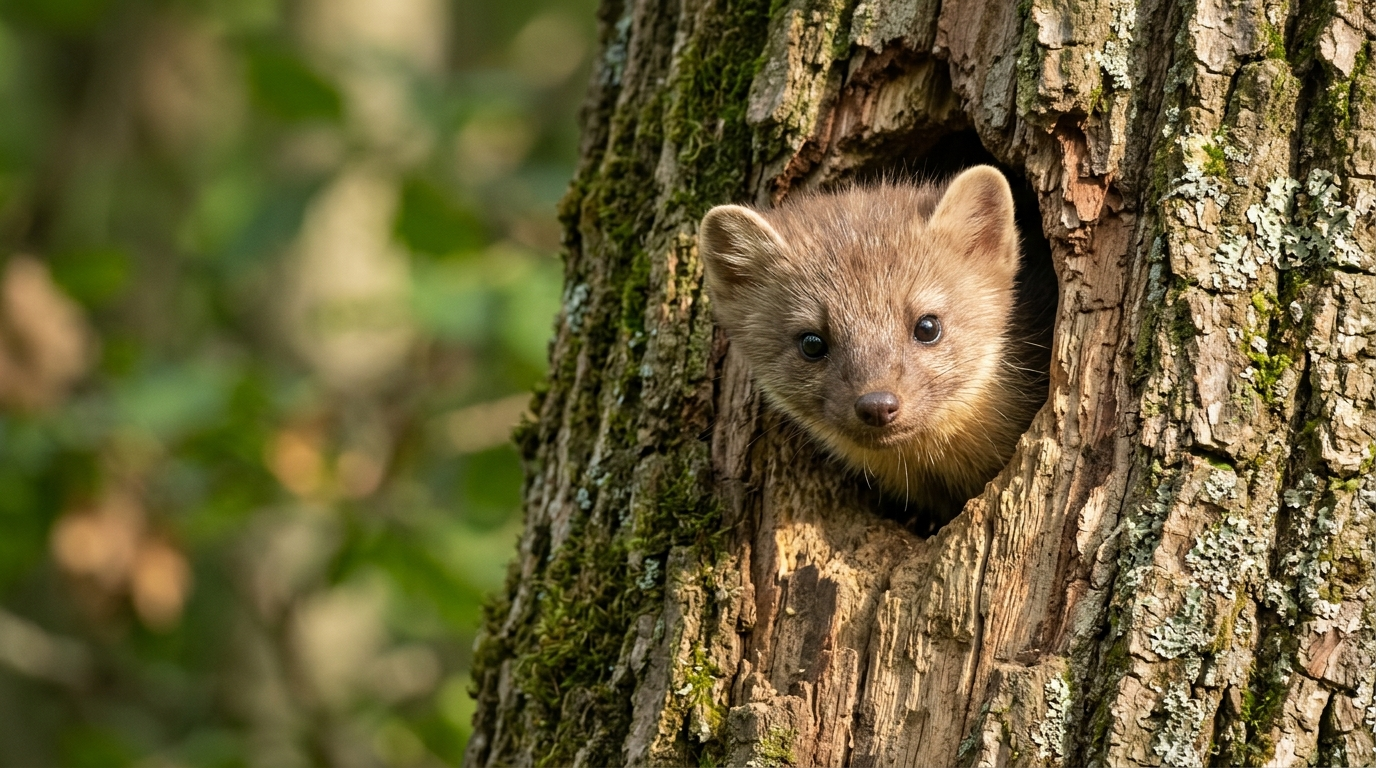
Fig. 05Young marten in a hollow — nests are usually 3–10 m above ground, often in holes carved by black woodpeckers.
The female builds the nest in a tree hollow (most often abandoned black woodpecker holes) or in an old squirrel nest. The lining consists of moss, dry grass, and squirrel fur. Location choice is key — the hollow must be high enough (3–10 m) to be out of reach for ground predators and tight enough that another adult male cannot squeeze in.
Development of the young: Eyes open after 5 weeks (later than in the stone marten — due to a warmer, safer nest), first solid food after 8 weeks. First independent excursions from the hollow occur at 10–12 weeks. Independence is reached after 4–5 months. Young females reach sexual maturity at 14–15 months, while males only at 24 months — much later than the least weasel, which breeds after only 3–4 months.
K-strategy — Long Life, Small Litter
The pine marten is a classic example of a K-strategist: a long life cycle (8–11 years in the wild, up to 17 in captivity), late maturity, small litter size (1–5 young), and intensive parenting. This is the opposite of the r-strategy seen in the least weasel. K-strategy fits species with stable but not overly abundant food sources and low adult mortality — which is exactly what an old forest provides.
In the wild, pine martens live 8–11 years. This is twice as long as a stone marten in the city (where they mostly die under car wheels) and much longer than a weasel (1–3 years). Main causes of death: predation (rare, mainly from golden eagles and eagle owls attacking the young), hunting, parasitic diseases, and in recent years increasingly — road collisions on routes intersecting forests.
06
Signs and Tracks
Tracks are larger than the stone marten's, but in snow, they are blurred by furred paws.
Pine marten tracks in the field are slightly larger than stone marten tracks — a full paw print is 4–5 cm long and 3–3.5 cm wide (vs. 3.5–4 cm in the stone marten). Five toes with claws are visible on fresh, soft ground (wet clay, mud). The gallop pattern — pairs of tracks with 50–80 cm gaps — is typical for mustelids.
Fig. 06Pine marten tracks in winter — blurred by the furred paw, a key diagnostic feature compared to the stone marten.
A full guide to marten tracks can be found in the article about marten tracks. One specific feature of the pine marten is worth highlighting: winter tracks are clearly blurred by dense paw fur, whereas stone marten tracks maintain clear toe prints even in snow. In summer, the difference fades — then both species leave similar tracks in clay or silt.
Pine marten droppings are small cylinders 6–10 cm long, ~1 cm in diameter, with a twist resembling the letter S — very similar to stone marten droppings. The color is dark brown to black, often containing squirrel or forest rodent fur, berry seeds, and small bones. Fresh ones have a characteristic musky scent. They are left on stumps, stones, and forest bridges as part of territorial marking. They are kept at a safe distance from humans, unlike the stone marten, which might leave droppings on a car hood.
Other signs of presence: picked pine cones in a typical "marten" style (split lengthwise with seeds eaten — distinct from squirrels, which leave cones chewed into a braid), remains of squirrels (fur, tail fragments), dreys with an enlarged opening (a sign that a marten moved into the squirrel's nest), and torn bark fragments on the trunk from sharp claws.
07
Humans and the Pine Marten
Conflicts are rarer than with the stone marten, but habitat pressure is growing.
The relationship between humans and the pine marten is much calmer than with the stone marten. The species leads such a secretive life in the forests that most people never encounter it directly in their lives. Conflicts occur mainly in forest-side homesteads — chicken coops, pigeon lofts, and rabbit hutches located at the forest edge may be attacked, though less frequently than by the stone marten. The pine marten also doesn't move en masse into the attics of residential buildings — it leaves that territory to its cousin.
Damage to forest-edge homesteads — occasional attacks on small livestock; intensity is much lower than with the stone marten.
Conflict with squirrel and small bird breeding — in small nature reserves and research farms, pressure on squirrels can be noticeable.
Road collisions — a growing threat on routes intersecting forest complexes (highways, expressways).
Habitat loss — the most serious long-term threat. Short timber rotation (40–60 years) eliminates hollow trees, which are crucial for reproduction.
Legal status: In Poland, the pine marten is a game species with a closed season from April 1 to August 31(Regulation on the determination of hunting seasons for game animals) — identical to the stone marten. Hunting outside this period can only be carried out by persons with hunting licenses. In practice, hunting pressure on the pine marten is low: the species is secretive, difficult to hunt, and has no significant fur value (the fur market collapsed in the 1990s). In many EU countries (Germany, Czechia, Slovakia), the pine marten is fully protected — which raises questions about its game status in Poland.
The Forest is Not an Attic
If you hear galloping above the ceiling or see a predator hanging around the chicken coop, it is almost certainly a stone marten, not a pine marten — even if you live at the edge of the forest. The pine marten has hundreds of hollows and dreys in the treetops at its disposal, so it rarely stoops to occupying buildings. Identification can only be confirmed by observing the bib (cream-yellow uniform = pine; white split = stone).
The protection of the pine marten in Poland should primarily involve preserving old-growth forests — leaving hollow trees in forests as so-called "biocenotic trees" (required for several years in forest management), protecting Natura 2000 areas, and limiting forest fragmentation by new roads. Without hollows, there is no marten — it's a simple and irrevocable equation.
Folklore hasn't burdened the pine marten as much as the least weasel. The traditional name tumak originally meant "forest fur animal" and was a respected name — tumak fur was one of the most valuable furs in medieval Poland. Kuna złotodzióbka (golden-throated marten), in turn, refers to the gold-yellow color of the bib. Both names are rarely used today but survived in the names of places.
08
Myths and Facts
The most common misunderstandings about this species.
Despite being harder to encounter than the stone marten, the pine marten has also acquired its share of false labels. Here are the six most common:
MYTH The pine marten and the stone marten are the same species.
FACT They are two distinct species — Martes martes and Martes foina. They share the same genus Martes, but differ in their bibs, habitats, lifespans, and reproductive strategies. Full comparison in the guide pine marten vs stone marten.
MYTH Pine martens attack people in the forest.
FACTThere are no such cases. The pine marten is exceptionally shy — in 99% of encounters, it is the first to flee. It attacks only when cornered, in defense of young, or when diseased (rabies, distemper). An encounter with an active marten during the day should warrant caution.
MYTH Pine martens cause as much damage on farms as stone martens do.
FACTSignificantly less often. The pine marten prefers the forest and usually finds enough squirrels and birds nearby to avoid coming down to farms. Conflict occurs mainly in forest-edge homesteads, but the scale is 5-10x smaller than with the stone marten.
MYTH Pine martens are common — you can find them in any forest.
FACTOnly in old forests. Dense populations of pine martens are found in stands 80+ years old with hollows and rich structures. In managed 30-60-year-old monocultures, the species occurs rarely or not at all. It is a forest quality indicator species.
MYTH Pine martens are still exterminated for their fur.
FACT The marten fur market collapsed in the 1990s and never recovered. Hunting statistics show that the harvest of martens in Poland is currently very small — mostly by dedicated hunters, not commercial breeding. The game status remains out of habit rather than economic necessity.
MYTH The pine marten is larger than the stone marten, so it's easy to identify.
FACTOn the contrary — in the field, both species are almost indistinguishable in size. A male pine marten (1.3-2.4 kg) is comparable to a male stone marten (1.1-2.5 kg). The key difference is the bib: uniform cream-yellow = pine, split white = stone.
„
A pine marten doesn't need an attic — it needs the hollow of an old oak. That is a difference of three centuries of tree growth.
— from field notes
§ Gallery
Species gallery
Eight shots in different conditions — seasons, environments, situations. Click to enlarge.
01 Portrait · M. martes02 Beech crown · summer afternoon03 Winter gallop · blurred tracks04 Squirrel · victim of an arboreal chase05 Jump · up to 4 m between canopies06 Tree hollow · daytime nest07 Night · descending the trunk08 Winter · dense fur of the tumak
Sources and credits
Goszczyński J. (1986) Diet of foxes and martens in central Poland, Acta Theriologica · Jędrzejewski W., Jędrzejewska B. (1998) Predation in Vertebrate Communities — The Białowieża Primeval Forest as a Case Study, Springer · Polish Mammal Atlas (PAN, 2014) · Pulliainen E. (1981) The Status, Structure and Behaviour of Populations of the Pine Marten · Editorial field notes 2024-2026.
Compiled: May 5, 2026
POLAND 2026
— Field correspondence —
One letter from the field, every month.
The latest species profiles, seasonal guides and field observations delivered straight to your inbox. No spam, no clickbait — just solid content once a month.
2,847 readers · 0% spam · unsubscribe with one click