SPECIES PROFILE · Wild cats
Felis silvestris silvestris · Schreber, 1777
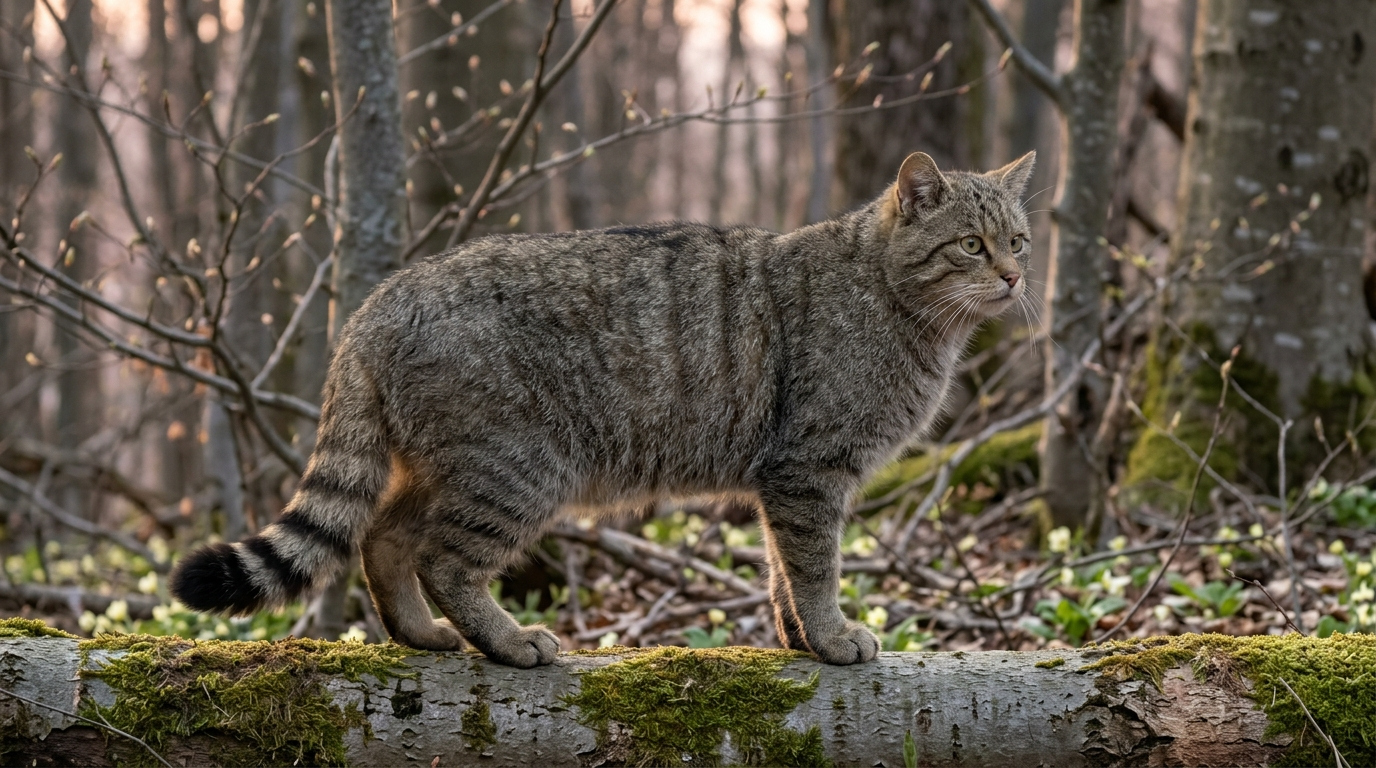
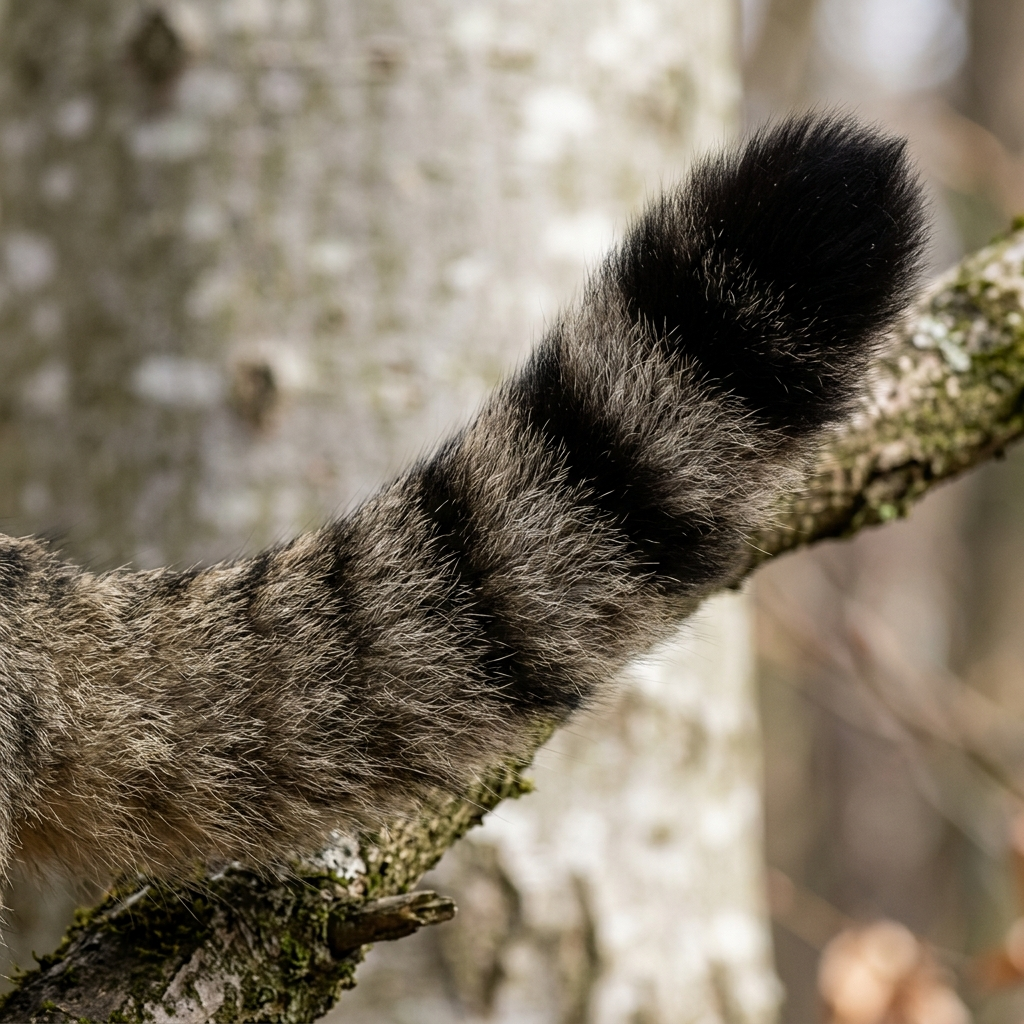
Poland's rarest wild cat — a thick tail with a black tip, a silhouette never confused with a tabby when you look closely.
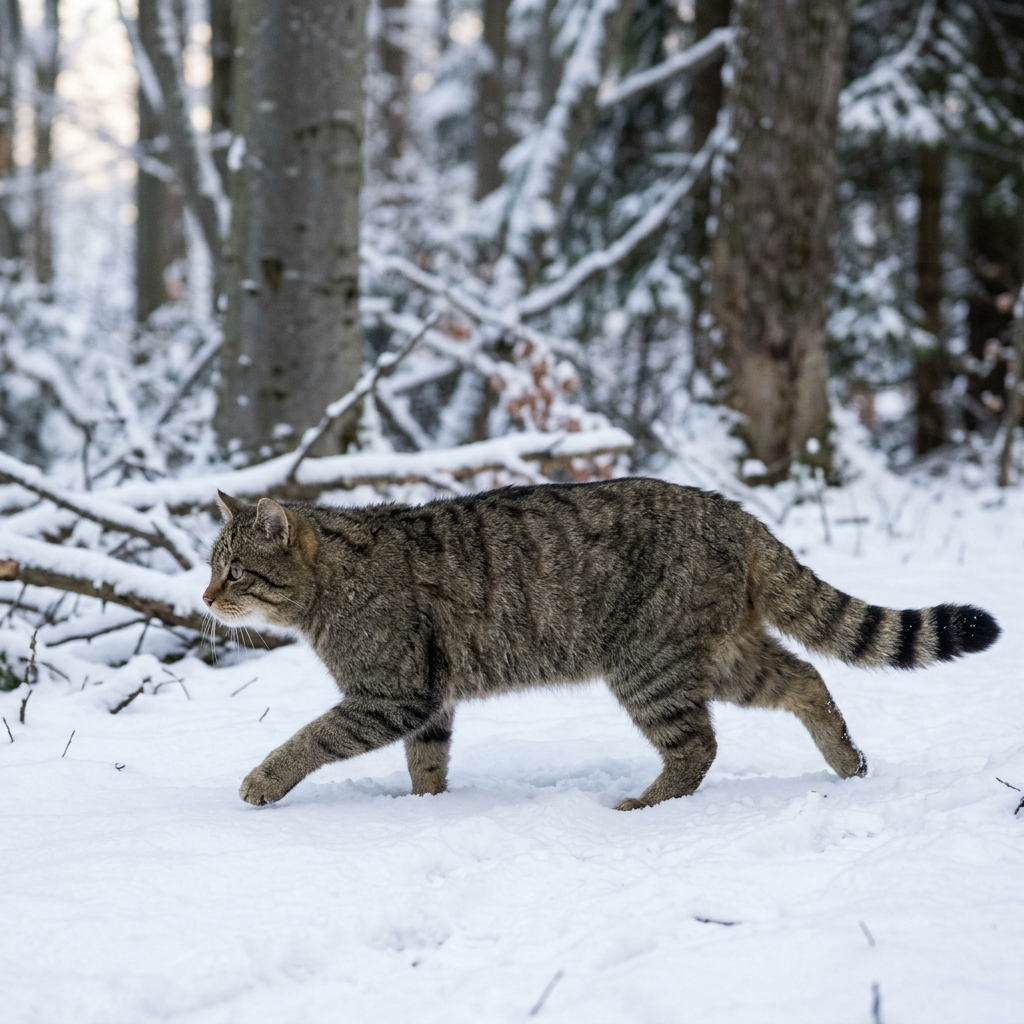
The European wildcat is Poland's rarest wild cat — only about 200 individuals live across the country, concentrated in the Bieszczady Mountains, Roztocze, and the restored population in the Świętokrzyskie Mountains. Commonly confused with a large striped tabby, it actually differs from the domestic cat in almost every detail: a thick tail ending in a blunt black tip, uniform gray-brown fur with dark streaks (never patches or white markings), a more massive head, shorter legs, and a compact silhouette. A Natura 2000 priority species — under strict protection.
| Kingdom | Animalia |
|---|---|
| Phylum | Chordata |
| Class | Mammalia |
| Order | Carnivora |
| Family | Felidae |
| Genus | Felis |
| Species/subspecies | F. silvestris silvestris |
The European wildcat (Felis silvestris silvestris) is, along with the lynx, one of the two wild cats of the Polish fauna — two species with radically different scales (lynx 18–30 kg, wildcat 3–7 kg) and radically different visibility in the field. The wildcat is comparable in number to the lynx (approx. 200 vs 200 individuals in PL), but much harder to observe due to its strictly nocturnal lifestyle and preference for dense old-growth forests. Polish populations are limited to three centers: Bieszczady and the Low Beskids (the core, approx. 130–150 individuals, continuous with Slovak and Ukrainian populations), Roztocze (approx. 30–40 individuals, connected to the Ukrainian population), and the Świętokrzyskie Mountains (30–40 individuals following a reintroduction program started in 2019 under the 'Active Wildcat Protection' project). The wildcat is a forest rodent specialist — voles, mice, and dormice constitute 70–90% of its prey biomass. The greatest contemporary threat is not hunters or drivers, but the domestic cat — hybridization with tabbies penetrating forest edges poses the greatest genetic threat to species purity, a problem dramatically illustrated in Scotland, where the Scottish wildcat has practically gone extinct as a distinct genotype. Unlike the fox, the wildcat avoids agricultural landscapes and settlement edges — it is a strict forest dweller.
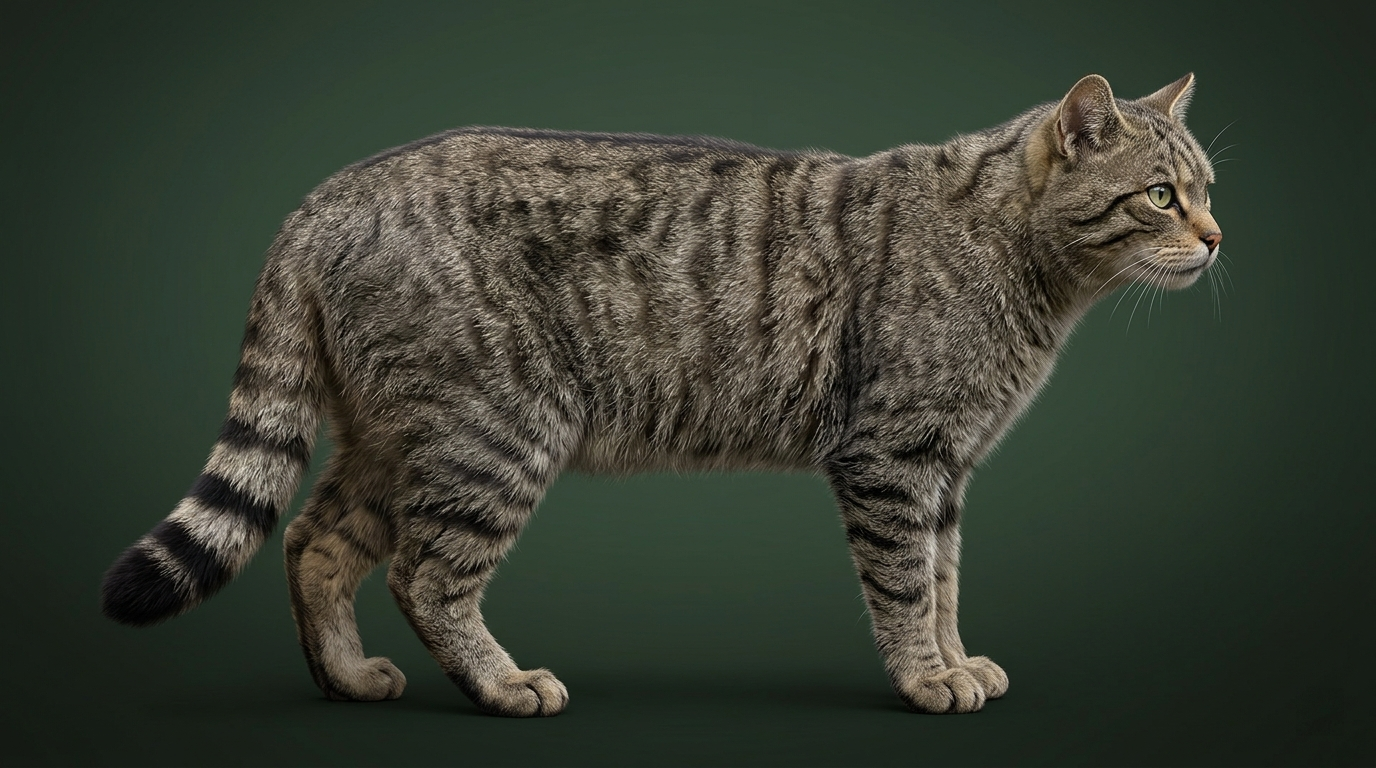
Every detail of the wildcat's silhouette says 'wild cat, not domestic.' The key is the tail, fur, and proportions — never a single feature.
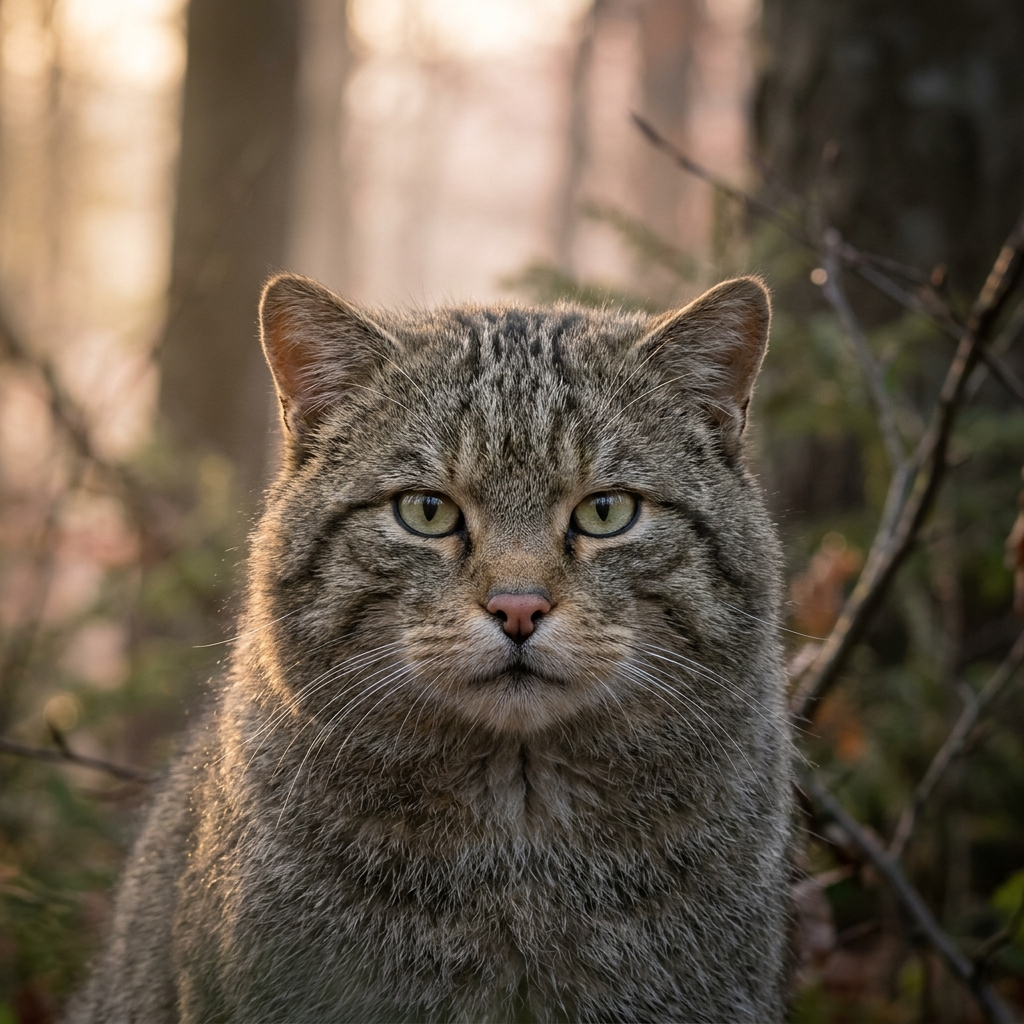
The European wildcat looks superficially like a large striped tabby — and this is the source of thousands of false sightings in Poland annually. However, no pure wildcat looks like a domestic cat when examined closely. Diagnosis is based on a combination of several traits: a thick short tail with a black tip, uniform gray-brown fur without patches, a massive head, short legs, and a compact silhouette. The simultaneity of these features is crucial — individually, any of them could appear in a domestic cat.
Body length 50–80 cm, tail 25–37 cm, weight 3–7 kg — males are significantly larger than females (males up to 7 kg, females rarely over 5 kg). This is the size of a large striped tabby, but in direct comparison, the wildcat appears heavier relative to its length: a compact muscular body, shorter legs, and a more massive chest. The silhouette is stout and compact, not slender and elongated like a domestic cat's.
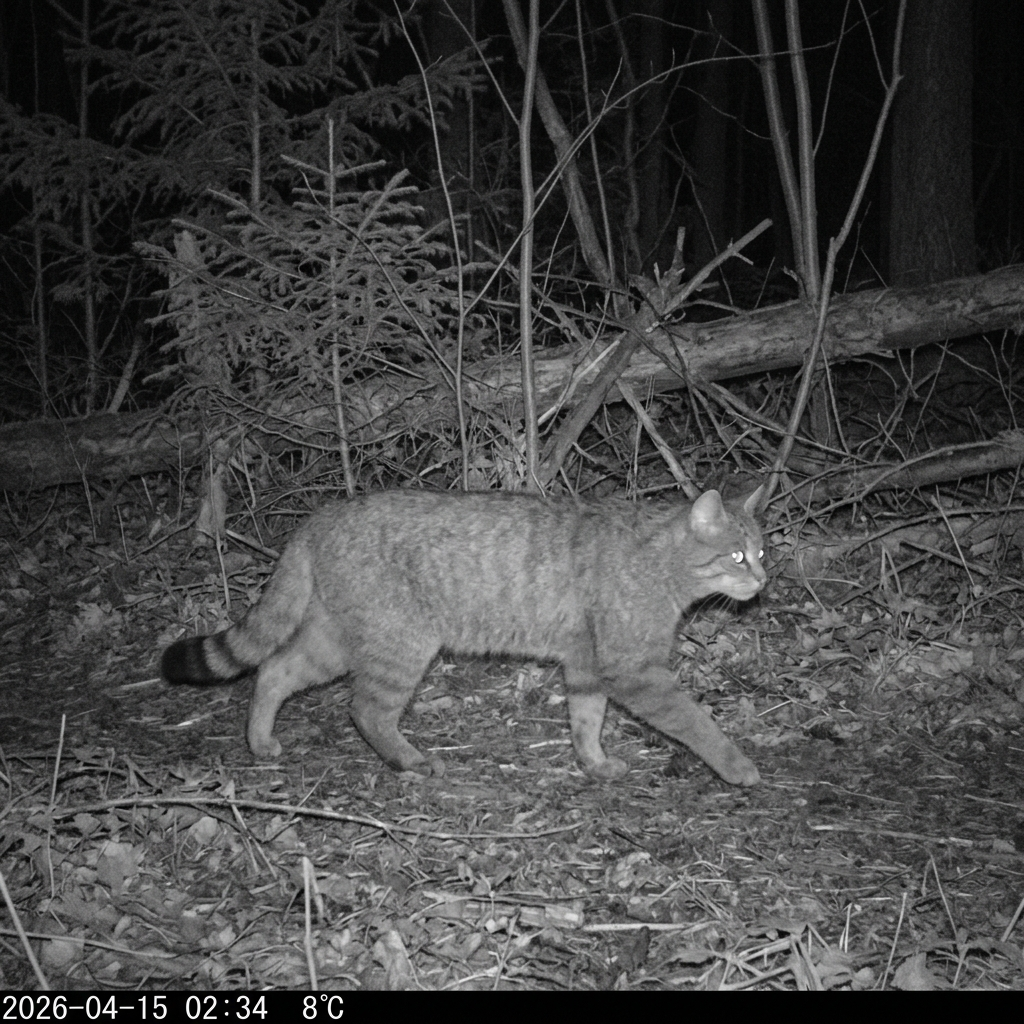
The tail is the most reliable diagnostic feature in the field. A wildcat's tail is thick along its entire length, slightly widening towards the end, and ending bluntly with a distinct black tip that reaches the very top. There are 4–7 distinct dark rings visible on the tail. In comparison, a striped tabby's tail thins towards the end, being clearly tapered and ending in a point — the rings are usually blurred and narrowly spaced, and the very tip of the tail is rarely distinctly black.
The fur is uniform gray-brown with a golden or olive tint, with dark vertical streaks on the sides and a distinct dark dorsal stripe ending at the base of the tail. Never in a pure wildcat will you find patches, spots, white markings on the chest or paws, a spotted muzzle, or bright white socks. Any such feature signals a hybrid with a domestic cat or simply a tabby. The head is larger and wider than in a domestic cat, with a short wide muzzle; the ears are small, rounded, and without tufts (tufts are a lynx feature).
There is a simplification circulating online: 'wildcat = tail with a black tip'. This is true but insufficient. Some domestic cats have a clearly dark end to the tail, and wildcat × domestic hybrids can have intermediate tails — partially thick but with light legs or a white spot on the chest. The only certain identification is based on a combination of features: tail + fur without patches + massive head + short legs + dark dorsal stripe. A wildcat is the whole package, not a single trait. If in doubt — take a photo with a camera trap and consult scientists from the monitoring program (Association for Nature 'Wolf', Forest Research Institute, national parks).

Three islands on the map of Poland — Bieszczady, Roztocze, Świętokrzyskie. Each with its own history and significance for the species.
The Polish wildcat population is fragmented — limited to three isolated forest centers. Totaling approx. 200 individuals, which makes the wildcat a rarer mammal than many Poles suspect: as rare as the lynx, and significantly rarer than the wolf. Each of the three centers has its own dynamics, history, and conservation challenges.
The core of the population consists of Bieszczady and the Low Beskids — approx. 130–150 individuals, continuously connected with Slovak and Ukrainian populations (Eastern Carpathians). This is a stable, natural population, not assisted by humans. The second center is Roztocze with approx. 30–40 individuals, genetically linked to the West Ukrainian population (Ukrainian Roztocze). The third, youngest center, is the Świętokrzyskie Mountains — approx. 30–40 individuals following a reintroduction program started in 2019. This is a founder population, monitored almost individually.
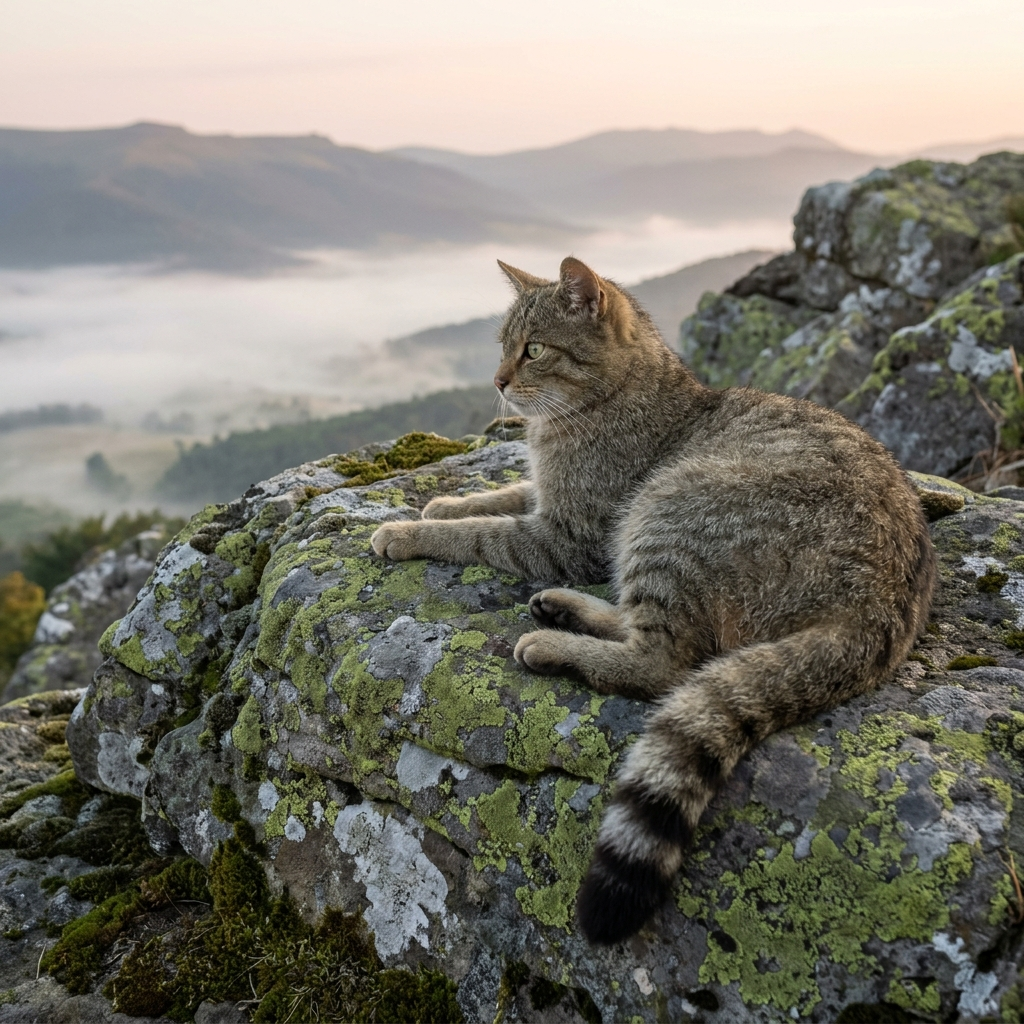
The wildcat's environment is dense deciduous and mixed forests, preferably old-growth stands with hollows in old oaks, beeches, and limes. Key requirements: (1) abundant hiding places — tree hollows, burrows under roots, rock piles; (2) abundant rodents — populations of voles, mice, and dormice; (3) tranquility — the wildcat avoids roads, settlements, and intensively exploited forests. The agricultural landscape is almost entirely avoided — this is a fundamental difference from the domestic cat, which actually prefers the edges of settlements. The wildcat rarely penetrates fields, and if it does — it's through narrow strips of woodland, briefly and purposefully.
Territory size: 200–800 ha for a male, 100–300 ha for a female — several times larger than that of a rural domestic cat. Female territories are smaller and do not overlap; male territories are larger and cover the areas of several females. In winter, the wildcat limits its activity, concentrating on safe hunting grounds with access to non-frozen water sources, and during periods of deep snow and frost, it may even descend to lower parts of the forest or river valleys.

A specialist in forest rodents — 70–90% of prey biomass consists of small mammals. The rest is opportunism.
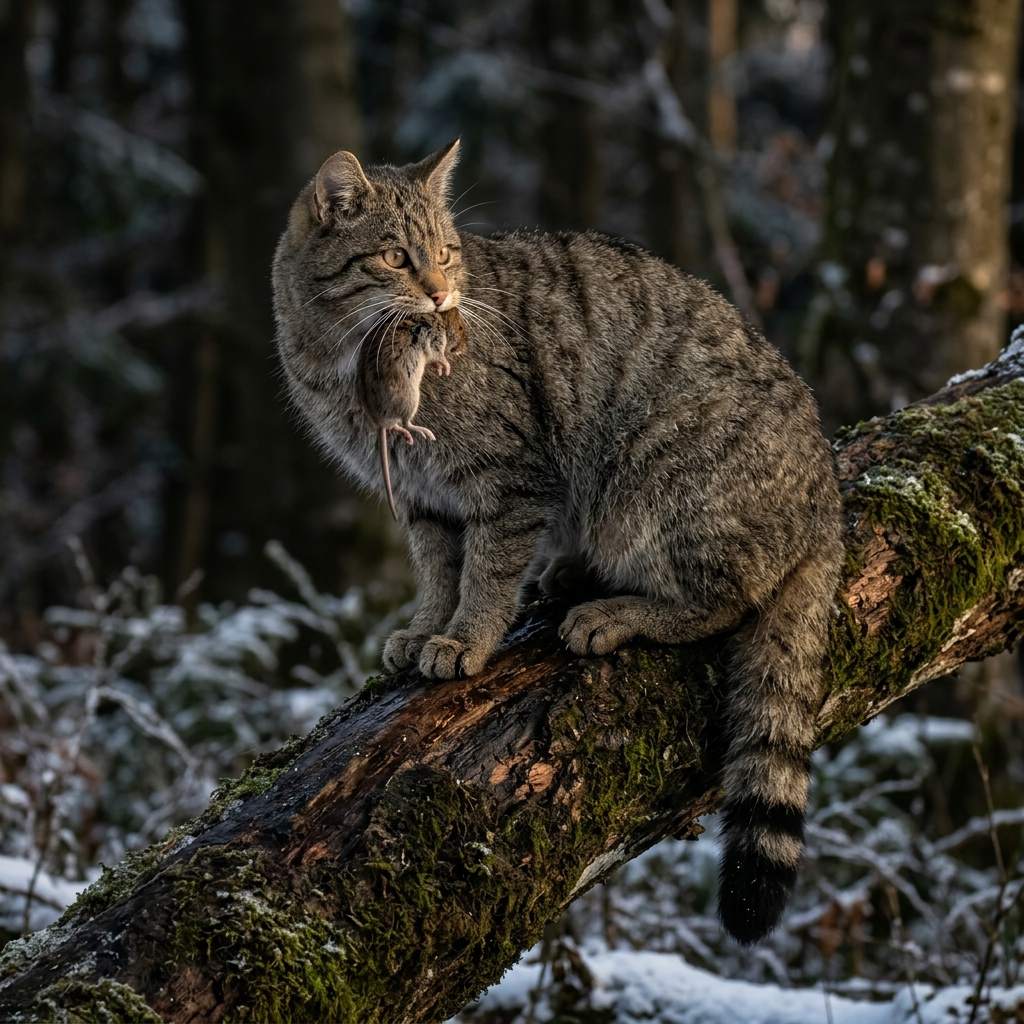
The wildcat is a specialized mouser — the mammalian equivalent of a Great Gray Owl. Polish studies consistently show that 70–90% of the dietary biomass consists of forest and field rodents: bank voles, field voles, wood mice, edible dormice, garden dormice, and occasionally rats and house mice on the edges of forests.
The rest of the diet consists of opportunistic additions: birds (thrushes, blackbirds, rarely young forest fowl) — a few percent of the biomass; lizards, frogs, insects in the summer season; fish in riverside hunting grounds (rarely); young deer and roe deer — exceptionally, in the case of a very strong, adult male encountering newborns. The wildcat does not hunt domestic animals — claims of attacks on chickens or rabbits are almost always mistakes involving foxes, beech martens, or American minks.
The hunting technique is classically feline: stalk and pounce (sit-and-wait + stalk). The wildcat chooses an observation point — a clump of grass, the roots of a fallen tree, a low stone — and waits, almost motionless, for prey. Once a rodent is located, a slow, almost imperceptible approach follows (sometimes 5–10 minutes for 5 m), ending in a short, fast pounce-and-pin. A single hunt is successful in about 20–30% of cases — typical for a cat.
Daily activity: strictly crepuscular-nocturnal, with two peaks — an hour after sunset and an hour before sunrise. During the day, the wildcat sleeps in a hollow, a burrow under roots, or a dense clump of bushes; it leaves its hiding place only when darkness falls. On long winter nights, activity can last 8–10 hours, on short summer nights 3–4 hours. Observing a wildcat during the day is exceptional — usually involving females with young in July–August, when increased food needs force extended activity.
In historical Poland, the wildcat was exterminated by hunters as a 'hunting pest' — accused of hunting hares, young roe deer, and forest fowl. Modern studies of stomach contents in Carpathian wildcats show clearly: the share of game animals in the diet is less than 5%. The wildcat is physically incapable of regularly hunting adult hares or roe deer, and young deer and roe deer die many times more often from foxes, martens, wild boars, and cars than from wildcats. Exterminating the wildcat as a pest was an ecological mistake — the species is now strictly protected, and its real economic role is rodent regulation, allied with forestry and agriculture.
A short rut, long care. The female raises the young alone — the male disappears from family life after mating.
The wildcat is a polygynous species — the male maintains a territory covering the ranges of several females with whom he mates during the rutting season. After fertilization, the male disappears from family life — the entire pregnancy, birth, and rearing of the young rest with the female.
The rut occurs in February–March, locally earlier (as early as January in mild winters) or later (until April in harsh ones). During the rut, males actively patrol expanded territories, scent-marking intensively (urine, cheek glands), and engaging in aggressive fights with competitors. The female announces her readiness for the rut with characteristic vocal calling — long meows resembling a domestic cat's 'mating voice' but louder and lower. Mating takes place on the ground, usually near the female's shelter.
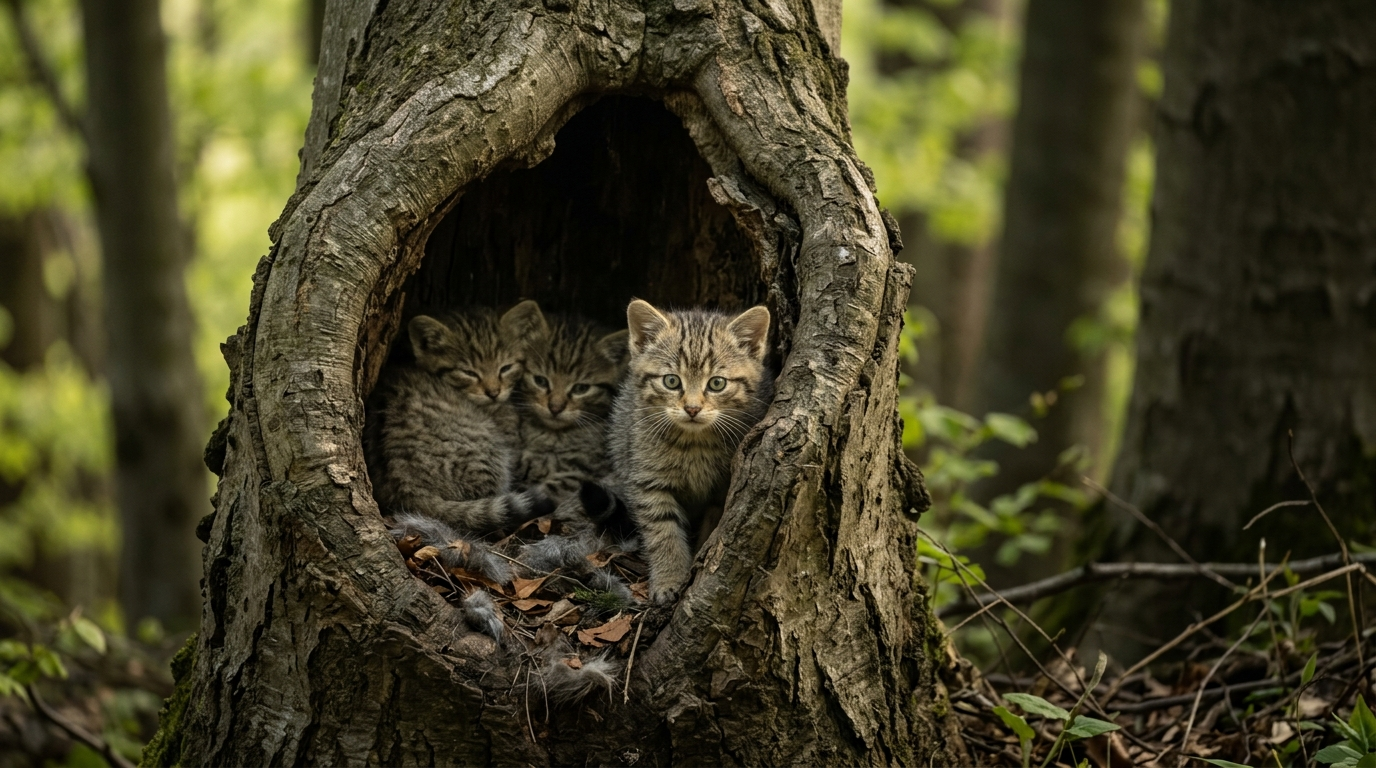
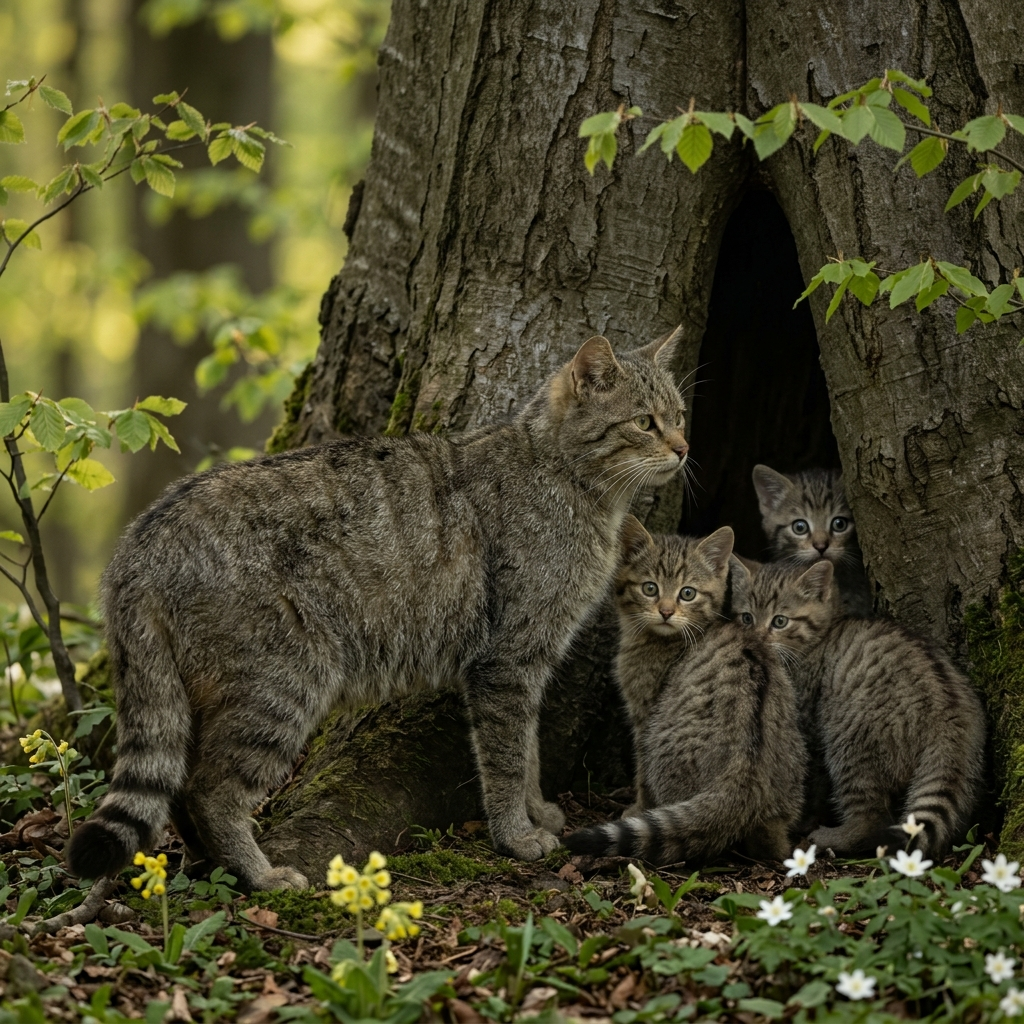
Gestation lasts 63–69 days. The female builds a birthing nest in a safe place — typically a hollow in an old tree (1.5–8 m above ground), a burrow under the roots of a fallen trunk, a crevice in a rock pile, or an abandoned badger or fox den. The inside of the nest is lined with fur and dry grass. The litter usually numbers 2–5 kittens, born in late April–May, blind, almost hairless, and weighing 70–135 g.
Kitten development: eyes open on the 9th–12th day, first solid foods in the 4th–5th week, leaving the nest in the company of the mother in the 6th–8th week. Kittens learn to hunt by observing the mother and practicing on weakened prey brought to the nest. The family stays together until autumn (October–November), when the young disperse in search of their own territories. Dispersion of young males reaches 30–80 km from the place of birth, females significantly less (5–15 km, often settling near the mother). Wildcats reach full sexual maturity in their 1st–2nd year of life.
Most Polish wildcat populations live in forests with a deficit of old hollow trees — the result of intensive forest management in the 20th century. A hollow in an old beech, oak, or lime with an opening of 15–25 cm is a critical resource: day shelter, birthing nest, winter hiding place. Competition is serious: beech martens, woodpeckers, owls, and dormice fight for the same hollows. Modern wildcat protection programs include designating refuges with old hollow trees and leaving dead wood — this is not just biodiversity for insects, but housing infrastructure for Poland's rarest cat.

The wildcat is almost invisible — but it leaves tracks, droppings, prey feathers, and claw-marked trees in the field. The key is reading the combination of signs.
Direct observation of a wildcat in the Polish field is exceptional — most zoologists have spent decades in Bieszczady to finally see the animal from a distance. Certain identifications today rely almost exclusively on camera traps and tracks, occasionally on DNA samples from droppings and fur.
Tracks of the wildcat are classic feline prints: 4 toes arranged in an arc around a three-lobed metacarpal pad, without claw marks (claws are retracted while walking, unlike canids). Length of a single print: 4–5 cm, width 4–5 cm. The tracks are clearly larger than those of a domestic cat (3–3.5 cm) and clearly smaller than those of a lynx (7–9 cm). A two-part track is characteristic of a trot — the hind paw steps into the track of the front paw, similar to a fox, but with more compactness.
Droppings of the wildcat are cylindrical, segmented, 5–10 cm long, and 1.5–2 cm in diameter — a typical cat scat. They often contain rodent fur, small fragments of bones, and bird feathers. The wildcat does not regularly bury its droppings in the forest (unlike a domestic cat in a sandbox) — it leaves them in visible marking spots: a rock, a stump, a root by a game trail. This is territorial behavior, not hygiene. DNA from droppings is today the primary tool for non-invasive monitoring of the wildcat population in Poland.
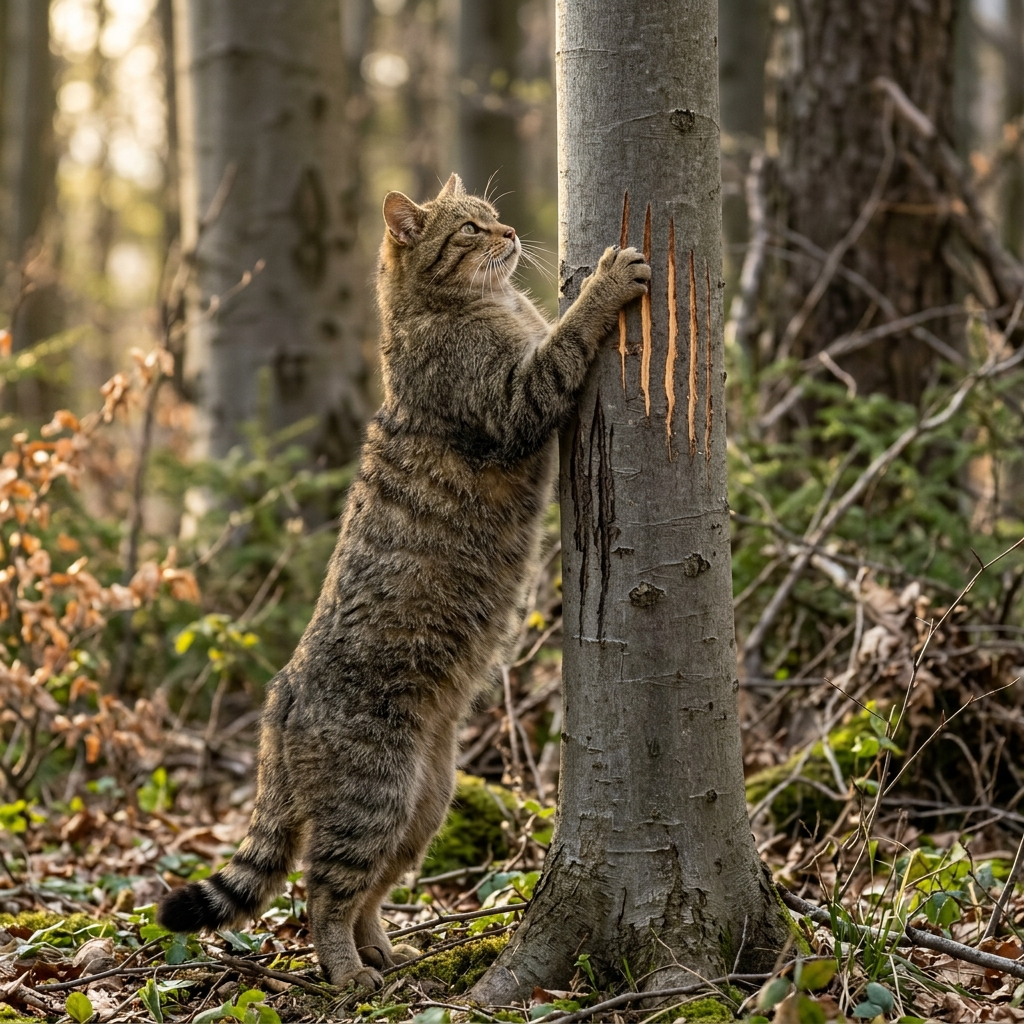
Claw-marking trees: the wildcat regularly returns to the same trunks — typically smooth-barked young beeches, firs, birches — and claws them from a height of 30–80 cm above the ground. Characteristics of the sign: 3–5 parallel vertical scratches, 10–25 cm long, fresh ones with a light interior, older ones darkening. These are territorial signs reinforced by scent from the paw glands. Feathers and fur of prey near shelters (hollows, burrows) — a typical sign of a nest or permanent hideout. Camera traps in Polish wildcat areas today provide most of the certain observations — Bieszczady, Roztocze, and the Świętokrzyskie Mountains are covered by a network of over 200 devices.

The greatest genetic threat to the species — not hunters, not drivers, not logging. Only the unneutered tabby at the forest edge.
The most dramatic contemporary threat to the European wildcat is not extermination, not habitat loss, and not collisions with cars — it is hybridization with the domestic cat (Felis catus). Both species are so closely related (the domestic cat descends from the African line Felis lybica, while the European wildcat is a sister line F. silvestris silvestris) that they produce fertile offspring without any reproductive barriers.
The lesson from Scotland is brutal and cautionary. The Scottish wildcat — the same subspecies F. s. silvestris as the Polish wildcat — has been officially recognized by the IUCN in the last decade as functionally extinct as a distinct genotype. Most remaining 'wildcats' in Scotland are hybrids, with the share of domestic cat genes exceeding 50%. The cause: the centuries-old practice of releasing unneutered village cats at the forest edges and the lack of geographical isolation of wildcat populations from settlements. Pure wildcats in Scotland are today isolated individuals, not a population capable of self-reproduction.
Mechanism of hybridization: an unneutered domestic cat at the forest edge (farm, forest lodge, tourist settlement) enters the peripheral territory of a female wildcat. Matings are physically and ethologically possible — the wildcat accepts a partner with a similar scent signature. F1 offspring are phenotypically intermediate: a partially thick tail but with a white spot on the chest; partially striped fur but with patches; rings on the tail but indistinct. Subsequent generations drift further from the wildcat type with every generation. After a dozen generations, it is impossible to distinguish a hybrid from a striped tabby without genetic analysis.
Polish protection programs include systematic genetic monitoring of the population — in Bieszczady, Roztocze, and Świętokrzyskie, DNA samples are taken from droppings, fur (hair traps), tracks in the snow, and captured individuals. Preliminary results are relatively optimistic: the core Bieszczady population shows up to 5–10% domestic cat gene share in individual animals, while in Scotland these values exceed 50%. This is thanks to: (1) geographical isolation of the core population from settlements, (2) continental connectivity with Slovakia and Ukraine, and (3) the village tradition of keeping cats close to the farm. The key conservation action anyone can participate in: neutering cats on farms at the forest edge, not letting them out at night, and not feeding stray cats.
If you live in a wildcat area — Bieszczady, Low Beskids, Roztocze, Świętokrzyskie Mountains, Bieszczady Foothills — your attitude towards cats has a real impact on the genetic future of the Polish wildcat. List of priorities: (1) mandatory neutering of all domestic cats (females and males) — this is not cosmetic, it's species protection; (2) do not let cats out at night — that's when the wildcat actively roams the area; (3) do not feed stray cats — they maintain illegal populations at the forest edge; (4) report feral cats to the local hunting club or forestry office — capture and sterilization by NGOs is a legal and ethical solution; (5) do not abandon cats in the forest even in a 'cared for' form — this is literally introducing foreign genetic material into the wildcat population. The cost of these actions is a few hundred zlotys per animal. The price of failure — the extinction of the species.
From extermination to reintroduction in 100 years. 'Active Wildcat Protection' in the Świętokrzyskie Mountains is a flagship project of Polish mammalogy.
The protective status of the wildcat in Poland evolved from an exterminated hunting pest (before 1952) through partially protected (1952), strictly protected (1995) to a Natura 2000 priority species (since 2004, Annex II of the EU Habitats Directive). Today, the wildcat is one of the best-protected mammals under Polish law — although hybridization remains a real threat that the law practically does not regulate.
Legal status: strict protection in Poland (Regulation of the Minister of the Environment of 16.XII.2016, Annex 1, species requiring active protection); EU — Annex II and IV of the Habitats Directive (priority species, requiring the designation of Natura 2000 areas); CITES — Annex II (regulation of trade in skins and specimens). Zonal protection of breeding sites is possible in Natura 2000 areas, though in practice rarely applied — due to the lack of knowledge about the precise locations of many families.
The 'Active Wildcat Protection in Poland' program implemented by the 'Salamandra' Polish Society for Nature Protection and partners (national parks, Association for Nature 'Wolf', Forest Research Institute) is a flagship undertaking for the species. The most spectacular component: reintroduction in the Świętokrzyskie Mountains, conducted since 2019. Founder individuals come from Bieszczady populations — they are captured, marked with chips and GPS telemetry collars, and transported to the Świętokrzyskie National Park and its surroundings. After a few weeks of acclimatization in aviaries, the release follows — letting them into the wild with individual monitoring.
Results of the Świętokrzyskie restoration (as of 2026): 30–40 individuals in the free-living population, including the first wild-born generations in the Świętokrzyskie Mountains (since 2022). Operational success exceeding initial assumptions. Other program components: genetic monitoring of the core population (Bieszczady, Roztocze) with emphasis on detecting hybridization; a camera trap network (200+ devices); protection of old-growth forests with hollows in state forests; educational campaigns on the edges of wildcat areas; a program for neutering village cats in forest-adjacent farms. Main residual threats besides hybridization: road collisions (especially in Bieszczady on roads crossing territories), accidents in poaching traps intended for other animals, and sporadic poaching.
Every well-documented observation of a wildcat in Poland has real scientific value, especially outside the three known centers. What to report: a photo or recording from a garden camera trap; tracks in snow or mud with a ruler for scale; a detailed description of the location and circumstances (date, time, GPS). To whom: (1) the nearest national or landscape park — Bieszczady NP, Roztocze NP, Świętokrzyskie NP, Magura NP; (2) 'Salamandra' Polish Society for Nature Protection; (3) Association for Nature 'Wolf' — monitors Carpathian predators; (4) IBL — Forest Research Institute. A report with a location outside the known centers (e.g., Sądecki Beskid, Lower Bieszczady, border Eastern Carpathians) is particularly valuable — it may indicate natural population expansion. Remember not to approach the animal — it is not dangerous but any stress increases the risk of a female abandoning her kittens.
Confusion with a domestic cat is classic — confusion with a young lynx is a typical error for beginning observers. The diagnostic table ends the dispute.
Most Polish 'wildcat sightings' outside the three known centers are actually large striped domestic cats — and there's no shame in that, because at first glance, the differences can be subtle. The second common error is confusing a wildcat with a young lynx, especially when the observation is brief, in half-shadow, or on a low-resolution camera trap. The table below resolves most key confusions.
Confusion with a domestic cat is the most common: a large striped village cat (up to 6 kg) overlaps in size with a female wildcat. Key: the tail. A domestic cat has a tail tapering towards the end, finishing in a point; the rings are blurred, and the tip is rarely distinctly black. Additionally, a domestic cat almost always wears some white marking — white paws, a chest spot, chin, or belly — which is never present in a pure wildcat.
Confusion with a young lynx is rarer but more dramatic in its consequences (different protection status, different consequences of misidentification). Key: size and proportions. A lynx — even a young one — is clearly larger (5–10 kg in the first year, adult 18–30 kg), with significantly longer legs (a silhouette 'taller than longer' at the withers), a very short tail (10–25 cm) ending in a characteristic black tip, and ear tufts (1–4 cm long, a characteristic trait of Lynx genus). A wildcat has no ear tufts, shorter legs, a compact body, and a significantly longer tail than a lynx (25–37 cm vs 10–25 cm).
| Feature | European Wildcat | Domestic Cat (Tabby) | Eurasian Lynx (Young) |
|---|---|---|---|
| Body weight | 3–7 kg | 3–6 kg | 5–10 kg (young), adult 18–30 kg |
| Body length | 50–80 cm | 45–60 cm | 70–110 cm |
| Tail length | 25–37 cm thick, short | 25–35 cm tapering | 10–25 cm very short |
| Tail tip | blunt black tip | pointed, rarely black | black mark |
| Tail rings | 4–7 distinct | blurred or absent | absent (uniformly dark end) |
| Fur | uniform gray-brown with streaks | various colors + white | red/gray with black rosettes |
| White markings | NONE | almost always present | white belly (pale) |
| Ear tufts | absent | absent | 1–4 cm — diagnostic |
| Leg proportions | short, compact body | slender, medium | long, tall body |
| Track | 4–5 cm no claws | 3–3.5 cm no claws | 7–9 cm no claws |
| Habitat | old-growth forest | settlement edges, fields | vast Carpathian/Podlasie forests |
If you see a 'strange large cat' in a Polish forest, ask yourself three questions in order: (1) What is the tail like? Thick with a black tip and rings — a wildcat candidate. Tapering and pointed — domestic cat. Very short with a black end — lynx. (2) What is the fur like? Uniform with dark streaks, no white — wildcat. Patches, white chest, color variety — domestic cat. Reddish with rosettes — lynx. (3) What are the ears like? Rounded, without tufts — wildcat or domestic cat. With 1–4 cm tufts — lynx. Three questions, three answers — and identification is almost certain. A photo from a camera trap clears up any remaining doubts.
Eight shots in different conditions — seasons, environments, situations. Click to enlarge.