SPECIES PROFILE · Mustelids
Mustela furo · Linnaeus, 1758
A domesticated polecat with 2500 years of history — human companion, rabbit hunter, and occasional escapee returning to the wild.
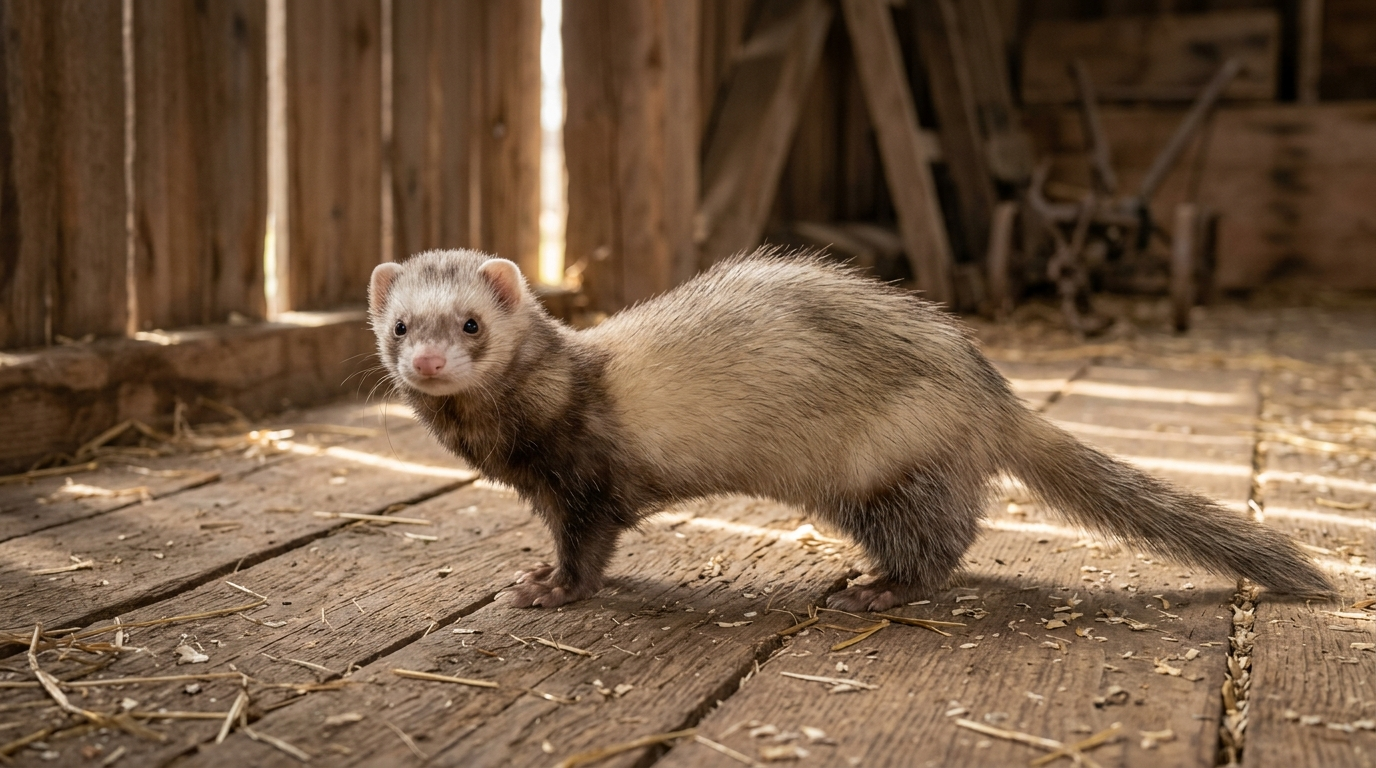
The ferret is not a wild species — it is a domesticated form of the polecat, accompanying humans for over 2500 years. Initially bred for rabbit hunting, it is now most commonly kept as a pet. It looks like a polecat with a makeover: lighter, gentler, with a blurred mask — and with its own set of ecological dilemmas if it escapes into nature.
| Kingdom | Animalia |
|---|---|
| Phylum | Chordata |
| Class | Mammalia |
| Order | Carnivora |
| Family | Mustelidae |
| Genus | Mustela |
| Species | M. furo |
The ferret (Mustela furo) is a domesticated form of the polecat — it is most often classified as the same species as the wild European polecat, treated as its subspecies (Mustela putorius furo). In practice, it is the same animal after 2,500 years of selective breeding — lighter, smaller, tamed, with a weakened hunting instinct and a much less pronounced scent. Its origin is debated: some researchers consider the European polecat (M. putorius) as its ancestor, others the steppe polecat (M. eversmanii), though recent genetic analyses point to the former. In Poland, the ferret exists exclusively as a domestic animal — there is no permanent feral population. Individual animals that escape their owners usually die within a few months due to hunger, predators, or hypothermia. However, those that survive can interbreed with wild polecats — and this is the most serious ecological problem associated with the species.
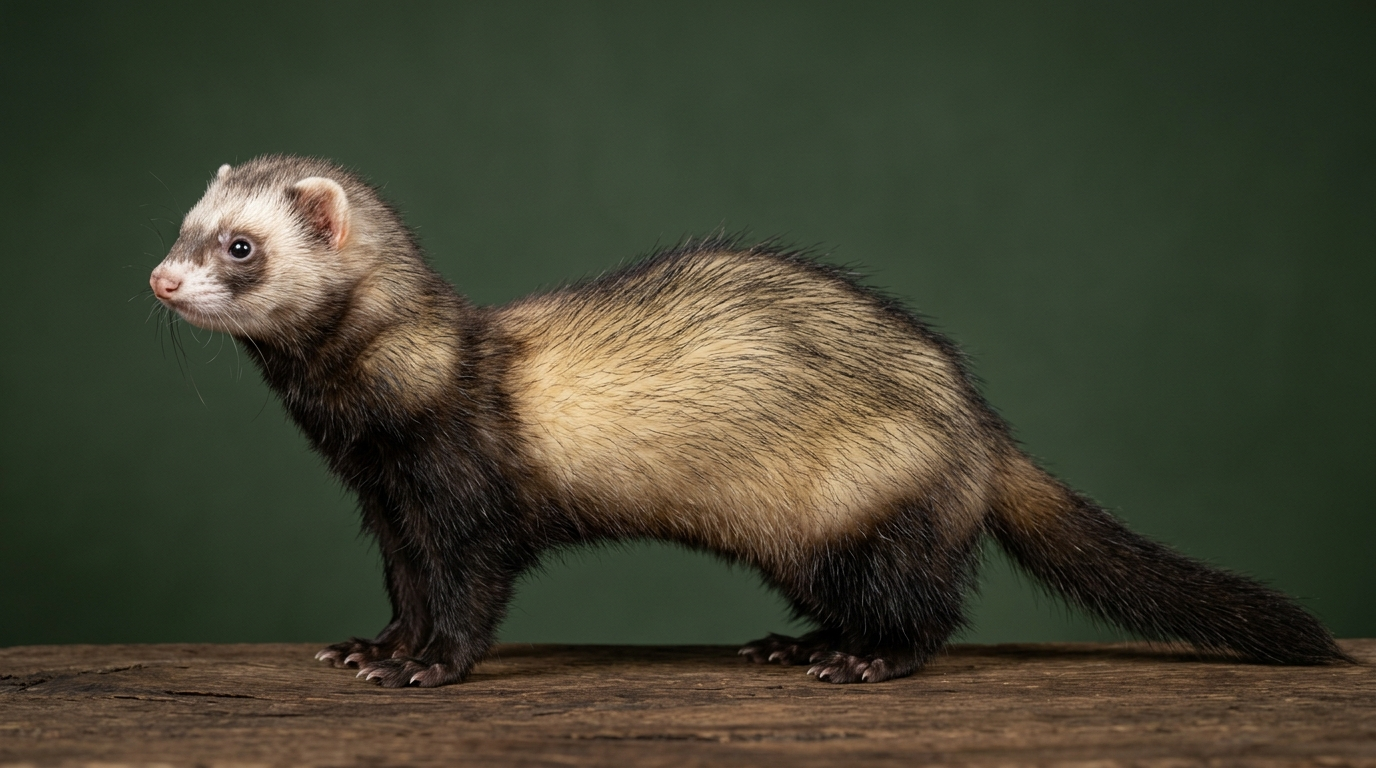
The same skeleton as a polecat, but bleached and with a blurred mask — plus over a dozen bred color variants.
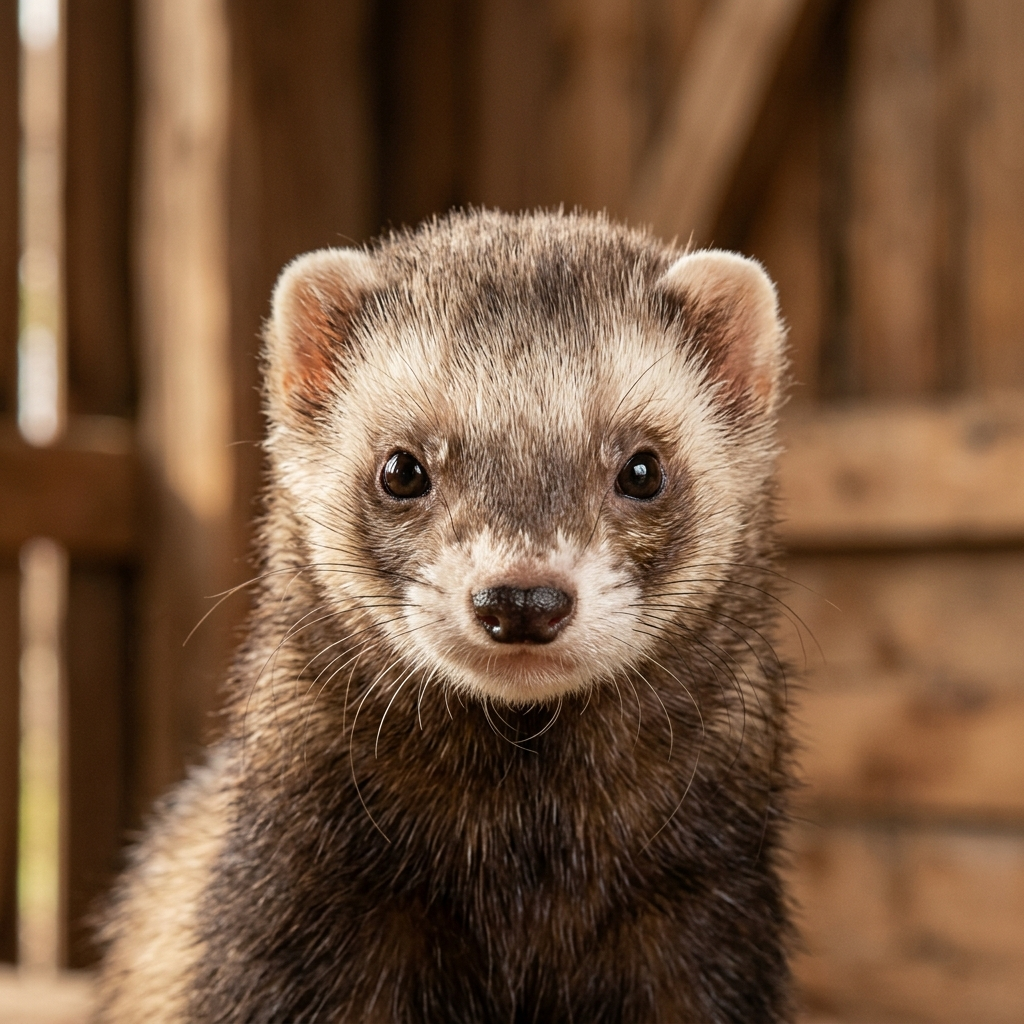
The ferret is slightly smaller and lighter than the wild polecat, but anatomically almost identical. It remains the same tube-like predator with short legs and a long, slightly hunched torso — just with a color palette shifted from dark brown toward cream, white, and ginger.
The body length of an adult is 33–46 cm, tail 13–18 cm, weight 0.7–2.0 kg (males up to 2.5 kg). Sexual dimorphism is distinct — males are 30–50% heavier than females. Compared to the wild polecat, ferrets are about 10–20% lighter for a similar length — a result of selection in captive conditions.
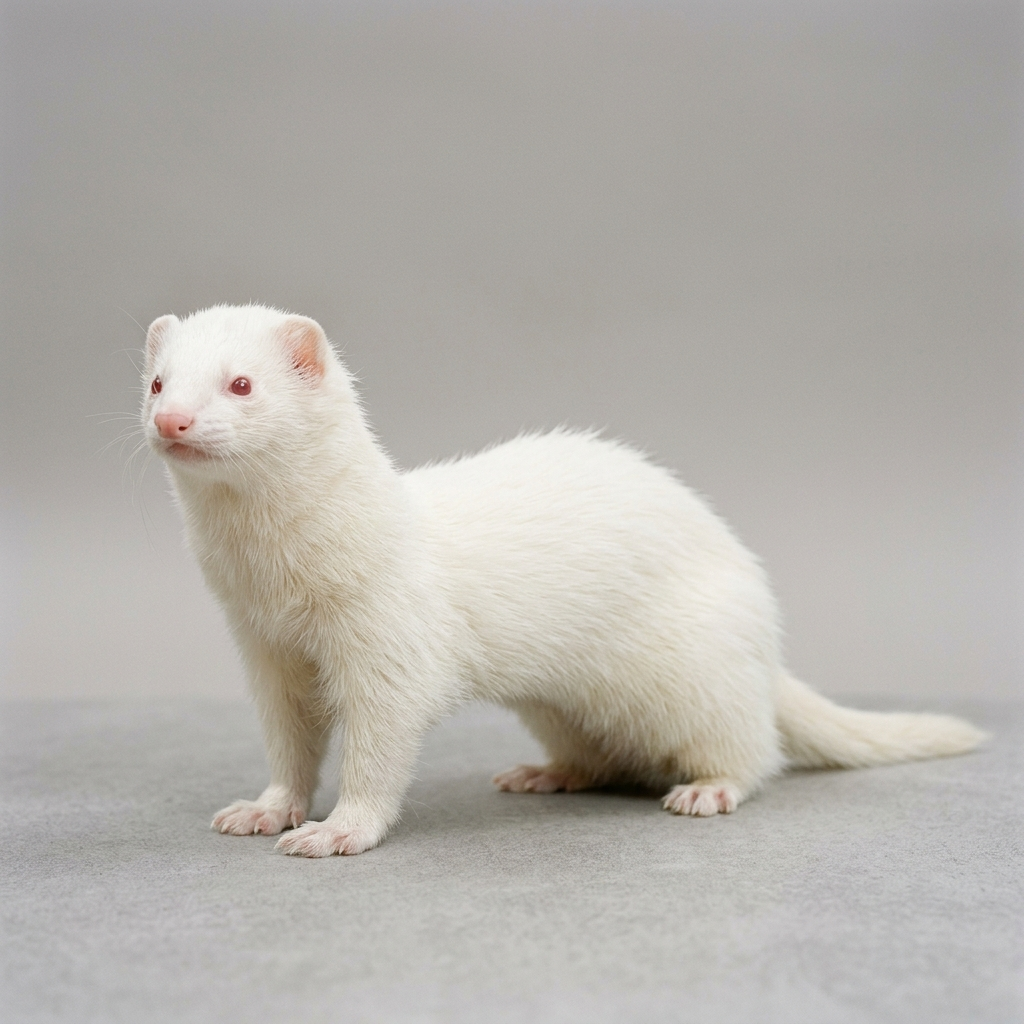
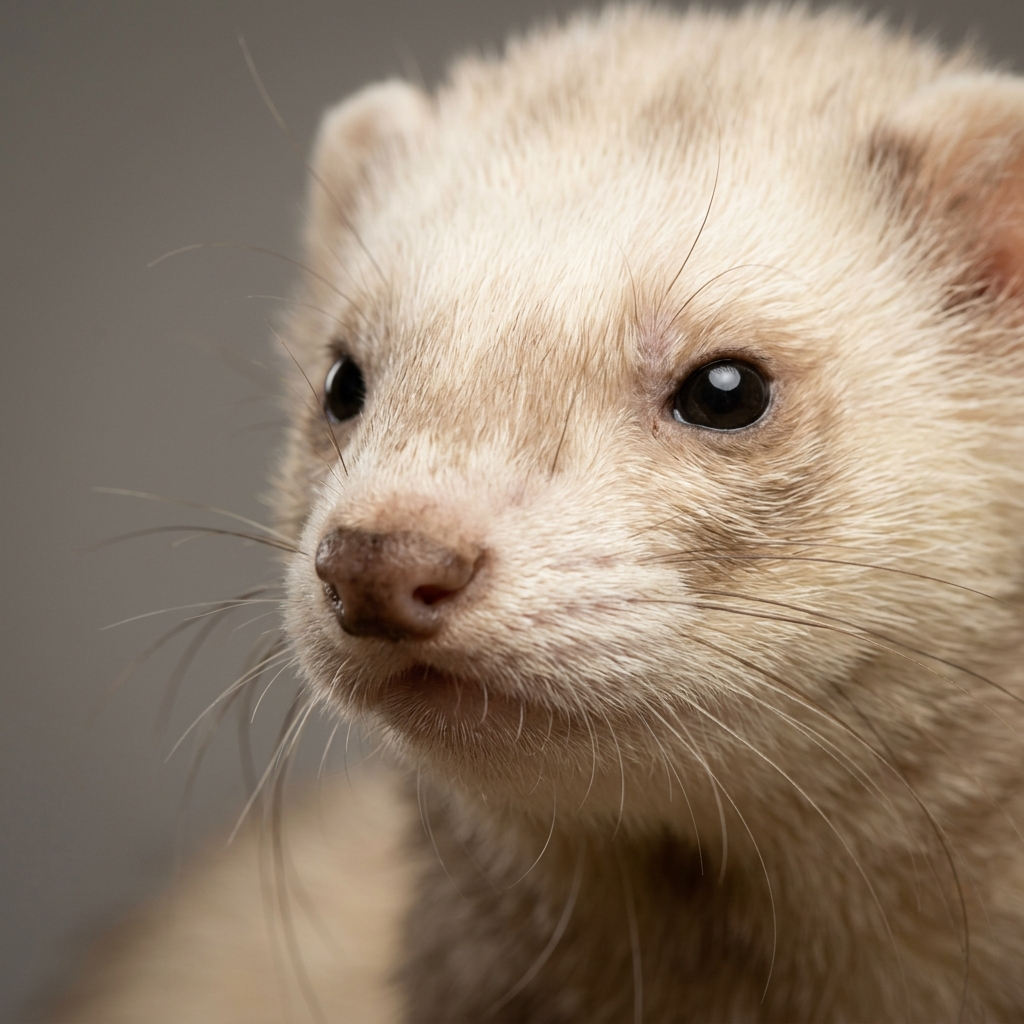
The fur has the same double-layered structure as the polecat: long guard hairs and a dense undercoat. However, it differs in coloration, which breeders have divided into about 30 official variants. The most common are sable (closest to the wild pattern: dark brown hair tips, light cream undercoat), albino (pure white with pink eyes), silver (grey with a white undercoat), cinnamon (reddish-ginger), chocolate (light chocolate brown), champagne (light cream). In all variants, the mask is significantly blurred, faint, or entirely absent — this is the most reliable identifying feature distinguishing a ferret from a wild polecat.
In the USA and Canada, descenting — the surgical removal of the perianal glands together with sterilization — is a standard veterinary procedure for captive ferrets. In Europe, this practice is controversial and often banned (including in the UK and Poland, where it is treated as a cosmetic procedure not medically indicated). Even without descenting, captive ferrets emit a much weaker scent than wild polecats — a result of long-term selection. The secretion primarily appears during stress and during the breeding season; daily life with a ferret does not require "degassing."

| Feature | Ferret | Wild Polecat |
|---|---|---|
| Facial mask | blurred or absent | sharp, high-contrast, with light bands |
| Fur color | light (cream, white, ginger) | dark brown-black |
| Body weight | 0.7–2.0 kg (smaller) | 0.5–1.7 kg (proportionally heavier) |
| Attitude toward humans | trusting, allows handling | skittish, aggressive in defense |
| Scent | weak, during stress | intense, heavy |
| Occurrence | captivity only | natural, wetlands |
2,500 years of partnership — from ancient rabbit hunts to modern sofas.
The ferret is one of the oldest domesticated predators — older than the domestic cat (~3,000 years), though younger than the dog (~15,000–30,000 years). Its breeding history dates back at least 2,500 years and is inextricably linked to rabbit hunting.
The first certain mentions come from Ancient Greece and Rome — Aristotle (4th century BCE) describes an animal called iktis, used to flush rabbits from burrows; Pliny the Elder (1st century CE) mentions viverra used for the same purpose in the Balearic Islands. Medieval European sources (12th–15th centuries) consistently use the name furo (from Latin fur — thief) — hence both the Polish "fretka" and English ferret.
Genetic origin has been debated since the 19th century. Two hypotheses compete: (1) domestication of the European polecat (Mustela putorius), (2) domestication of the steppe polecat (M. eversmanii), or a crossbreed of both. The latest genome analyses (studies from 2014–2020) point mostly to the European polecat as the primary ancestor, with a possible contribution from the steppe polecat in some breeding lines. Ferret × wild polecat hybrids are fully fertile in all generations — which is another argument for considering them the same species form.
Modern roles for the ferret include: domestic pet (the vast majority of the current population in Europe), hunting companion in the technique known as ferreting (mainly in the UK, Australia, New Zealand), and a model animal in medical research (flu, SARS, COVID — ferrets are naturally susceptible to human respiratory viruses). In Poland, the role of a pet dominates — estimated at tens of thousands of individuals in private homes, with a growing hobbyist base and ferret clubs.

An obligate carnivore with a short intestine — unforgiving of dietary compromises.
The ferret is an obligate carnivore — like a cat, but in an even more restrictive version. Its digestive system cannot handle starch, fiber, or plant-based protein sources, and its short intestine (4–5× body length) requires a diet of high digestibility and frequent meals.
Optimal diet composition is: 32–38% animal protein, 18–22% fat, less than 4% carbohydrates, and essential taurine (like in cats). In domestic conditions, three approaches are available: (1) high-quality dry food for ferrets or premium cat food (always grain-free, based on real meat), (2) wet animal food, (3) BARF (Biologically Appropriate Raw Food) — raw meat, offal, small bones, quail eggs, and sea fish.
Feeding frequency stems from physiology — a ferret digests food in 3–4 hours, and being fasted for longer than 6–8 hours can lead to hypoglycemia, which if prolonged can result in a coma. In practice, this means constant access to food (ad libitum) or at least 4–5 meals over a 24-hour period. Fresh water — absolutely always.
Chocolate, onions, garlic, grapes, raisins — toxic just like in dogs. Milk, cheese, yogurt — ferrets are lactose intolerant. Fruits and vegetables in larger quantities — indigestible, can cause intestinal blockages. Dog food and cheap cat food — animal protein content too low, too many grains. Raw wild-caught salmon — risk of salmon poisoning (neorickettsia helminthoeca). Cooked poultry bones, salty and smoked meats, sweets — strictly excluded.
| Feeding Model | Advantages | Disadvantages |
|---|---|---|
| Premium dry food | convenience, balanced, long shelf life | low moisture, risk of stones |
| Wet food | high moisture, palatable | short life after opening |
| BARF (raw) | closest to natural diet, excellent dental health | requires knowledge, risk of imbalance, expensive |
Seasonal breeding with induced ovulation — biology that cannot be ignored.
Ferret reproduction is seasonal and induced — the female does not ovulate spontaneously, but only as a result of copulation. This mechanism, inherited from the wild polecat, means that if a female is not mated during the breeding season, she can develop a life-threatening condition — aplastic anemia.
The breeding season falls between March and September, peaking in April–June. The stimulus is day length (photoperiodism) — in captivity, artificial lighting can be used to shift the season. The female enters estrus (heat), which lasts until mating occurs or the season ends. An unmated female remains under the influence of high estrogen levels for many weeks — which in extreme cases causes hyperestrogenism and fatal bone marrow suppression.
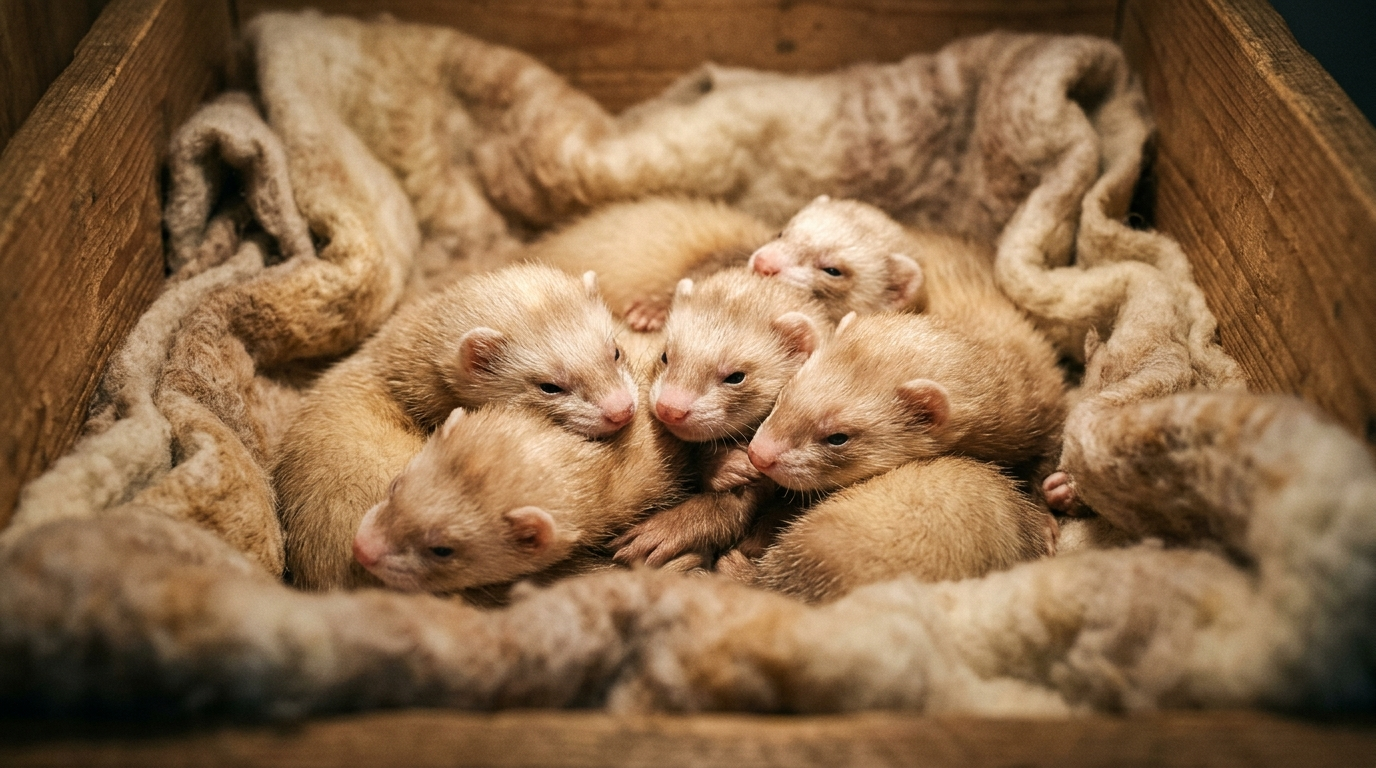
Gestation lasts 41–43 days, is short, and lacks embryonic diapause (unlike in martens or stoats). The female gives birth to 5–13 young, average 8. The young are born blind, deaf, and hairless, weighing about 8–10 g. They open their eyes at 4–5 weeks of age and are weaned from the mother at 6–8 weeks. Sexual maturity is reached at 8–12 months.
For female ferrets not intended for breeding, sterilization is necessary — not for behavioral reasons like in cats, but to save their lives. An unmated female in heat produces elevated estrogen levels for weeks, which suppresses the bone marrow. This results in aplastic anemia — often fatal despite treatment. Alternatives include: full sterilization (ovariohysterectomy), deslorelin implant (temporary suppression), or controlled mating with a vasectomized male. Leaving a female "to nature" is a death sentence — unless she is being bred.

A social predator with 14–18 hours of sleep — if you don't understand them, they won't understand you.
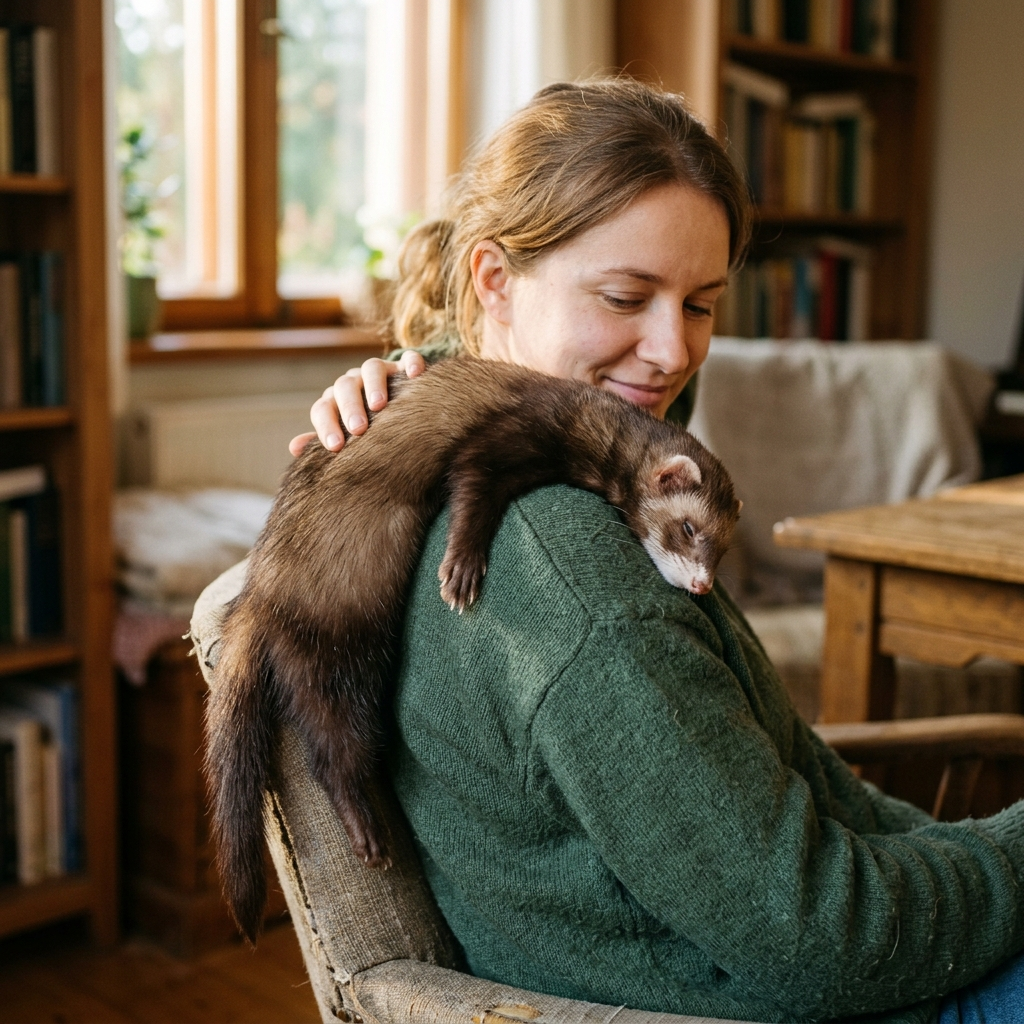
A ferret is not for everyone. It is an animal with a strong exploratory instinct, extremely social, but with an activity cycle so different from humans that without preparation, it can be more frustrating than rewarding. However, once a bond is formed, it builds a relationship with the owner comparable to that of a dog.
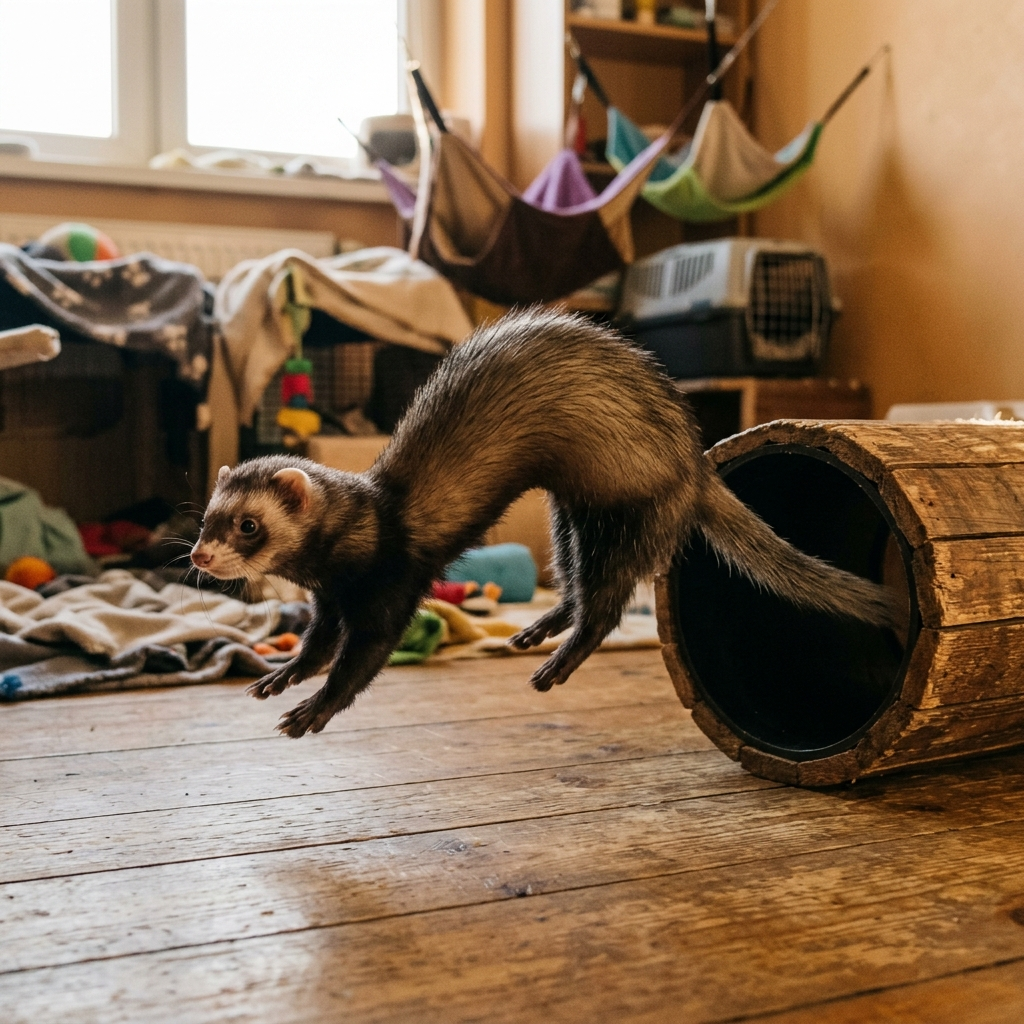
A ferret's daily cycle involves 14–18 hours of sleep divided into 4–6 periods, and short, intense activity phases (15–60 min). Ferrets are not active at night like wild polecats — they are crepuscular and opportunistic: they adapt to the owner's rhythm, provided they get a minimum of 3–5 hours of "free-roaming" time per day.
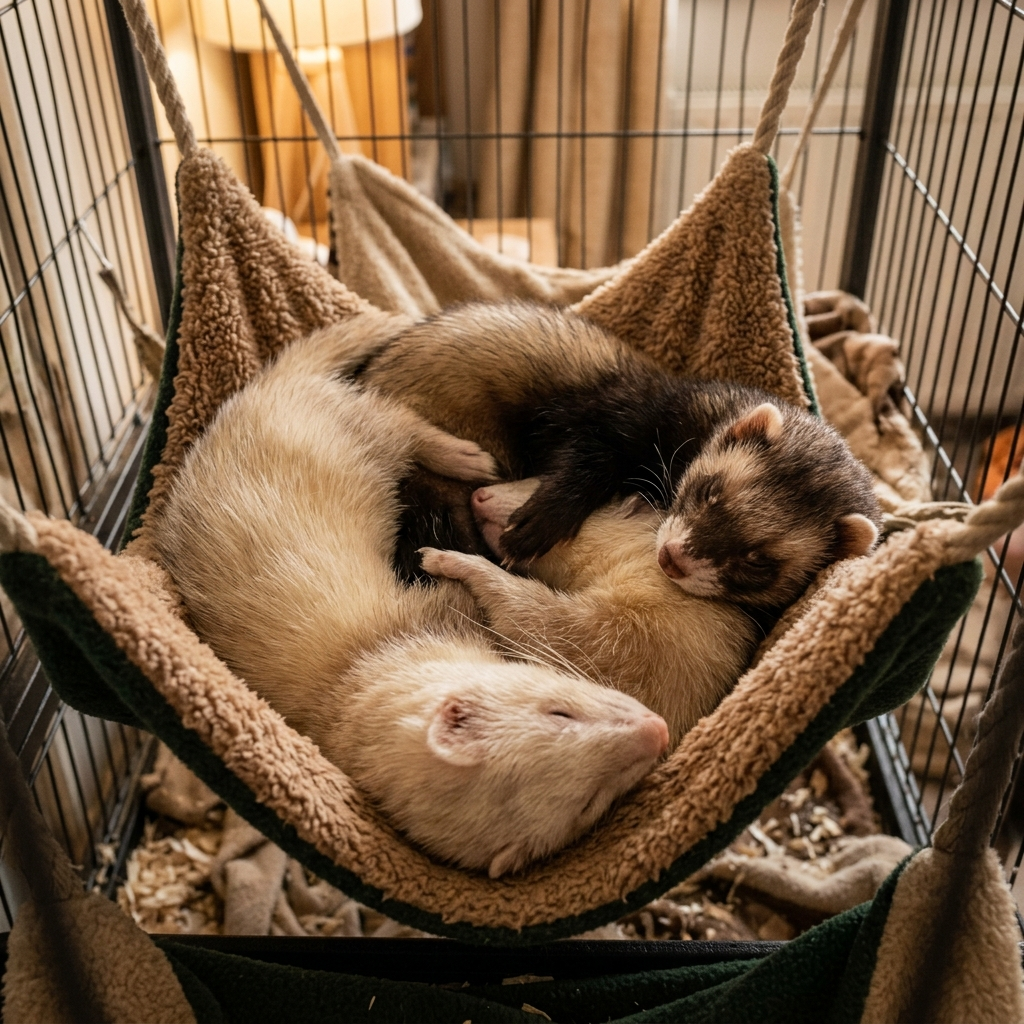
Socializing is crucial for ferrets. In nature, polecats are loners, but domestication has strengthened social behaviors — ferrets kept in groups (a business of ferrets) are significantly more balanced than solitary individuals. Optimally, keep a pair or trio of the same sex (to avoid physical seasonal mating conflicts leading to fights).
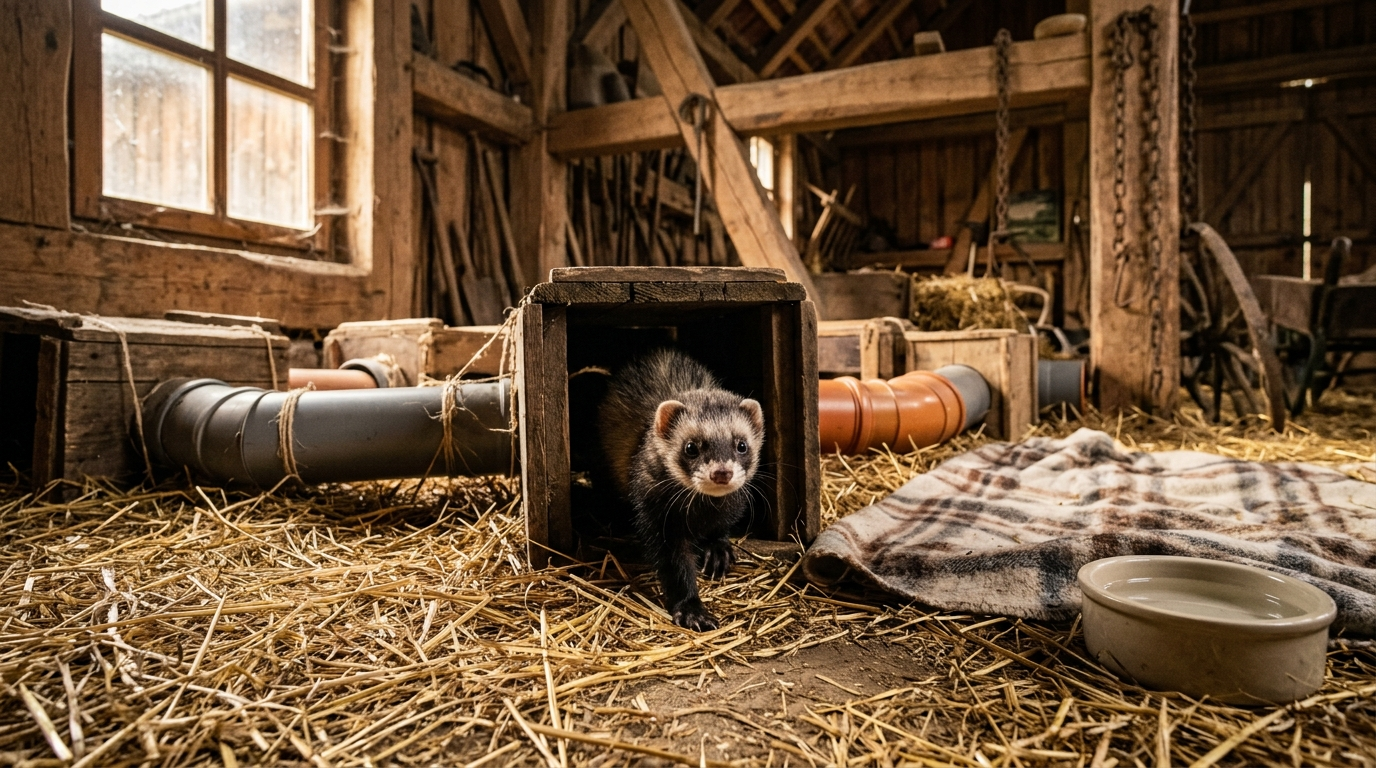
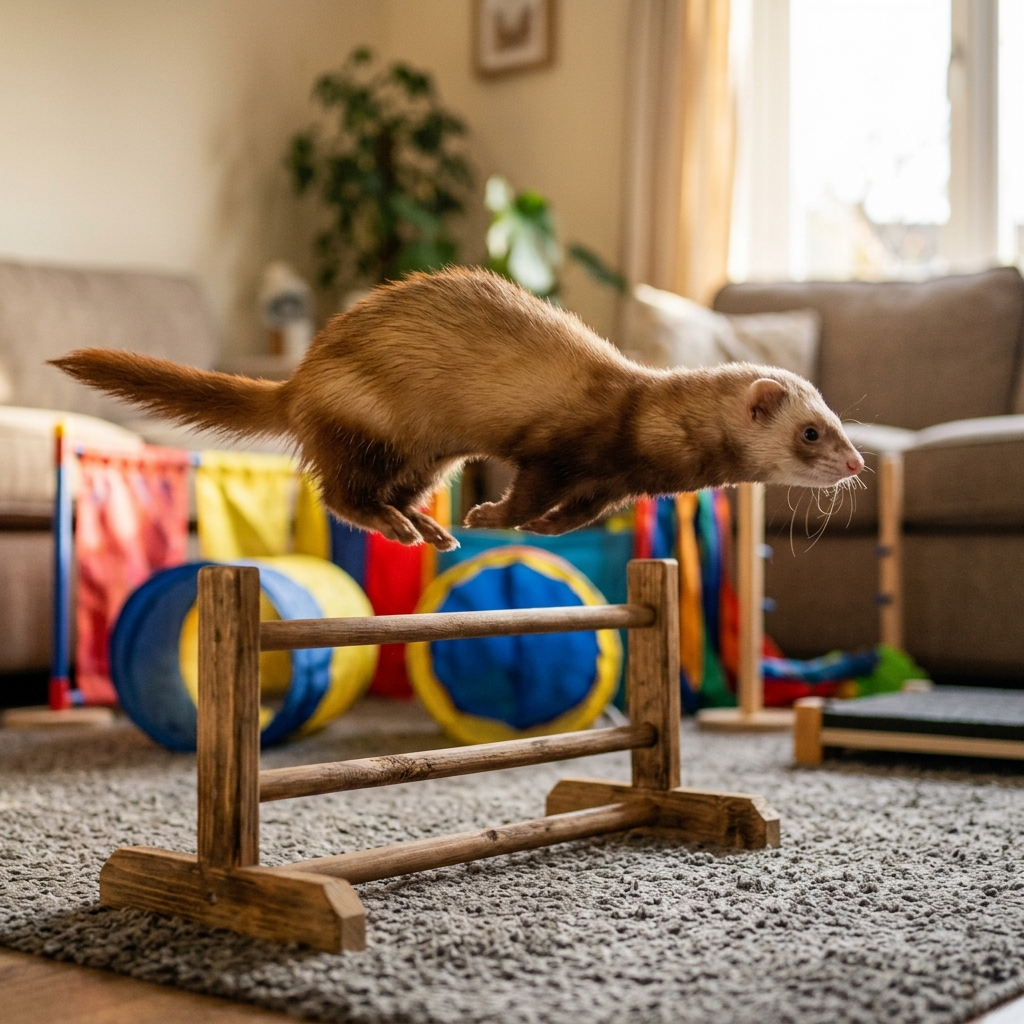
Home requirements include: a large multi-level cage (min. 0.8 m³ per individual) or a dedicated ferret room, daily exercise in a safe space, tunnels and mazes, a litter box (ferrets can be litter-trained like cats), destructive toys, and a tangle of blankets and hammocks for sleep. Any hole larger than 4 cm in diameter = potential escape — a ferret can squeeze through anything its head can pass through.

A short list of diseases that ferret owners fear most.
Ferrets are susceptible to a surprisingly narrow but severe set of diseases. Selective breeding from 100 years ago left certain predispositions in the gene pool, and their short lifespan (6–10 years) means health problems appear rapidly.
Adrenal disease is now the most common chronic ferret illness — estimated to affect about 70% of individuals over 5 years old. It is linked to early sterilization (before sexual maturity) and a lack of photoperiod in domestic conditions. Symptoms: hair loss (starting from the tail), itching, behavioral changes. Treatment: deslorelin implant or surgical removal of the affected adrenal gland.
Insulinoma — a pancreatic tumor that produces excess insulin — appears in about 25% of individuals over 4 years old. Symptoms: episodes of weakness, seizures, drooling. Requires pharmacological treatment (prednisone) or surgery. Canine distemper — fatal in >99% of cases, making annual vaccination absolutely necessary. Human influenza — ferrets catch human viruses and may require isolation from sick family members.
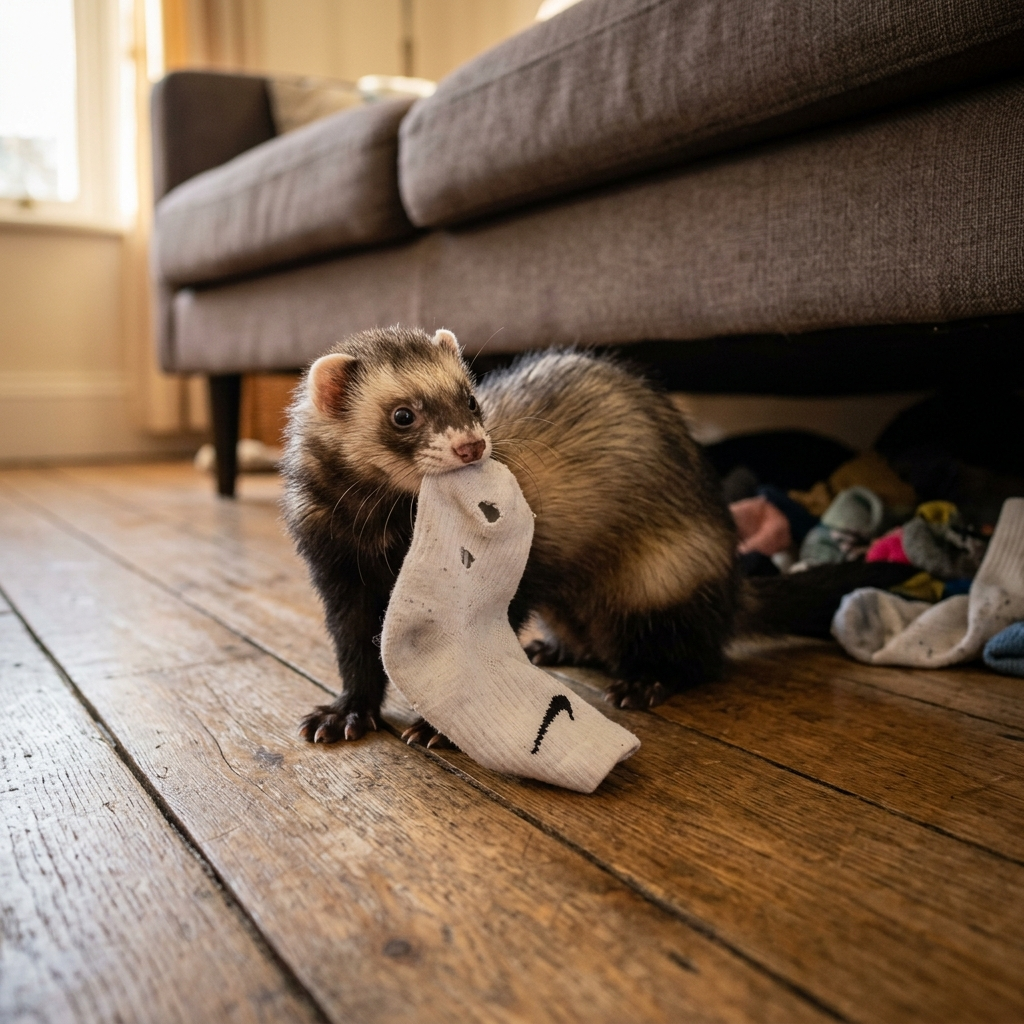
The average annual cost of keeping a ferret in Poland is 1500–3000 PLN (food, litter, vet, accessories). Chronic disease treatment costs after age 5: 4,000–10,000 PLN annually. A ferret is not a cheap animal despite its small size. Second: the smell. Even in sterilized individuals, the fur has a characteristic musky aroma that one must get used to. Third: a ferret steals — an instinct inherited from the polecat, involving hiding "prey" in a burrow. Keys, jewelry, and socks regularly disappear and are found in "caches" under the sofa.
What happens when a captive mustelid ends up in wild wetlands.
The ferret as a domesticated form is not an ecological threat in itself — as long as it remains in the home. The problem begins when an escaped animal ends up near wild polecats. That is when hybridization occurs.
In Poland, there is no permanent feral ferret population — unlike in New Zealand, where animals introduced in the 19th century to fight rabbits became a major predator of native avifauna. The Polish climate (freezing winters, lack of rabbits in high density, predation by foxes and hawks) eliminates escapees within 6–12 months. Nevertheless, during those months, an individual can meet a wild polecat and mate with it.
Ferret × polecat hybrids are fully fertile and phenotypically ambiguous — they often look "intermediate": darker than a ferret but with a weakened mask. This makes it difficult to identify wild polecats in the field. More importantly: hybrids can introduce alleles associated with reduced skittishness, weaker hunting instincts, and attachment to human settlements into the wild gene pool. In the UK, where the problem is most studied, it is estimated that dozens of percent of "wild polecats" are actually ferret hybrids.
If you see a ferret in the field (usually near settlements, roads, or pet shops) — it is most likely an escapee, not a wild polecat. Characteristics: light fur (cream, white, ginger), no distinct mask, trust in humans, no flight response. Catch it gently with a towel (watch out for fear bites), place it in a closed box with holes, and contact a shelter or veterinary clinic. Notify Facebook groups like "Ferrets — lost and found" — owners are often located. Do not release it. Do not try to save it by "releasing it to nature" — this is a death sentence for the animal and a risk of hybridization.
The most common misunderstandings about ferrets — from "wild predator" to "smelly rat."
The ferret is a species whose social status is highly polarized. Some owners treat them as noble companion animals, while some outsiders see them as a smelly relative of the rat. The truth — as usual — lies somewhere in between.
MYTH The ferret is a wild predator that should not be kept at home.
FACT Untrue. The ferret has been a domesticated form of the polecat for about 2,500 years — in Poland, it is legal as a domestic pet without special permits. Keeping them as pets is allowed and regulated by general animal protection laws. The ferret is not a wild species in the sense of hunting law or CITES.
MYTH The ferret and the polecat are two different species.
FACT Ambiguous. Modern systematics usually treat them as the same species form (Mustela putorius furo) — the ferret is the domesticated variety of the European polecat. Hybrids are fully fertile in all generations, confirming biological compatibility. However, some taxonomists maintain a separate species M. furo based on ecological and ethological criteria.
MYTH Ferrets smell terrible and cannot be kept in an apartment.
FACT Exaggerated myth. Thousands of years of selective breeding have significantly weakened the activity of the anal glands — ferrets do not smell nearly as intensely as wild polecats. A characteristic musky fur aroma is present but subtle, comparable to a wet dog. Full secretion from the glands only occurs during stress. Daily life with a ferret does not require "deodorizing" the apartment.
MYTH The ferret is a rodent.
FACT Complete taxonomic error. The ferret is a predator from the mustelid family (Mustelidae), in the order of carnivores (Carnivora). It has nothing in common with rodents evolutionarily; they are only linked by small size and quick movement. A ferret's teeth are typically carnivorous (strong canines, sharp molars for cutting meat), not rodent-like (long, constantly growing incisors).
MYTH A ferret can be fed the same things as a cat.
FACT Only partially. Premium grain-free cat foods (e.g., Orijen Cat & Kitten, Acana Pacifica) can be temporarily acceptable, but only those with very high animal protein content (>32%) and low carbohydrates (<10%). Cheap cat foods contain grains and are inappropriate. Optimally, feed specialized ferret food or BARF. Dog food is excluded — too little protein.
MYTH You can just release a ferret for it to "return to nature."
FACT This is a death sentence. As a domesticated form, the ferret does not have the hunting and orientation skills of a wild polecat — in nature, it dies of hunger, hypothermia, or predator attacks within a few months. Additionally, individuals that survive may hybridize with the wild polecat and deplete its gene pool. Releasing to the wild is ethically and ecologically wrong — a responsible owner finds the ferret a new home or shelter.
Eight shots in different conditions — seasons, environments, situations. Click to enlarge.