Saturday · May 9, 2026 · Vol. I, Nº 01
★ Spring observation season · 52°13′N 21°00′E · 14°C / pochmurno
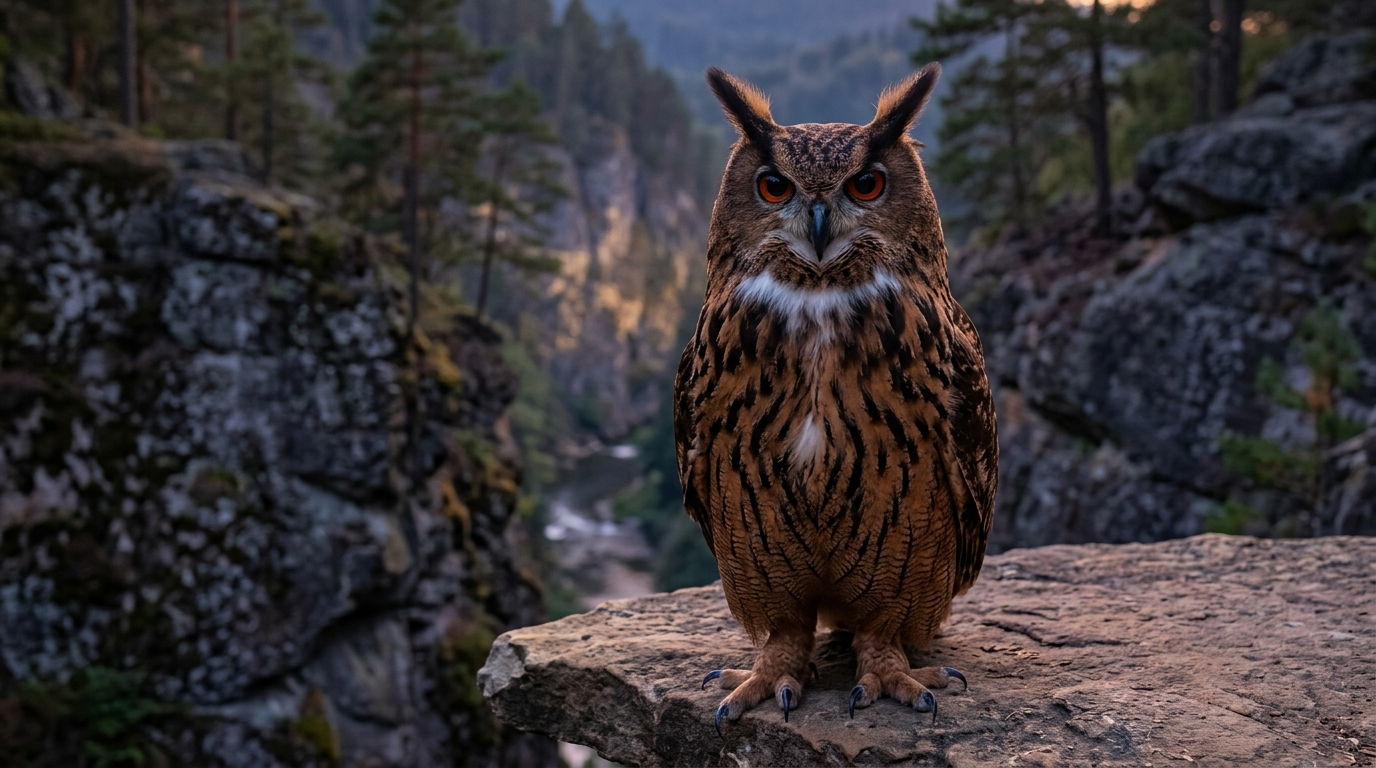
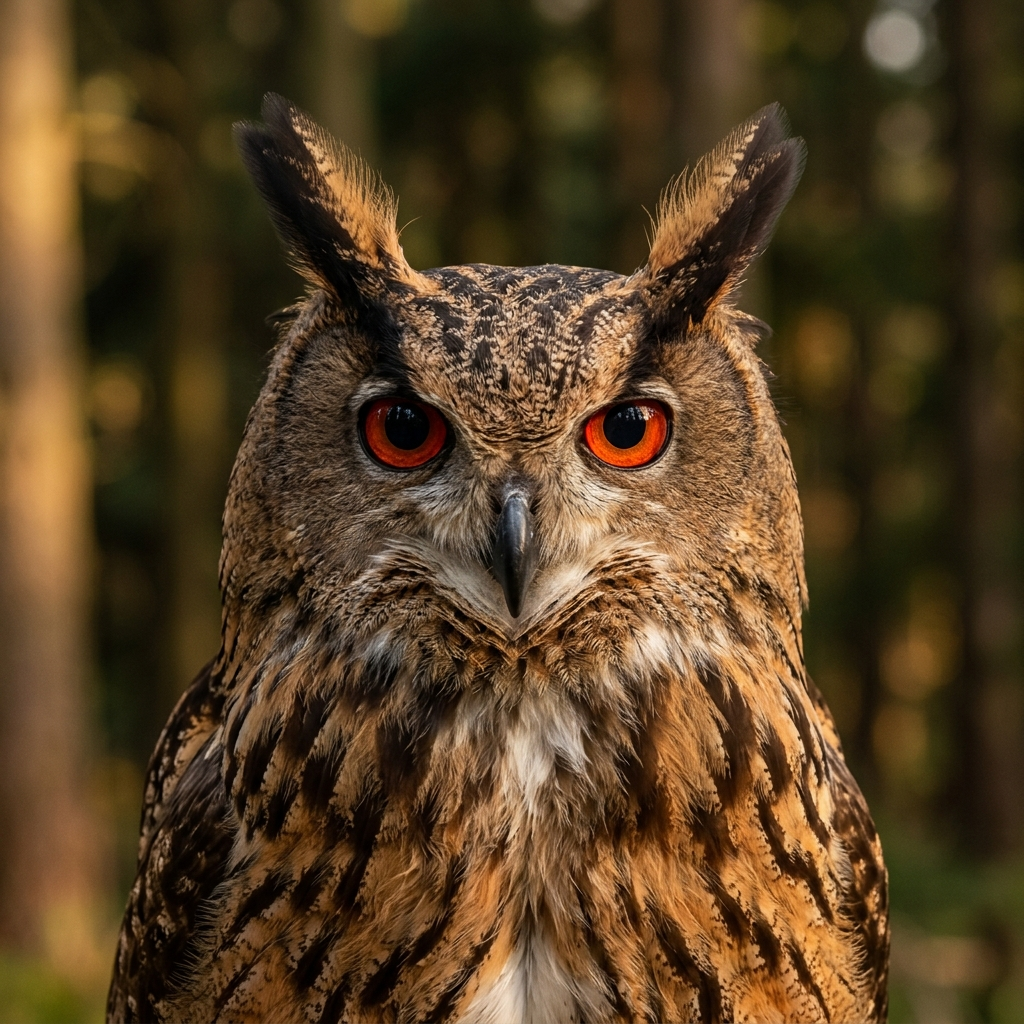
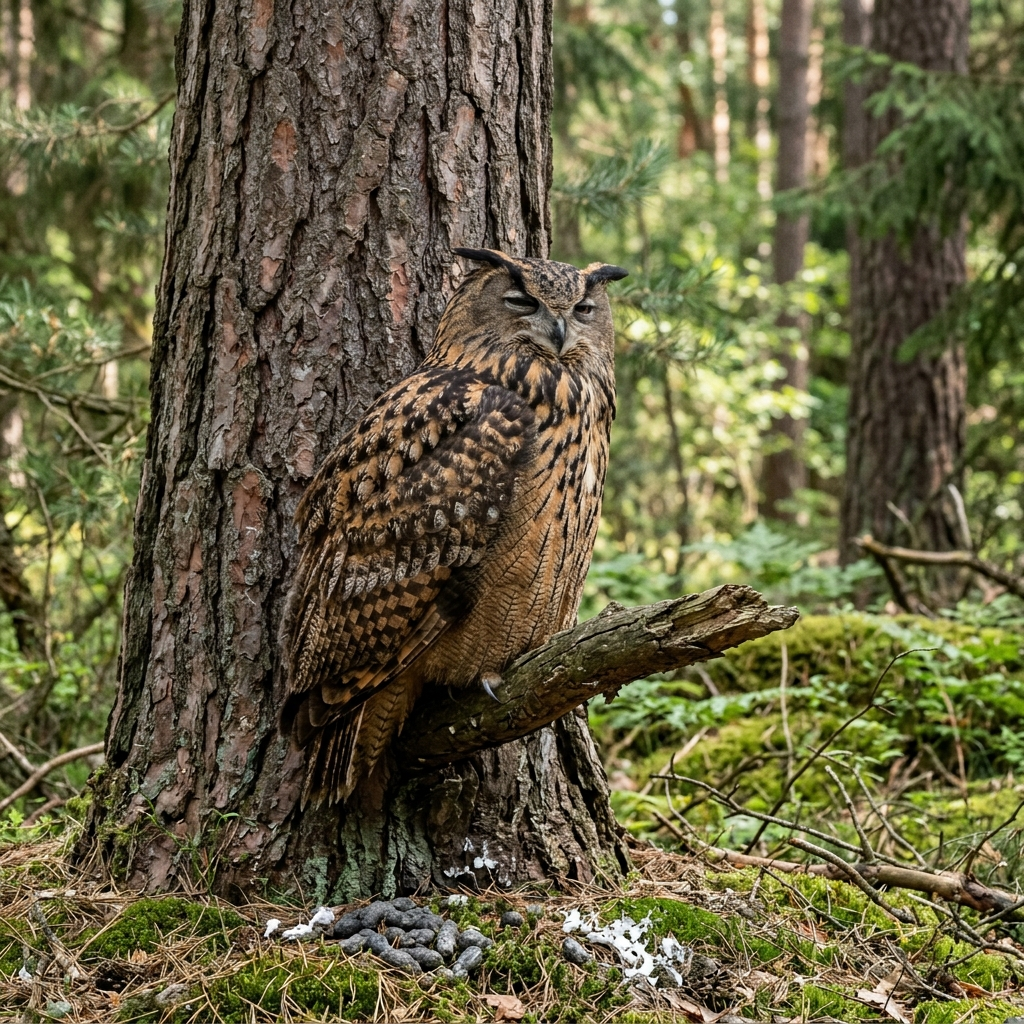
Eurasian Eagle-owl Bubo bubo on a rocky ledge in a Carpathian gorge at dusk, characteristic ear tufts, huge orange-red eyes, rusty-brown plumage with black streaks
PLATE Nº 01 Bubo bubo

SPECIES PROFILE · Birds of Prey

Eurasian Eagle-owl

Bubo bubo · Linnaeus, 1758

The largest European owl — silent flight, two-syllable "BU-ho" in the night valley, ruler of rocky ledges.

The Eurasian Eagle-owl is Europe's largest owl and one of the largest owls in the world — with a wingspan reaching 188 cm and a weight of up to 4.2 kg in females. Characteristic ear tufts (which are not for hearing), huge orange-red eyes, and silent flight thanks to the fringed edges of its feathers make it a secretive but recognizable ruler of nocturnal forests, rocky cliffs, and quarries. In Poland, it is a highly threatened but increasing species — the population of 350–400 breeding pairs has recovered following reintroductions since the 1980s.

60–75 cm
body length
160–188 cm
wingspan
1500–2800 g
male mass
2300–4200 g
female mass
15–80 km²
pair territory
2–4 eggs
per clutch
34–36 days
incubation
350–400 pairs
PL population
LC Least Concern Strict and zonal protection in PL (Reg. of the Min. of Env. from 16.XII.2016) — year-round protection zone of 200 m and seasonal zone of 500 m around the nest; EU Birds Directive Annex I; CITES Appendix II Increasing — PL population approx. 350–400 breeding pairs following successful reintroductions in the 80s and 90s (Świętokrzyskie Mountains, Pomerania, Sudetes)

In short

Classification

Kingdom Animalia
Phylum Chordata
Class Aves
Order Strigiformes
Family Strigidae
Genus Bubo
Species B. bubo

The Eurasian Eagle-owl (Bubo bubo), along with other nocturnal owls, is the most prominent representative of the Strigidae family in Polish avifauna — though paradoxically the least frequently observed directly. It is a nocturnal and cryptic owl: during the day, it sits motionless on a rock ledge or in the thicket of an old forest, where its rusty-brown plumage with black streaks provides excellent camouflage. Activity begins at dusk, and the male's characteristic two-syllable "BU-ho" call carries through valleys for 3–4 km. The Polish population counts approx. 350–400 breeding pairs, concentrated in the Carpathians, Sudetes, Pomerania, and Masuria. Unlike the northern goshawk and other diurnal birds of prey, it almost never enters cities — it remains an animal of the wild rocky and forest landscape. Reintroductions carried out in PL since the 80s (Świętokrzyskie Mountains, Pomerania) have proven to be one of the greatest successes of Polish nature conservation — the species is returning to habitats from which it disappeared in the 19th and 20th centuries due to persecution.

01

Appearance and Silhouette

A monumental silhouette — a massive body, a huge head with ear tufts, and orange eyes that cannot be mistaken for any other owl.

The Eurasian Eagle-owl is the largest owl of our continent and one of the largest in the world. The silhouette is massive and stocky — body length 60–75 cm, wingspan 160–188 cm, weight 1.5–4.2 kg. Reversed sexual dimorphism is distinct: the female is 25–40% heavier than the male, placing her among the largest European birds of prey.

The head is enormous, covered on all sides with dense plumage, with characteristic ear tufts — upward-sticking clumps of feathers on the sides of the crown. Diagnostic note: ear tufts have nothing to do with hearing — they are purely decorative and used for visual communication (alarm or courtship postures). The actual ears of the eagle-owl are hidden on the sides of the head under a layer of facial disc feathers and are asymmetrical (left higher, right lower) — a key adaptation for 3D localization of prey by sound.

The eyes are the largest among all European owls — the eyeball diameter equals that of a human eye. The iris is orange-red, intensely fiery, with a distinct black pupil. The retina is 100× more sensitive to light than the human retina — allowing it to hunt in almost total darkness, though the eagle-owl does not hunt in complete darkness (it needs a minimal amount of moonlight or starlight).

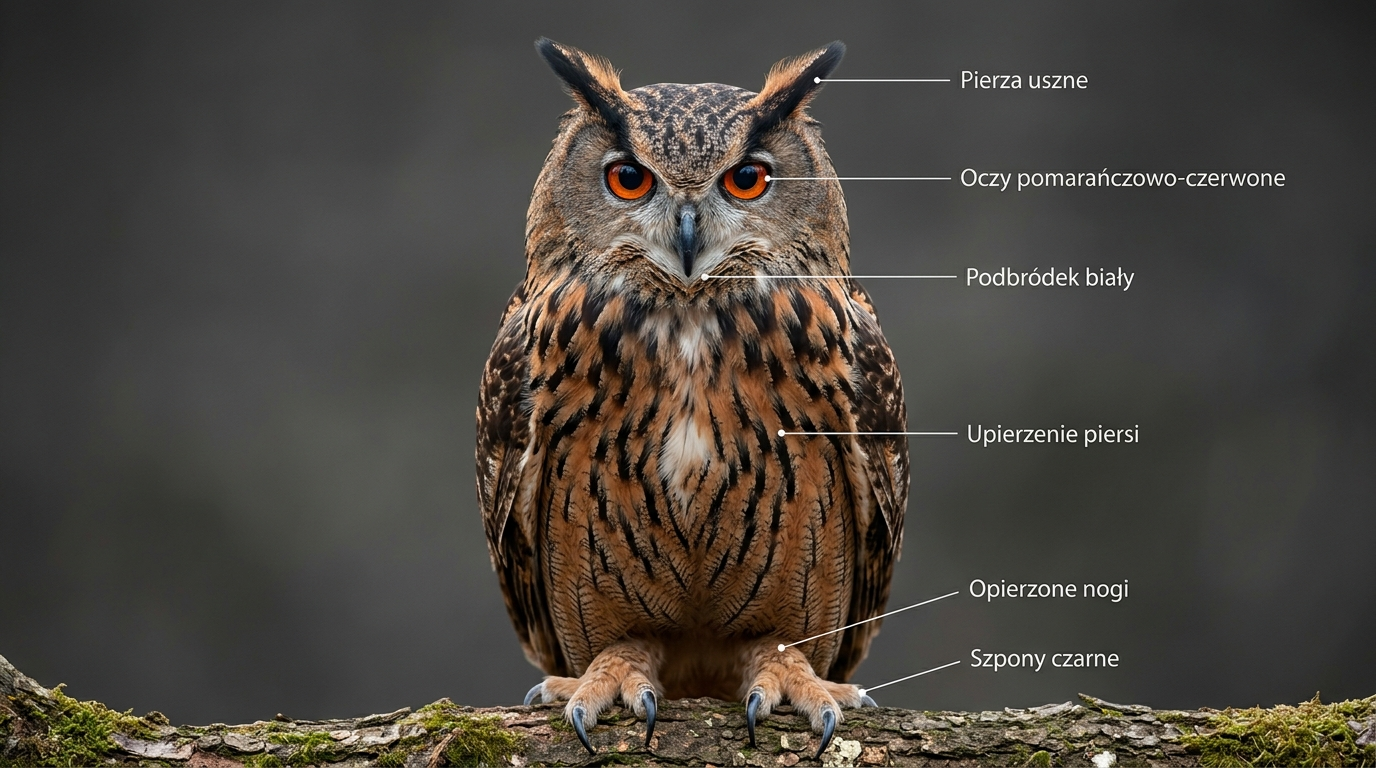
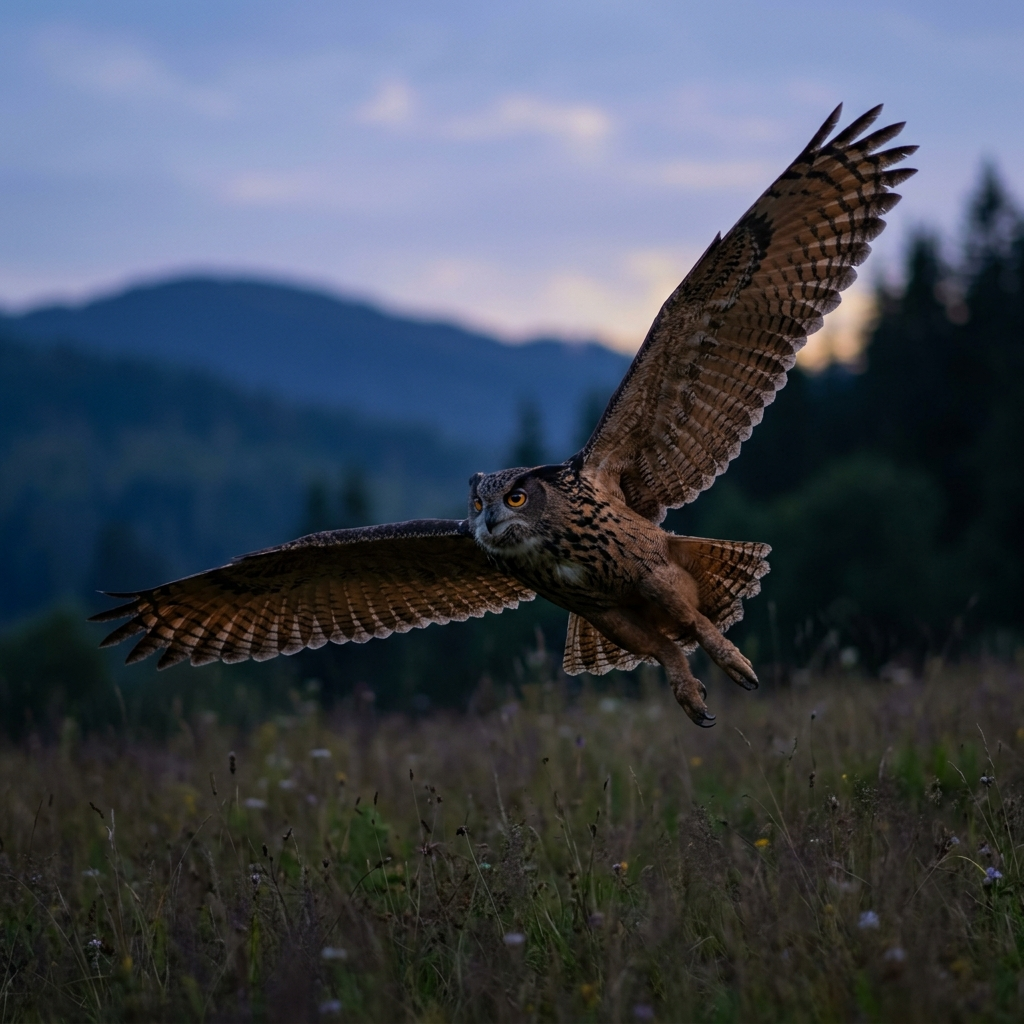
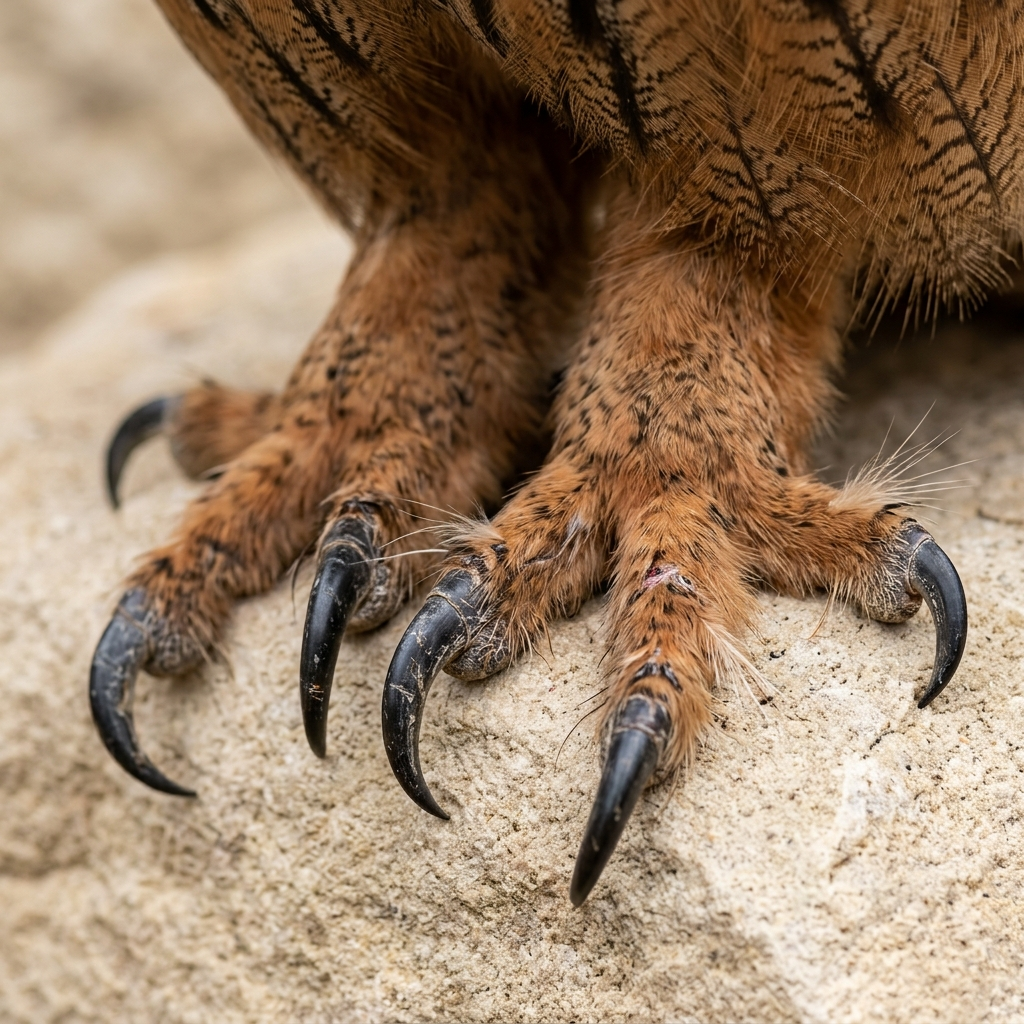
The plumage is rusty-brown with dense black vertical streaks on the chest and transverse bars on the belly. The facial disc (the characteristic face of owls) is weakly marked compared to tawny owls — this is a diagnostic feature. Legs are fully feathered down to the toes (adaptation to cold conditions and defense against rat bites), ending in powerful black talons up to 4 cm long. The beak is hooked, black, and partially hidden in feathers. Silhouette in flight: broad rounded wings, short tail — a typical forest owl profile, not a falcon's.

Why ear tufts are not for hearing

Ear tufts (also called "horns") are one of the most misleading anatomical features of owls. The actual ear openings of the eagle-owl are located on the sides of the head, hidden under the facial disc feathers, and are asymmetrical — the left ear is placed higher than the right. This asymmetry allows the owl's brain to calculate the 3D position of a sound source with 1° accuracy, enabling hunting by sound in total darkness. Ear tufts, however, serve purely visual functions: (1) they disrupt the silhouette of the head in darkness, making it harder for diurnal resting animals to recognize the owl; (2) they are used for intraspecific communication — alarm posture (raised), fear (laid flat on the head), courtship (slightly spread to the sides). This morphological feature is present in eagle-owls, long-eared owls, and Tengmalm's owls, but absent in tawny owls.

Anatomy of the eagle-owl — frontal silhouette with described features: ear tufts, orange eyes, feathered legs, black talons
02

Environment and Range

Rocks, cliffs, quarries, old forests — the eagle-owl avoids humans and chooses wild, inaccessible landscapes.

The Eurasian Eagle-owl is a species of rocky and forest landscapes. Unlike the sparrowhawk or northern goshawk, it almost never enters urbanized areas — it remains an owl of wild river valleys, rocky cliffs, and deep forests. This is a habitat preference, but also a consequence of a long history of persecution.

Main habitat types in Poland: (1) steep rock walls and cliffs — Carpathians, Sudetes, Kraków-Częstochowa Upland, Świętokrzyskie Mountains; (2) active and abandoned quarries — key surrogate habitats in the lowlands (Pomerania, Greater Poland); (3) old pine and mixed forests with large nests of old birds of prey (mainly white-tailed eagles, lesser spotted eagles); (4) river valleys with slope cliffs and riparian forests. The eagle-owl needs an inaccessible nesting ledge and open hunting grounds within a 5–10 km radius.

Range in Poland: the species was never evenly distributed. Modern strongholds: Carpathians (Bieszczady, Low Beskids, Tatras, Pieniny — approx. 100 pairs), Sudetes (Karkonosze, Table Mountains, Owl Mountains — approx. 50 pairs), Kraków-Częstochowa Upland (approx. 30 pairs), Świętokrzyskie Mountains (approx. 20 pairs — result of reintroduction), Western and Central Pomerania (approx. 80 pairs — result of reintroduction), Masuria and Suwałki region (approx. 40 pairs), Tuchola and Lower Silesian Forests (approx. 30 pairs). Absent eagle-owl: central Poland, Masovia, Greater Poland — agricultural landscapes without cliffs.

An ideal landscape for the eagle-owl: a rock or cliff at least 20 m high, at least 1 km from human settlements, with access to open hunting grounds — meadows, clearings, river valleys, forest clear-cuts. It is essential to combine a nesting habitat (inaccessible rock ledge or old eagle nest in a tree) with a hunting habitat in the immediate vicinity. A pair of eagle-owls has a territory of 15–80 km² — the largest among Polish owls.

Carpathian gorge at dusk — steep sandstone rocks and Scots pines, typical nesting habitat of the eagle-owl
03

Diet and Hunting

The widest prey spectrum among Polish owls — from mice to young foxes, from frogs to jays. Hedgehogs make up 30% of the diet locally.

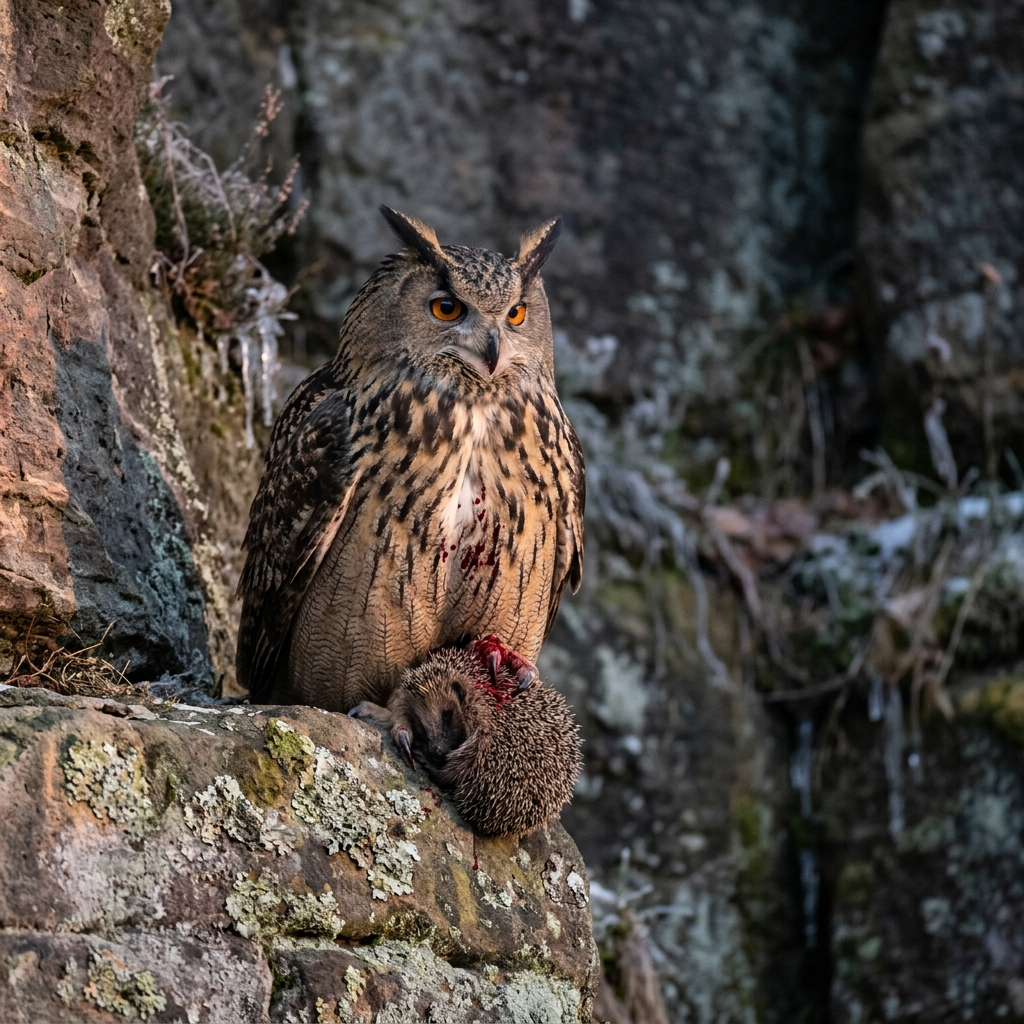
The eagle-owl is the most opportunistic hunter among Polish owls. The prey spectrum ranges from grasshoppers to young roe deer — though the majority of the biomass consists of medium-sized mammals and birds. Characteristic is a special predilection for hedgehogs: in some European populations, hedgehogs constitute up to 30% of the prey biomass.

Main prey: hedgehogs (locally up to 30% of the diet!), rabbits, hares, medium-sized birds — jackdaws, rooks, wild and domestic pigeons, partridges, pheasants, mallards. On a smaller scale: brown rats, voles, mice, shrews, small mammals. Occasionally: young foxes, martens, young roe deer (up to 10 kg), squirrels, sea urchins, bats. Locally: over rivers and lakes, the eagle-owl hunts for fish pulled from shallows with its feet — documented mainly in Scandinavian populations, but also occurs in PL (Pomerania, Masuria).

Predilection for hedgehogs is a characteristic feature of the eagle-owl. Other predators (foxes, badgers) have difficulty overcoming the hedgehog's spines; the eagle-owl, with its feathered legs and powerful talons, grabs the hedgehog from above, bypassing the prickly defense and instantly piercing the animal. Locally (e.g., in Central Europe), hedgehog populations show clear signs of eagle-owl pressure — a negative correlation has been shown between eagle-owl pair density and the hedgehog population.

Hunting technique: the eagle-owl is an ambush hunter. It waits motionless on a tree or rock ledge, watching and listening to the surroundings. Once prey is detected, it performs a silent flight — the edge of the wing feathers is fringed, which disperses turbulence and completely eliminates the whistle of air. The attack is a low, gliding flight just above the ground or grass, ending in a talon grab. Killing occurs by piercing internal organs with talons (not by head strike as in tawny owls). Smaller prey are swallowed whole, larger ones are torn apart on the nesting ledge or a special "feeding platform."

Hunting in the dark — physiology of a night hunter

The eagle-owl does not hunt in complete darkness — contrary to popular myth. It needs a minimal amount of light from the moon, stars, or city glow. Its retina contains 100× more rods (cells sensitive to low light) than the human retina, but cones (color) are few — the owl sees in shades of gray at night, not colors. Hearing is complementary: asymmetrical ears allow sound localization with 1° precision. On dark nights (new moon, thick clouds), the owl hunts more by listening — detecting grass rustles from mice, the breath of a sleeping hare, or a hedgehog's steps from 50–100 m. Silent flight completes this package of adaptations: the prey will never hear the incoming attack, and the owl itself does not mask ambient sounds with its own wing whistle.

04

Reproduction and Breeding

No nest building of its own — the eagle-owl uses rock ledges or old nests of other birds of prey. Fledglings leave on foot before they can fly.

The eagle-owl is monogamous and territorial, with strong nest-site fidelity — pairs use the same rock ledge or nest for many years (record documented in PL: 27 years). It is a long-lived species — average lifespan in the wild is 15–20 years, in captivity up to 60 years (Wrocław Zoo record).

The breeding season begins earlier than any other Polish owl — as early as January and February, when snow still lies in the forests. Pairs perform vocal duets: the male calls with a two-syllable "BU-ho", and the female responds with a higher "u-HU". Courtship flights are modest — mainly consisting of sitting next to each other on rock ledges, mutual preening, and food delivery (the male feeds the female before laying).

The nest is minimalist — the eagle-owl does not build its own nest. It uses: (1) a rock ledge sheltered from above by a niche — the most common location in the Carpathians and Sudetes; (2) an old nest of a white-tailed eagle, lesser spotted eagle, or black stork in a tree — common in the lowlands; (3) a cave or rock crevice — occasionally; (4) the ground under a rock overhang — rarely. The clutch consists of 2–4 eggs (rarely 5–6), white, almost spherical, laid at 2–4 day intervals. Incubation lasts 34–36 days, carried out exclusively by the female; the male provides her with food at the nest.

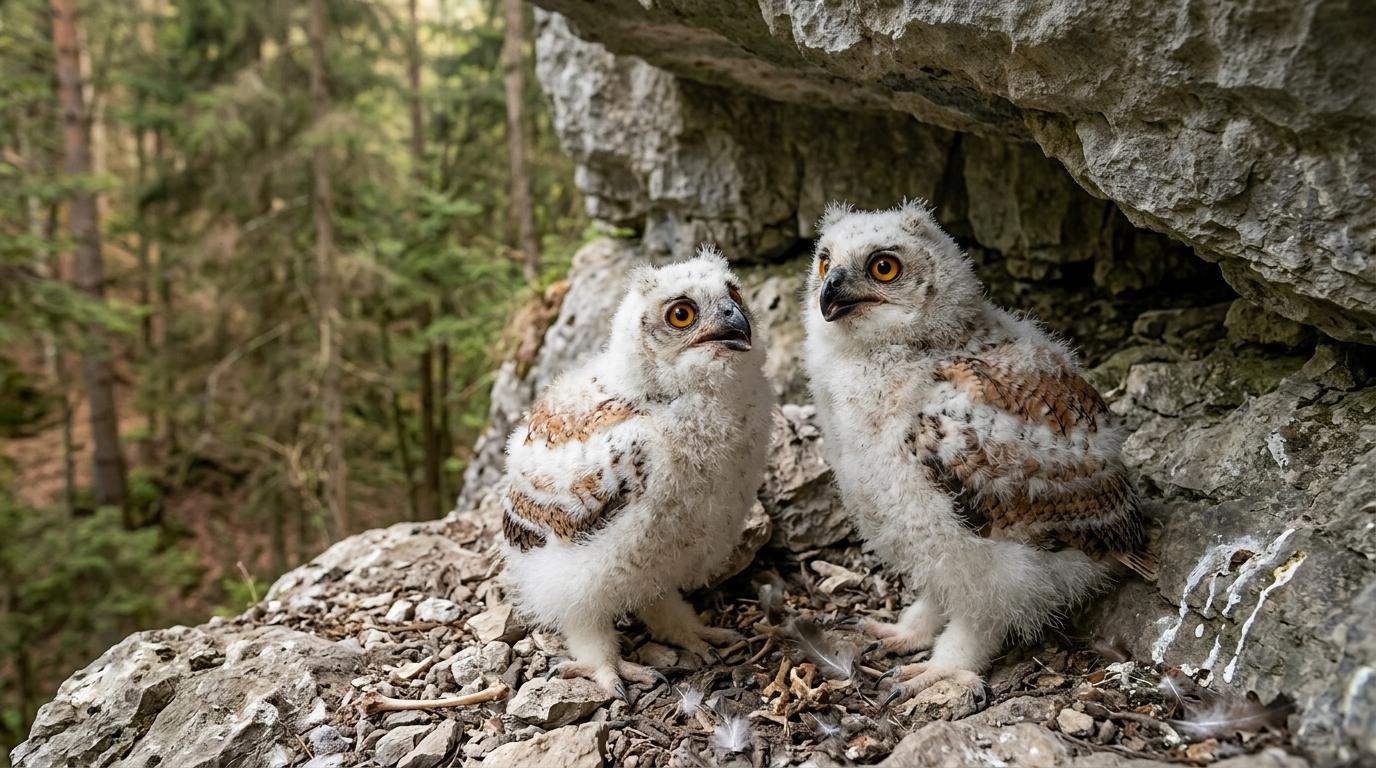
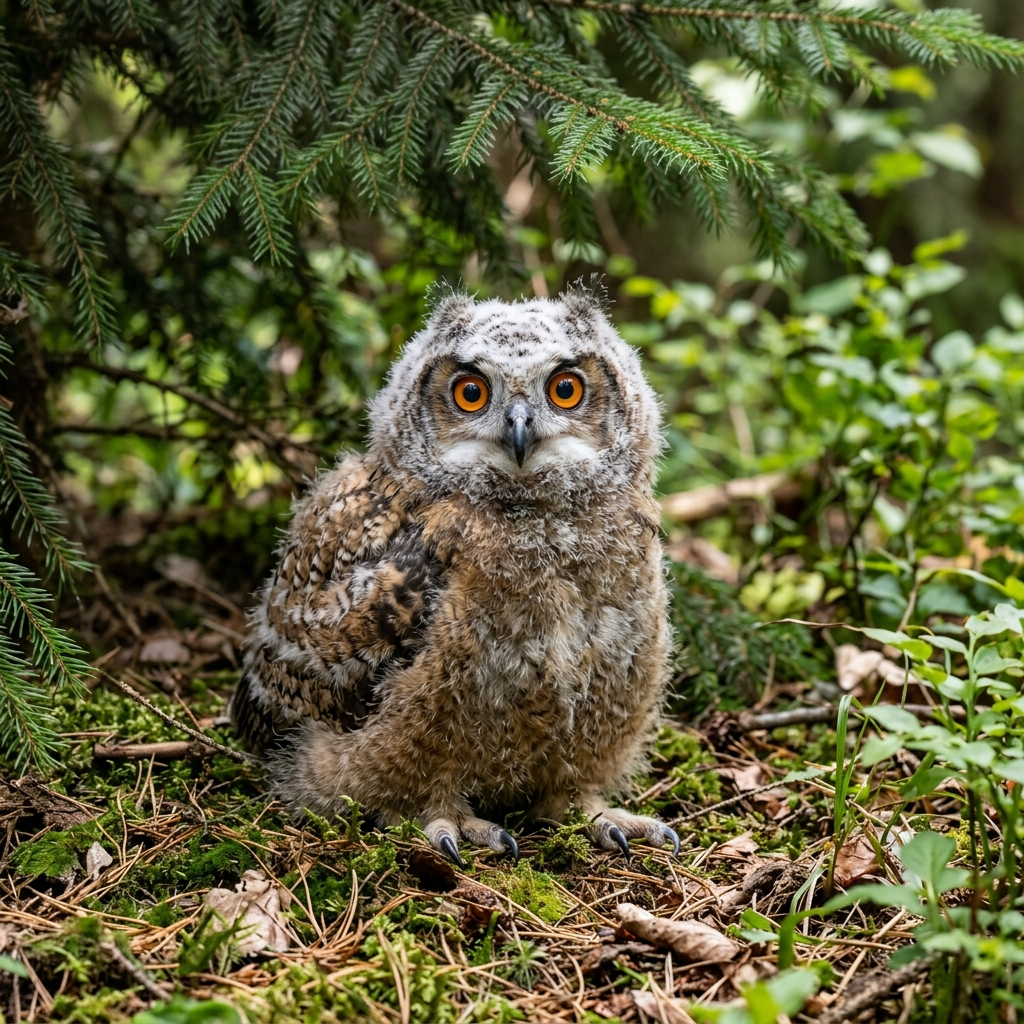
Chicks hatch asynchronously and are covered in white down. They open their eyes on the 4th–5th day and begin to hobble around the nest in the 3rd week. Fledging is unusual — at 5–6 weeks, the young leave the nest on foot before they can fly! They climb down rocks or trees, disperse within a 100–500 m radius, and hide in rock crevices or thickets. These "branchers" are fed by parents for another 4–5 months until full independence in autumn. They achieve full flight at 9–10 weeks of age.

"Branchers" — chicks on the ground are NOT in need of rescue

The most common mistake of tourists and mushroom pickers: finding an eagle-owl chick on the ground under a tree and "interpreting" it as an accident or emergency. This is a natural development phase. Eagle-owls aged 5–6 weeks regularly leave the nest before they can fly and hide in the undergrowth, where parents feed them. Taking such a chick home or to a rehabilitation center is tragic — it robs it of the chance to learn hunting from parents and dooms it to life in captivity (eagle-owls raised by humans never return to the wild). What to do: (1) do not touch the bird; (2) leave as quickly as possible so parents can return with food; (3) if there is a road or dangerous animals nearby, carefully move the young 50–100 m into a thicket and leave it; (4) never take it home. Call a rehabilitation center only if the bird has visible injuries (blood, dragging wing).

Two eagle-owl chicks on a rock ledge in a Carpathian gorge — white downy plumage and first growing contour feathers
05

Voice, Tracks, and Signs of Presence

The eagle-owl itself is almost invisible — but it leaves massive pellets, characteristic tracks in the snow, and a voice audible for 4 km.

Direct observation of the eagle-owl in nature is exceptionally difficult — it is a nocturnal and cryptic species that sits motionless and perfectly camouflaged during the day. The most common evidence of presence is the nocturnal call, massive pellets under roosting trees, and characteristic hunting tracks.

Voice is the surest proof of the eagle-owl's presence. The male calls with a characteristic two-syllable "BU-ho" (accent on the first syllable, deep guttural tone), repeated every 8–15 seconds during the breeding season (Dec–Apr). Audibility: on a windless night, the voice carries for 3–4 km in valleys and open landscapes. The female responds with a higher, shorter "u-HU" — duets between male and female are diagnostic. Chicks beg with a characteristic high-intensity rasping "chrr-chrr" (May–Aug).

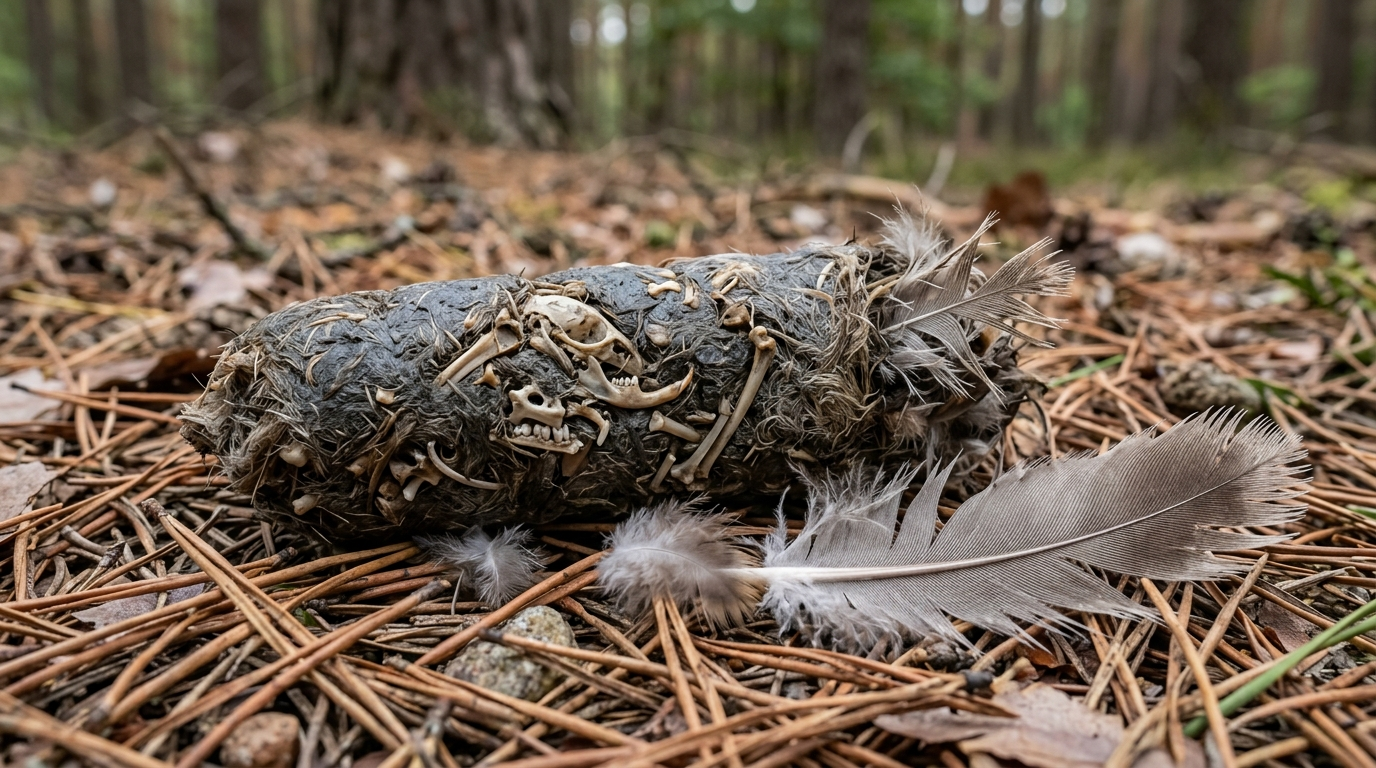
Pellets of the eagle-owl are the largest among Polish owls — length 7–12 cm, diameter 3–5 cm, weight up to 30 g. They contain undigested bones, fur, feathers, and insect carapaces — unlike sparrowhawks, the eagle-owl does not digest bones, so pellets are a complete record of its diet. Location: under roosting trees (the owl returns regularly to the same branches), under rock ledges, or on the ground at "feeding platforms." Fresh pellets are dark gray and moist, older ones fade to gray-white.

Hunting signs: prey feathers (pigeons, jackdaws) scattered within a 5–10 m radius of the consumption site, larger than those of a sparrowhawk and with visible beak cut marks (the owl cuts feathers, does not pluck them). Snow tracks are diagnostic: wide footprints (8–10 cm), with visible claw marks, sometimes wing tip impressions in the snow on both sides of the track (ground attack for prey under snow). White droppings — large splashes on roosting tree trunks and under rock ledges, often accumulated over years.

Fresh eagle-owl pellet under a roosting tree — dark gray cylindrical capsule with visible bones and fur
06

Threats and Conflicts

Power lines and lead ammunition — the two modern killers of eagle-owls. The persecution of the past century is history, but its effects are still felt today.

In Poland, the eagle-owl is an increasing but still highly threatened species. The main modern threats are not shooting (as in the 19th and 20th centuries), but infrastructural and toxicological consequences of civilization: collisions with medium-voltage power lines and lead poisoning from hunting ammunition.

Collisions with medium-voltage power lines are the leading cause of mortality for eagle-owls in Poland — estimated at 30–50% of adult mortality. Mechanism: due to its size (188 cm wingspan), the owl contacts two wires simultaneously when landing on a power pole and suffers electrocution. Poles with vertical insulators and wires spaced 60–80 cm apart are particularly deadly. The solution involves special insulation covers and nesting platforms — a project by the Eagle Conservation Committee has been implementing these in the Carpathians and Sudetes since 2010.

Lead poisoning from hunting ammunition is a silent epidemic. By consuming carcasses of game shot with lead pellets (roe deer, wild boar, partridges, ducks), the owl accumulates lead in its liver, leading to neurological damage, paralysis, and death. Polish studies from 2018–2020: 40% of dead eagle-owls had elevated lead concentrations, including 15% with lethal doses. The EU plans a total ban on lead ammunition by 2030, but implementation is slow.

Other threats: (1) collisions with cars — eagle-owls hunt on roadsides where rats and mice are abundant; (2) disturbance during breeding by rock climbers, photographers, drones — a key reason for protection zones; (3) conflicts with pigeon and poultry breeders — the owl occasionally attacks lofts, leading to illegal persecution; (4) loss of old nesting trees in managed forests. Historical persecution (19th and first half of the 20th c.) nearly wiped out the Polish population — in the 60s, it was estimated at fewer than 100 pairs nationwide.

07

Strict and Zonal Protection

Zonal protection for the eagle-owl is one of the strongest legal tools in Polish nature conservation — with year-round (200 m) and seasonal (500 m) zones around nests.

The eagle-owl is among the most strictly protected species of Polish avifauna. Its status includes not only strict protection (ban on killing, catching, disturbing), but also zonal protection — designated buffer zones around nests where human activity is restricted. This tool contributed to the recovery of the Polish eagle-owl population after the 20th-century catastrophe.

Legal basis: Regulation of the Minister of Environment of December 16, 2016, on species protection of animals, Annex 1 (strict protection) and Annex 4 (species requiring zonal protection). EU — Birds Directive Annex I (priority species for Natura 2000). CITES — Appendix II. Polish ratification: strict protection since 1952 (one of the first for birds of prey in PL); zonal protection since 1983.

Protection zones around an eagle-owl nest: (1) year-round protection zone — radius of 200 m from the nest, where any human activity (except authorized research) is prohibited; (2) seasonal protection zone — radius of 500 m, where entry is prohibited from January 1 to July 31 (full breeding season). The zone is established by the Regional Director for Environmental Protection upon discovery or application. Zone violation is an offense punishable by a fine up to 5000 PLN; in case of nest destruction — a crime under Art. 181 of the Penal Code (up to 5 years imprisonment).

Reintroductions: the eagle-owl restitution program in PL began in the 1980s, led by the Polish Society for the Protection of Birds, the Breeding and Reintroduction Center in Stobnica, and national parks. Successes: Świętokrzyskie Mountains (since 1990, now approx 20 pairs), Central and Western Pomerania (since 1995, now approx 80 pairs), Sudetes (population replenishment, now approx 50 pairs). In total, approx 700 captive-bred individuals have been released in PL since 1980; first-year survival is 30–40%, but many successfully settle in natural habitats. Result: the PL population grew from <100 pairs in the 60s to 350–400 pairs in 2025.

Zonal protection — what it means for tourists

The eagle-owl protection zone is marked in the field with information boards "Animal refuge and site protection zone" with the RDOŚ decision number. In the 200 m year-round zone: no entry (except public roads), no climbing, no drone flights, no photography near the nest. In the 500 m seasonal zone (Jan–Jul): no entry outside existing paths, no organized events, no forestry work. What you can do as a tourist: (1) respect the boards and marked paths; (2) if you hear an owl at night in an unmarked area, do not approach or try to locate the nest; (3) report sightings to a national park or RDOŚ; (4) never use playback of eagle-owl calls in the field — it is a form of disturbance (and an offense).

08

What it is Mistaken With

The eagle-owl is so large and characteristic that mistakes are rare — but in some conditions, it is confused with the Ural owl, snowy owl, and long-eared owl.

Field identification of the eagle-owl should be simpler than for most Polish owls — its enormous size and ear tufts are diagnostic. In practice, however, when observing in poor light, in flight, or at a distance, mistakes occur. Most often, the eagle-owl is confused with the Ural owl and snowy owl, and less frequently with the smaller long-eared owl.

Ural owl (Strix uralensis) is the second largest (after the eagle-owl) Polish owl species — length 50–62 cm, wingspan 110–134 cm, weight 0.5–1.3 kg. Absence of ear tufts is the key diagnostic feature: the Ural owl has a round, smooth head. The plumage is uniformly white-gray with a subtle pattern (the eagle-owl is rusty-brown). The Ural owl's eyes are black, not orange. It is a species of eastern and north-eastern Poland (Białowieża, Suwałki, Bieszczady).

Snowy owl (Bubo scandiacus) is formally of the same genus as the eagle-owl but smaller (length 53–66 cm, wingspan 125–150 cm). White plumage (solid in males, spotted in females) is almost impossible to mistake for the rusty-brown eagle-owl. It has no ear tufts. In Poland, it is an extremely rare winter visitor from Scandinavia and the Arctic — single observations every few years on the coast or in Masuria.

Long-eared owl (Asio otus) has ear tufts similar to the eagle-owl, which causes confusion, but it is much smaller — length 31–40 cm, wingspan 86–98 cm, weight 200–400 g (the eagle-owl is up to 4200 g!). That is a 10–20× weight difference. The long-eared owl is a lowland species, common in parks and orchards, while the eagle-owl is a rocky and forest species. The ear tufts of the long-eared owl are also proportionally shorter and more delicate.

FeatureEurasian Eagle-owlUral OwlSnowy OwlLong-eared Owl
Body length60–75 cm50–62 cm53–66 cm31–40 cm
Wingspan160–188 cm110–134 cm125–150 cm86–98 cm
Mass1.5–4.2 kg0.5–1.3 kg1.1–2.4 kg0.2–0.4 kg
Ear tuftspresent, longABSENTABSENTpresent, shorter
Eye colororange-redblackyelloworange-yellow
Plumagerusty-brown with streaksuniform white-graywhite (female spotted)rusty-brown
Habitat in PLrocks, cliffs, forestsold forests of NE Polandwinter visitor from Arcticwoodlands, parks
Status in PL350–400 pairsapprox 1500 pairsextremely rareapprox 6–10k pairs
Vocal diagnostics at night

In nocturnal observation, the voice is the most reliable tool. Eagle-owl: two-syllable "BU-ho" (accent on the first), deep and guttural, audible for 3–4 km, 8–15 second pauses. Ural owl: characteristic "uchu-uchuchu" or "buho-bu-bu-bu-buho" — multi-syllabic, much shorter pauses. Tawny owl (most often confused with Ural, not eagle-owl): classic "huuuh-huu-hu-hu-huuuh" — syllabic vibrations. Long-eared owl: monotonous "hu-hu-hu" of the male, significantly higher pitch than the eagle-owl. Rule: two syllables = eagle-owl; many syllables = tawny/Ural owls; single syllable series = long-eared owl.

POLAND
2026
— Field correspondence —

One letter from the field, every month.

The latest species profiles, seasonal guides and field observations delivered straight to your inbox. No spam, no clickbait — just solid content once a month.

2,847 readers · 0% spam · unsubscribe with one click