Saturday · May 9, 2026 · Vol. I, Nº 01
★ Spring observation season · 52°13′N 21°00′E · 14°C / pochmurno
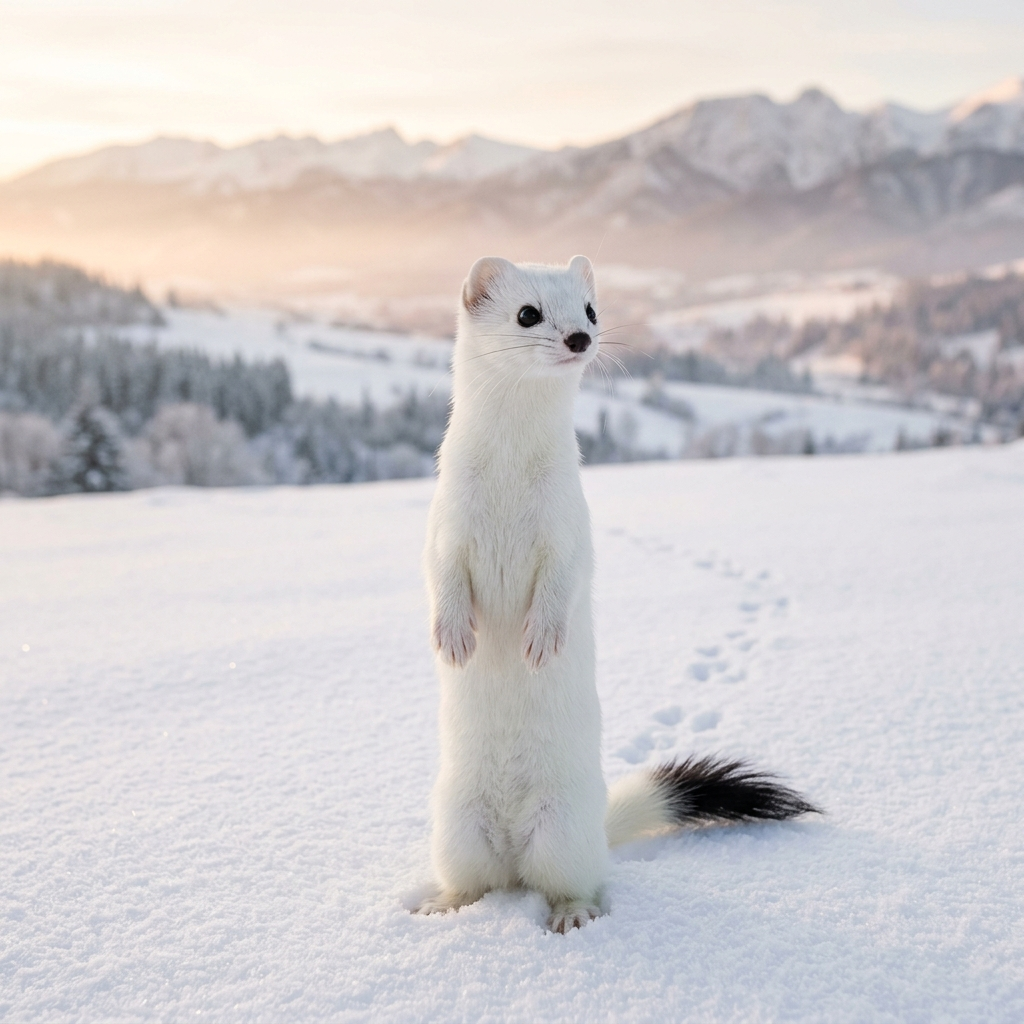
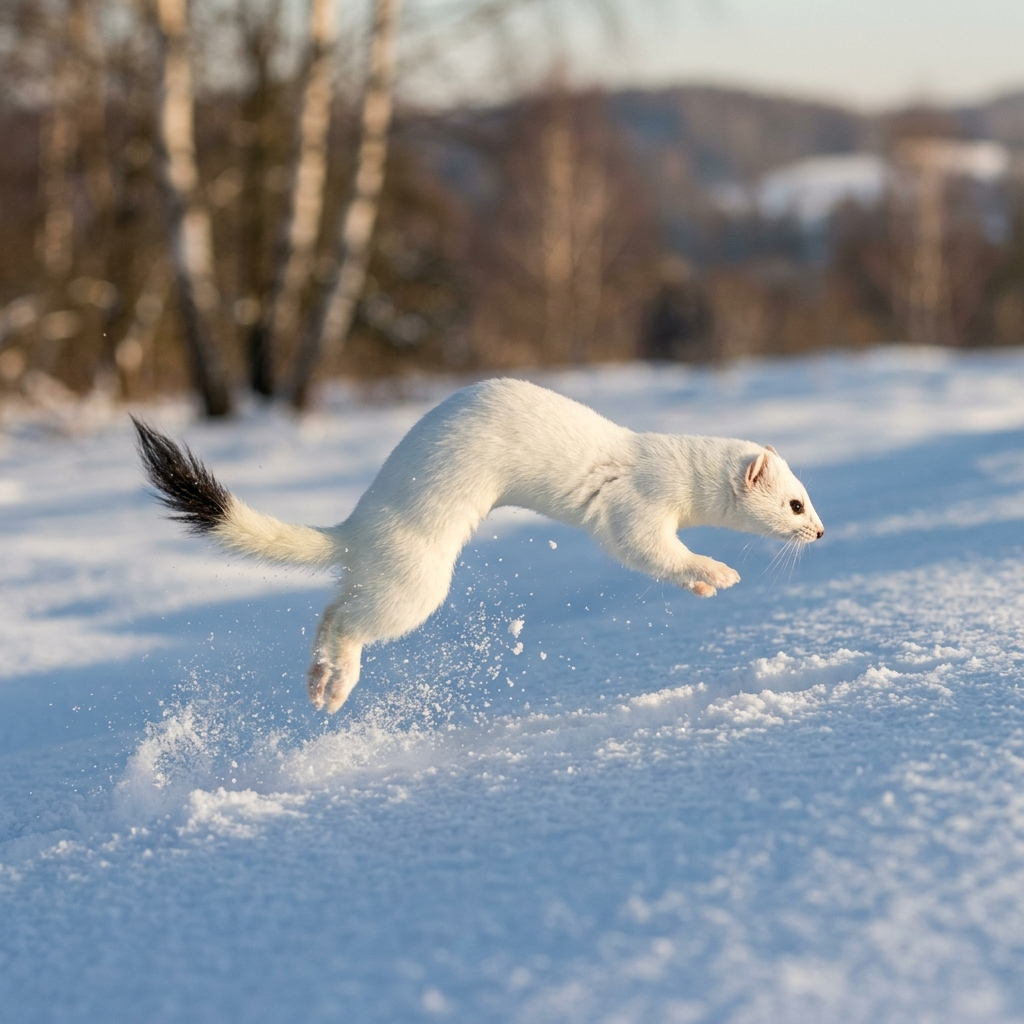
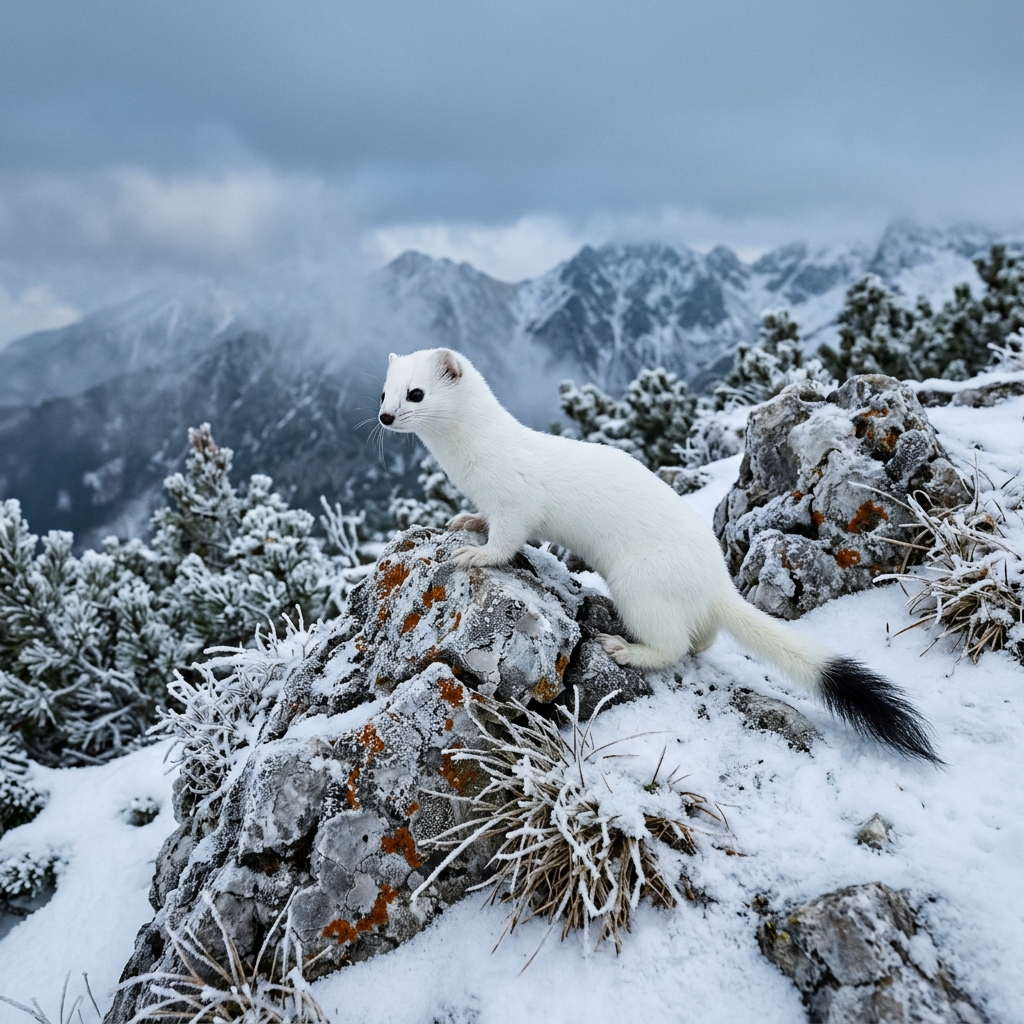
Stoat Mustela erminea in full winter white coat on fresh snow, black tail tip clearly visible, dynamic silhouette
PLATE Nº 01 Mustela erminea

SPECIES PROFILE · Mustelids

Stoat

Mustela erminea · Linnaeus, 1758

A mustelid with a royal winter coat and a black tail plume.

A small predator with two seasonal coats: reddish-brown with a white underside in summer, and snowy white with a black tail tip in winter — a heraldic symbol of rulers and one of the most efficient vole hunters in the Polish landscape. Larger than the least weasel, smaller than the marten, it moves through rodent tunnels as if it were in its own home.

17–32 cm
body length
7–12 cm
tail length
70–360 g
body mass
4–7 years
lifespan in the wild
5–15 ha
male territory
4–9 young
per litter
approx. 280 days
pregnancy with diapause
2–4 / 12–15 months
maturity ♀ / ♂
LC Least Concern Partially protected species (since 2014, previously strictly protected) Stable in Poland, locally declining in some Western European countries

In short

Classification

Kingdom Animalia
Phylum Chordata
Class Mammalia
Order Carnivora
Family Mustelidae
Genus Mustela
Species M. erminea

The stoat (Mustela erminea) is a medium-sized mustelid from the Mustelidae family, recognized at first glance by the black tail tip present year-round — regardless of the color of the rest of the fur. In Poland, it occurs throughout the lowlands, in the foothills, and in the lower parts of the mountains, reaching the upper montane forest in the Tatras, and occasionally even above the tree line. It is larger and more slender than its close relative, the least weasel, but significantly smaller than the stone marten. Its seasonal coat change, hunting inside rodent burrows, and embryonic diapause lasting nearly ten months make it one of the most ecologically interesting mammals of the Polish fauna.

01

Appearance and Anatomy

A slender mustelid with two coats per year and one constant feature — a black plume at the end of the tail.

The stoat is a medium-sized mustelid with an elongated, almost cylindrical body and a proportionally longer tail than the least weasel. Males measure 22–32 cm in head-body length, females 17–27 cm; the tail adds an additional 7–12 cm. Mass: males 150–360 g, females 70–200 g — sexual dimorphism in mass is clear, close to a 2:1 ratio.

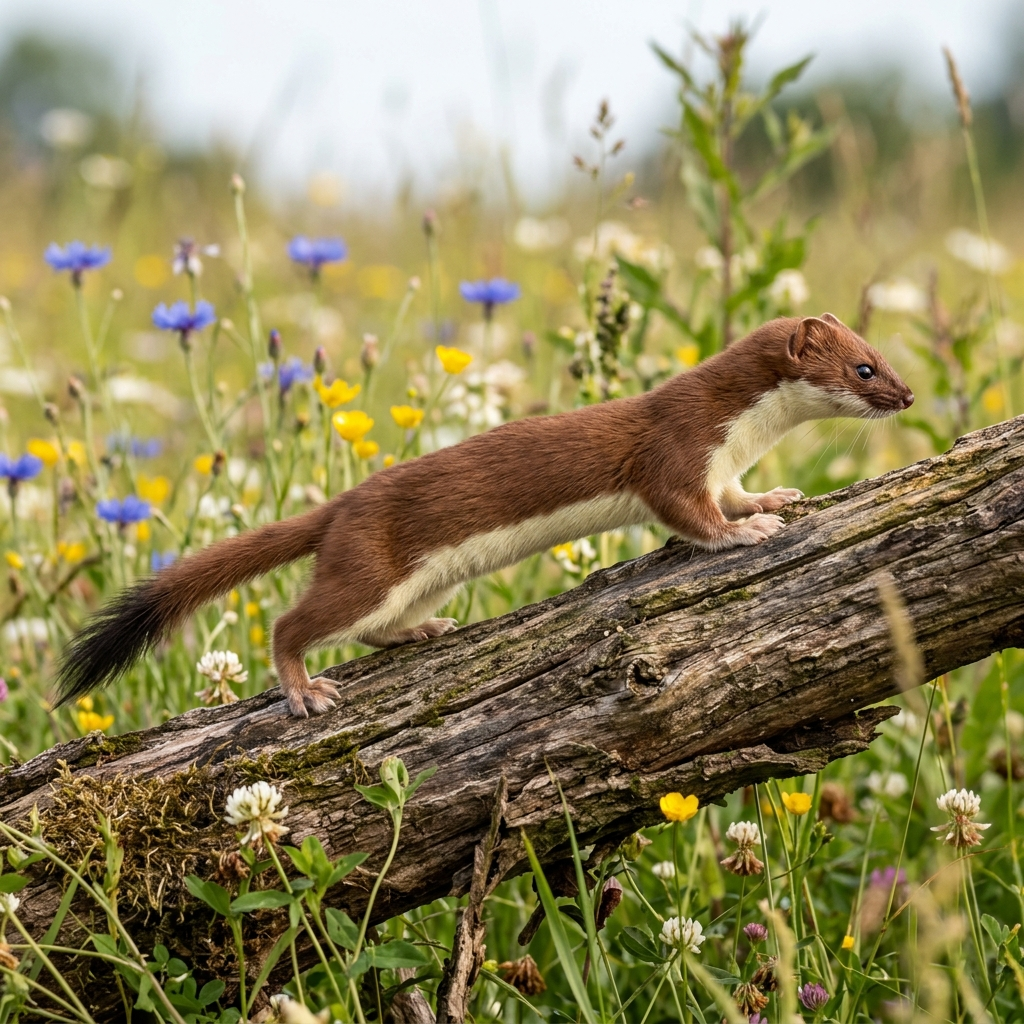
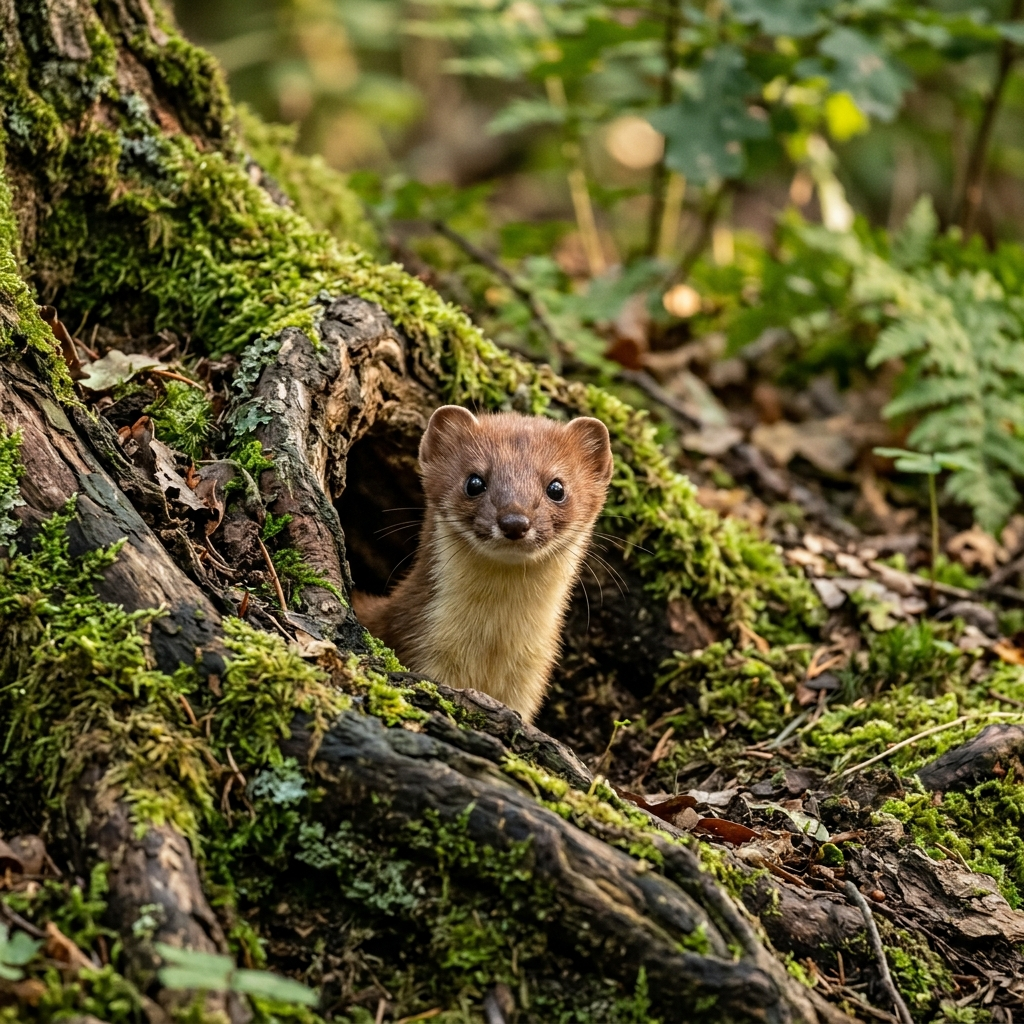
The summer coat is two-colored and sharply contrasted. The back, sides, forehead, and top of the tail are covered in short, warm reddish-brown or chestnut fur. The belly, throat, inner sides of the legs, and chin are pure cream or whitish — the color boundary runs along the sides in a sharp, straight line, without irregular inlets or spots. This feature distinguishes the stoat from martens, which have spotted undersides (bibs).

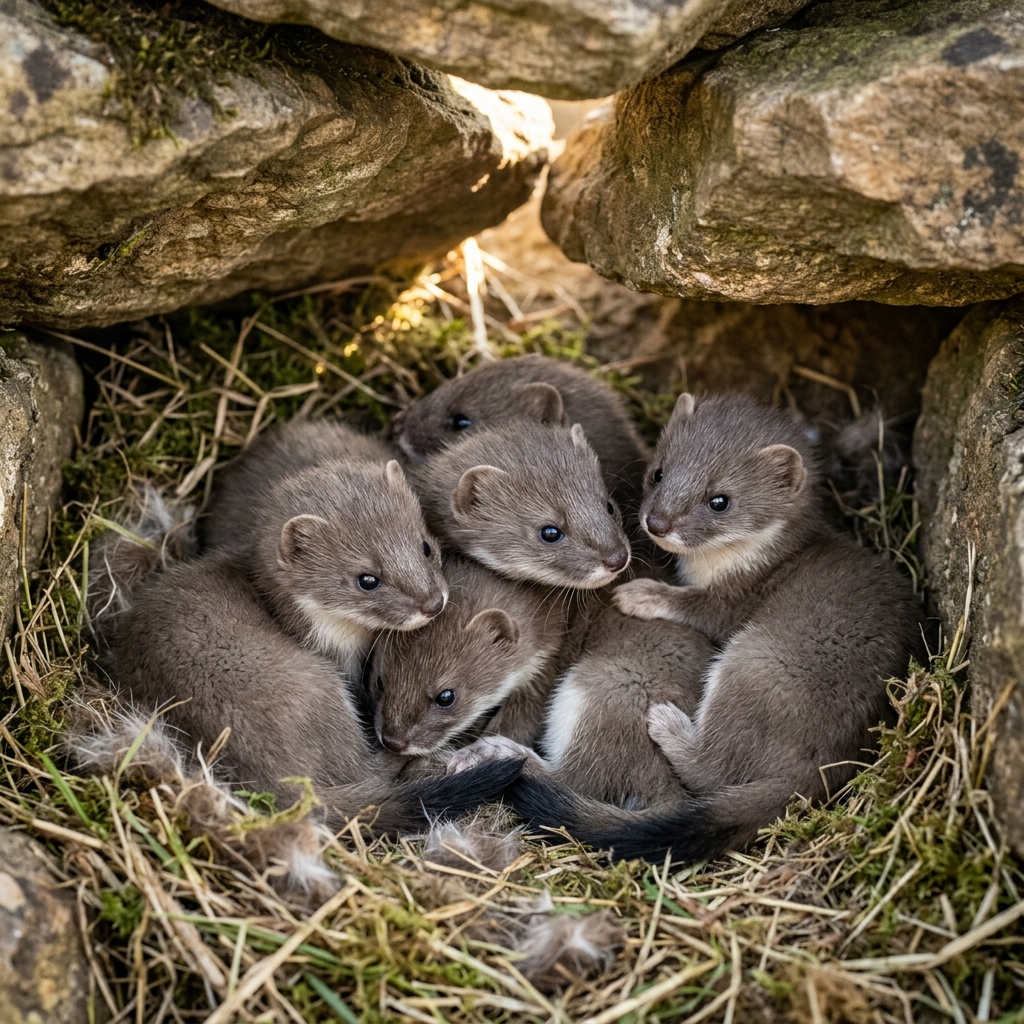
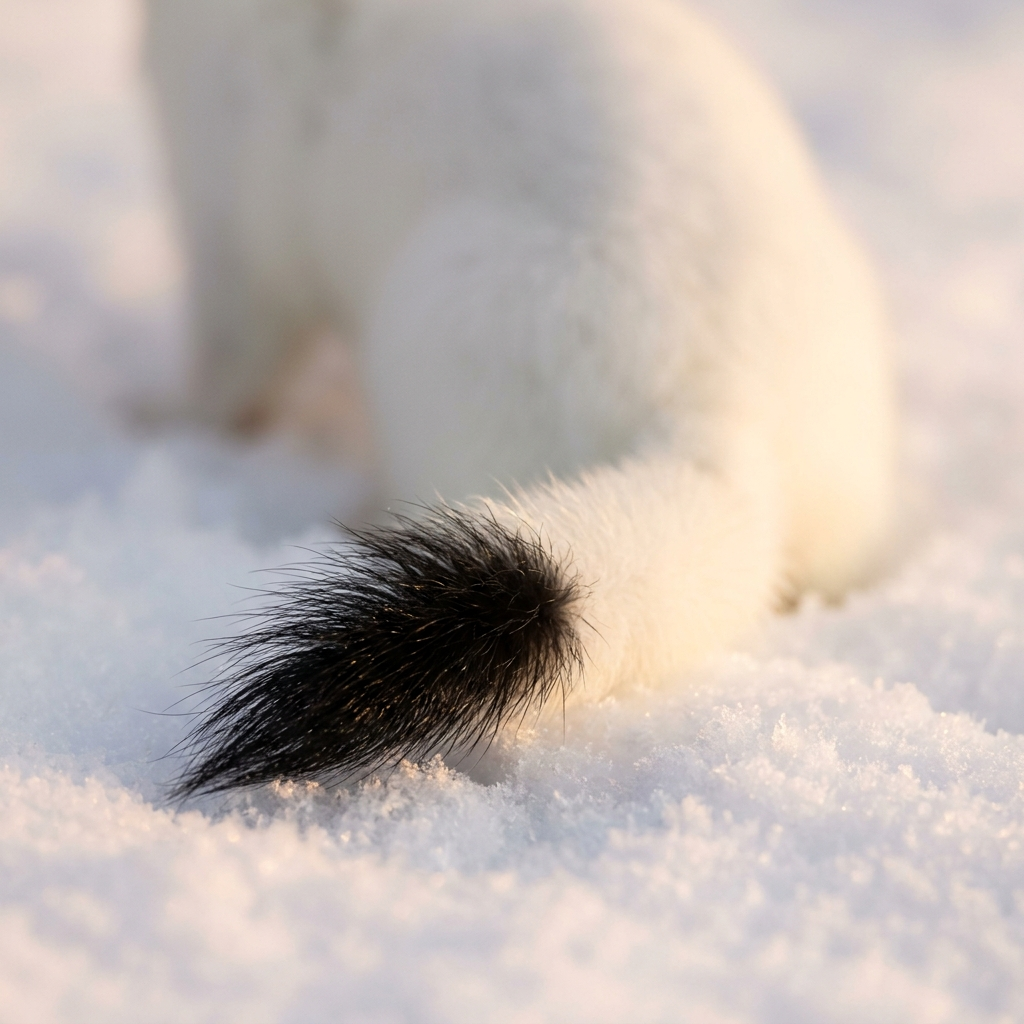
The winter coat in Polish stoats is most often completely white — with the exception of one element. The final third of the tail remains deep black year-round and never turns white. The color change mechanism is triggered by the photoperiod (shortening days in autumn) and a drop in temperature; the hairs are not replaced with new ones but lose pigment at the base. Full whitening usually lasts 4–6 weeks and occurs in October–November. The spring reverse change proceeds just as quickly, in March–April.

Red in summer, white in winter — but the tail is always the same

Summer stoat: reddish back, white belly, white-reddish upper tail ending in a black plume. Winter stoat: entirely snowy white, but the black plume of the tail remains. This is a key field clue: if you see a white mustelid in the Polish landscape in winter, look at the tail. Black tip — stoat. No black tip — least weasel (which whitens more rarely and only partially).

The legs are short, all five-toed, with sharp, non-retractable claws. The underside of the foot is densely furred in winter — this provides insulation against the snow and helps with running over drifts (increasing the surface area). Muzzles are narrow, slightly triangular, ears are rounded and short, eyes dark and shiny. The canines are long relative to body size, adapted for a lightning-fast bite to the prey's cervical vertebrae.

02

Environment and Range

Across Eurasia and North America; in Poland from the coast to the mountain forests — wherever there are small rodents and hiding places.

The stoat is among the most widely distributed mustelids of the Northern Hemisphere. It is found in nearly all of Europe (except for most of the Mediterranean basin), in boreal and temperate Asia as far as Japan, and in North America (where it is called the short-tailed weasel or ermine). It was introduced — with catastrophic consequences for native birdlife — to New Zealand.

In Poland, it occurs throughout the country, although with varying density. In the lowlands, it prefers a mosaic agricultural landscape: field boundaries, hay meadows, fallow lands, field edges, marshy river valleys, reed beds, woodpiles, and stone heaps. In the mountains, it reaches the upper montane forest, and in the Tatras, it is sporadically recorded even above the tree line — in the dwarf pine and alpine meadow zones, where it hunts snow voles and field mice. In the Bieszczady and Beskids, it typically dwells in montane clearings and the edges of riparian forests.

Hiding places are key: the stoat does not build its own burrows but adapts abandoned rodent systems, stone piles, woodpiles, roots of ancient trees, abandoned farm buildings, and piles of branches. In the presence of water (ditches, riverbanks, ponds), its density increases as small rodents and waterbirds concentrate there.

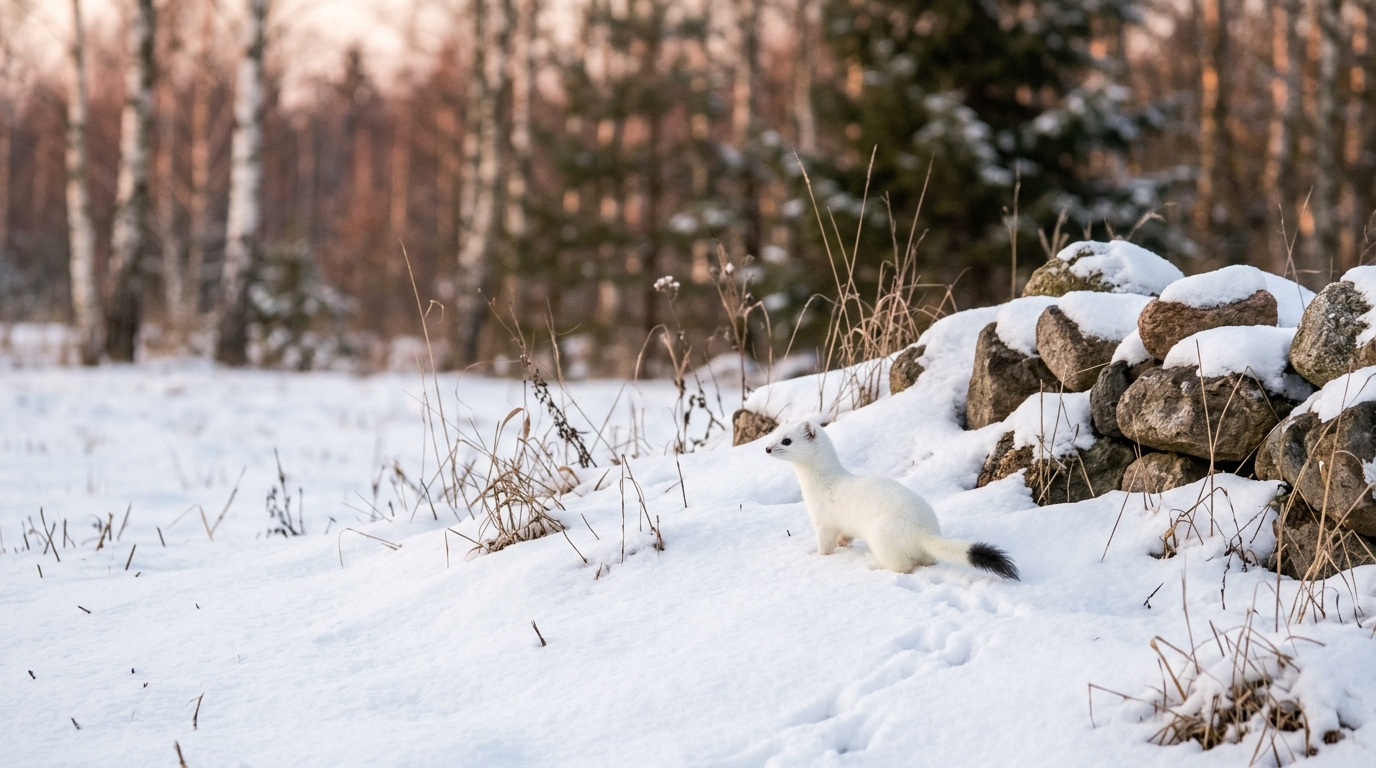
Stoat in winter on a snowy field boundary, with its black tail tip visible against the white snow background
Fig. 02Classic winter habitat: a stone field boundary on the edge of meadows and fields, with a dense network of common vole tunnels under the snow layer.

Home range depends strongly on food availability. Males occupy 5–15 ha (sometimes up to 40 ha during the mating season), while females are more sedentary with ranges of 2–8 ha. Male ranges overlap the areas of several females — this facilitates mating during the breeding season. In years of common vole outbreaks, ranges sometimes shrink twofold; in years of rodent population collapse, the stoat travels greater distances and is then recorded in unusual habitats.

03

Diet

A narrow specialist — voles and mice make up the lion's share of the menu, but the stoat can also handle prey many times its own weight.

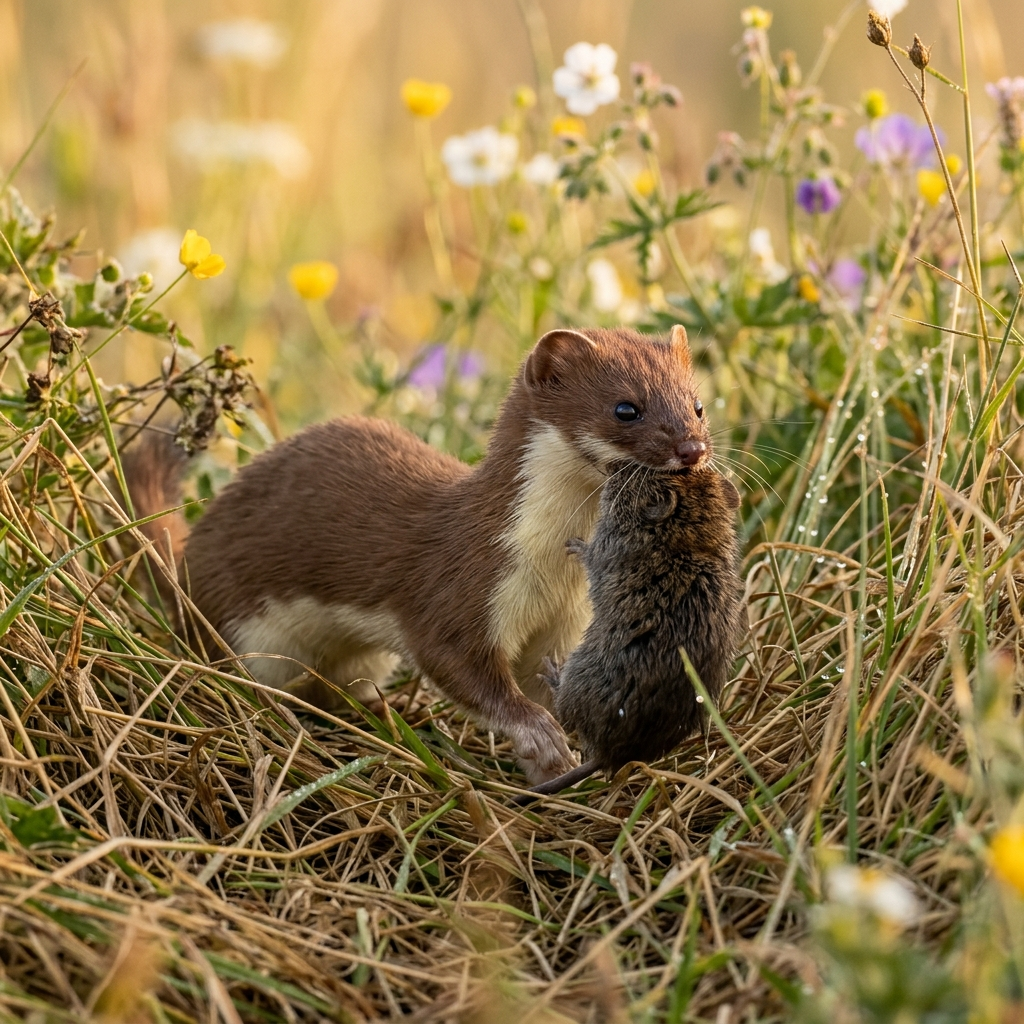
The stoat is a specialized micropredator, but unlike the least weasel, it reaches for slightly larger prey. Small rodents form the core of its diet, however, it can also tackle young hares, partridges, and even adult brown rats. Its narrow, cylindrical body allows it to enter burrows and hunt within rodent tunnel systems — an ecological niche that martens or foxes cannot reach.

The core of the menu consists of common voles, bank voles, field voles, field mice, and wood mice — totaling 60–80% of the biomass consumed annually. The diet composition shows strong seasonality. In spring, the stoat also hunts intensively for chicks and eggs of small ground-nesting birds (especially skylarks, pipits, and warblers). In summer, lizards, frogs, and larger insects are added seasonally. In autumn and winter, the share of rodents rises again to 80–95%.

ParameterStoatLeast Weasel
Typical preyvole, mouse, young ratvole, shrew, house mouse
Max. prey mass1–1.5 kg (young hare, chicken)200–400 g (adult rat)
Hunting stylerodent tunnels + surfacemainly inside tunnels
Killing techniqueneck bite, long caninesneck bite, long canines
Prey cachingyes — larders in sheltersrare, smaller caches
Bird share in dietup to 20% (seasonally)up to 10% (seasonally)

The hunting technique is based on precision and speed. The stoat tracks prey by scent (its vision is good but not exceptional); in a vole's tunnel, it moves as confidently as the host. The attack starts with a sudden pounce; a bite to the neck immobilizes the prey, and death usually occurs within 2–5 seconds. The stoat caches excess prey — during periods of food abundance (rodent outbreaks, bird nesting season), it builds larders with over a dozen carcasses in one place, especially near nursery burrows.

Specialization on voles — and its consequences

Such a strong focus on small rodents has a major ecological consequence: the stoat population size follows the common vole outbreak cycle with a one-to-two-year delay. In the year after a rodent peak, the stoat population grows sharply; in the year after a collapse, it drops heavily. This is one of the most beautiful examples of predator–prey coupling in Polish vertebrate fauna.

04

Behavior and Ethology

Territorial, solitary, active mainly at night and twilight — but also seen in the snowy fields at noon.

The stoat leads a solitary, territorial lifestyle. Outside of the brief mating period, individuals do not tolerate each other — especially males, which engage in fierce battles in June and July. Adult females are more sedentary and loyal to their home range. Activity is concentrated mainly at twilight, night, and early morning, but during intensive winter foraging or the kit-rearing season, the stoat also hunts in broad daylight.

Territory marking occurs mainly through the secretion of anal glands, urine, and feces left in prominent places — on stones, logs, protruding grass clumps. The scent mark has a strong, musky character. Boundaries are patrolled every few days, most often following the same routes — along field boundaries, ditches, forest edges, and stone walls.

Vocal communication is limited but recognizable. The alarm signal is a short, sharp squeak; when aggressive, the stoat produces a growl or low snort; the mother communicates with her young with soft clicking sounds. During the mating season, males make dry "clicking" sounds — a noise barely audible to humans but recognized by females from dozens of meters away.

The stoat leaves a track in the snow that looks like two full prints in a single leap — and disappears behind a drift before you can even focus your binoculars.

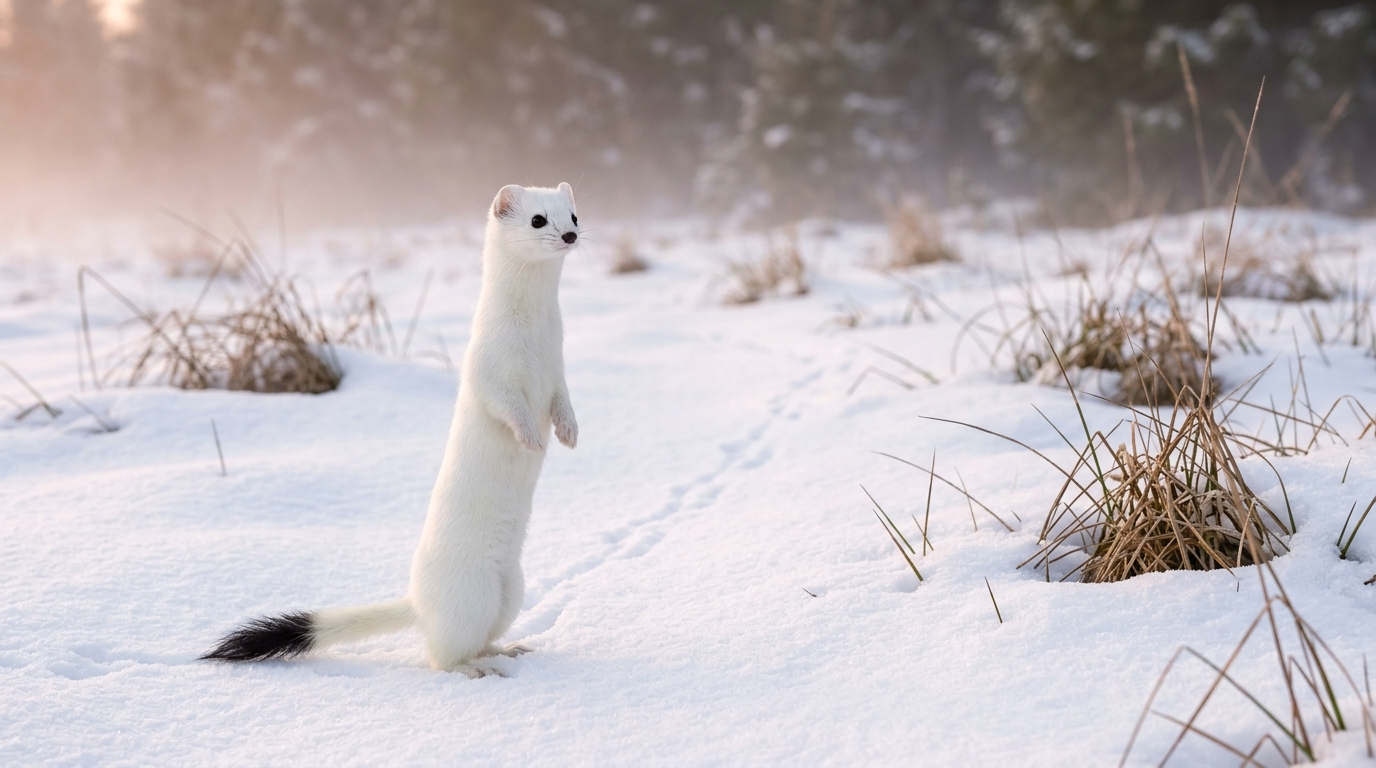
The movement of a stoat is springy and efficient. In a gallop, it covers 6–10 m/s over short distances, jumps nearly 1.5 m vertically, and over 2 m horizontally. It swims better than the least weasel — in the Bieszczady and Podlasie regions, there are observations of stoats swimming across rivers dozens of meters wide. The characteristic "periscope" (or "candle") — vertically straightening the body on hind legs to look around — is often the first sign to an observer that a stoat is hunting in the grass.

05

Reproduction and Life Cycle

Embryonic diapause lasting almost 10 months — the longest among Polish mustelids besides the badger.

The reproductive cycle of the stoat is one of the most complex among Polish predatory mammals. The breeding season lasts from May to August, peaking in June–July. Copulation is followed by fertilization, but the embryo does not implant immediately — it enters a state of embryonic diapause lasting 9–10 months. Actual development of the embryo only starts in early spring, and females give birth in April or May of the following year.

Embryonic diapause — what does it mean

After fertilization, the egg divides to the blastocyst stage (approx. 100 cells) and stops in the uterus — without implanting, without further development. Only a hormonal signal in early spring (increasing photoperiod) triggers implantation. The actual pregnancy then lasts only 21–28 days, but from copulation to birth, a total of approx. 280 days pass. This adaptation synchronizes the birth of the young with the season of greatest prey abundance — the spring peaks in rodent populations and bird hatchings.

The litter usually counts 4–9 young (at most up to 13 in a vole outbreak year). They are born blind, deaf, almost naked, and weigh 3–4 g. The nest is built in an abandoned vole or mole burrow, under a stone heap, under a woodpile, or in an old stump. It is lined with grass, moss, fur from preyed-upon rodents, and feathers.

The female raises the litter alone — males do not participate in care. Milk feeding lasts 6–8 weeks, but as early as week 4, the mother begins bringing killed rodents. The young open their eyes in week 3–4, start their first independent exits from the nest in week 5–7, and full independence and dispersal of siblings occur in week 10–12. The most interesting feature of stoats: young females reach sexual maturity very early — some can be fertilized by an adult male as early as 2–4 months of age, even before leaving the nest. Males mature much later, only at 12–15 months of age.

Lifespan in the wild is on average 1–2 years, although individuals that survive their first winter can live 4–7 years. In captivity, stoats have been recorded living 9–10 years. The highest mortality affects the young in their first 6 months of life — due to hunger, predation by foxes, owls (especially the tawny owl and eagle owl), hawks, and larger mustelids (martens). In the agricultural landscape, road accidents are also a significant mortality factor.

06

Tracks and Signs

A characteristic two-beat gallop in the snow and narrow, twisted droppings containing rodent fur.

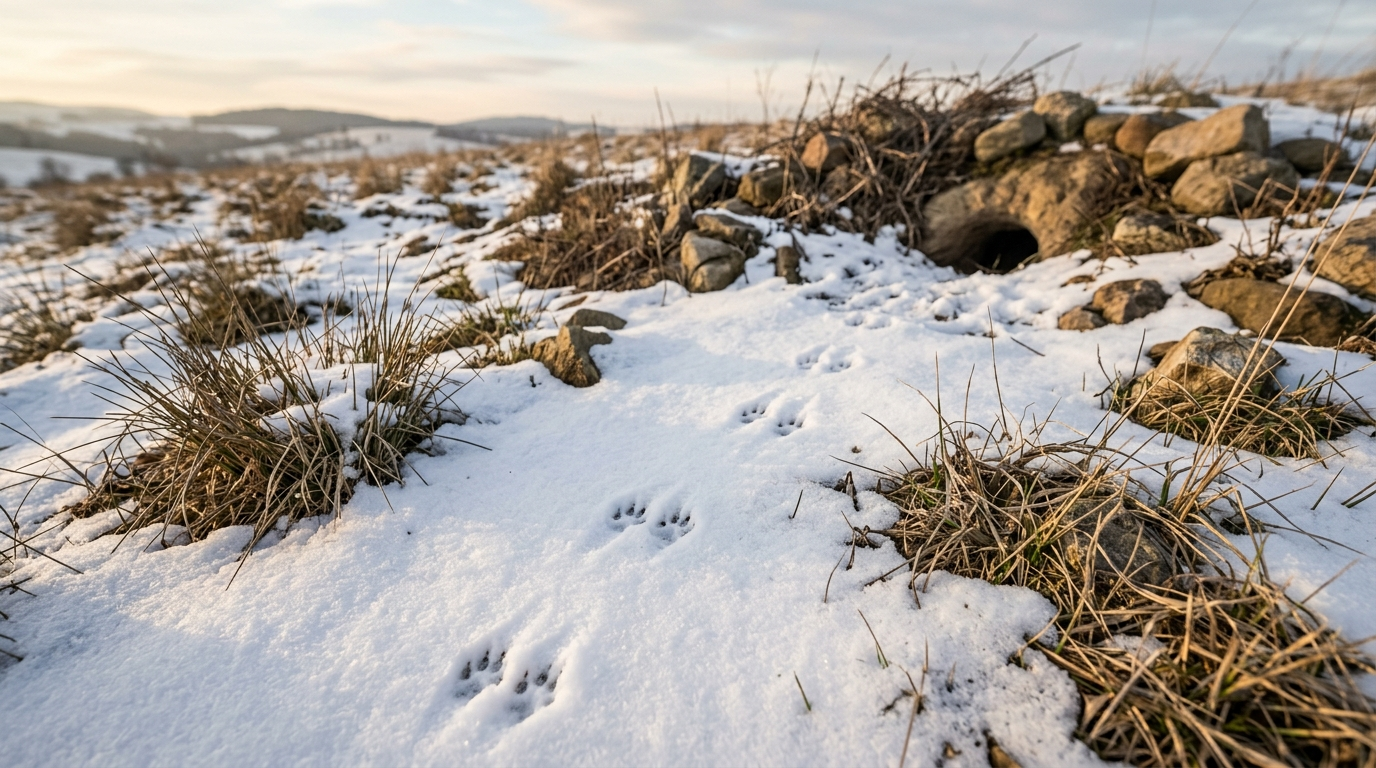
The best time to identify the presence of a stoat is winter with fresh snow. The tracks are clearly larger than those of a least weasel, but still small compared to a marten. A full paw print measures 2–2.5 cm in length, and the characteristic two-beat gallop leaves a pair of tracks close together, with gaps of 30–60 cm between pairs (up to a meter in a full gallop).

Stoat droppings are narrow, dark cylinders 4–8 cm long and 4–6 mm thick — clearly thinner than a marten's, slightly thicker than a weasel's. They are often twisted, ending in a sharp, elongated point, with a characteristic musky smell. Inside: rodent fur, fragments of small bones, sometimes feathers. They are left in visible places — stones, stumps, protruding grass clumps — as part of territory marking.

FeatureStoatLeast WeaselPolecat
Track length2–2.5 cm1–1.5 cm3–4 cm
Number of toes555
Gallop — pair gap30–60 cm25–40 cm40–80 cm
Scat — thickness4–6 mm3–4 mm8–12 mm
Scat — length4–8 cm3–5 cm6–10 cm
Scentmusky, moderatemusky, weakstrong, pungent
Stoat tracks in fresh snow — two-beat gallop with pairs of tracks close together
Fig. 06Two-beat gallop of a stoat — pairs of tracks close together, 30–60 cm gaps between pairs, single prints 2–2.5 cm long.

Other signs of presence: plucked rodent carcasses with the head bitten off (the stoat eats the brain and neck first), larders under stone heaps and in abandoned burrows, characteristic worn edges of burrows used as shelters, in the snow — sometimes signs of diving under the snow layer to search for rodents feeding in snow tunnels. In summer, good signs include predated ground bird nests with broken eggshells.

07

Humans and Stoats

Heraldic symbol of rulers, ally of the farmer, victim of centuries of fur trading — today a protected species.

The human relationship with the stoat has a thousand-year, highly ambivalent history. On one hand — the white winter fur with the black tail tip was for centuries the most prestigious heraldic fur in Europe: worn by kings, princes of the Church, and high-court judges. On the other — the stoat was and sometimes still is treated on farms as a pest of the chicken coop, dovecote, or rabbitry. Today, the key threat is neither the fur trade nor the gun, but habitat loss in agricultural monocultures and landscape fragmentation.

On farms, the stoat appears less frequently than the stone marten, but can be responsible for real damage. Unlike the least weasel, it can tackle an adult hen, young turkey, carrier pigeon, young rabbit, or a ferret in a cage. A classic scenario: the stoat enters a chicken coop or dovecote at night through a small opening (remember — it can pass through a gap 3–4 cm in diameter), kills disproportionately many birds "for later" (the surplus killing effect), and then carries away only one or two carcasses.

Heraldic symbol: the white fur of the stoat with black tail tips arranged in a regular pattern of points became a sign of royal and judicial power in medieval Europe. It was worn by monarchs of England, France, Poland, hierarchs of the Roman Catholic Church, and judges of the highest tribunals. The name "gronostaj" — according to some etymologists — derives from a Proto-Slavic root meaning white fur; in Western European heraldry, the equivalent is ermine, the pattern of black "tears" on a white background still used today in the coats of arms of Brittany and many noble families.

Legal status in Poland: the stoat is a partially protected species. Until 2014, it was strictly protected, but by the Regulation of the Minister of Environment of October 6, 2014, on the protection of animal species, it was moved to the partial protection category. Killing, injuring, and destroying burrows and breeding sites remain prohibited. The use of leghold traps, snares, and other non-selective traps is strictly forbidden (Art. 6 and 35 of the Animal Protection Act). In the event of a conflict on a farm — e.g., repeated damage to a chicken coop — the appropriate path is securing the facilities, not removing the animal.

The stoat is protected — what it means in practice

Partial protection DOES NOT mean that killing the stoat is allowed. It only means that the RDOŚ (Regional Directorate for Environmental Protection) may, in exceptional situations (e.g., documented repeated damage, protection of rare bird breeding), issue individual consent for limited actions. In a typical rural farm, the only lawful strategy is to secure the chicken coop or dovecote: seal gaps to <3 cm diameter, use fine mesh with openings <2.5 cm, and concrete floors under walls. Catching in a live trap for the purpose of release elsewhere requires RDOŚ consent.
08

Myths and Facts

The most common misunderstandings we hear about the stoat from readers.

The stoat is a species surrounded by a mix of folklore, heraldry, and hunting myths. Six common misunderstandings:

In winter, the stoat leaves a track in the snow that looks like two full prints in a single leap — and disappears behind a drift before you can even focus your binoculars.

— from field notes, Beskid Foothills, February 2025

Sources and credits

King C.M., Powell R.A. (2007) The Natural History of Weasels and Stoats, Oxford University Press · Jędrzejewski W., Jędrzejewska B. (1998) Predation in Vertebrate Communities — The Białowieża Primeval Forest as a Case Study, Springer · Polish Mammal Atlas (PAN, 2014) · Pucek Z. (ed.) Key to identifying mammals of Poland, PWN · Regulation of the Minister of Environment of October 6, 2014, on the protection of animal species · materials from IBL PAN and PTOP regarding mustelid predators · Editorial field notes 2024–2026, Beskid Foothills, Narew Valley, Bieszczady.

Compiled: May 5, 2026

POLAND
2026
— Field correspondence —

One letter from the field, every month.

The latest species profiles, seasonal guides and field observations delivered straight to your inbox. No spam, no clickbait — just solid content once a month.

2,847 readers · 0% spam · unsubscribe with one click